

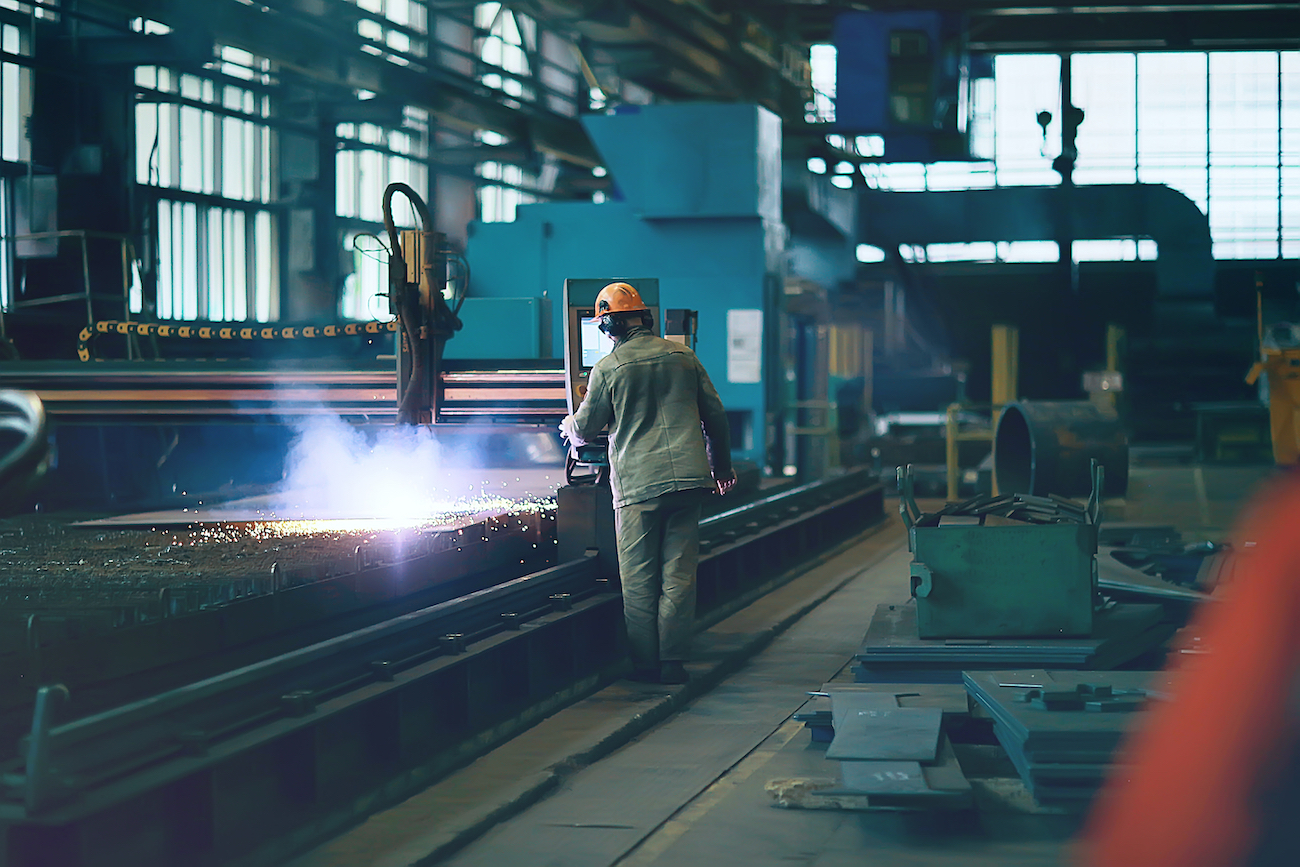
EU sanctions Russian semis but grants temporary quotas
The European Commission’s eighth round of sanctions on Russia has widened the EU ban on Russian steel, encompassing, as expected, Russian semi-finished products. However, temporary exemptions have been granted, with slab imports permitted up to a quota exceeding 3.7 million tonnes/year until 2024.
The eight sanctions package was approved on Wednesday (see Kallanish passim), but details were released on Thursday.
The new sanctions also specify that steel products processed in third countries using steel originating from Russia will not be accepted in Europe as of 30 September 2023. This therefore tightens restrictions on those third-country steel processors making use of competitive Russian feedstock and wishing to supply the EU.
As expected, some temporary exemptions for specific grades of semis were granted. The official Commission announcement explains that a quota of 3.748mt will be granted for slab – CN code 72071210 – for the period October 2022-September 2023 and then again for October 2023-September 2024.
Russian billet has also been given a quota, albeit much smaller than slab. Between October 2022 and September 2023, Russian-origin billet imports of up to 487,202t will be permitted, reducing to 85,260t in October-December 2023 and 48,720t in January-March 2024.
A senior source at a European steelmaker notes that granting exemptions for specific products creates too much confusion.
The new round of sanctions also includes a complete ban on the import of coking coal from Russia into the EU. Finally, it specifies that material originating from the regions of Donetsk, Luhansk, Zaporizhzhia and Kherson will also be targeted by bans.


Rebar prices fall in Italy, Spain amid decline in end-user consumption
Prices tumbled in the Southern Europe rebar market in the week to Wednesday October 5, with customers reluctant to book large tonnages when forecasts suggest that prices have further to fall, sources told Fastmarkets.
Italy
A stagnant market and persistent de-stocking resulted in falling prices in Italy, Fastmarkets understands.
Fastmarkets price assessment for steel reinforcing bar (rebar) domestic, exw Italy was €900–975 ($863-967) per tonne on Wednesday, down by €10-55 per tonne from €955–985 per tonne since last week.
Weak demand resulted in the steel mills reducing their prices, but low end-user consumption resulted in few transactions taking place in the Italian rebar market, sources told Fastmarkets.
“Prices are going down because the market is very flat [and] energy costs are not really going down,” a producer source in Italy said.
“The steel mills are trying to find customers for large tonnages, but the attitude among buyers is that prices are going to keep dropping so [they are] only buy what they need.”
Producers are targeting prices around €960 per tonne, but the lack of demand means few transactions are happening, one market participant told Fastmarkets.
In late September the Italian Treasury discussed providing a financial package to support heavy industries to combat soaring energy costs, but because the Italian government is currently in a state of transition, sources remain uncertain about whether any immediate help will actually be provided.
“Demand is slow at the moment as clients want to see what measures the new government will put into place to stimulate the economy… including price caps on energy costs,” a buyer source said.
But many in the market remain skeptical about the impact of any government intervention.
“In Italy, there is still no price cap. This means the impact energy costs have on the cost of the material varies from €100-200 per tonne,” a buyer source in said. “As you know, the government in Italy has changed, so it will take time before something is implemented.”
The source added that while France and Germany have a cap on energy costs, the lack of such a cap in Italy meant prices were already higher in Italy.
Regardless of input costs, however, mills have targeted lower prices as the low level of demand does not support higher prices, other market participants said.
Production cuts have not yet had an impact prices because demand is so low, sources added.
Spain
Prices remain depressed in the Spanish rebar market amid weak trading activity, sources there told Fastmarkets this week.
Fastmarkets’ price assessment for steel reinforcing bar (rebar), domestic, delivered, Spain was €850–870 per tonne on Wednesday down by €75-85 per tonne from €925-955 per tonne last week.
Competition between Celsa and Megasa ahs resulted in both mills dropping their rebar prices, Fastmarkets understands.
International scrap prices, which affect the price of all long steel products, have edged up slightly in October, but fell throughout September, as did domestic scrap prices in Spain.
In the seaborne market, Fastmarkets’ daily calculation of the index for steel scrap, HMS 1&2 (80:20 mix), North Europe origin, cfr Turkey, was $365.38 per tonne on October 5, up from $361.75 per tonne week-on-week.
Published by: India-Inés Levy


Europe’s steel hollow sections market suffering from energy-cost uncertainty, trader says
Prices for hollow steel sections in Northern Europe remained unchanged but the market in Southern Europe narrowed downward in the week to Wednesday October 5, due to limited trading.Fastmarkets’ weekly price assessment for steel sections (medium), domestic, delivered Northern Europe, was €1,020-1,050 ($1,012-1,041) per tonne on Wednesday, stable week on week.
Sources told Fastmarkets that stockholders were busy trying to clear imported steel products under this year’s fourth-quarter EU steel safeguard quota allowance.
“There are not so many inquiries at the moment, and no sales [in which] to reduce or increase the price due to low demand,” a producer said.
But sources in Southern Europe said that, despite the low consumption, demand for sections was not dead and that production was still running at full capacity at some mills.
“We are pushing on with production and using quite a lot of energy,” the producer said. “Clearly, there are higher costs and, for the moment, we are trying to manage, but we will see [how the situation develops] in the coming months.”
Fastmarkets’ weekly price assessment for steel sections (medium), domestic, delivered Southern Europe, was €970-1,020 per tonne on Wednesday, narrowing downward by €30 per tonne week on week from €970-1,050 per tonne.
Market participants expected construction-sector consumption of steel products to remain weak until next year, despite the European Council approving emergency measures on September 30.
The measures, intended to ease the burden of rising energy costs fueled by Russia’s unprovoked invasion of Ukraine in February, included a voluntary overall reduction target of 10% of gross electricity consumption, and a mandatory reduction target of 5% of electricity consumption during peak hours.
The council also approved a cap on market revenues at €180 per MWh for “inframarginal” technologies such as renewable and nuclear energy producers, a windfall levy on fossil-fuel companies, and additional powers for member states to temporarily set a price for the supply of electricity to small and medium-sized enterprises.
The regulation was scheduled to come into force early this month.
Some EU member states have also pledged independent support for energy-intensive industries, with the Italian government approving its “Aiuti Ter” decree which will offer heavy industry companies a 40% tax rebate at the end of 2022.
The German government announced a €200 billion support package for businesses and households, while France and Italy have pledged subsidies of €67 billion and €68 billion respectively.
But sources told Fastmarkets that they did not think any short-term measures would improve construction consumption due to there being long lead times for projects.
The August forecast by European steel association Eurofer predicted that apparent steel consumption would recover in 2023, following a third annual recession in the past four years.
“But the overall evolution of steel demand remains subject to high uncertainty, which is likely to continue to undermine demand from steel-using sectors,” Eurofer said in its third-quarter report.
Traders said that mills needed more clarity on energy costs so they could calculate whether to reduce or shut down production.
“The market is suffering at the moment because it is unclear what will happen – no one knows for the moment,” a trader said.
Meanwhile, traders said that the market for the product’s feedstock, hot-rolled coil, was muted due to sluggish demand.
Fastmarkets’ daily calculation of its steel hot-rolled coil index, domestic, exw Northern Europe, was €740 per tonne on Wednesday, down by €22.50 per tonne from €762.50 per tonne a week earlier.
Published by: Holly Chant
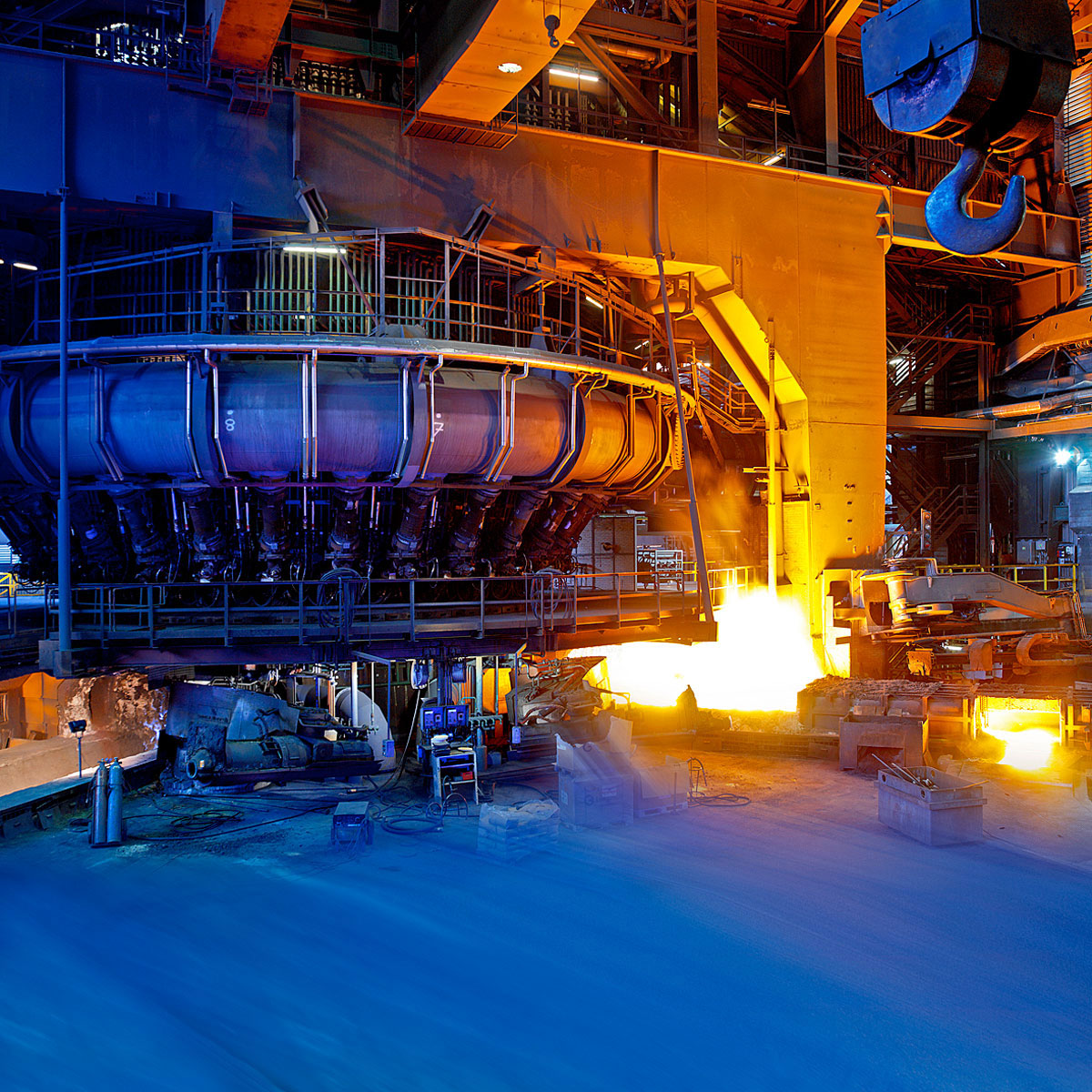
Voestalpine defines sustainable and digital research for €200m
Voestalpine has budgeted some €196 million ($193m) for research and development (R&D) in the current business year (April 2022-March 2023).
Research priorities include digitalising the production processes, developing innovative products, and converting to climate-neutral steel production, Kallanish hears from the Austrian company.
It says it is heavily researching digital simulation methods and processes that will prepare and support the transformation of steel production. For example, one project is assessing the potential for recycling by-products into the production process and developing technologies for a circular economy to ensure climate-neutral steel production in the future.
On the product side, the group is developing new digital and smart technologies such as “intelligent” cold-rolled steel strip. For tailormade functional steel, conductor tracks for the required sensors are integrated into a special high-quality coating layer. Intelligent sensors also ensure continuous monitoring in smart turnout systems. The development focus is to make sure the system detects and reports impending failures early on.
“The use of artificial intelligence is constantly opening up new technological opportunities for both production and products,” says R&D head Franz Androsch.
Worldwide, voestalpine has over 740 employees working in R&D in more than 80 companies. It cooperates with around 100 scientific partners, and also cultivates strong development partnerships with key customers.
Christian Koehl Germany

German fabricators see orders declining
Production at Germany’s steel-using industries dropped in the second quarter – the first period marked by the war in Ukraine, and more recent order intake figures suggest low activity going forward.
In the second quarter, companies produced 2.1% less than in the first quarter, and 2.7% less year-on-year, according to industry federation WSM. The first half-year in total saw orders decline by 1.5%. At the MBI Stahltag conference last week, WSM managing director Christian Vietmeyer presented the latest figures for July, which showed further drops for most sectors of the industry.
Wire products as well as surface coated and heat-treated products were down by more than 8% y-o-y, very likely because of their higher consumption of costly natural gas. Many other segments saw drops of between 2% and 6%. A positive exemption occurred on cold-rolled narrow strip, which was up 3%, and for pipes, which were up by 1.5%, probably owing to orders for domestic infrastructure, Kallanish heard from Vietmeyer.
The negative gap becomes much wider when looking at the order intake of the month as well as seven-month period, which was down in the two-digit percentage range for most products. However, the figures compete with the base effect of a strong summer in 2021, when many companies caught up on the lull of 2020. A recent outlier is the arms industry, which in the first seven months saw orders rise by as much as 207%. Notably, July itself brought a y-o-y drop for that sector, too, by 15%, in spite of the ongoing war in Eastern Europe.
Christian Koehl Germany
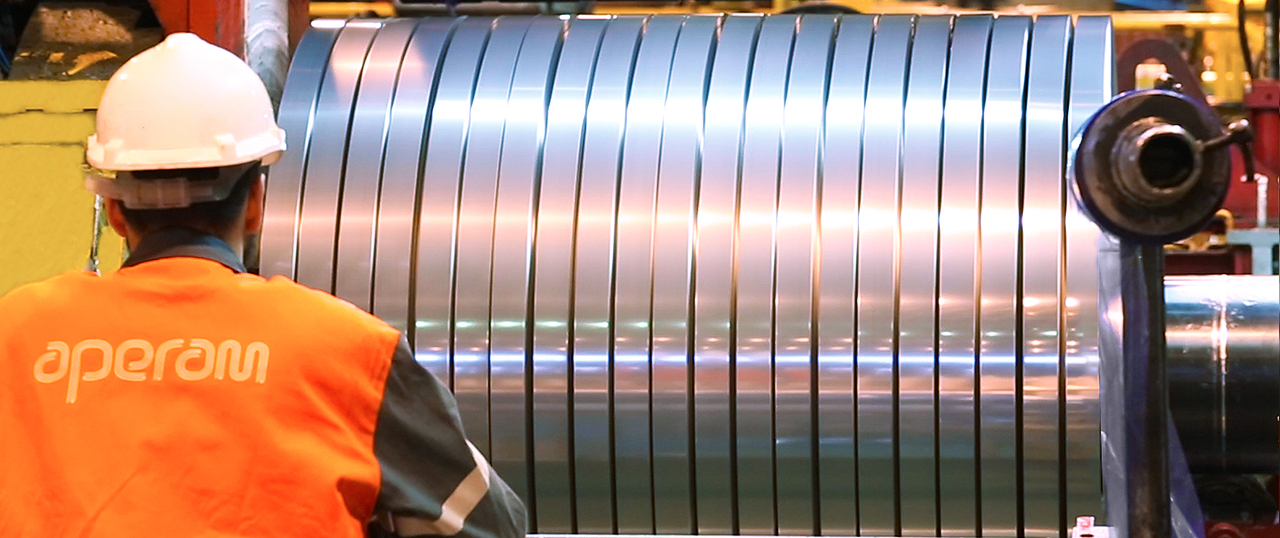
Aperam to use temporary layoffs to reduce output
Aperam is expected to make use of a new Belgian law on temporary layoffs to reduce output further during October and November, Kallanish notes.
At its mill in Genk, the company is reported to be applying for a full closure of one week at the end of October, supported by a new temporary layoff scheme designed for energy-intensive industries.
The mill already reduced output during the summer, extending the usual August closure into September, due to high energy costs and market uncertainty. Output at the mill is expected to resume fully in October, before the week-long stoppage at the end of the month.
Emanuele Norsa Italy

EC clears Germany’s €1 billion Salzgitter decarbonisation aid
The European Commission (EC) has approved Germany’s €1 billion ($992 million) state aid measure to help steelmaker Salzgitter implement green hydrogen into its production processes, Kallanish reports.
The approval on 4 October clears the way for €700m in federal support and €300m for state support. The direct grants will support the construction of an electrolyser, a direct reduction plant and an electric arc furnace for the first stage of development of Salzgitter’s SALCOS project.
The on-site, 100-megawatt electrolyser will produce roughly 9,000 tonnes/year of green hydrogen, which will be used as feedstock in the DRI plant to produce sponge iron. Salzgitter, which has already committed €723m to this initial stage of the project, expects to commission the 1.9 million t/y crude steel production capacity by late 2025.
The three-phase project is designed to include two DRI plants and three EAFs to replace blast furnaces and converters by 2033. When fully operational, this new hydrogen route to steelmaking is planned to cut emissions by 95% or 8m t/y of CO2.
“This [measure] will contribute to the greening of a very energy-intensive and hard-to-abate sector while reducing Germany’s dependence on imported fossil fuels,” comments EC vice-president Margrethe Vestager.
The EC says the aid has an incentive effect “as the beneficiary would not carry out investments in the steel process decarbonisation project without the public support”. It adds that the aid’s positive effects outweigh any potential distortion of competition and trade in the EU, and that the company will return part of the aid received to Germany if the project is “very successful and generates extra revenues”.
EU re-rollers seen struggling to replace Russian slab
The new, eighth round of EU sanctions on Russia encompasses, according to some reports, semi-finished steel, which could spell major problems for some European slab re-rollers, as Russian semis cannot easily be replaced for some applications, Kallanish notes.
Although the sanctions package was approved on Wednesday, details are expected to be published only on Thursday. It is however reported to include steel products, meaning semis are likely to be affected. It nevertheless appears some countries may be spared from the ban on importing Russian slab for two years.
A group of European re-rollers recently wrote to the European Commission, in the wake of speculation, widely publicised by some agencies, that slab will indeed be sanctioned. They poignantly answered the question of why Russian slab imports were not sanctioned in the first place (see Kallanish passim).
“The lack of supply for re-rollers would hamper the EU’s ability to build [among others] new wind installations and improve energy independence, while the semi-finished steel products [slabs, billets, and blooms] would be immediately redirected to other regions and with a 1% share of steel semis in total Russian exports, the potential ban would not have any tangible impact on Russia,” the letter says.
European steelmakers appear to have been lobbying the EC to include slab and billet in the list of sanctioned products, “using political arguments in what is essentially an economic and competitive issue”, the re-rollers went on. The re-rollers “help balance the demand and supply of finished steel producers”. As a sector, they account for 8% of total EU flat steel output and provide more than 30,000 jobs in the EU, according to the group.
With so much at stake, it is widely assumed that replacing Russian slab would be easy with the array of established as well as new, opportunistic suppliers currently operating in the market. To an extent, it is possible to replace slab supplied to re-rollers producing hot rolled coil with European material, depending on the level of finished product pricing in the region.
Reports this week of European slab exports, as a solution to low demand and HRC prices in the EU, suggest this supply could also find its way to the bloc’s re-rollers. But the heavy plate business, painstakingly created by cooperation between European and Russian counterparties in the last 20 years, is most at stake, market observers note.
Russia’s NLMK, the only non-sanctioned Russian slab producer, runs three plate mills in the EU: DanSteel (Denmark), Verona (Italy) and Clabecq (Belgium), to the aggregate nameplate capacity of around 1.75 million tonnes/year. Its model of re-rolling a lower-priced, precision produced slab in a higher paying market such as Europe is now under threat of collapse, amid Russia’s invasion of Ukraine and consequent sanctions.
Most vulnerable in the equation is DanSteel, which requires specialised slab with certain surface and chemical characteristics, currently unattainable in the merchant market.
NLMK has in fact been looking at alternative slab supplies for over a decade in order to reduce costs further, but the search has always encountered two main problems: economics and supply reliability.
“Even if [they] found a producer that could supply the appropriate quality, there would always be an issue of can this supplier guarantee certain volume, at certain prices, and for a certain length of time without changing them. The answer would always be no,” one former industry executive says.
As the supply pool expanded recently amid global modernisation efforts, some Chinese slab was tried, but it was only approved by some mills, due to quality. Brazilian supply would work on quality but is currently hinged on the US market, and, seeing only occasional sales to the eastern hemisphere, this would affect its pricing policy significantly. There is also supply from Asia, especially now when the Asian steel market is seeing negative growth, but “this supply is incidental, and while it may serve as an occasional supplier, it is hard to rely on a [long-term] basis,” a source observes.
South Korean slab quality is well known in the global market, and it could also replace some of the more intricate slab quality requirements, apart from oil and gas pipe applications and shipbuilding.
“There could be new supply alliances forged, but it cannot be accomplished immediately; some time will be needed to achieve this,” a former slab trader concludes.

EU HRC market quiet as participants look toward Euroblech fair
European hot-rolled coil prices held stable Oct. 5, with market activity still muted given buyer resistance to restocking.
Offers in the Northern European market were heard at Eur730-740/mt ex-works Ruhr and Eur750/mt delivered Ruhr. Market participants saw tradable value in a range of Eur700-740/mt ex-works Ruhr and Northern Europe, with levels approaching Eur700/mt ex-works increasingly heard in the low-demand market.
The latest deals were reported by a distributor source at Eur765/mt delivered Germany, the equivalent of Eur730/mt ex-works Ruhr.
As such, Platts assessed hot-rolled coil in Northwest Europe stable Oct. 5 at Eur730/mt ex-works Ruhr.
Some positivity was heard in the market for the near term, given the approach of the Euroblech fair later this month, with many looking to the event for the settlement of longer-term contracts and the opportunity to bring some clarity to prevalent uncertainties in the market.
“I think most are waiting for the fair now,” a mill source said. “The whole industry is reducing output, so demand and supply will eventually align.”
Indeed, recent price increases attempted in the market were to an extent premised on reduced supply and availability of coil, with one distribution source expecting further cuts given mills could still offer five- to six-week lead times.
“For this quarter we attempted higher prices, which was largely costs driven, but unfortunately this has to be supported by demand which has dried up,” a second mill source said. “Distributors are looking forward at their inventories, and we will see a degree of recovery, but not to 2021 levels.”
In the Southern market, multiple sources reported a preference from Italian mills to stop production rather than cutting prices, in contrast to Northern European mill strategies.
“[Northern] mills are hungry and looking for orders,” a distributor source said. “But in Italy they’ve followed a different strategy — stopping production over discounting volumes. Their offer levels just aren’t realistic, though.”
Platts assessed HRC stable at Eur725/mt ex-works Italy due to a lack of transactional activity to realize the higher offer levels, heard at Eur760-780/mt ex-works Italy.
Platts is part of S&P Global Commodity Insights.
— Benjamin Steven, Maria Tanatar
