


EUROMETAL brought together the Nordic Distributors


This Regional Meeting Nordics, co-organized in collaboration with the Swedish National Federation Stål- och Metallföreningen, brought together in Stockholm around 50 distributors, traders and service centers active in the Nordic countries.
The event began with an introduction of the current context by the chairman of Ståloch Metallföreningen, Magnus Bosson. As would be expected, topics such as the impact of European sanctions on Russia and the fall in Ukrainian production were not left unaddressed, as were the increase in energy costs, rising inflation, high interest rates and the safeguards imposed by the European Commission.
Matthew Watkins, Principal Analyst at CRU Group, presented the European & Nordics Steel Market Outlook, while Maria Tanatar, Senior Editor, EMEA Ferrous Metals at S&P Global Platts, introduced the evolution of European flat steel prices. This first session was concluded by the EU Steel Trade Cases and Steel Safeguard Measures, presented by Xiaoyi Tang, partner at the law firm Dentons Europe LLP.
After an intense first session, John Armstrong, CEO and founder of Reibus International presented the advantages of digitalization and online trading in the distribution supply chain.
In a region where safety is key, Mattias Lafvas, health and safety engineer at NCC and
Björne Karlsson, director at the safety park, exposed the Swedish project Byggbranschens Säkerhetspark that promotes safety learning through in-depth training.
The second session was concluded by Mark Bula, CCO at H2 Green Steel, presenting the ongoing construction of their steel plant in Boden and their decarbonization targets for the steel industry.
In the afternoon, the agenda followed up with an eloquent presentation by Helge Runer, CEO at Norsk Stål, awakening about the bad image of Steel as a “worst-performer” from a “dirty and old industry” representing 7% of total emissions and the need to unite and cooperate to make it a desired and required product.
Jaap-Jan Aardenburg, distribution marketing manager at Tata Steel Europe, presented Tata’s Zeramis brand and the transformation of IJmuiden integrated site introducing Direct Reduced Iron (DRI) technology, processed with green hydrogen in direct connection to an offshore wind farm.
This session was concluded by Thomas Hörnfeldt, Vice President Sustainability & Public Affairs at SSAB that explained their HYBRIT pilot and demonstration plant aiming to produce fossil-free steel in 2026.
The event ended with a pannel discussion about the challenges of Nordic steel distribution.
Moderated by Håkan Magnusson, CEO of Celsa Steel Service, the panel was attended by
Hans Svensson, Vice President and marketing manager at Stena Stål, Magnus Bosson, Managing Director at BE Group Sverige, Richard Ralsgård, CEO at ArcelorMittal BE Group SSC and Staffan Ekstrand, Manager ArcelorMittal Flat Carbon Europe.
EU mills fail to find common ground on specifications of low-CO2 steel: EUROMETAL conference
European flat steel producers present at the EUROMETAL Regional Meeting Nordics in Stockholm this week had drastically different views on the definition of carbon-accounted steel, according to speakers and audience members during discussions at the event.

Mark Bula, chief commercial officer at H2 Green Steel, a brand-new hydrogen-fueled steel mill project in Sweden, said: “There is no definition of green steel”, after an audience member asked for clarifications on the specifications for “green steel”.

Thomas Hörnfeldt, vice president for Sustainability & Public Affairs at Sweden’s SSAB, responded to a similar request by saying that fossil-free steel needs to have a zero-carbon footprint, including power and transportation.
Meanwhile, a representative of Tata Steel in the Netherlands reported that the answer is more complicated and depends on the demands of the customers and that the most common request the company has seen is a 30% reduction of carbon dioxide emissions.

The majority of EU mills are aiming to launch projects, including the use of hydrogen and electric-arc furnaces (EAFs) to meet toughening CO2 requirements and also to fulfil the growing needs of buyers, including in the automotive industry, for steel products with a low or zero-carbon footprint.
In addition, before the zero-carbon target can be met, more steel products with reduced carbon content will be offered to the market, sources said.
The availability of carbon-accounted steel remains low as the majority of steelmaking projects are still under development or in the process of construction and existing EAF-based mills have just started to receive EPD certifications. But the availability of low-carbon material is still expected to grow in the next few years, first increasing its share in long-term contracts and then entering the spot market.
The seeming absence of a unified approach amongst mills as to a definition for the product resulted in a heated discussion among the conference participants.

Some distributors, including John Armstrong, CEO of Reibus International, said that a new way of certification is needed, allowing the carbon footprint of the product to be seen.
In addition, the environmental product declarations (EPD) used now might not meet all the requirements of the distributors, according to the event participants.
EPD was described as being a “step in the right direction,” by one of the mills. But this certification system was also reported to lack strict standards and it could not serve as a long-term solution when more carbon-accounted steel becomes available in the spot market.
According to the Phase 4, under the EU Emissions Trading System (ETS), free EU Allowance (EUA), is 1.4 mt CO2 for each mt of hot metal, sintering and met coke production (Scope 1, 2). Emissions for European HRC producers are typically 2.0 mt CO2 or greater.
Maria Tanatar, S&P Platts

Marubeni-Itochu Steel acquires UK steel distributor
Marubeni-Itochu Steel Inc. (MISI) has acquired the entire share capital of UK steel distributor Barclay & Mathieson (B&M) Group.
MISI plans to grow its presence within the UK and European markets, and the acquisition of the B&M group will add value-added businesses to its existing portfolio. “With plans to invest significantly post acquisition, it will be an exciting opportunity to expand and grow further globally,” B&M says in a note seen by Kallanish.
“Our worldwide infrastructure will help us catapult the B&M group to the next level,” says MISI president Tatsuhiko Toshita. B&M Group chief executive Mike Walton adds: “It’s an exciting time for the B&M Group, with further plans for growth in the UK and the rest of the world, the backing of our new parents and the significant resources both financial and operational will enable us to deliver those goals.”
Japan-based MISI employs over 10,000 people in 90 countries, with annual revenue of some $16.5 billion.
Adam Smith Poland


Italian longs market standoff continues on lower consumption
Italian long product markets have remained uneventful this week, with some rebar prices falling and values for all other longs mostly stable.
Merchant bar sales continue to languish. Prices are flat so far on last week but buyers expect some decreases this month. Distributors who spoke to Kallanish report low consumption for merchant bar and some aggressive pricing from suppliers. Steelmakers continue to produce but are mulling some stoppages in October if demand does not pick up.
Distributors intend to remain in wait-and-see mode this month and only buy back-to-back. Including size extras, contract prices are flat on-month at €1,090-1,100/tonne ($1,077-1,087) ex-works, sources suggest.
Despite some aggressive prices from distributors and import sources, heavy sections are the only product for which demand is reported to be good. Sellers from other European countries such as Spain remain present in the market offering lower prices but not a large product range. Beam contract values for the first category remain flat at €1,220-1,230/t ex-works, depending on tonnage. Sellers believe market sentiment is currently worse than the reality of sales activity, as September was a good month for beams.
Natalia Capra France

New EU sanctions to include Russian semi-finished steel imports
The European Council has adopted its eighth sanctions package against Russia for its invasion of Ukraine, which expands its ban on the import of Russian steel products to include semi-finished steel, the European Commission said in a statement Oct. 6.
Among a number of other restrictions announced, the EC said it was banning the export of coal, including coking coal, which was used in Russian industrial plants, subject to a three-month wind-down period of existing contracts signed before the export ban was adopted.
The EU previously banned imports of finished steel from Russia as part of sanctions imposed in March, while some semi-finished and raw material suppliers had also been previously hit by sanctions imposed on specific companies and individuals.
The import ban would cover finished or semi-finished steel products that originated in Russia or had been exported from Russia, with a three-month wind-down period envisaged to allow for the execution of contracts signed before the import ban on the semi-finished steel products was adopted, the EC said in a Q&A on the sanctions package.
The EC, which said the new import restrictions totaled almost Eur7 billion ($6.9 billion) in value, added that the full ban on imports of some semi-finished steel products would be phased in after a transition period of up to two years.
It said the new package would also ban Russian steel products that had been further processed in third countries, within a one-year period.
Market sources told S&P Global Commodity Insights previously that European mill representatives had made an official request to impose sanctions on imports of semi-finished products from Russia after Russian President Vladimir Putin declared a partial military mobilization Sept. 21.
However, nine large companies, including European steel rerollers and traders, sent a joint letter to the EC Sept. 27 underlining the risk “of sanctioning input materials for the rerolling business model in Europe.”
According to the letter, any import ban on semi-finished steel products, such as slabs, billets and blooms from Russia would have consequences for the industry, such as unemployment and price spikes, as there were no other real options for substituting the supply with alternative producers.
More than 80% of the EU’s steel semi-finished steel products come from Russia and Ukraine, according to the letter.
European rerollers told S&P Global Oct. 6 that they were assessing the codes of the semi products that would be subject to the two-year transition period.
Platts, part of S&P Global, assessed the weekly FOB Black Sea slab price at $450/mt Oct. 5, falling 23.1% since the beginning of 2022. Russian slab and flat-rolled steel exporters mainly target the Turkish market, with their slab prices lower than the competition, according to S&P Global data.
Platts assessed import slab in Southern Europe at $600/mt CIF Italy Sept. 30, unchanged week on week, and plate in Southern Europe at Eur1,000/mt ex-works Italy Sept. 30, also flat.
NLMK
NLMK is the only slab exporter from Russia still active in the EU market despite global sanctions, and has been focused on slab delivered to its own coil and plate rolling mills in Belgium, France, Denmark and Italy and some external sales to Central European buyers.
In 2021, NLMK shipped 1.7 million mt to Dansteel, its plate mill in Denmark, and 670,000 mt of slab to NLMK Belgium Holdings, or NBH, a 49-51 joint venture between NLMK and Belgian investment fund SOGEPA, which comprises plate mills NLMK Clabecq in Belgium and NLMK Verona in Italy, and strip mills NLMK La Louviere in Belgium and NLMK Strasbourg in France.
In the first half of 2022, NLMK’s slab supplies to NBH totaled 1.33 million mt. Roughly 550,000 mt of slab was distributed among NLMK’s fully own subsidiaries outside of Russia, with some of this tonnage destined for Dansteel.
NLMK pointed out that during the transition period, the country is permitted to supply 3.7 million mt of slab between Oct. 7, 2022, and Sept. 30, 2023, and the same amount between October 2023 and September 2024, which is equivalent to the volume of exports in 2021.
For billets, imports into the EU from Russia can continue in the volume of 487,202 mt between Oct. 7, 2022, and Sept. 30, 2023, in the volume of 85,260 mt between Oct. 1, 2023 and the end of December 2023, and in the volume of 48,720 mt between Jan. 1, 2024, and the end of March 2024.
Severstal, the first Russian steel company to take the brunt of sanctions in early March, will not be further affected by the new sanctions.
Evraz, a significant steel billet exporter, told S&P Global Oct. 6 that it was not selling any steel products to the EU.
— Jacqueline Holman, Ekaterina Bouckley
LME to consider options to address Russian metal in warehouses
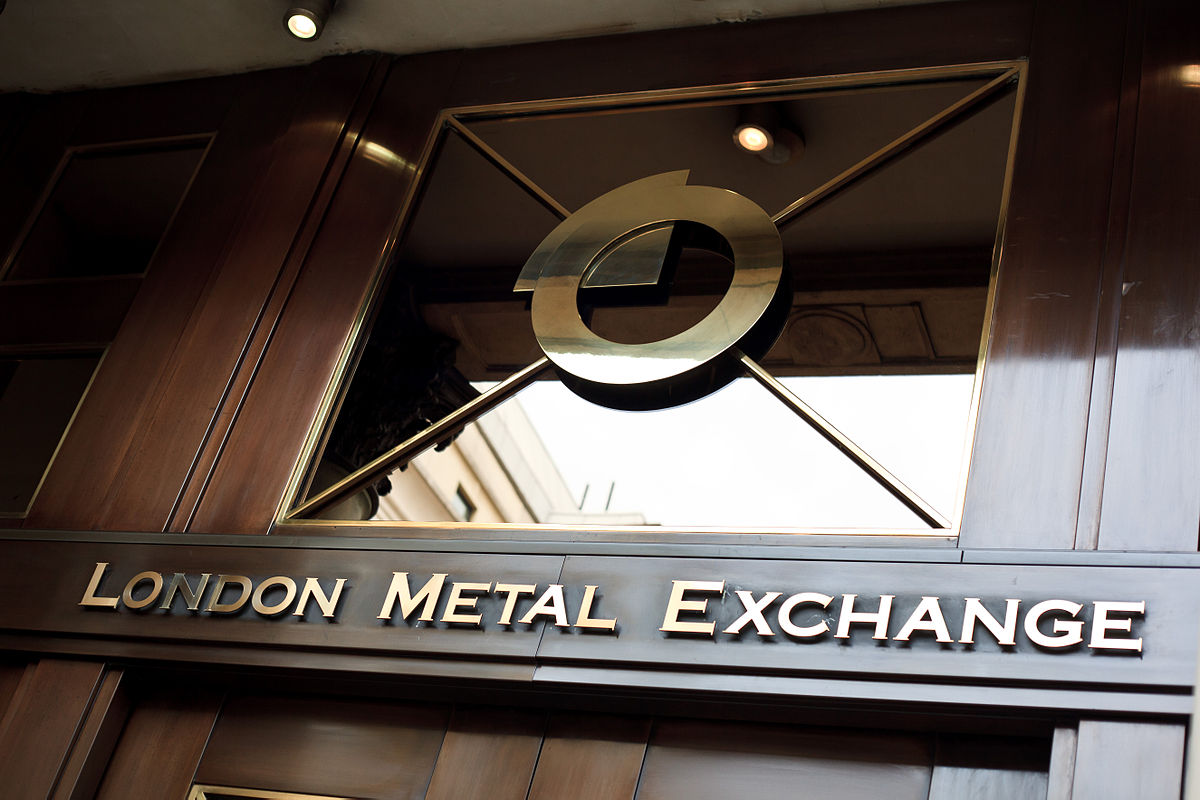
The London Metal Exchange released a discussion paper Oct. 6 to inform members that it would start examining the sentiment regarding the flow of Russia-origin metal in its warehouses in the wake expectations that market participants may increasingly reject these products as 2023 contract negotiations progress.
“Since Russia invaded Ukraine on Feb. 24, 2022, specific sectoral sanctions and related measures against Russia have been introduced; however, there has been no comprehensive government-led action to prevent the widespread use of Russian metal,” the LME said in the paper. “In parallel, the LME has been closely monitoring the usage and throughflow of Russian metal on the LME, to ensure that LME warehouses do not see a significant inflow of unwanted Russian stocks, posing a risk of creating a disorderly or unfair market.”
The LME said Russian metal inventories have been flowing through its warehouse throughout the year, indicating that consumers have been willing to take delivery of Russia-origin products, though the sentiment may change by the end of 2022.
“As the current negotiation period for 2023 supply agreements progresses, the LME understands that an increasing number of consumers may be expressing an unwillingness to accept Russian metal in 2023,” the LME said. “As a result, and in light of the potentially changing market landscape, the LME now considers it appropriate to gather further data and views.”
While many companies have opted to “self-sanction” by implementing their own policies regarding Russian-origin metal, the LME acknowledged that it has acted cautiously to reflect the interests of the broader market.
“For as long as Russian metal is acceptable to a broad spectrum of global consumers, then the interests of an orderly market are likely best to be served by the continued presence of Russian brands on the LME’s brand lists, as this will ensure that the LME’s warehouse stocks continue to reflect the global physical market,” the LME said.
Possible options
The LME said it will seek market feedback as it considers an “appropriate balance” to address the future of Russian metal in its warehouses.
“The metal market has been operating in a low stock environment for some time, adding further uncertainty,” the LME said. “Acting preemptively could cause further market distortion during an already difficult time but, on the other hand, a failure to take action now could mean that the LME’s hands are tied in the future, when any move to address the situation could be undermined by the volume of Russian metal already on warrant.”
Possible actions that the LME could enact include maintaining its current position, introducing volume thresholds for Russian metal inventories in LME warehouses, or suspending warranting for Russian metal in its global warehouses.
“The LME is keen to hear views on the topics in this discussion paper and also on the specific options laid out,” it said. “The LME would also welcome ideas not included in this paper.”
— Nick Lazzaro

Russia-origin slab, billet imports to Europe can continue until 2024 on quota basis: EC
Russian-origin imports of billet and slab into the European Union will be allowed until April and October 2024, respectively, on a quota basis, the European Commission said Oct. 6, in its eighth sanctions package against Russia for its invasion of Ukraine.
EU imports will be allowed to import a total of 3,747,905 mt of Russian slab between Oct. 7, and Sept. 30, 2023, as well as another total of 3,747,905 mt between Oct.1, 2023, and Sept. 30, 2024, according to the EC.
For Russian-origin billet, EU importers will be allowed to import 487,202 mt between Oct. 7 and Sept. 30, 2023. A further 85,260 mt of billet will be allowed between Oct. 1, 2023, and Dec. 31, 2023, and 48,720 mt of billet will be allowed January-March 2024.
The slab and billet import quota volumes set by the EC is considered close to what is needed by EU steel processors, market participants told S&P Global Commodity Insights.
Nine large companies, including European steel rerollers and traders, had previously written a joint letter addressed to the EC Sept. 27 underlining the risk “of sanctioning input materials for the rerolling business model in Europe.”
More than 80% of the EU’s steel semi-finished steel products come from Russia and Ukraine, according to the letter. Following the Russian invasion of Ukraine in late February, and as a result of previous sanctions imposed on specific Russian companies and individuals, Russian mill NLMK became the main slab supplier into the EU from the Black Sea, with some European rerollers having to source material from alternative origins.
NLMK has been focused on delivering slab to its own coil and plate rolling mills in Belgium, France, Denmark and Italy, as well as some external sales to Central European buyers.
Furthermore, imports of finished steel products that have been “processed in a third country incorporating iron and steel products originating in Russia will be allowed until September 30, 2023,” according to the EC.
However, finished steel products processed in a third country using specifically Russia-origin billet and slab products, will be allowed until April 1, 2024, and Oct. 1, 2024, respectively, in line with the timeframe set for the ban on direct imports of Russia-origin slab and billet into the EU.
In addition, for a small group of finished or semi-finished steel products that either originate in Russia or have been exported from Russia, a three-month winddown period, until Jan. 8, 2023, will be in place to allow for the execution of contracts signed before the import ban on the semi-finished steel products was adopted on Oct. 7, 2022.
The products for which Russia-origin imports are only allowed until Jan. 8, 2023, are listed in the following table:
| CN/TARIC Codes | Name of the good |
| 7206 | iron and non-alloy steel in ingots or other primary forms (excl. remelting scrap ingots, products obtained by continuous casting and iron of heading 7203) |
| 7218 | stainless steel in ingots or other primary forms (excl. remelting scrap ingots and products obtained by continuous casting); semi-finished products of stainless steel |
| 7223 | wire of stainless steel, in coils (excl. bars and rods) |
| 7224 | steel, alloy, other than stainless, in ingots or other primary forms, semi-finished products of alloy steel other than stainless (excl. waste and scrap in ingot form, and products obtained by continuous casting) |
| 7229 | wire of alloy steel other than stainless, in coils (excl. bars and rods) |
| 7303 | tubes, pipes and hollow profiles, of cast iron |
Platts, part of S&P Global Commodity Insights, assessed CIS export billet at $525/mt FOB Black Sea on Oct. 6, unchanged from Oct. 5, amid the absence of large bookings, few Russian offer and hesitance from buyers in Turkey, the main outlet for Russian billet, sources said. The billet price range discussed by market players on Oct. 6 continued to be exceptionally wide.
The Platts weekly FOB Black Sea slab price assessment stood at $445-$455/mt Sept. 30, unchanged on week, declining 23% from $580-$590/mt at the beginning of 2022. Russian slab and flat-rolled steel exporters mainly target the Turkish market, with their slab prices lower than alternatives.
Platts, assessed import slab in Southern Europe at $600/mt CIF Italy Sept. 30, unchanged on week, but down $50/mt from Sept. 2.
— Annalisa Villa, Viral Shah, Benjamin Steven

EU HRC prices inch down on low demand
Domestic prices for hot-rolled coil in Europe moved down Oct. 6 due to weak demand and mills’ attempts to generate orders by giving discounts.
Platts assessed hot-rolled coil in Northwest Europe at Eur725/mt ex-works Ruhr Oct. 6, down Eur5/mt day on day.
Producers and distributors have reported tradable value at Eur700-730/mt ex-works Ruhr.
In Southern Europe, Platts assessed hot-rolled coil also down by Eur5/mt on the day at Eur720/mt ex-works Italy.
The assessment was based on tradable value reported at Eur700-730/mt ex-works Italy.
“It is difficult to pinpoint where the actual market price is as traded volumes remain low,” a service center said. “Prices still can move down further, but not significantly.”
Demand for HRC has remained limited across Europe as distributors have high inventories of flat steel that they were trying to reduce by year-end, and they have not been interested in new deals. In addition, they have also been competing with mills in the attempt to sell, pressuring on the prices.
Demand from end-consumers, including automotive and white goods segments, has also been reduced.
Steelmakers, in the meantime, have been trying to lower production to bring balance between supply and demand. However, these attempts have failed to support the prices or improve buyers’ interest.
Platts is part of S&P Global Commodity Insights.
— Maria Tanatar, Benjamin Steven