

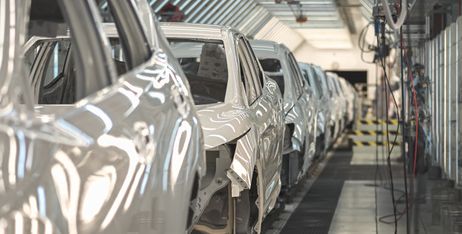
European auto industry calls for urgent policy intervention
The European automotive industry is calling for an urgent policy framework to enable the EU car market to both recover and make the shift to zero emissions, Kallanish reports.
Trade body ACEA said on Friday it has revised its initial forecast that the EU new car market would return to growth in 2022. It now expects a 1% retraction year-on-year in sales to 9.6 million units. Despite the symbolic change, manufacturers are pointing out this volume is still 26% lower than the pre-pandemic levels in 2019.
Throughout the first eight months of the year, the main issue on sales has come from the supply side, led mainly by components shortages. However, demand may also suffer over the coming months due to inflation and fears of recession, the association says.
“To ensure a return to growth – with an even greater share of electric vehicle sales so climate targets can be met – we urgently need the right framework conditions to be put in place,” says Oliver Zipse, ACEA president and chief executive of BMW. “These include greater resilience in Europe’s supply chains, an EU Critical Raw Materials Act that ensures strategic access to the raw materials needed for e-mobility, and an accelerated roll-out of charging infrastructure.”
In the past years, automakers have faced Brexit, the coronavirus pandemic, semiconductor supply bottlenecks and the war in Ukraine – which is still impacting prices and availability of energy. Yet, despite the adversities, ACEA says the industry continues to invest “massively” in R&D, skills and technologies driving the green transition. But without the right political framework conditions to ensure industry remains competitive “well into the future”, this transformation is at risk, warns ACEA.
Industry fuel rationing and voluntary production shutdowns may be necessary for European countries to cope with winter demand despite some incentives offered by some governments. Such measures would directly impact steel demand in the region.
Gabriela Farhangi UK


Vale, Saarland mills team up for decarbonisation
Vale and the two mills in Germany’s Saarland state will together explore solutions on carbon-neutral steelmaking processes, Kallanish hears from the Brazilian mining group.
To this effect, Vale has signed a memorandum of understanding with Stahl-Holding-Saar (SHS) GmbH & Co, the holding of platemaker Dillinger and special bar qualities mill Saarstahl.
The partners intend to jointly study the use of Vale’s green iron ore briquettes and direct reduction pellets in steelmaking. Also examined will be the use of Tecnored technology, as well as the design of a briquette plant located near SHS’s facilities.
Vale says this initiative will contribute to its commitment to reduce 15% of net Scope 3 emissions by 2035, and marks the first cooperation with a German company to this end. Since 2021, Vale has engaged with around 30 ironmaking clients representing approximately 50% of the company’s Scope 3 emissions, it says.
The SHS mills have scheduled to start production of low-carbon steel in 2027. The new production route will include an electric arc furnace at Saarstahl, and an EAF and direct reduced iron plant for the production of sponge iron at the Dillinger plant.
Christian Koehl Germany

Steel price talks stand back for energy talks
Germany’s steel processors and fabricators are the segment of the value chain that is being worst squeezed by the massive surge in energy prices in Western Europe, a recent industry event heard.
Depending on their activity, they rely on extra consumption of gas and electricity, in addition to the premium energy costs that are already incurred upstream by the steel mills. If mills hand down their extra costs, their customers are bitten twice by the energy price craze.
“The forwarding of the energy costs is currently the hardest part of negotiations – much harder than the bargaining for the actual steel price,” Christian Vietmeyer, managing director of German fabricators federation WSM, said at last month’s MBI Stahl Tag in Frankfurt.
“Many of our member companies do not get any offers at all, not even regular customers of the utilities, and not even at sky-high prices,” he said at the event attended by Kallanish. Utilities have some obligation to supply private households, but not to companies. WSM is currently lobbying for a change in the political regulation to this effect, Vietmeyer observed.
On the day of the conference, the gas price saw a temporary peak at €186 ($182) per MWh, while long-term supply contracts are expected to settle at €75-80, according to Heinz Jürgen Büchner of IKB Bank.
“This is a four-fold increase compared with existing contracts, and you can be happy if you get away with that,” he stated. Such prices, from domestic utilities, equal the price of imported liquefied natural gas from US fracking, and will render prices for German parts and components uncompetitive internationally, he noted.
Roland Döhrn, formerly of RWI Essen Institute, concurred. He highlighted that “Germany is a strong industrial location for its big steel users and their export business.” He asked: “Will they move their production elsewhere to remain competitive?”
Christian Koehl Germany
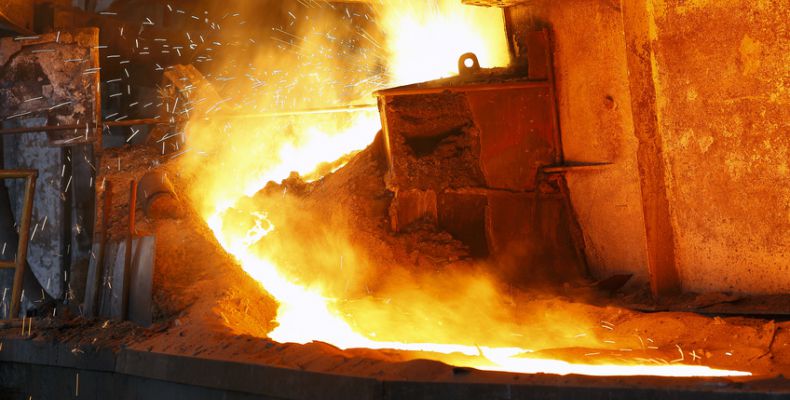
Outokumpu to delay FeCr furnace restart until ‘at least’ end of Q1 2023
Finland-headquartered stainless steel and ferro-chrome producer Outokumpu plans to continue to restrict its ferro-chrome production into the beginning of 2023, the company said on Friday October 7.
Outokumpu now plans to delay the restart of one of its three ferro-chrome furnaces until at least the end of the first quarter of 2023 and will “start change negotiations related to the restriction of the ferro-chrome production.”
The negotiations concern all the employees working at Outokumpu’s ferro-chrome operations, and the planned measures would affect 70 people at most, it said.
The capacity of the furnace that has been shut down is about 30% of Outokumpu’s ferro-chrome capacity of 530,000 tonnes per year.
Outokumpu said the “exceptionally high” price of electricity remains an issue, and that the situation on the energy market had not improved since September 6, when it announced its decision to postpone the restart of one of the three furnaces after a maintenance break.
“Unfortunately, the situation in the energy market has not eased, but the high price of electricity continues to have a negative impact on our cost competitiveness compared to our competitors, mainly from outside Europe,” Martti Sassi, president of the ferro-chrome business area at Outokumpu, said.
“The possible further delay of the restarting of the furnace is a difficult but potentially necessary measure in an utterly exceptional situation. In the change negotiations, we will try to find a solution for us to be able to employ our ferro-chrome personnel in the other Tornio operations,” Sassi added.
Outokumpu began work to optimize its ferro-chrome production in August 2022 by not producing the alloy at the highest electricity prices.
Continuing to restrict the ferro-chrome production will not impact Outokumpu’s stainless steel deliveries, the company said.
“Outokumpu’s ferro-chrome has the smallest carbon footprint in the world. We hope that politicians will take an active role in stabilizing the energy market environment, so that we can continue to profitably produce ferrochrome,” Sassi said.
Published by: Claire Patel-Campbell


Sustainability ‘not yet a priority for long steel sector’
Buyers in the long steel sector cannot purchase green steel products and remain competitive unless their usage is written into legislation, sources told Fastmarkets on Friday October 7.
The success of green steel initiatives and the appetite for green steel were not seen universally across flat and long steel products, Fastmarkets heard.
Green steel initiatives have seen considerable uptake across flat products. This was largely because there was greater pressure on the automotive sector to become more sustainable, compared with the construction industry.
Car manufacturers are a major market for flat steel products, and have pledged to achieve net-zero carbon emissions by a certain date, but construction companies, the main buyers of long steel, have not done the same.
A significant part of the achievement of net-zero emissions for car manufacturers entails the purchasing of more sustainable materials, such as green steel.
One of the sustainability goals that emerged following the COP26 climate conference, held in 2021, was that all sales of vans and new cars should be at zero emissions by 2040 or earlier.
At COP26, automotive manufacturers Ford, Mercedes-Benz and Volvo pledged to achieve net-zero emissions in new vehicle sales by 2035.
There was also additional pressure from consumers, who have become increasingly interested in product origins and how sustainable they are, sources said.
Low-carbon steel is an integral part of sustainability goals.
In early October, for example, German industrial group Thyssenkrupp signed an agreement with Mubea, a major automotive parts supplier, for low-carbon steel deliveries from 2026.
Similarly, in February 2022, Salzgitter signed a deal with German carmaker BMW for the supply of low-carbon steel from 2026 onward.
But the pressures that were driving sustainability in the automotive sector did not currently apply in the construction industry, Fastmarkets heard.
The construction industry is the major consumer of long steel products.
Such materials are predominantly produced with the use of electric-arc furnaces (EAFs), which are much less energy-intensive than the blast furnaces used in the production of flat steel, sources said. EAFs also consume scrap, a recycled raw material.
No construction company has been heard to have pledged to go green, or to have a green strategy.
Once a building is constructed, sustainability might be a factor in terms of its energy efficiency. But at the stage of purchasing construction materials, there was no appetite to prioritize sustainability over cost, Fastmarkets heard.
“I don’t know if I can believe in green steel yet,” one rebar buyer in Austria said. “Right now, it is not a reality – it is just a buzz-word. Everyone is throwing around [such jargon] terms, but what are the actual effects? Unless the government creates legislation which means buyers have to fulfil a quota of green steel each year, companies are never going to do it.”
Another buyer source from Northern Europe said: “We sell a minuscule amount of green steel to special projects. Sustainable steel will never make leaps and bounds in the construction industry. It will be very slow.”
Special projects, according to this source, accounted for less than 2% of overall consumption, and these projects were probably related to sustainability.
If the project were a sustainable initiative, for example, then the premium cost for green steel would be worth it, sources said. But in most projects for private clients and public projects, the main priority would be to keep costs low.
Interestingly, according to one source, the energy crisis and the subsequent weak demand have not affected the amount of green steel being requested, Fastmarkets heard. Although it was very low, the figure has remained flat.
Published by: India-Inés Levy

Lack of construction demand drags on rebar prices in Poland
Polish steel rebar prices inched lower in the seven days to Friday October 7 on weak demand, with the downtrend expected to persist in the weeks ahead, market sources have told Fastmarkets.
Rebar buyers in the country continued to shun large-volume purchases during the assessment period due to weak demand from the construction sector and a lack of clear outlook for the fourth quarter of 2022.
The continued weak performance of the construction industry, the key consumer of rebar, was the main factor depressing the market.
“Demand [for rebar] is very poor. There are no new projects [in construction] – there are just small orders for current needs,” a distributor in Poland told Fastmarkets.
Official rebar offers from three local producers were still being reported at 4,100-4,200 zloty ($832-852) per tonne delivered (around 4,070-4,150 per tonne exw) during the assessment week.
But buyers’ price ideas were closer to 4,050-4,070 zloty per tonne exw.
Rare transactions were reported at 4,070-4,100 zloty per tonne exw during the week.
As a result, Fastmarkets’ price assessment for steel reinforcing bar (rebar), domestic, exw Poland, was 4,070-4,100 zloty per tonne on Friday, down by 30-50 zloty per tonne from 4,100-4,150 per tonne on September 30.
The market expectations for the last quarter of the year were quite gloomy, because construction demand, the main driver for rebar consumption, was not expected to recover any time soon.
“Until interest rates come down, there will be a very weak market,” a Polish distributor said. “We expect [rebar] prices to continue to fall, and by the end of the month to be around 4,000 zloty per tonne cpt.”
Published by: Julia Bolotova

European HRC prices stable to slightly weaker in quiet market
European hot-rolled coil prices were stable to slightly weaker in a silent market on Friday October 7, with buyers postponing their purchases amid overstocking and poor demand from end sectors.
Fastmarkets calculated its daily steel HRC index, domestic, ex-works Northern Europe at €735.00 ($724.57) per tonne on Friday, down by €2.50 per tonne from €737.50 per tonne on Thursday.
Friday’s calculation of the index was down by €16.67 per tonne week on week and by €35.00 per tonne month on month.
Buyer’s indications of achievable prices were reported at €720-750 per tonne exw, while transactions and official offers from mills were sparse in the market.
“There is no point in giving any offer – buyers are not in the market to buy, activity is zero. We are just talking the price down if we give any indications,” a mill source said.
“There’s just no demand, so mills can offer anything, but no orders are coming,” a trading source said.
Fastmarkets’ calculation of its daily steel HRC index domestic, exw Italy was €730.00 per tonne on Friday, down by €5.00 per tonne from €735.00 per tonne on Thursday.
The latest calculation of the Italian index is down by €28.75 per tonne week on week and by €31.67 per tonne month on month.
Trading activity was also minimal in the nation despite mills being prepared to offer discounts for larger tonnages.
“The market is totally dead and stocks are high at buyers. The price doesn’t really matter now. And no upturn can be expected in the next three to four weeks,” a buyer in Italy said.
Imports
Most buyers in Italy agreed that the workable price for overseas coil would be below €700 per tonne cfr.
Even though most import HRC coil was offered below €700 per tonne cfr, buying interest for imports was quite limited due to a lack of end-user demand, overstocking and lack of a clear outlook, sources said.
Offers from Japan of HRC for delivery to Italy early in the first quarter of 2023 were reported at €670 per tonne cfr – slightly lower week on week.
Offers from Taiwan and South Korea were reported at €680-690 per tonne cfr.
Meanwhile, HRC offers from Turkey were reported at €700-710 per tonne cfr, with Turkish mills able to offer end-of-fourth-quarter delivery.
There was a market chatter about 20,000-30,000 tonnes of HRC sales from Egypt to Italy earlier this week at around €690-700 per tonne cfr. The details were not revealed before the time of publication, however.
But most Italian buyers were not seeking tonnages for the fourth quarter because of the high stocks on hand and the risk of exceeding European Union import safeguard quotas, according to sources.
Published by: Julia Bolotova

German steel market expects price levels to soften in Oct
German steel producers and traders expect prices to soften over October amid weakening costs, according to data from S&P Global Commodity Insights’ monthly steel sentiment survey.
In the survey, traders and producers were seen almost equally bearish on pricing, with the October index at 41 points down from 75 points in September.
Prices were unanimously expected to soften, and traders seemed slightly more pessimistic on the near-term price trends with an index at 40 points compared to the index of 75 points for September. The index for producers stood at 42 points for October compared with 75 points in September.
“Prices will come back up with demand, but prospects aren’t looking fantastic,” said a flat steel trader source. “Everyone is still focusing on getting inventories down so no one’s buying. I think things will be down for the rest of the year with recovery in the first quarter.”
The Platts assessment of TSI North European hot-rolled coil was down Eur15/mt on the day at Eur710/mt ex-works Ruhr on Oct. 7, according to S&P Global data.
“I see a bit of weakening in prices,” one long steel producer source said, adding, “in October, energy prices seem to be lower so prices [for long steel products] might be moving down, but the real challenge will be the winter season in November and December when energy prices are expected to move higher.”
One Benelux-based distributor source for long steel products also expected prices to move further down as energy costs seemed to be softening.
The Platts assessment of TSI Northwest Europe rebar dropped Eur20/mt to Eur935/mt ex-works on Oct. 5, according to S&P Global data. The Platts assessment of European medium sections price (category 1, S235 JR) also decreased Eur10/mt on the week to Eur1,215/mt delivered Oct. 5.
The index for production outlook slightly softened to around 28 points for October, compared with 30 points in September, showing that mills might continue to operate at lower capacities. Trading sources were expecting mills to continue to operate at lower capacities with a production outlook of 35 points, stable compared to September. The index for producers’ sentiment stood at approximately 21 points for the month, compared with 25 points in September.
“Let’s see how the economy in Germany unfolds. There are a lot of factors involved,” the long steel producer said, adding that mills might cut production capacities that was already happening, to deal with low demand.
Inventory expected to strengthen
The overall index for German inventory sentiment stood at 43 points, compared with around 41 points in September. Some producers expected a stronger recovery in inventory levels during the month, compared with trading sources.
“Inventory levels, from what I hear, are around low to normal, so customers might start restocking, which will lead to higher inventories [in October],” the long steel producer said.
The inventory outlook index for steel producers for October stood at 50 points, compared to 38 points in September. Traders were more bearish in the sentiment, with the index at 35 points for October, compared to 45 points in September.
— Rabia Arif, Benjamin Steven
