

Steelmakers must collaborate, think global for decarbonisation: panel
Collaboration among steelmakers and industry stakeholders will be key to accelerating the energy transition away from fossil fuels, was the conclusion of panellists at Wednesday’s Hydrogen Iron & Steel Making Forum in Stockholm.
ArcelorMittal chief technical officer Pinakin Chaubal pointed out that steelmakers have spent years trying to differentiate from each other, whereas now the focus must be on working together. Governments must also step up to accelerate the transition.
Salzgitter head of technology development direct reduction Peter Juchmann observed at the event monitored by Kallanish: “All our customers believe in green steel”. Producers must work together to overcome regulatory issues in Europe, he added.
Thyssenkrupp steel head of sustainable steel production Frank Ahrenhold emphasised: “Hydrogen needs to become a commodity.” He added, in reference to the Hybrit project: “It cannot be that you can only produce hydrogen in the Arctic Circle where everything [conditions] is perfect.”
The scale of thinking must be global, Ahrenhold said, pointing out the fact India is still building blast furnaces, which have a long lifespan. There is much talk of banning scrap exports from the EU, but this creates the question over what then happens to carbon emissions elsewhere, he added.
Tata Steel Europe project manager Tim Peeters said by collaborating on technology, steelmakers can dispense with the need for time-consuming pilot projects by sharing what they know as a community. While the blast furnace took two centuries to be perfected, time to decarbonise is of the essence. The energy transition must be done within a decade, he observed.
Panel moderator and wordsteel director sustainable manufacturing Andrew Purvis said first movers are “key”. “We need to learn from them and share experiences in a way that respects intellectual property,” he added.
Earlier in the day, Lord Adair Turner, chairperson of the Energy Transitions Commission, said a hydrogen revolution is coming, which will see green hydrogen demand surge from 2-3 million tonnes/year to 500m t/y. This will therefore create a surge in electrolysers production and a collapse in their cost.
Hydrogen will transform how steel is made but also where it is made, Turner continued. Iron and steel will not have to be produced in the same places as traditionally. Iron production can be moved to where wind, solar and therefore hydrogen are cheapest.
Turner also pointed out that, compared to estimates before the Ukraine war, carbon emissions reduction is likely to happen faster, as the war has increased the awareness of industry of the volatility and cost of using fossil fuels.
Adam Smith Poland


Poor end-user consumption, pessimistic outlook blight Northern Europe rebar market
A pessimistic outlook has taken hold in the Northern European rebar market, with weak demand and tumbling prices adding to the downbeat mood, sources told Fastmarkets on Wednesday October 12.
Despite producers offering significant discounts, buyers remained in a wait-and-see mode.
Fastmarkets’ weekly price assessment for steel reinforcing bar (rebar), domestic, delivered Northern Europe, was €930-995 ($902-965) per tonne on Wednesday down by €10-20 from €950-1005 last week.
Postponed construction projects and uncertainty regarding future price direction resulted in few transactions in the Northern European rebar market.
High energy costs resulted in mills raising their long steel offers following summer closures. But weak demand has made those prices unacceptable.
“Very little has changed since last week,” a buyer source told Fastmarkets. “Demand remains poor and customers remain in wait-and-see mode.”
While some producers are trying to maintain stable prices by referencing higher scrap prices in Turkey, others are offering unviable discounts, Fastmarkets understands.
Over the past fortnight, energy costs have dropped, sources said, so buyers expect prices to fall, but producers are already close to breakeven and are concerned that energy costs might rise again toward the end of the fourth quarter.
“Overall sentiment is weak and demand is not great. Buyers expect prices to continue going down but we cannot go down any further. If we drop prices, we will no longer [be able to] continue producing [rebar],” a producer source said.
“Energy prices are going down but the forecast for November and December looks high so we cannot drop prices,” the source added. “With ongoing uncertainty [continuing over Russia’s unprovoked invasion of Ukraine], we cannot take the risk.”
Sluggish demand is not cost-driven, sources told Fastmarkets, adding that downward pressure on prices from producers undercutting each other was not necessarily likely to stimulate trading activity.
Some producers have, therefore, stopped dropping their prices and have said the will only issue official offers when demand improves.
International scrap prices have an impact on all long steel product prices and increased through early October.
They have since stabilized, however, and Fastmarkets’ calculation of the daily index for steel scrap, HMS 1&2 (80:20 mix), North Europe origin, cfr Turkey, was €362.41 per tonne on October 12, slightly down from $365.38 per tonne a week earlier.
Published by: India-Inés Levy


Thyssenkrupp starts up new steel HDG line in Dortmund
German industrial group Thyssenkrupp has inaugurated a new hot-dipped galvanizing line at its Dortmund site, it said on Thursday October 13.
The company first announced plans to build the new HDG line in 2018, to meet the growing demand from the automotive industry for high-quality hot-dipped galvanized products.
The new line has capacity for 600,000 tonnes per year of HDG and was commissioned on October 13, according to a company press release. It will complement Thyssenkrupp’s existing galvanizing line, boosting overall HDG output at Dortmund to 1 million tpy.
A wide range of grades will be produced by the new line, in almost all strength classes for outer panels and structural components, as well as selected industrial products, the press release read.
“This investment in the future is also a mark of confidence in the location, the employees and the steel industry in North Rhine-Westphalia,” the regional president, Hendrik Wüst, said at a ceremony to inaugurate the line on Thursday.
But demand for flat steel in general, and HDG coil in particular, has been extremely weak in Europe for most of 2022 so far, due to the weak performance of key end-user sectors, and particularly the automotive industry.
Automotive output in the EU rebounded in 2021 from a slump by 20.4% in 2020, which was due to the effects of the Covid-19 pandemic. But the rebound was only by 3.4%, according to European steel association Eurofer.
Output from the automotive industry in the bloc was expected show a 0.5% decline in 2022. This would mean that the automotive industry’s output would remain below pre-pandemic levels.
The prices for flat steel products in Europe have been sliding recently, with mills struggling to fill their order books.
Fastmarkets’ weekly price assessment for steel HDG, domestic, exw Northern Europe, was €840-860 ($815-834) per tonne on October 12, down by €10-30 per tonne from €850-890 per tonne seven days earlier.
Published by: Julia Bolotova
Steel price decline pulls down Klöckner profit
Exceptionally steep steel price declines and an actively enforced inventory reduction have left the third quarter results of Klöckner & Co far below expectations, Kallanish hears from the German-based distribution group.
The operating income (Ebitda) of €16 million ($15.5m) remained short of the previous forecast range of €50-100m due to an unforeseen inventory write-down at the end of the quarter, Klöckner states. The group has thus revised its full-year earnings forecast, although it still expects one of the best results in years, despite the slowdown in earnings momentum in Q3 and Q4.
Contrary to the previous forecast of more than €500m, Ebitda for the full year is now expected to be around €400m against the background of the macroeconomic environment and the inventory write-downs. The full figures for the third quarter will be announced on 3 November.
Christian Koehl Germany
Miele to buy low-carbon steel from thyssenkrupp
Thyssenkrupp Steel Europe and white goods maker Miele Group have signed a memorandum of understanding for the supply of climate-friendly steel from the direct reduction plant in Duisburg planned to start producing in 2026.
From the start-up of the plant, thyssenkrupp Steel will supply the manufacturer of premium home appliances with its proprietary “Bluemint” steel, the steelmaker tells Kallanish. In subsequent years, the quantities purchased are to increase step by step, with Miele and thyssenkrupp aiming to switch to 100% Bluemint by 2030.
Miele has set itself the goal of reducing CO2 emissions of its appliances in the use phase (Scope 3) by a further 15% by 2030 compared to 2019. Since this accounts for the majority (85%) of Miele’s emissions, it offers the greatest leverage for reducing emissions. The appliances maker has already signed similar low-carbon steel supply deals with Salzgitter AG and with Swedish venture H2 Green Steel.
Christian Koehl Germany

Assofermet sees improved Italian scrap demand, increasing prices
The Italian government’s tax cut to alleviate the burden of energy prices on energy-intensive sectors has resulted in many mills resuming production, thereby boosting demand for scrap, Italian trade association Assofermet says in a market note monitored by Kallanish.
This is causing a slight price increase in the domestic market, by some €15-20/tonne ($14.5-19.4), amid good demand for scrap at the beginning of October.
“The hope of scrap sellers is that this increase, but above all scrap demand, will consolidate … However, uncertainty continues to hover, particularly regarding energy costs and the instability of the international political situation,” Assofermet says. If mills resume working on three shifts, scrap availability, which remains sufficient for now, may nevertheless fall below requirements.
The reopening of the steel sector in September after the August break was often impacted by production stoppages and weak demand for scrap. From a price standpoint, the scenario remained mostly stable last month, but consumption continued to decline. The majority of steelmakers worked mostly nights to save on energy bills but also to cut output of finished products hit by low sales volumes.
The first days of October have shown signs of price increases internationally. The further weakening of the euro, which has stabilised around parity with the dollar, could revive exports of finished products.
Meanwhile, the declining pig iron price trend continues in Italy. Availability and offers remain plentiful from Russia and Ukraine. Brazil remains out of the Italian market, Assofermet concludes.
Natalia Capra France

Acciaierie d’Italia’s crude steel output seen falling amid low demand, high costs
The overall production of crude steel by the Italian producer Acciaierie d’Italia is expected to be around 3.5-3.8 million mt in 2022, sources told S&P Global Commodity Insights Oct. 12, reflecting a drop from 4.1 million mt in 2021.
According to sources, the drop in output was attributed to low demand and high energy costs, with Acciaierie d’Italia continuing to work at low-capacity utilization rates owing to its only two blast furnaces, BF1 and BF4, running after BF2 was idled in July.
The company was producing 10,000 mt/day of pig iron from the blast furnace No. 4 and blast furnace No. 1, compared with 15,000 mt/day previously, the source said.
Acciaierie d’Italia’s facility in Taranto has three 2 million mt/year working blast furnaces, namely blast furnaces No. 1, No. 2 and No. 4. Its blast furnace No. 5 with 3.5 million mt/year capacity and blast furnace No. 3 with 2 million mt/year of capacity were idled in 2015 and 1994, respectively, and are scheduled to be dismantled.
Union sources also noted that Acciaierie d’Italia has confirmed that it had produced 4.1 million mt of crude steel in 2021, posting a turnover of Eur3.4 billion ($3.7 billion) after Eur1.6 billion in 2020.
Acciaierie d’Italia declined to comment when contacted by S&P Global Commodity Insights.
“It is not clear yet the financial situation for this year, we also have to wait and see what the new Italian government has planned for Acciaierie d’Italia,” a union source said.
“The last government confirmed Eur2 billion, of which Eur1 billion was for the new DRI and Eur1 billion was working capital funds, now we are waiting for this money,” the source added.
At the end of September, the government in Italy was changed following national elections, with Giorgia Meloni’s Brothers of Italy, a right-wing party, winning an absolute majority in the parliament, replacing Mario Draghi as Prime Minister.
According to the political party’s manifesto, Meloni will establish a crisis unit on energy and will try to help push for recovery in the infrastructure and automotive industries.
South European hot rolled coils prices have fallen Eur136/mt since the beginning of 2022 to Eur700/mt EXW Italy Oct. 11, down Eur10 from the previous day, data from Platts, part of S&P Global showed, with tradable levels continuing to fall as European mills move increasingly toward offering on a discounted delivered basis.
— Annalisa Villa

UK’s TRA proposes to re-include galvanized tubes in antidumping measures
The UK’s Trade Remedies Authority has proposed to re-include galvanized tubes in goods covered by a trade remedy measure on welded tubes and pipes from China and Belarus, as it had been established that this product was produced within the UK, it said Oct. 12.
If implemented, the change would mean that imports of this product would be subject to a tariff imposed at the border, along with other types of welded tubes and pipes covered by this measure.
In August 2021, the UK government approved the TRA’s recommendation to no longer apply antidumping measures on imports of certain types of welded tubes and pipes from Russia, although it maintained the measures on imports of these products from China and Belarus.
At the time, the scope of the measure was also changed to exclude one of the four types of product covered by the measure, as it said it was not manufactured within the UK.
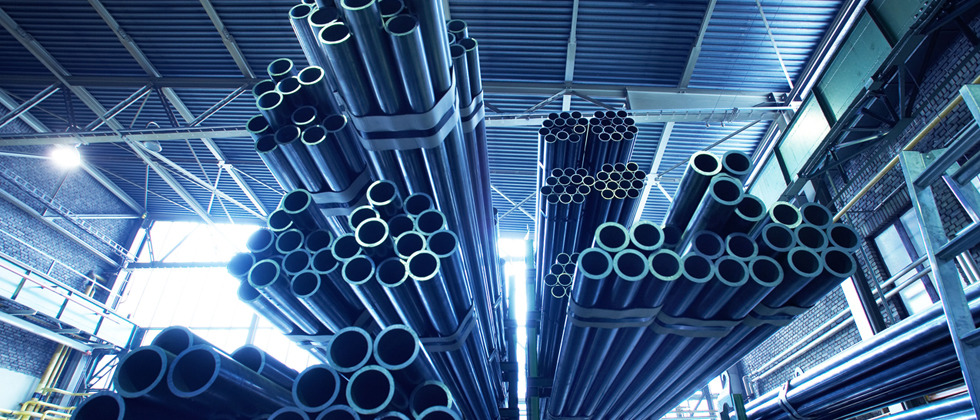
The measures, which were inherited from the EU, cover welded tubes and pipes of iron or non-alloy steel, or WTP, plated or coated with zinc commonly used for heating and plumbing systems in the construction industry.
The TRA found at the time that if the measures were removed, producers in Belarus and China would likely dump these products and cause harm to UK industry, but that Russian producers would not.
Tata Steel UK, a main domestic producer of these pipes, then applied in September 2021 for the TRA to reconsider its decision, saying that it did produce non-threaded WTP plated or coated with zinc and, as a result, wanted galvanized tubes to be included in the measure.
It also said if the antidumping amount was “sufficient” to offset dumping, then the TRA need not consider whether that measure was “necessary” to offset dumping and asked that Russia remain subject to the antidumping measures due to the high likelihood of recurred dumping.
The TRA had investigated these three grounds and said it agreed that these pipes were produced in the UK, but it disagreed with Tata’s “submissions regarding the TRA’s ability to carry out assessments relating to both the necessity and the sufficiency of a measure, and its assertion that conducting a dumping likelihood analysis in the original transition review involved an error of law.”
It also disagreed with Tata that Russia should remain subject to the antidumping measures.
The TRA, therefore, recommended that CN code 7306 30 72, which covers galvanized pipes for use in the gas industry, be included in the antidumping measures and it upheld the original decision to exclude Russia from the antidumping measures.
The TRA said its recommendation would be available from Oct. 12 for 14 days to allow interested parties to consider the findings, with the final recommendation to then go to the Secretary of State for International Trade Kemi Badenoch.
Platts assessed the weekly UK hot-rolled coil price at GBP725/mt DDP West Midlands Oct. 6, down 17.4% from the start of 2022, according to S&P Global Commodity Insights data.
— Jacqueline Holman