

CMC Poland shipments fall amid slowing industrial activity
As a result of the ongoing energy crisis, industrial activity in Central Europe is now contracting, thereby impacting demand for merchant bar and some wire rod products, says CMC. Turnaround in this activity likely depends on the success of the EU’s efforts to lower energy prices from their current historically high levels.
CMC Poland saw steel shipments fall 7% on-year in the fourth fiscal quarter through August to 428,000 short tons. Although rebar rose slightly to 177,000t, merchant and other product sales fell 12% to 251,000st, Kallanish notes.
Average selling price was however up 16% to $888/st, with cost of ferrous scrap utilised down 3% to $435/st. Steel margin thus surged 44% to $453/st. Net sales grew 12% to $412.3 million but adjusted Ebitda was down 5% to $64.1m.
Ebitda fell despite expanded margins due to lower shipment volumes, higher costs for energy and alloys, the negative earnings impact of selling higher-cost inventory, and the impact of the weakening Polish zloty versus the dollar.
Europe end market demand was mixed during the quarter. Polish construction activity continued to grow on a year-over-year basis, while industrial production across Central Europe has contracted for several months, CMC says.
Volumes during much of the quarter were negatively impacted by a supply chain destocking cycle that occurred in the wake of widespread safety stock procurement by end users and intermediaries following the outbreak of war in Ukraine. The purchase of safety stock meaningfully benefited CMC’s shipments during the fiscal third quarter, but the fourth quarter experienced the opposite effect.
“Poland’s trade with EU countries has benefited from a relatively advantageous energy cost position. Whereas the average spot price for electricity was up over 280% on a year-over-year basis across Germany, France and Italy, it was up a more modest 98% in Poland,” CMC chief executive Barbara Smith said during the firm’s August-quarter earnings call.
“With regards to rebar trade within countries outside the EU, little foreign material has entered the Polish market to offset the loss of Russian and Belarusian rebar. Imports have increased significantly into the broader EU but this material has gone to countries that are more logistically accessible and are experiencing higher energy costs,” Smith added.
In the fiscal year through August 2022, CMC Poland sales rose 7% on-year to 1.72 million st, with rebar at 622,000t and merchant and other at 1.1mst. Net sales rose 55% to $1.62 billion and adjusted Ebitda soared 133% to $346.1m.
Adam Smith Poland


Benteler starts Europe’s largest tube galvanizing line
Benteler claims the new plant will be the largest surface treatment centre for tubes in Europe. Following on from the company’s investment in a large-diameter tube galvanizing line for hydraulic line tubes in 2018, the new line is specifically designed for small tube dimensions.
The company points out that demand for environmentally friendly surface coatings has risen sharply recently, especially for smaller tube diameters (10-16mm), and that its latest investment was driven by such customer demand.
In a matter of nine months, the galvanizing line was designed in-house and built in cooperation with companies from the region. In addition to the technical possibilities, resource conservation was the focus of the construction project. The new plant is characterised by comparatively low electricity and water consumption during operation, the company emphasises.
It notes the proprietary coating systems produced at Schloss Neuhaus, such as Zista Seal and Zistaplex, are in demand worldwide. The surface solutions protect components such as hydraulic line tubes from corrosion, thus extending the service life of, for example, construction or agricultural machinery.
Christian Koehl Germany

Italian longs forecast to decline further
Italian long products prices are forecast to decrease in the coming days in both contracts and producers’ asking values. According to sources who spoke to Kallanish, a price slide is the inevitable consequence of a protracted deadlock in market activity.
Consumption continues to decline this month after a weak September, hampering sales of wire rod, rebar and merchant bar. Prices are flat for these products. However, selling small tonnages at high cost of production is unsustainable and larger volumes are needed.
At present, including size extras, contract prices for merchant bar remain at €1,090-1,100/tonne ($1,059-1,069) ex-works. Wire rod is at €850/t ex-works for drawing-quality material, sources suggest.
Rebar prices have also decreased to the level of €600/t base ex-works, meaning €860/t including size extras, and values are forecast to continue to decline this week. Demand for sections continues to be sustained, despite lower prices being offered by other European producers. Beam contract values for the first category remain flat at €1,220-1,230/t ex-works, depending on tonnage.
Natalia Capra France

German gas cap comes too slowly: end users
A working group set up by the German government to discuss curbing exploding gas prices has presented a proposal to introduce a price limit for 70% of industrial gas consumption next year. The proposal has been welcomed by steel industry interest groups, but steel users, especially, claim the 2023 schedule for price caps is not soon enough.
“The working group’s proposal to limit gas prices for the base consumption of industries in 2023 is an essential pillar for companies to bridge this painful energy crisis,” says German steelmakers federation WV Stahl. Relief was also expressed by the head of the country’s biggest steelmaker, thyssenkrupp Steel. “This proposal should be implemented. It provides us with planning security for investments and upcoming tasks,” Bernhard Osburg was quoted as saying by Reuters.
Further downstream, steel users are more sceptical. While welcoming the gas price brake in principle, fabricators federation WSM warns it ought to come faster. “It provides some buffering on a stony road, but the dry spell until the end of the year is still long,” Kallanish hears from managing director Christian Vietmeyer.
He notes that companies have already reached the limit of what they can achieve by lowering production or using different sources of energy. On energy prices, he anticipates that in the long run, “the new normal will be above the level of former days”.
Christian Koehl Germany

Poland’s rebar prices soften amid subdued demand
Rebar prices in Poland dipped again in the week to Friday October 14 amid sluggish construction demand, sources told Fastmarkets.
Polish producers were prepared to offer discounts during the week to spur buying activity.
Offers for small tonnages were reported at 4,050 ($816) zloty per tonne cpt – about 4,000-4,020 zloty per tonne exw – on Thursday, sources said. That is down from 4,100 zloty per tonne delivered targeted in the first half of this week.
Trading activity improved slightly toward the end of the week, though traded volumes remained low, sources said.
“The beginning of the week was a disaster, but now demand picked up a bit. Maybe buyers have accepted that prices will not go any lower,” a trading source told Fastmarkets.
In general, buyers do not expect domestic rebar prices to slide below 4,000 zloty per tonne exw this month, but some downward correction is possible in November.
Sustained weakness in the construction industry – the key consumer of rebar – was cited as the main factor depressing the market.
“The problem is still the same. There is a shortage of projects in the construction sector. There are a few, but not enough to push [rebar] demand up,” another trading source said.
Fastmarkets’ price assessment for steel reinforcing bar (rebar), domestic, exw Poland was 4,000-4,070 zloty per tonne on Friday, down by 30-70 zloty per tonne from 4,070-4,100 zloty per tonne a week earlier.
The assessment was based on deals, lower offers and market sources’ estimates of achievable prices.
In the secondary market, steel rebar was traded at 4,070-4,100 zloty per tonne cpt during the week to Friday.
Published by: Julia Bolotova


Steel slab suppliers to Italy seek higher prices, buyers hold back
Steel slab suppliers to Italy were targeting higher prices in the week to Friday October 14, while buyers resisted an increase amid a weakening finished steel products market, sources told Fastmarkets.
In general, import slab offers to Italy were reported mainly at $600 per tonne cfr and higher in the week to Friday.
Notably, India-origin slab with December shipment was offered to the nation at $620 per tonne cfr, while an offer from Indonesia was heard at $610 per tonne cfr.
A supplier from South Korea was targeting a level of $590-600 per tonne cfr, after having concluded several deals for sizeable tonnages at $560-570 per tonne cfr in early October.
One market source, however, reported a transaction for South Korean slab done at $590 per tonne cfr during the week to Friday, but it was not widely concluded by other sources.
The highest bids from the re-rollers in Italy were reported at $580 per tonne cfr, while trading sources agreed that the workable price level for import slabs in Italy would be “below $600 per tonne cfr.”
“The plate market is very weak, there is a lot of pressure from buyers to decrease prices,” a trading source said.
As a result, Fastmarkets’ weekly price assessment for steel slab, import, cif Italy, was $580-590 per tonne cfr on Friday, up by $20 per tonne from $560-570 per tonne on October 7.
The assessment was a reflection of bids, lower end of offers, and market sources estimations of achievable prices.
Published by: Julia Bolotova

Tata Steel UK reduces energy use at Port Talbot with laser technology
The UK’s largest steel producer Tata Steel is cutting the energy use and the carbon footprint of the hot rolling mill at its Port Talbot plant in South Wales by using laser technology at the site’s two slab re-heating furnaces, it said Oct. 14.
The technology also improved product quality and consistency, it said, adding that the site’s furnaces were the first digitally fired furnaces globally to use the technology.
The installed laser sensors analyze slab heating furnaces molecule by molecule to measure the combustion products and the temperature profile of the furnace to produce live visual data, Tata Steel Process Technologist Jonathan Richards said.
“Heating slabs to the correct temperature is critical to ensure the metallurgical properties match the requirement of our customers,” he said, adding that the system also allowed the company to monitor and control gas usage more accurately, saving energy and costs and reducing the carbon footprint.
The furnaces are fueled by around 60% natural gas supplemented with around 40% process gases from the operation’s coke ovens, according to Tata.
“Our energy usage has fallen dramatically and this work has helped the business reduce more of its carbon footprint,” Richards said.
The technology can also narrow down issues to any of the 56 burners in each furnace, which will allow for more efficient planning ahead of maintenance stops, cleaning and calibrations, he said.
Tata worked with Koch Engineered Solutions’ technology company OnPoint Digital Solutions to perfect the solution, the company said.
The solution used OnPoint’s ZoloSCAN laser technology, OnPoint Service Manager and Engineer David Brinkmann said, which provides laser-based combustion monitoring and diagnostic capabilities for ultra-harsh environments to optimize the yield, efficiency, and safety of combustion applications, according to the company’s website.
Tata plans to make the process a closed loop operation as part of the next phase of the project, with the system detecting anomalies and automatically adjusting the furnace gas flows to ensure optimum energy efficiencies, it said.
Port Talbot is the UK’s largest steel plant and is around 81% energy self-sufficient, using gases from its blast furnaces, steel plant and coke ovens to generate heat and electricity through its on-site power plant, according to Tata.
Tata Steel aims to produce net-zero steel in the UK latest by 2050 and have CO2 emissions reduced by 30% by 2030.
Tata Steel UK has a designed steelmaking capacity of 5 million mt/year and produces around 3.5 million mt/year.
Platts, part of S&P Global Commodity Insights, assessed the weekly UK hot-rolled coil price at GBP700/mt ($783.74/mt) DDP West Midlands Oct. 13, down 15.7% from the start of 2022.
— Jacqueline Holman

TURKEY DATA: Aug HDG exports slump on limp demand, EU duty
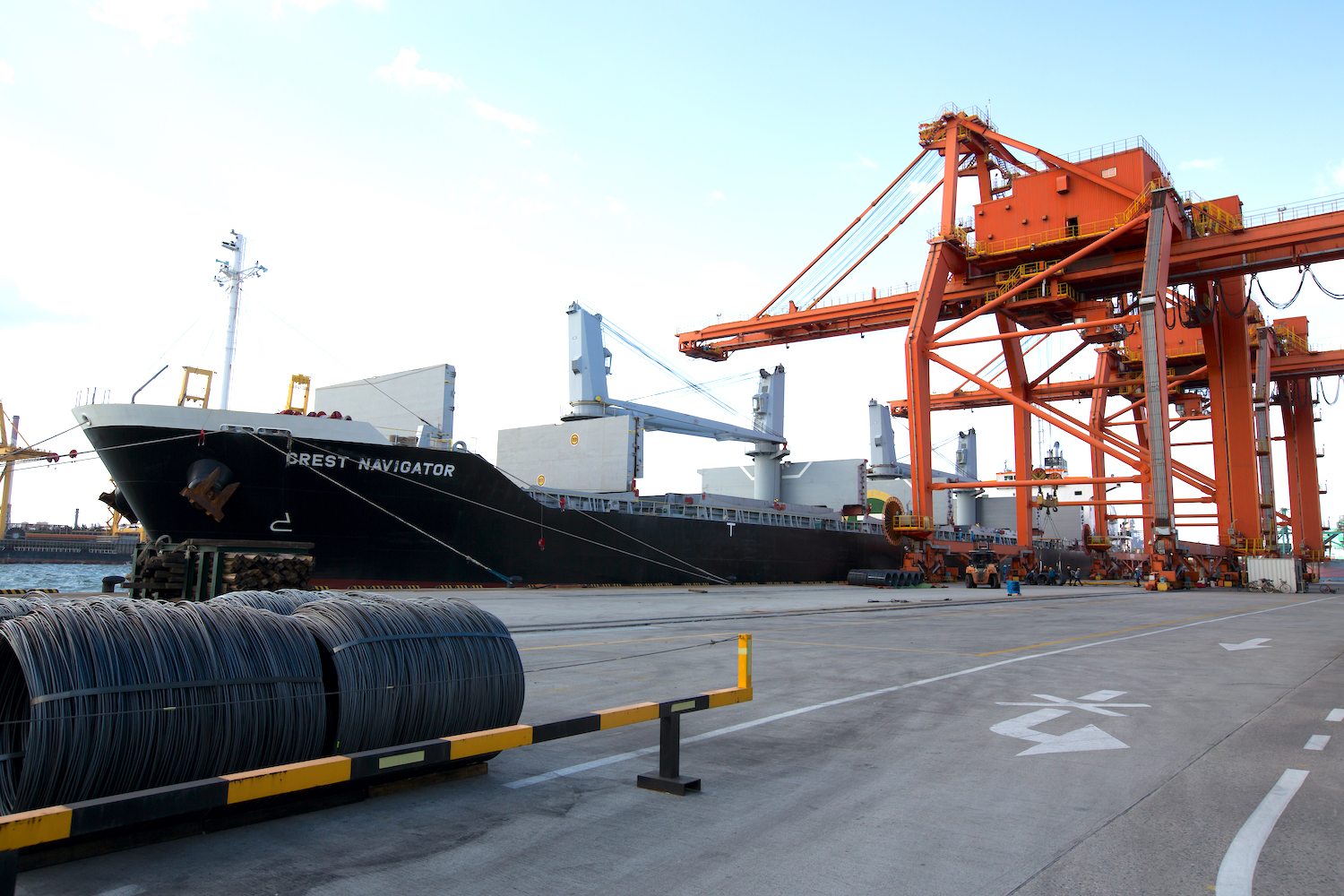
Turkey’s coated steel coil exports, mostly hot-dip galvanized coil, slumped 50% both month on month and year on year to 117,800 mt in August, as exports to the EU dropped following the European Commission’s Aug. 12 decision to impose antidumping duties on hot-dip galvanized steel coils and sheets from Turkey and Russia.
EU HDG imports from Turkey are subject to antidumping duties of 10.5% for MMK Metalurji, 2.4% for Tatmetal and 11% for all other companies, effective for five years.
The UK became Turkey’s top coated coil export market in August at 19,650 mt, up from zero a year ago, according to the latest Turkish Statistical Institute data.
Despite a 53% year on year decline the US was Turkey’s other top export market at 8,000 mt.
The sharpest declines were seen in exports to South European countries, which were Turkey’s main HDG markets a year ago.
Turkey’s coated coil exports to Spain totaled 4,600 mt, down 92.5% year on year, while exports to Italy dropped 66.5% to 6,300 mt.
Shipments to Romania dropped 46% to 7,300 mt and exports to Greece fell 43% to 6,400 mt.
The total revenue generated from the August exports fell 56% on the year to $130.8 million, according to the data.
Platts assessed the weekly Turkish domestic HDG price at $840/mt EXW Oct. 7, down from the intra-year high of $1,400/mt reached in mid-March, according to S&P Global data.
— Cenk Can

EU HRC trading activity subdued despite steelmaker discounts
Trading activity remained subdued in the European hot-rolled coil market Oct. 14 despite discounts from steelmakers.
High inventories with distributors, destocking by the year’s end, and subdued demand from end-consumers, including the automotive industry, have led to weak consumption.
“Demand is still low, we hear lower prices every day but in the end no deals closed,” a German distributor said. “There are rumors that prices will go down further, and stockholders and steel service centers are not motivated to place orders.”
Platts assessed Northwest HRC down Eur10 on the day at Eur670/mt ex-works Ruhr Oct. 14.
Northern European distributors estimated tradable value at Eur650-Eur700/mt ex-works Ruhr.
A German service center said maximum achievable prices are at Eur700/mt ex-works Ruhr.
A steelmaker cited tradable value at Eur650/mt ex-works Ruhr, and another mill said Eur650-Eur700/mt ex-works Ruhr.
A Central European buyer cited a deal with a German steelmaker at Eur700/mt ex-works Ruhr. Deals at that price were unlikely to be achieved in Germany, sources said.
“There is a glimpse of hope for the mills that demand could rebound as distributors would restock for the first quarter, but in reality, the stocks are still too high and this is not going to help the prices and order books,” a Northern European distributor said. “Raw materials are more expensive, and demand is low, nonetheless the mills keep furnaces running and they chose to decrease prices. But such approach will not solve the problem.”
In Southern Europe, Platts assessed domestic HRC down Eur15/mt day on day at Eur785/mt ex-works Italy.
The assessment was based on deals at Eur680-Eur690/mt ex-works Italy. Some buyers also cited tradable value at Eur650/mt ex-works.
Market participants said most European mills have already decreased HRC prices to the level below production costs and the negative trend is unlikely to end soon.
Platts assessed import HRC in Southern Europe stable on the day at Eur750/mt CIF Italian ports.
The assessment was based on offers heard at Eur650-Eur660/mt CIF Italy for material originating from Japan, South Korea, and Indonesia.
Platts is part of S&P Global Commodity Insights.
— Maria Tanatar, Benjamin Steven

EU plate prices down as mills chase orders
Domestic prices for heavy plate have declined in the week to Oct. 14 as mills have been cutting offers to secure sales.
Demand has slowed down in October as majority of the buyers have secured required stocks and some mills have reduced prices to secure order books.
Platts assessed plate in Northern Europe down Eur10/mt on week, at Eur1050/mt ex-works Ruhr.
Offers and tradable value for the material from German mills have been heard at Eur1,000-1,100/mt ex-works Ruhr.
In Northern Europe, a Danish producer has been reported to give competitive offers for plate at Eur950/mt ex-works. But the buyers’ interest in the material and impact from competitive prices have been limited as Russian slab have been used as feedstock, market sources said.
“A lot of buyers try to avoid plate produced from Russian slab, mainly due to either self-sanctioning or due to concerns about new sanction the EU might impose,” a Northern European distributor said.
On Oct. 6, the European Commission introduced latest round of sanction against Russia, under which Russia-origin slab and billet import into the EU can continue until 2024 on quota basis.
Italian re-rollers have been trading heavy plate at Eur910-920/mt ex-works with buyers looking for bigger lots and at Eur950-970/mt ex-works with smaller buyers.
As a result, Platts assessed plate in Southern Europe down Eur20/mt on week, at Eur940/mt ex-works Italy.
“There is almost no room for further decrease of plate prices,” an Italian re-roller said. “Although slap prices went down, re-rolling production costs have also jumped this year.”
Platts assessed import slab in Southern Europe at $600/mt CIF Italy Oct. 14, down $20/mt over the week.
A deal for South Korea-origin slab has been reported at $600/mt CIF Italy.
Offers of slab from Russia, Asia and Brazil have been heard at $650/mt CIF Italy, while bids have been reported at $580/mt CIF Italy.
Platts is part of S&P Global Commodity Insights.
— Maria Tanatar, Benjamin Steven