


STEELFORCE joined as member of EUROMETAL

We are pleased to inform you that STEELFORCE joined as member of EUROMETAL.
STEELFORCE is an independent global steel trader handling 2.5 million tons from 25 sourcing countries to 95 destination countries. With its foundations dating back to 1950, the name STEELFORCE was established in 2006 after the merger of 3 independent trading companies to create a global trading company.
Today, STEELFORCE has a strong presence across the global steel markets (Africa, Americas, Asia and Europe) as well as niche markets such as tinplate.
STEELFORCE’s role in the global steel trade is to always offer competitive and adequate solutions to both buyers and sellers taking into account the daily changing market trends all over the world, relying on an extensive historical network and on the in depth market know how of our staff. To enable the delivery of steel, we support our counterparts with financial solutions and logistical services to ensure our customers get the material they need, when they need it and in the way they need it.

Website: steelforce.eu

Norwegian entrant Blastr, Cargill eye green steelmaking venture
A relatively new company named Blastr Green Steel has struck a memorandum of understanding with Cargill to work together to supply steel made in the Nordic region without using fossil fuels.
Norway-based Blastr was founded and is backed by Vanir Green Industries. a Nordic investment company that invests in, develops and scales green, robust and profitable businesses for the energy transition. The venture plans to establish production facilities in the Nordic region, citing deep ice-free ports as well as a highly qualified workforce as advantages. Its green steel project is expected to be one of the largest industry start-ups in the Nordic region, the company claims.
Blastr echoes the ambition set forth by Swedish group H2 Green Steel (see separate story), and it has had little public exposure prior to the agreement with Cargill, which was announced on Monday.
The agreement foresees that Cargill Metals will bring expertise in raw materials sourcing, and its global capabilities in ocean transportation and logistics, as well as development of green products for market, risk management and financing. Blastr is to contribute industrial decarbonisation expertise, entrepreneurial business skills, track record and access to capital within green energy and CO2 abatement, Kallanish learns from a statement issued by Cargill.
The group highlights its ambition to develop world leading projects in the green steel supply chain through the expedient development of initial production and then incrementally expand capacity.
The people behind Blastr previously worked for Nordic companies like LKAB, Outokumpu, Norsk Hydro, or Elkem.
Christian Koehl Germany


Stainless flats prices, demand continue to improve
Sales activity for European stainless steel coil, sheet and tube continues to be sustained in October after a dynamic September following a long period of market weakness, sources in the sector tell Kallanish.
Flat product prices are increasing by some €50-100/tonne ($48-97) this month, depending on product and tonnage. Re-rollers and service centres throughout Europe say orders and shipments are at higher levels compared to last month. However, the flow of tube orders continues to be inconsistent.
European stainless cold and hot rolled coil is increasing by some €100/t compared to last month. The increases and prices heard in the market are for November and December delivery, but mills are not quoting prices for January. In northern European countries, both HRC and CRC remain above the level of €3,000/t delivered, at about €3,000-3,100/t for HRC and €3,200/t for CRC. Values are slightly lower in southern Europe, where HRC is sold at €2,550-2,600/t, thanks to import competition, and CRC is at €3,050-3,100/t delivered.
At current coil sales values and amid skyrocketing costs, steelmakers are said to be selling nearly at a loss. Because of the margin squeeze, some mills are only producing when they have orders, and they all continue to implement stoppages to save on energy bills. Sources expect CRC prices in Europe to increase in January to €3,500/t and possibly €4,000/t delivered. European steelmakers may not be able to produce at prices below this, given current energy and raw material prices, sources believe.
Demand for coil, flats and tube products was extremely weak in the May-August period in Western and southern European countries. It has improved significantly in September and October. The European market is expected to gain further traction in January as some balance should be restored in first-quarter demand.
Natalia Capra France

Disappearing Indian demand worries Benelux scrap exporters
Benelux exporters, previously reliant on Asian scrap demand amid slow Turkish buying, are exercising caution following the slowdown in Indian scrap demand and lower prices in Turkey last week.
While most exporters are refraining from building stocks amid uncertainty, instead just watching the market, some exporters need to buy and are seen paying €320/tonne ($314) delivered for HMS 1&2 80:20. Although suppliers are targeting €330/t and above, they seem to have started to panic as there is no longer any support from demand, following worsening sentiment and lower Indian interest.
In Turkey, two EU-origin HMS 1&2 80:20 deals were heard done last week at $363/t and $367/t cfr Turkey. The price difference between the deals arises mostly from the origin as Turkish mills usually pay a premium for ex-Germany material.
A Benelux supplier tells Kallanish: “We are at €320/t today but the flow is very weak. Even if the material does not come, we will decrease our dock price anyway.”
Although European suppliers are targeting to sell HMS 1&2 80:20 at above $365/t cfr, Turkish mills’ price targets are even lower than the latest deal values. Most market players believe prices will drop to $350/t cfr levels in the coming days as Turkish mills are pushing scrap values down amid high production costs, lacklustre steel sales and pressured steel prices. Moreover, the number of scrap offers seems to have increased in the Turkish market, while crude steel production continues to decrease.
One Turkish mill says: “Actually, a fall in prices was inevitable in Turkey, but suppliers, referring to Indian demand, were trying to hold prices firm. Even though they also knew that Asian demand is far from being able to replace Turkey’s volumes, they were holding on to it. Now that they have lost their only weapon, we will see what happens.”
In India, containerised shredded offers stand at $450-455/t cfr Nhava Sheva levels, unchanged on-week. Demand, however, decreased remarkably compared to previous weeks.
Burcak Alpman Turkey
Tata Steel seeks UK government aid to support green transition
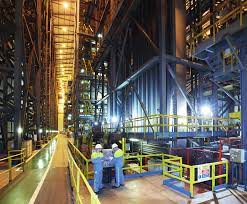
India-based steel producer Tata Steel is looking to the UK government to provide favorable policies and fiscal support to help the transition to green steelmaking at the Port Talbot works in South Wales, Fastmarkets heard on Monday October 17.Tata owns the Port Talbot plant, the largest remaining steelworks in the UK. It hopes that the UK government will provide a £1.5 billion ($1.68 billion) fiscal package while it faces weak market conditions, increasing production costs and significant pressure to move toward more sustainable methods of steel production.
The weak market and the other challenges faced by steel producers across Europe and the UK have resulted in calls from various parts of the UK steel industry for government support.
Without such support, and given the challenges, business for Tata Steel in the UK could lose viability, Fastmarkets heard.
The steel producer’s call for government support was a reflection of the difficulties faced by producers trying to invest significantly into technologies whose benefits would only be felt in the long term, while market conditions were still depressed and the outlook remained highly uncertain.
“Tata Steel is in active and detailed discussions with the UK government with relation to the future of the UK business,” a Tata Steel spokesperson told Fastmarkets. “Tata Steel is not currently in any discussions with potential buyers for the UK business.”
To remain viable while transitioning to green steel production, the Port Talbot plant would require significant investment into alternative technologies, as well as favorable policies that would help it to remain competitive while it transitions to green steel methods of production, a spokesperson for the company said.
Tata Steel has been responsible for hiring 8,000 employees across the country. If it were to withdraw from the UK steel industry, there would be a decrease in the country’s steel output as well as a considerable loss of jobs. This in turn could increase the price of domestic supply or result in a greater reliance on imports, Fastmarkets heard.
The green steel transition is in line with the company’s goal to produce exclusively carbon-neutral steel in the UK and its other assets in Europe by 2050.
Published by: India-Inés Levy


European HRC market remains quiet despite lower offers
The European hot-rolled coil market remained quiet on Monday October 17, with discounts granted by some suppliers failing to spur trading activity, Fastmarkets heard.Fastmarkets calculated its daily steel HRC index, domestic, ex-works Northern Europe, at €683.75 ($664.65) per tonne on Monday, down by €16.25 per tonne from €700.00 per tonne on Friday.
The latest calculation of the index was down by €43.75 per tonne week on week and by €86.25 per tonne month on month.
Most buyers indicated a tradeable price for HRC in the region between €660 and €700 per tonne exw.
Transactions were reported at €660-670 per tonne exw, in line with offers from some integrated mills in the region.
Some producers cut their offers last week to fill gaps in their order books, Fastmarkets reported. Despite that, trading activity in the region has remained sluggish.
“Buyers are staying on the market sidelines. They have enough [HRC] in stock to wait,” a trading source in Germany said.
“The price decline actually flustered buyers. There is a lack of clarity, and a lack of understanding what the price bottom should be,” another source added.
Fastmarkets’ calculation of its daily steel HRC index, domestic, exw Italy, was €687.50 per tonne on Monday, down by €12.50 per tonne from €700.00 per tonne on Friday.
The latest calculation of the Italian index was down by €35.00 per tonne week on week and down by €75.83 per tonne month on month.
Distributors and stockholders in the nation estimated the tradeable price for HRC around €680-690 per tonne exw, although offers from local mills were still heard at €700 per tonne exw.
Producers were said to be ready to give discounts for reasonable tonnages, but Italian buyers preferred to hold back from trading.
Published by: Julia Bolotova
H2 Green Steel chooses SMS group as technology partner
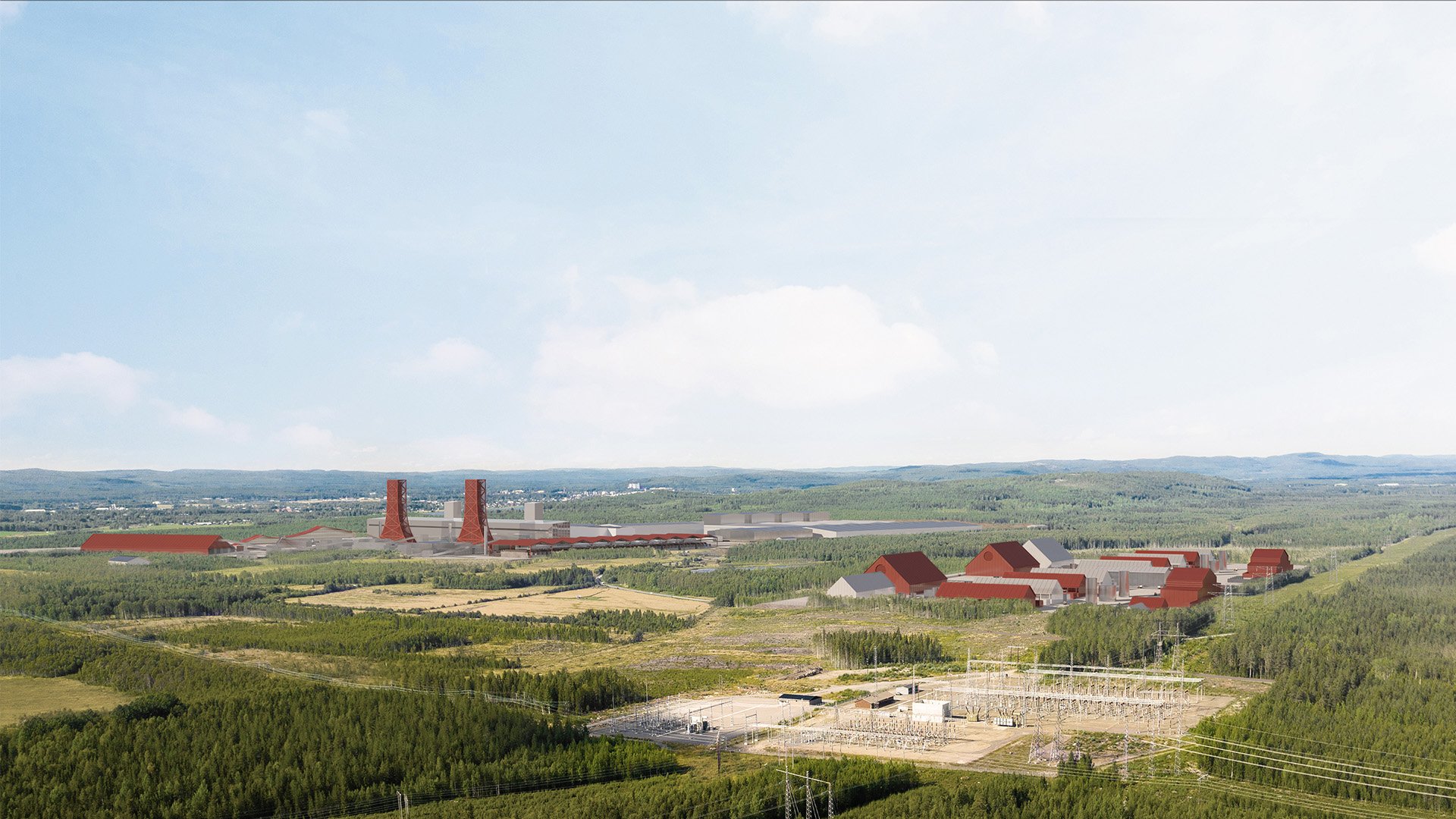
H2 Green Steel has selected metallurgical plant manufacturer SMS Group to supply process technology for its low carbon steel plant in northern Sweden, the company said Oct. 17.
H2 Green Steel is developing a green hydrogen powered plant in Boden that will produce 2.1 million mt/year of hot direct reduced iron and hot briquetted iron to feed an initial production of 2.5 million mt/year of low carbon steel, potentially increasing to 5 million mt/year by 2030.
SMS will deliver the process equipment for the electric arc furnace, or EAF, and the casting and cold and hot rolling plant.
The total order volume for SMS group exceeds Eur1 billion ($970 million) and includes the earlier announced order awarded to SMS’s wholly owned subsidiary Paul Wurth and its consortium partner Midrex.
“Hydrogen-based green steel is the future of primary steelmaking, and we are all working full speed ahead to deliver the key technologies to start a new era of steelmaking. We are excited to continue the partnership with the H2 Green Steel team and looking forward to the joint realization of this lighthouse project,” SMS Group CEO Burkhard Dahmen said.
“We have jointly designed the plant to make a significant CO2 reduction throughout the whole steel plant in a way that will set us apart from others in the market,” H2 Green Steel CTO Maria Persson Gulda said.
H2 Green Steel’s process will remove up to 95% of carbon emissions compared to traditional steelmaking with a blast furnace and using iron ore.
The Platts 62% Fe iron ore index was at $96.15/dry mt CFR North China on Oct. 14, down 19.5% since the start of 2022. Platts is part of S&P Global Commodity Insights.
— Annalisa Villa


Salzgitter, Sunfire complete EU-funded green hydrogen project
Steelmaker Salzgitter and electrolysis manufacturer Sunfire have successfully complete their EU-funded Green Industrial Hydrogen, or GrInHy2.0, project after four years with a record production of almost 100 mt of green hydrogen for the production of green steel, the companies said Oct. 17.
To date, almost 100 mt of green hydrogen gas produced has been fed directly into the hydrogen grid of Salzgitter’s Flachstahl mill in Germany to be used in the annealing processes and galvanizing plants for steel finishing.
Since 2019, the project partners have been operating a high temperature electrolyzer from Sunfire with an electrical connected load of 720 kW on the premises of the Flachstahl mill.
“GrInHy2.0 is an important part of our SALCOS project for CO2-reduced steel production,” Salzgitter Mannesmann Forschung Head of Department Efficiency of Resources and R&D Coordination Alexander Redenius said.
SALCOS is Salzgitter’s low CO2 steelmaking program.
“Green hydrogen is essential for producing low-CO2 steel, as it reduces carbon emissions very efficiently,” Redenius said. “With GrInHy2.0, we have gained valuable insights into the integration of electrolysis into our production processes,” he added.
The partnership between Sunfire and Salzgitter will continue beyond the GrInHy2.0 project, they said.
“For the transformation of steel production towards hydrogen-based processes, the criteria of availability and cost-effectiveness are becoming increasingly important. Therefore, high-temperature electrolysis is a very interesting technology in the field of steel production, which we will continue to support intensively,” said Redenius.
At the start of 2022, the Sunfire electrolyzer set new efficiency standards by being able to demonstrate an electrical efficiency of 84% el,LHV, or lower heating value, which corresponds to an energy requirement of 39.7 kWh/kg H2, for the first time due to its innovative solid oxide electrolyzer cell, or SOEC, technology, according to the companies.
“Projects like this lay the foundation for rapidly scaling electrolysis technologies worldwide,” Sunfire CTO Christian von Olshausen said, adding that the company had gained valuable insights for further technical development.
The SMS group company Paul Wurth, Tenova and the French research institution CEA were also part of the GrInHy2.0 project, which received funding from the EU’s Fuel Cells and Hydrogen 2 Joint Undertaking, now called the Clean Hydrogen Partnership.
Hydrogen is used in low carbon steelmaking to power electric arc furnaces, which also use iron ore in the steelmaking process.
The Platts 62% Fe iron ore index was at $96.15/dry mt CFR North China on Oct. 14, down 19.5% since the start of 2022. Platts is part of S&P Global Commodity Insights.
— Annalisa Villa

Back-to-back trading seen in low-demand EU HRC market
Hot-rolled coil prices in the European market declined the week beginning Oct. 17 as distributors continued attempts to deplete stocks amid poor steel consumption.
Platts assessed hot-rolled coil in Northwest Europe down Eur10/mt on the day at Eur660/mt ex-works Ruhr.
Market participants generally regarded the tradable level as within Eur650-670/mt ex-works Ruhr, as confirmed by both buy- and sell-side sources.
“Buyers are still focused on destocking — there is some limited back-to-back trading, but no restocking activity,” a mill source said. “Maybe we’ll see some improvement in demand next year.”
Mills were heard attempting to avoid further furnace stoppages due to costs and time elements, compounded by unpredictability both in the steel market and the wider global economy.
Given the proximity between domestic and import prices, buyers showed no interest in foreign material given the lack of competitive values and long lead times.
Buyers were heard bidding at Eur610-620/mt CIF for imported coil against offers higher at Eur650/mt CIF — within the range of achievable prices perceived in the domestic European market.
Workable prices for Italian HRC were still heard at a premium to German tradable levels, heard at Eur670-680/mt ex-works Italy Oct. 17. As such, HRC in Italy was assessed down Eur5/mt on the day at Eur680/mt EXW.
Platts is part of S&P Global Commodity Insights.
— Benjamin Steven, Maria Tanatar