


Europe’s energy crisis cuts off US flat steel exports: LME Week
Europe’s spiraling energy costs have choked off flat steel exports to the United States, while buyers continue to shun overseas material amid declining domestic prices and ample local availability.Imported flat-rolled steel products have been non-competitive in the United States for several months now, with domestic steel prices continuously softening and lead times remaining short, several market participants told Fastmarkets.
The current lead time for domestically produced hot-rolled coil in the United States is four weeks, and cold-rolled coil and hot-dipped galvanized lead times are at five to seven weeks.
“The foreigners are not even offering steel,” a US-based steel distributor said. “Next shipments of foreign products are [in] January 2023.”
“We have not seen any import deals that we would consider,” a US consumer said.
A plate consumer said he had “not heard any plate offers coming from [the European Union], barring for one or two niche products,” in the last several weeks.
“The German mills are completely out of the US import plate market, and I have not heard a single Italian plate offer in two months,” the plate consumer said.
European flat steel producers have been squeezed between high production costs and low demand.
“We cannot really be flexible with offers, because [production] costs bite: energy, carbon permits, labor, transportation – everything went up drastically,” a mill source in Italy said.
For example, in September 2022, average electricity prices in Italy were around €543.15 ($531.40) per MWh, up from about €112.40 per MWh in August 2021, according to local energy service company Gestore dei Mercati Energetici.
In August 2022, the average wholesale price of electricity in Germany surpassed €500 per MWh for the first time in history, sources told Fastmarkets.
Faced with these unprecedented energy price rises, European steel mills started to increase their prices in September, but failed to achieve targeted levels due to persistently weak demand.
During the month of September, a number of EU mills announced production cuts, but sources said that more capacity needs to be brought offline to balance supply and demand.
According to Fastmarkets estimates, about 14-15 million tonnes of steelmaking operations in Europe have been taken offline.
Fastmarkets calculated its daily steel HRC index, domestic, ex-works Northern Europe at €683.75 per tonne on Tuesday October 18, unchanged from the previous day.
The index was down by €35.00 per tonne week on week and by €86.25 per tonne month on month.
Prices for most flat-rolled steel grades imported into the US have been under pressure for months.
Fastmarkets’ fortnightly assessment for steel hot-rolled coil, import, ddp Houston declined by 6.41% to $700-760 per short ton ($35-38 per cwt) on October 12, from $760-800 per ton on September 28.
Fastmarkets’ assessment for steel medium plate, import, ddp Houston fell by 3.17% to $1,350-1,400 per ton from $1,400-1,440 per ton in the same comparison.
Steel import licenses into the United States fell both month on month and year on year in September, according to data from the US International Trade Administration’s steel import monitoring system.
Apart from Europe, flat-rolled steel import offers from Turkey into the United States have been unattractive as well, due to rising Turkish prices and lukewarm appetites for long lead times associated with overseas material.
“HRC prices are going up internationally whereas domestically the prices are softening in the United States,” a Turkish exporter told Fastmarkets.
“For Turkey, compared to last year, and even compared to three to four months ago, export demand is very weak,” the exporter said. “The EU market is totally closed, and domestic demand in Turkey is not good as well. The energy crisis is affecting the Turkish export markets.”
Published by: Julia Bolotova, Rijuta Dey Bera

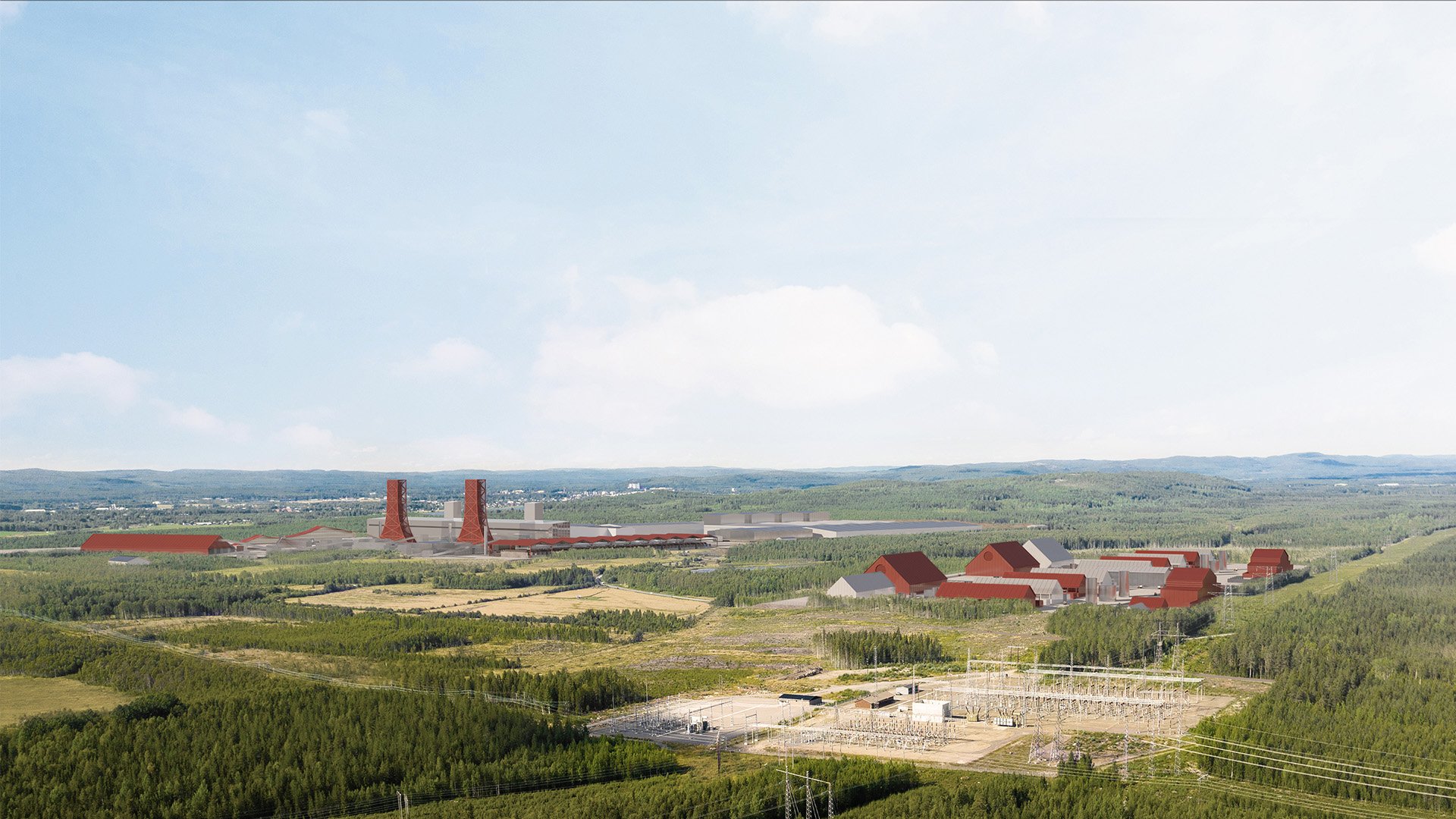
Sweden’s H2 Green Steel raises Eur260 mil for low carbon steel plant development
Swedish low carbon steel developer H2 Green Steel has secured Eur260 million ($255.2 million) in equity funding via a private placement to fund the development of its low carbon steel plant in Sweden, the company said Oct. 19.
H2 Green Steel is building a green hydrogen powered steel plant in Boden, northern Sweden, that will have an initial production of 2.5 million mt/year from 2025, potentially increasing to 5 million mt/year by 2030.
The company’s process will remove up to 95% of carbon emissions compared with traditional steelmaking with a blast furnace and iron ore.
The Platts 62% Fe Iron Ore index was at $94.80/dry mt CFR North China Oct. 18, down 20.7% since the start of 2022. Platts is part of S&P Global Commodity Insights.
The company has presold about 60% of its initial volumes to a range of European customers in a broad range of sectors, it said.
H2 Green Steel raised Eur190 million in an August funding round and an initial Eur86 million in May 2021.
The latest round of funding added Eur70 million in new investments from Hitachi Energy, Swedish investment company Kinnevik, an unnamed climate-focused institutional investment fund, and Japanese steelmaker Kobe Steel, with the latter’s investment announced earlier in October.
“Our investors are leaders in their respective fields and at the forefront of enabling the change required to meet our climate targets,” H2 Green Steel CEO Henrik Henriksson said.
The company received a permissibility permit in July, with plant construction progressing steadily.
— Jacqueline Holman


Cold-rolled coil, hot-dipped galvanized prices under pressure in ‘phantom’ EU market
Competitive import offers, declining hot-rolled coil prices and poor demand are restricting the potential for the recovery of cold-rolled coil and hot-dipped galvanized prices, steel, market sources said Oct 19.
The CRC and HDG markets continue to be plagued by muted activity across Europe, described by one trader source as “phantom markets.”
“Domestic demand for downstream coils is zero, at least for domestic material,” agreed another trader. “End consumers are not looking for volumes, and imports are available competitively.”
Foreign mills were heard as offering competitively into both North and South Europe, in a range of Eur710-740/mt CIF Antwerp and Southern Europe.
In addition, weakening HRC prices resulted in little to no potential for a rebound in downstream coils, assessed down Eur40/mt on week in Northern Europe.
Platts assessed North European CRC down Eur20/mt on week, at Eur800/mt ex-works Ruhr. In South Europe, CRC was assessed down Eur30/mt at Eur810/mt ex-works Italy.
Platts assessed HDG stable in Northern Europe at Eur850/mt ex-works Ruhr, while South European HDG moved down Eur20/mt at Eur840/mt ex-works Italy.
Some mills were heard as opening offering for the first quarter of 2023 at higher price levels for January delivery coil due to expectations of demand recovery, at around Eur50/mt higher than current offer levels.
Platts is part of S&P Global Commodity Insights.
— Benjamin Steven, Maria Tanatar

Global steel demand to drop 2.3% on year in 2022: worldsteel
Steel demand is expected to drop 2.3% year on year in 2022 to 1.8 billion mt and then only recover 1% in 2023 to 1.815 billion mt, the World Steel Association said in its short-range outlook update released Oct. 19.
In April the association had forecast 2022 demand to grow 0.4% to 1.84 billion mt, after increasing 2.8% in 2021, and 2023 demand to rise a further 2.2% to 1.88 billion mt.
The global economy had been hit by inflation, US monetary tightening, China’s economic deceleration and Russia’s invasion of Ukraine, worldsteel Economics Committee Chairman and Ternium CEO Máximo Vedoya said, with the demand forecast revised lower due to high energy prices, rising interest rates and falling confidence resulting in a slowdown in steel-using sectors.
“The prospect for 2023 depends on the impact of tightening monetary policies and central banks’ ability to anchor inflation expectations,” he said.
“Particularly the EU outlook is subject to further downside risk due to the high inflation and the energy crisis that have been exacerbated by the Russia-Ukraine war.”
Europe’s potential gas supply crisis was also a downside risk and, while supply chain problems had partially eased in 2022, they also continued to constrain production due to emerging new disruptions, the association said.
“Assuming that the war will not end soon and China continues to maintain its strict COVID containment policy for the time being, supply bottlenecks will not dissipate completely, despite slowing demand,” worldsteel said.
In China, the association forecast that steel demand was likely to drop 4% on the year, after it fell 6.6% in the first eight months of 2022 due to repeated COVID lockdowns cooling the country’s economy and a deepening slump in the property market.
In 2023, steel demand in China was expected to remain steady, assuming that small new stimulus measures were introduced, lockdown measures were largely removed and new infrastructure projects and a mild recovery in the real estate market could prevent further demand contractions.
Developed world demand to fall 1.7% in 2022
Steel demand in the developed world was forecast to fall 1.7% in 2022 and inch up 0.2% in 2023, after recovering by 16.4% in 2021 from the pandemic dip of 12.3%, worldsteel said.
This was down from April’s forecast of a 1.1% increase in 2022 and a 2.4% jump in 2023.
Steel demand in Europe was expected to drop 3.5% year on year in 2022, due to with high inflation and the energy crisis, as well as the Ukraine war causing supply-chain issues.
European steel demand was expected to contract further in 2023, worldsteel forecast, saying there were no immediate improvements in the gas supply situation in sight and there was significant downside risk in the case of a harsh winter or further energy supply disruptions.
However, worldsteel said there was some upside potential in 2023 if the Ukraine war ended sooner than expected.
In the US, worldsteel said it did not expect steel demand to turn into a contraction, as the automotive sector was expected to maintain positive momentum on the back of pent-up demand and easing of supply chain constraints, the new infrastructure law was due to boost infrastructure investment and rising energy sector investment would support steel demand growth, despite a weakening economy.
Japan’s steel demand was expected to see a moderate recovery in 2022, due to support from the non-residential construction and machinery sectors and continue to recover in 2023 amid automotive industry growth and easing supply chain constraints, the association said.
The steel demand outlook for South Korea was expected to decline in 2022 due to falling facility investment and construction, although a recovery in 2023 would be led by less auto supply chain bottlenecks and improved ship deliveries and construction.
High growth in India, ASEAN region
Outside of China, worldsteel said developing economies, especially energy-importing ones, were experiencing more acute inflation and monetary tightening cycles, although fast-growing Asian developing economies, like India and the ASEAN region, were expected to maintain high growth, supported by the structural strength of the domestic economy.
Worldsteel said India’s demand was forecast to show high growth due to strong urban consumption and infrastructure spending, while demand in the ASEAN region had been growing in 2022 as governments pushed for infrastructure projects, with the body predicting particularly strong demand in Malaysia and the Philippines.
Meanwhile, demand in Russia was expected to contract less in 2022 than previously expected, despite sanctions, mainly due to high oil prices and government measures supporting construction, worldsteel said, although demand in Russia’s automobile and machinery sectors would contract due to high dependence on imported components.
Russia’s steel demand in 2023 was then expected to fall further due to sanctions.
“Steel demand in war-ridden Ukraine contracted more than 50% in 2022, but a partial recovery is expected in 2023 on the back of reconstruction activities,” worldsteel said.
Turkey’s demand was also expected to contract in 2022 and have a limited rebound in 2023, due to the lira’s depreciation and high inflation impacting construction.
Demand in countries in South and Central America were expected to contract in 2022 due to significant destocking, slowing construction and a high inflation environment, with US monetary tightening also putting additional pressure on financial markets, it said.
— Jacqueline Holman

EU mills give discounts for December delivery HRC, aim for higher prices in Q1
European steelmakers have continued to offer December delivery hot-rolled coil Oct. 19 in an attempt to secure sales in a slow market.
For January-February delivery, however, some mills have been offering higher prices, and others have been holding back from price announcements for the first quarter of next year.
Platts assessed hot-rolled coil in Northwest Europe up Eur10 on the day to Eur660/mt ex-works Ruhr Oct. 19.
In North Europe, offers and tradable value for December delivery hot-rolled coil have been heard at Eur700/mt delivered from the region’s mills, the equivalent of Eur650-670/mt ex-works Northern Europe. Market participants estimated delivery costs at Eur20-50/mt depending on logistics.
One source estimated achievable prices at Eur630-650/mt ex-works Ruhr, but the lower end of the range has not been confirmed in the market.
An Italian trader reported an unconfirmed deal for German-origin HRC at Eur710/mt delivered Northern Europe, the equivalent of around Eur770-780/mt ex-works Ruhr.
Demand for coil delivered this year has been close to zero as buyers have been focused on destocking by year-end, following the traditional cycle. For January delivery, however, the situation might improve, sources said.
For first-quarter delivery, North European mills have been aiming for Eur750-760/mt delivered, the equivalent of Eur700-750/mt ex-works Ruhr based on transportation costs of Eur10-50/mt.
“I think that coil prices will rise again next year,” a steelmaker said. “So, for December delivery we have been accepting Eur700/mt delivered for HRC, but we refused a request for the material at the same price for January delivery.”
Demand across the European market remained low due to both reduced steel consumption of end-users and sufficient stocks of distributors. Declining coil prices in Europe have also not supported demand of distributors as they prefer to hold back from making new deals until prices reach bottom.
“Even those who need material now are delaying purchases as they believe prices could slide further down,” a Southern European service center source said. “This puts mills under pressure to cut prices to make deals to fill order books. And that makes buyers believe that prices have not reached bottom.”
A pipemaker source agreed, saying: “Situation is still complicated. Buyers that need to restock prefer to wait, and others just have too much coil in stock. And prices have been moving down, so the buyers also do not want to lose money. They have already had to sell coil for lower prices than they booked them.”
In South Europe, mills have had limited volumes to offer as they preferred to keep production rates under control in an attempt to support prices.
“Italian mills prefer not to sell coil to giving discounts that would not help the sales but would stress the market,” a distributor said.
Platts assessed HRC in Italy up Eur5 on day to Eur690/mt ex-works Oct. 19.
The assessment was based on the lower end of offers reported at Eur700-720/mt delivered and at Eur700-720/mt ex-works.
A European steelmaker was reported to offer HRC to export markets, notably Turkey at Eur650/mt CIF, in a bid to reduce domestic availability and to fill order books.
Import prices for HRC in Europe have moved down due to lower offers from Taiwan.
Platts assessed import HRC in Southern Europe down Eur20/mt on the day at Eur630/mt CIF Italian ports.
Two sources reported offers for HRC from Taiwan at Eur620/mt CIF Italy. One of them said buyers have been sending bids at Eur600-610/mt CIF Italy.
A trader indicated offers at Eur620-640/mt CIF Italy for the material from Asia.
And an Italian source said that prices of Eur620/mt CIF Italy were available only to big buyers and that offers for HRC from Asia were at Eur640-660/mt CIF Italy.
Platts is part of S&P Global Commodity Insights.
— Maria Tanatar, Benjamin Steven

Tata Steel and Permastore reach supply agreement for low-CO2 steel
The two companies have agreed on a deal that allows Permastore to offer options for Zeremis Carbon Lite in its Glass-Fused-to-Steel and Epoxy coated modular bolted storage containment tanks and silos.
The whole world is changing and there is an undeniable shift in thinking and acting when it comes to our environment. The transition era for decarbonisation is here. It is not a fixed point in time, it is a journey with many milestones, challenges and chances. Tata Steel has been working for years to reduce its CO2 emissions. The company is highly committed towards decreasing its carbon footprint in production and through the life cycle of the product and thus playing a valuable part in the world’s shift towards becoming carbon neutral.
With Zeremis Carbon Lite, a steel with an allocated carbon footprint reduction of up to 100%, the company is now able to meet the growing demand for low-CO2 steel in all sectors and industries. The lower CO2 intensity is generated from CO2 savings realised within Tata Steel Netherlands since 2018 and verified by independent assurance expert DNV. Permastore, a technical leader and established trusted global brand within the modular bolted containment and storage industry, has now been announced as Tata Steel’s launch partner in the Construction sector.
“Permastore has a long history working closely together with Tata Steel Nederland and both companies have seen the urgent need to act for some time now. It’s as simple as that; green steel is the future and the foundation for this needs to be built now. Therefore, we are very happy to be able to count on our reliable and trusted supplier when it comes to the delivery of high-quality steel with a significantly reduced carbon footprint. We are working together to bring our first modular storage tanks and silos to the market using a low carbon emission steel”, says Dr Frank Cutri, CEO of Permastore.
“Here at Tata Steel, we see ourselves as an ally to our customers, meaning their journey is our journey. This very journey is about supporting them on their way to a clean, green, and circular future in the best possible way. This is why we are very happy to announce Permastore as our launch partner for Zeremis Carbon Lite in the Construction sector. We are sharing the same entrepreneurial values and thus it felt only logic to expand our partnership and reach this supply agreement for Tata Steel’s newest low-CO2 steel offering. This is only the first step of many towards our own ambition of becoming a carbon neutral steel producer and our joint goal of paving the way to a more sustainable world.”, says Jaap Jan Aardenburg, Marketing Manager Distribution Sector at Tata Steel.
The straightforward and highly flexible solution Zeremis Carbon Lite is available across all Tata Steel products. Customers such as Permastore can therefore easily implement the solution without having to compromise on product quality or service reliability. The two companies have agreed on a deal that allows Permastore to offer options for Zeremis Carbon Lite in its Glass-Fused-to-Steel and Epoxy coated modular bolted storage containment tanks and silos. Tata Steel Nederland will supply the tank sheets through its Feijen Steel Service Center in Maastricht to Permastore’s high-quality standards, which Tata Steel can fully meet with Zeremis Carbon Lite.
With the launch of Zeremis Carbon Lite, Tata Steel’s journey to a clean, green and circular future is far from over. When creating products and services, stagnation is never an option. Tata Steel is continuously improving its product lines to make them match or even exceed current customer requirements. In order to reduce the emissions of steel production on a large scale, the company has therefore committed to switch to green hydrogen-based steelmaking. Tata Steel targets a CO2 emission reduction of 35% – 40% by 2030 – when it commissions its first DRI installation – and to emit 75% less CO2 around 2035. That is when the company will transition to a producer of large quantities of high-quality green steel. The ultimate goal is to be a CO2 neutral steelmaker by 2045.