

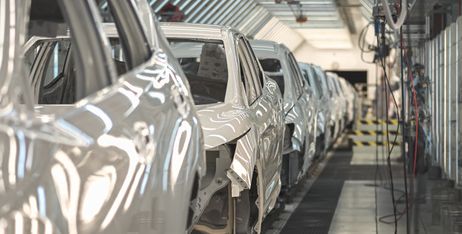
Energy crunch threatens European automotive output: study
Skyrocketing energy prices in Europe and a possible harsh winter could place certain automotive sectors at risk of being unable to keep their production lines running, says S&P Global Mobility.
“The combined black swan events of the Covid-19 pandemic and the Russian invasion of Ukraine have already stretched the automotive supply line – especially in regard to semiconductors,” it says in a note seen by Kallanish. “Now, some OEMs and suppliers with energy-intensive manufacturing processes may face extensive pressure in terms of energy costs in the coming months.”
As a result, potential manufacturing losses from Europe-based OEM final-assembly plants could reach more than 1 million units per quarter, starting in the fourth quarter of 2022 through the entirety of 2023.
Quarterly production from Europe-based auto manufacturing plants has been forecast in the 4-4.5-million-unit range, meaning moderate growth. However, with potential utility restrictions, that OEM output could be reduced to as low as 2.75-3 million units per quarter.
“As seen with past regional events, losing one crucial piece in the global supply chain can bring the automotive manufacturing industry to a crunching halt,” the note says. “The consensus forecasts for a cold, wet European La Nina winter, combined with energy shortages, could have a similar effect. The recent leaks in the subsea Russian pipelines to Europe adds to risk and the likelihood that our model is directionally correct.”
“We also anticipate disruption of the traditional just-in-time supply model due to some suppliers implementing a schedule of working fractional-months on a 24/7 setup – which can be more energy-efficient than traditional weekly shifts due to the latter’s higher start-up and shut-down energy costs,” S&P Global Mobility says.
For an industry already struggling with low inventories of vehicles in dealer showrooms, an additional crisis could be incapacitating on a global scale, it warns.
“If you look through the supply chain – particularly where there’s any metallic structure forming through pressing, welding or extrusion – there’s a tremendous amount of energy involved,” said S&P Global Mobility principal analyst Edwin Pope. “Total energy usage in these companies could be up to one-and-a-half times what we’re seeing in vehicle assembly today. Some of this manufacturing capacity is becoming so uneconomic that companies are simply shutting up shop.”
Svetoslav Abrossimov Bulgaria


French construction sector outlook improves
Sentiment among French construction companies has improved in October. However, the firms surveyed say it is more difficult than in September to predict the future evolution of the market but they remain optimistic about their activity for the next three months, Kallanish learns from a l’Institut National de la Statistique et des Études Économiques (Insee) report.
In October, production capacity increased on-month but obstacles to production persist, caused by global supply disruptions. The same number of construction firms as in September reported slowing output this month and say they are facing supply difficulties.
Despite an improved supply situation, “the share of companies at the limit of their production capacity, that is to say, that they could not produce more with their current means if they received more orders, has risen again: 54% of business managers have reported being in this situation,” the report states.
This month, more companies than in September say they will increase their prices over the next three months and more firms also consider that the level of their order books is higher than average.
Despite this positive picture, the French rebar market is going through a weak patch, with prices and sales volumes reducing. Uncertainty is causing buyers to purchase small quantities and adopt a wait-and-see attitude (see Kallanish passim).
Natalia Capra France
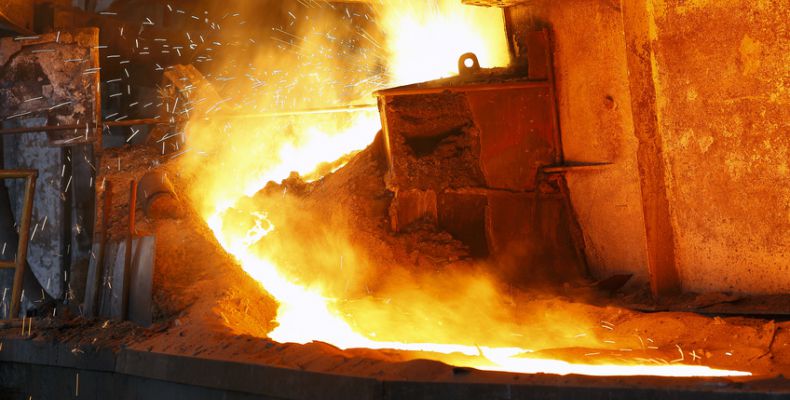
Electrification faces obstacles, hydrogen steelmaking distant: Czech steelmakers
There is a long way to go before hydrogen-based steelmaking takes off on an industrial scale, but electrification through the electric arc furnace route is readily available. However, the availability of low-carbon electricity and scrap feedstock pose major obstacles, says Czech and Slovak steel association Steel Union.
Czech steel production is dominated by the iron ore-based blast furnace route, with many products produced needing to have high steel purity which cannot be achieved through scrap-based EAF production, the association observes. Trinecke Zelezarny plans to secure half of its production by 2030 through the EAF route, while Liberty Ostrava is investing into hybrid furnaces, which can flexibly process 40-100% of scrap in a batch.
If both steelmakers were to switch to production of their current volumes of steel from scrap, they would automatically lose the electricity produced from their own process gases and would thus become completely dependent on external supplies. In addition, their annual electricity consumption would roughly double – about 450 kWh is needed to produce 1 tonne of steel in a classic arc furnace.
It would therefore be necessary to build a very high voltage network connection to both mills. It will take years, however, to obtain permissions, arrange the purchase of land and implement the construction of the technology.
“An increase in demand for clean electricity from other sectors of the economy can be expected, which will result in a fight for this commodity,” Steel Union observes in a note seen by Kallanish.
“On the one hand, there is a need to decarbonise the industry through electrification; on the other hand, this means an extreme increase in the cost of purchasing electricity and the logical question of whether it makes sense,” the association continues.
Mills will also have to replace BF process gases, used in the heating process, with natural gas, which is also currently at record-high prices.
Scrap will be indispensable for steelmaking electrification. Its availability is however limited by two factors. One is the use of increasingly high-quality and durable steel products or structures which significantly slows down the cycle of returning scrap to the market. The second is EU scrap exports. The first factor cannot be influenced; the second could be, by changing the EU’s waste policy, Steel Union observes.
The production of scrap in Czech Republic reaches about 4.3 million tonnes/year, with exports accounting for 2.3mt, imports 0.5mt and consumption around 2.5mt. This balance would have to change significantly when switching to EAF steelmaking, meaning scrap would have to stop being exported from the Czech Republic. Moreover, an additional 2m t/y of scrap would have to be imported, Steel Union concludes.
Adam Smith Poland

H2 Green Steel says leading European banks support Eur3.5 billion debt financing
H2 Green Steel has received support from major European financial institutions for Eur3.5 billion ($3.46 billion) in debt financing to sustain its hydrogen-powered “green steel” plant in northern Sweden, the company said Oct. 24.
H2 Green Steel is building a green hydrogen-powered steel plant in Boden, northern Sweden, with initial production of 2.5 million mt/year from 2025, potentially increasing to 5 million mt/year by 2030, while removing up to 95% of carbon emissions compared with traditional steelmaking with a blast furnace and iron ore, it said.
The company plans to finance the construction of its hydrogen-powered green steel plant in northern Sweden through a combination of equity and debt financing.
H2 Green Steel has executed a conditional commitment letter with a leading infrastructure fund comprising large Nordic investors in connection with their lead participation in a circa Eur500 million junior debt facility.
Societe Generale is acting as lead financial advisor on the senior and junior debt facilities. KfW IPEX-Bank is acting as joint financial advisor on the senior debt facility. BNP Paribas, ING and UniCredit are acting as Pathfinders for the financing as respectively market, documentation and technical banks.
“These strong commitments to our debt financing show how far we have come on our journey, in a very short time,” said Henrik Henriksson, H2 Green Steel’s CEO, in a statement. “We are impressed by the collaborative approach of these institutions and the leadership they are displaying in financing the transition. The support from the European Investment Bank, Swedish National Debt Office and some of the world’s leading export credit agencies and banks, not only underlines our business case and debt carrying capacity, but also highlights the willingness to support initiatives that will help fulfil the target of the Paris agreement.”
Platt assessed the 62% Fe Iron Ore Index at $93/dry mt CFR North China Oct. 21, up $1.60/dmt from Oct. 20. Platts is part of S&P Global Commodity Insights.
— Annalisa Villa


Steel demand from EU seen rising in winter months: Fuat Tosyali
EU steel producers could face further production issues in the winter due to the energy crisis, which could increase the region’s demand for Turkish steel, Fuat Tosyali, head of the Mediterranean Ferrous and Non Ferrous Metals Exporters’ Union and chairman of Tosyali Holding, said Oct. 24.
Demand and supply have fallen globally, while raw material supply problems have increased amid high energy costs arising from the Russia-Ukraine war, he said in a statement.
“Especially global steel demand has declined substantially in the last 3-4 months,” he said. “But, the fall that Turkish producers faced was at a reasonable level compared to our rivals.”
Some opportunities could emerge with some risks, and Tosyali said Turkey could emerge as a reliable supplier to the EU, as the energy crisis might reduce EU steel output further.
Some major European steelmakers recently halted steelmaking or rolling capacities in Europe or announced planned stoppages or delays in equipment restarts, as a result of high energy prices and weakening market demand, particularly from the automotive and white goods sectors.
“If we manage the risks and evaluate the opportunities that will emerge in 2023 and afterwards, we could even exceed our export targets in the coming years,” Tosyali said.
Turkey’s steel exports, however, slumped 12.4% year on year to 11.1 million mt in the first eight months of 2022, according to the most recent data from the Turkish Steel Producers’ Association, while the revenue generated from those exports rose 8.8% to $10.5 billion.
Platts, part of S&P Global Commodity Insights, assessed Turkish export rebar at $670/mt FOB Oct. 21, down from an intra-year high of $960/mt FOB reached April 1.
— Cenk Can

European hot-rolled coil market stable ahead of EuroBLECH trade fair
Stability was reported in the European hot-rolled coil market Oct. 24 as market participants looked to the EuroBLECH trade fair to give clarity to prevailing uncertainties.
Platts assessed hot-rolled coil in Northwest Europe down Eur10 at Eur650/mt ex-works Ruhr Oct. 24.
Transactional activity was reported at the Eur650/mt ex-works price level in Germany, confirmed as a workable level by both buy-side and sell-side sources.
Price direction was uncertain, with most expecting stability in the near-term at least until after the EuroBLECH trade fair.
“There will be no moves until the top of next week in my view,” a distributor source said. “I’d guess the market is waiting for EuroBLECH for further information from producers and end-users.”
Mills have recently attempted to establish increased pricing for the first quarter 2023, heard offered at around Eur750/mt ex-works Ruhr for January delivery. That said, some were skeptical whether increases could hold in the low-demand market.
“[Natural] gas prices in Germany have dropped significantly this week and demand is not improving – I am uncertain on what grounds the mills can increase prices when their costs are clearly coming down,” one service center source said.
In Italy, the tradable range remained unclear due to a lack of trading and a comparative resistance from Southern mills to cut discounts, as in Northern Europe.
A second service center source indicated Eur670-690/mt ex-works Italy was a workable range on the day, with Platts assessing Italian HRC stable at Eur680/mt ex-works Italy.
Platts is part of S&P Global Commodity Insights.
— Benjamin Steven, Maria Tanatar

European HRC buyers delay restocking amid unclear outlook
European hot-rolled coil buyers extended their silence on Monday October 24, with minimal trading activity reported amid poor demand and unclear sentiment, Fastmarkets heard.
The lack of clarity in the market continued to limit buying interest for HRC in both Northern Europe and Italy.
Producers have had problems selling their fourth-quarter volumes and were ready to cut offer prices for December-delivery material.
But buyers had little interest in fourth-quarter-delivery coil due to sufficient stocks. They also held back from booking material for delivery in the first quarter of 2023 amid unclear sentiment.
“Customers still don’t know whether it is time to book [HRC] or not. Sentiment is rather bad and there are no signs of a steel demand recovery,” one trading source in Germany told Fastmarkets.
Meanwhile, steel producers expect HRC prices to recover when buyers start booking their first-quarter volumes, so most refused to provide discounts on Q1-delivery coil for now.
Fastmarkets calculated its daily steel HRC index, domestic, ex-works Northern Europe at €670 ($660.36) per tonne on Monday, up by just €5 per tonne from €665 per tonne on Friday.
Monday’s calculation of the index was down by €13.75 per tonne week on week and down by €95 per tonne month on month.
Buyers’ indications of achievable prices were reported at €660-670 per tonne exw.
Mills’ offers for December-delivery coil were heard at €670-685 per tonne exw, while for Q1 material, the minimum price would be €700 per tonne exw, sources said.
Fastmarkets’ calculation of its daily steel HRC index, domestic, exw Italy was €687.50 per tonne on Monday, up by €5 per tonne from €682.50 per tonne on Friday.
The latest calculation of the Italian index was stable week on week, but down by €73.75 per tonne month on month.
Italian producers maintained official offers at €700-720 per tonne exw for HRC with five to six weeks delivery, while buyers’ indications of achievable prices were lower at €670-680 per tonne exw.
HRC buyers in the nation were also opting to hold back from bookings and wait for a clearer market picture.
“This week is important; we will see if anything happens during EuroBlech [trade fair] – more production cuts announcements, some restocking. There is a lack of understanding, what the price bottom will be,” an Italy-based trader said.
Import HRC offers from Southeast Asia (South Korea, Japan, Taiwan), with delivery at the end of the first quarter, were reported at €630-640 per tonne cfr to Italy, while buyer’s indications of a tradeable price level for imports did not exceed €610 per tonne cfr.
Published by: Julia Bolotova
