


Italian railway firm places orders with five steelmakers
Italian railway company Rete Ferroviaria Italiana (RFI) has awarded a large order of over 200,000 tonnes of rail to five steelmakers in Europe, Kallanish learns from RFI.
The order with a total value of €1.1 billion ($1 billion) will be divided into two phases. The first phase has a total value of €946 million and includes the allocation of five lots. Lot no.1, a supply batch worth over €236m, will be awarded to JSW Steel Italy in Piombino. The €208m lot no.2 has been awarded to ArcelorMittal Poland. Voestalpine Rail Technology has won lot no.3 with a €189m value. Saarstahl Rail was awarded the €170m lot no.4, while ArcelorMittal Spain has bagged lot no. 5 for €142m.
The second phase of the supply has been awarded to JSW Steel Italy for over €153m.
The rails will go into new infrastructure projects and maintenance supported by the European recovery fund, Piano Nazionale di Ripresa e Resilienza (PNRR). The order will satisfy RFI’s need for 43,000 rails of approximately 108 metres per year, the company reveals in a note.
According to JSW’s financial-year 2022 report, the steelmaker’s Italian division sold over 315,000t of re-rolled products including bars, wire rod and rails. It reported €309m revenue, Kallanish notes.
Natalia Capra France


AMKR operates at 25% amid coal shortages: ceo
ArcelorMittal Kryvyi Rih (AMKR) is in an extremely difficult situation, which is likely to last beyond year-end if the military situation does not improve, according to AMKR chief executive Mauro Longobardo.
“This is unfortunate, given that we were one of the most competitive plants in the ArcelorMittal Group,” Longobardo noted in an interview with Germany’s Stahl-Punkt. “At present, the steel plant operates only one blast furnace, producing 100,000 tonnes of products per month and operating at 20-25% capacity. We are now shipping our products to the ports of Poland and the Baltic countries, from where they are sent to our customers.”
“However, these ports are not equipped for our product type and quantity we ship,” he adds. “Even with a favourable market situation, the entire system can only provide about 50% of our capacity. The company’s logistics costs have increased significantly – by $100/tonne.”
This means that transportation costs are higher than the market price of the goods, preventing the company from starting a second blast furnace, the ceo noted. “However, if the situation improves and ports open, our losses could quickly approach zero, as we will immediately save on additional logistics costs and this would be enough to launch another blast furnace and reach maximum capacity,” Longobardo concluded.
According to him, another problem is the supply of coking coal, the consumption of which is typically 300,000 t/month. It was usually delivered to Ukraine from several countries, including Australia and the US, but this is no longer possible. The enterprise now depends on coking coal which goes through Polish ports.
“Since Metinvest, another large Ukrainian steel company, has lost its factories in Mariupol, we can use coking coal that could have been consumed there. But none of this will provide us with the necessary capacity utilisation,” Longobardo observed.
AMKR announced earlier it is counting on growth of export deliveries of its steel products to EU countries in the fourth quarter (see Kallanish passim). The company plans to fill the gap in the European market, which was formed due to the temporary stoppage of some EU steelmakers amid rising electricity costs.
Svetoslav Abrossimov Bulgaria
NLMK Belgium concludes integration of DanSteel
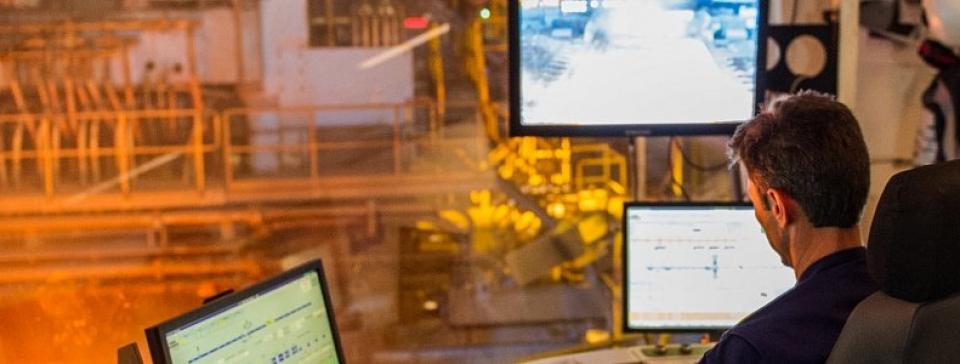
NLMK has formally concluded the integration into NLMK Belgium Holdings (NBH) of NLMK DanSteel. As a result, NBH has further expanded into the steel plate market, increasing its offering and becoming a player, for example, in the wind energy segment.
NBH is a Belgium-based joint venture between the public entity SOGEPA and NLMK Group. Dansteel controls a mill in Denmark and has a good reputation in the steel market as a key supplier of extra-large-dimensioned wide and thick heavy plate, Kallanish notes.
“The addition of DanSteel leads NBH to offering one of the widest plate product portfolios in Europe and globally for customers active in shipbuilding, civil engineering, yellow goods, mining, lifting, transport and wind energy,” NLMK explains. NBH also has plate units located in Verona, Italy, and Clabecq, Belgium.
Emanuele Norsa Italy

SSAB to idle blast furnace at Raahe
SSAB to idle blast furnace at Raahe
SSAB says it plans to bring forward maintenance of one of its blast furnaces at the Raahe integrated plant.
The decision has been taken to reduce output in the fourth quarter amid a slowdown of demand in Europe, Kallanish notes.
The furnace, with the capacity of 1.3 million tonnes/year of pig iron, will be idled from mid-November for 6-8 weeks.
In Q3, European crude steel production at SSAB stood at 1 million tonnes, in line with production in both Q3 2021 and Q2 2022. In January-September, crude steel production reached 3mt, some 400,000t less than in January-September 2021.
The firm’s Americas and Special Steel segments carried financial performance in Q3 (see separate story).
Emanuele Norsa Italy

Global crude steel output rises 3.7% on year in September: World Steel Association
Global crude steel production in September climbed on a year-on-year basis for the first time in 2022, rising 3.7% on the year to 151.7 million mt, with production increases in China offsetting decreases in most regions, according to World Steel Association, or worldsteel, data released Oct. 25.
The global monthly production volume was also 2% higher from August’s production levels, reaching a three-month high.
China’s production registered an increase of 17.6% year on year and a 3.7% increase month on month to 87 million mt, which accounted for 57.3% of the total volume and also reached a three-month high.
This brought total global production for the first nine months of 2022 to 1.41 billion mt, down 4.3% year on year, with China’s production for the period dropping 3.4% to 780 million mt, worldsteel said.
Second largest global producer, India, saw crude steel output rise 1.8% on the year in September to 9.9 million mt, although this was 2.5% lower from August levels, bringing the country’s nine-month total to 93.3 million mt, up 6.4% on the year.
Iran’s production increased 26.7% on the year and increased 33% from August to 2.7 million mt, with the January-to-September total rising 9.8% to 22.2 million mt.
Meanwhile, all other top-10 steel producing countries saw production fall in September.
Japan’s September production totaled 7.1 million mt, down 12.3% on the year and 3% lower from August, with January-August output also lower on the year at 67.8 million mt, the data showed.
The North American region saw output decrease 7.6% on the year to 9.1 million mt, with the US producing 6.6 million mt, down 7.5% on the year and down 4.2% month on month to a seven-month low.
South America recorded a 9.6% year-on-year production decrease to 3.5 million mt in September, which was also down 3.8% from August. The main producer, Brazil, produced 2.7 million mt, down 11.7% on the year and down 3.4% from August to also reach a seven-month low.
For the nine-month period, US output dropped 4.3% to 61.5 million mt, while Brazil production was down 5.3% to 25.9 million mt, worldsteel data showed.
Countries in the Commonwealth of Independent States region, including Ukraine, saw production fall 21.9% on the year in September to 6.7 million mt.
Russia – the fifth largest worldwide producer – was estimated to have produced 5.7 million mt, down 6.8% year on year and down 3.2% from the previous month. The drop was likely due to western sanctions imposed on Russian steel products due to the country’s invasion of Ukraine. In the first nine months of 2022, Russian production dropped 6% on the year to an estimated 54.6 million mt, the data showed.
South Korea produced 4.6 million mt of steel in September, down 15.4% on the year and also 22.4% lower than August to the lowest monthly volume since S&P Global Commodity Insights’ records began in January 2018.
For the January-September period, South Korea registered a production decrease of 4.4% to 50.5 million mt.
European production falls 17.2% on year
Meanwhile, the whole of Europe, including the UK, registered a production decrease of 17.2% on the year to 14.2 million mt in September, which 7.6% higher than August levels and brought the nine-month total to 140.4 million mt, down 8.5% on the year.
Europe’s largest steel producer, Germany, produced 2.8 million mt in September, down 15.4% on the year and down 1.1% month on month to the lowest level since August 2020. Germany’s nine-month output was also down 6% on the year to 28.2 million mt.
The weak data followed a number of facilities across Europe being idled in response to weaker steel demand and higher costs, especially due to energy costs.
Platts assessed domestic HRC prices in Northern Europe at Eur730/mt ex-works Ruhr Sept. 30, down 20.8% since the start of 2022, according to data from S&P Global Commodity Insights.
Turkey produced 2.7 million mt of crude steel in September, down 19.4% year on year and down 5.9% on the month. In the first nine months of the year, Turkey registered a decrease of 9.3% to 27.3 million mt of production.
Steel production from electric arc furnaces fell 23.8% on the year in September to 866,000 mt, while production from basic oxygen furnaces was down 11.2% on the year to 1.98 million mt, the data showed.
Total September production of pig iron from 38 countries was 106.8 million mt, up 3.6% year on year, the data showed, while direct reduced iron produced worldwide amounted to 9.3 million mt, up 12.7% year on year, the data showed.
Pig iron output over the January-September period totaled 971.8 million mt, down 4.4% year on year, while DRI production for the period rose 7.4% on the year to 82.5 million mt.
Crude steel data covers the 64 countries that report to worldsteel, accounting for about 98% of the world’s crude steel production.
— Annalisa Villa, Jacqueline Holman


Volvo, SSAB see EU helping define low-emissions steel for market growth
Steelmaker SSAB and auto group Volvo Cars expect new EU standards defining low-emissions steel, which includes clarification on the role of ferrous scrap, to accelerate investments and demand for so-called green steel, company executives said Oct. 25.
Standardizing low emissions steel with involvement from the European Commission, and industry stakeholder groups such as ResponsibleSteel, may facilitate investments and support for new plants against climate targets, while new procurement criteria may drive market interest in compliant grades.
Currently, new low-emissions steel supply is made up mainly of carbon-accounted flat steel via blast furnaces, with certifications on emissions savings allocated to specific volumes, with focus on renewable energy use for existing scrap-based steel. Some sales and trials using new or adapted production processes are taking place, led by auto and truckmakers as well as white goods manufacturers. Use of emissions savings certificates need to be addressed in a common standard for low-emissions steel, Celine Domecq, EU head of public affairs at Volvo Cars said at an EC webinar.
“We are interested in a standard or a harmonized definition of what is near-zero steel,” she said. “There is a lot about mass balancing and certificates and we need this to be addressed, and be very clear what is acceptable and what is not acceptable, otherwise you will have a lot of creative accounting on what is clean, and what it not clean.”
A common standard needs to be robust and technologically neutral in a way to be able to adopt with new steel production processes, she said.
Volvo Cars needs to be sure around the basis of carbon emissions data for its steel procurement, and for its communications with customers, she said.
While clearer definitions and a common European standard may help, the cost of renewable power underpinning low emission steel production has surged, pitching costs at a multiple of input costs via traditional blast furnaces using met coal and a variety of iron ore. Difficulties in securing scarce iron ore grades used in traditional direct-reduced iron production transitioning to deploy green hydrogen to slash emissions add to concerns around volumes, as new DRI projects in many EU countries are announced.
SSAB pilot
Sweden’s SSAB is still in its pilot stage of testing green hydrogen-based steelmaking under small batches with end-users such as AB Volvo. SSAB’s joint venture HYBRIT will only start up a larger demonstration DRI plant in 2026. Steel groups such as ArcelorMittal, Salzgitter, ThyssenKrupp and Tata Steel Europe have plans for new DRI plants starting this decade, which may increase volumes available.
“We need to have an ambitious standard, that drives investments towards transformative technology, because without investing in technology that removes emissions from iron ore-based steelmaking, we will not have enough steel by only relying on recycled scrap-based steel,” SSAB’s chief technology officer Martin Pei said in the seminar hosted by member of the European Parliament Jessica Polfjard.
“Worldwide, we produce a lot of steel every year, starting from iron ore, so focusing on the standard that drives the transition of that part of the industry is going to be the key to solve the climate crisis,” he said.
SSAB has accelerated investments to adopt electric arc furnace steelmaking at existing sites with blast furnaces, while the company sees the pace of development determined by permitting approvals for new plants and high power transmission lines.
Scrap metal will remain key for lower emissions steel, where available.
“We need to use as much as possible recycled scrap, that’s the best way to save CO2 emissions,” Pei added.
Volvo Cars sees the importance of scrap to be included in any benchmarking standard, taking into account recycled steel is crucial to meet EU circular objectives.
Ambitious targets for recycled content could be an obstacle for standardization for low-emissons steel, said Polfjard.
Ecodesign
Steel is expected to be covered by the EU’s Ecodesign Standards for Sustainable Products Regulation, or ESPR, according to SSAB. In parallel to the ESPR, the EC aims to regulate the creation of reliable, comparable and verifiable environmental labels across the EU.
Steel may be a strong industry candidate for inclusion in the first report for consultation on the topic, Jean Bergevin, senior expert for energy intensive industries unit DG Grow said at the webinar.
Begevin suggested demand for steel differentiated around carbon emissions will drive the transition, more so than by energy supply factors. There is strong interest for low-emissions steel in some segments, while a difficult regional economy with cost pressures could make users substitute for other types of lower cost steel if possible.
While the largest EU steelmaker ArcelorMittal is using a carbon-accounted steel approach, as well as benchmarking steel carbon intensity, the company is advocating inherent steel emissions-based standardization. ArcelorMittal, which offers a range of lower-emissions steel products, has 600,000 mt of low-emissions steel certificates available for sale by the end of 2022, it said.
Integrated steel producers have looked at ways to allocate effective cuts to carbon emissions into their steel offering, rather than work off smaller contributions to individual steel product emissions across overall production volumes.
The so-called mass balance methodology used by ThyssenKrupp, Austria’s Voestalpine, Tata Steel Europe and Kobe Steel, allocates emissions savings to a portion of steel products. ThyssenKrupp said its saving are directly related to the blast furnace production process by adapting feedstocks with scrap or hot-briquetted iron.
ArcelorMittal said July 28 that its steel decarbonization standards tracking inherent emissions in hot-rolled steel product — introduced in June for industry consultation — is complementary to methods “rewarding virtual low-carbon steel, at least until significant amounts of physical low-carbon are available.”
Steel pricing and premium discussions, along with benchmarking around the inclusion and allocation of emissions, continues. However, the relative cost of producing lower emissions steel for markets may become more focal as new steel standards consolidate and energy and carbon prices are factored in.
— Hector Forster

Tata Steel to invest Eur65 million in sustainable steel production at IJmuiden
Tata Steel will invest Eur65 million ($64 million) in the the engineering package of the hydrogen-based manufacturing route for its site at IJmuiden, the Netherlands, the company said Oct. 25.
The investment will make steel production at IJmuiden more sustainable, replacing the current blast furnace technology with direct reduction plants and electric furnaces before 2030 with the aim of becoming carbon neutral by 2045.
Tata Steel Nederland has signed contracts with three companies — McDermott, Danieli and Hatch — for the further technical preparations of the hydrogen route, it said.
The new DRI plants will be built at IJmuiden and all existing plants will remain in operation until the DRI is up and running, which guarantees continuity of supply throughout the transition, it said.
The company also said it has completed major projects at its hot strip mill and main cold rolling mill at IJmuiden. The hot strip mill will now be able to process the strongest types of strip steel.
The completion of the reconfiguration of the cold rolling mill will result in an improvement in the surface quality and the development of new UHSS steel grades needed to meet the demands of the automotive market. In addition, the key automotive hot dip galvanizing line in IJmuiden will be also upgraded within the next six months, it said.
Tata Steel Nederland has also signed a memorandum of understanding with Ford in Europe to supply the carmaker with Zeremis green steel once the IJmuiden steelworks switches to green hydrogen-based steelmaking.
Platts, part of S&P Global Commodity Insights, assessed hot-rolled coil in Northwest Europe down Eur10 at Eur650/mt ex-works Ruhr Oct. 24.
The agreement makes Ford the first customer committed to offtake the green steel that Tata Steel plans to produce via the hydrogen route.
“While we are transitioning to become a producer of large quantities of high-quality green steel, we can already supply our customers with a significant amount of high-quality low-CO2 steel today and thus make their product offering more sustainable,” Hans van den Berg, Tata Steel Nederland chairman said. “By aligning our sustainability ambitions with customers like Ford, we can create an early market for green steel, speed up the transition and meet the expectations of society at large.”
— Annalisa Villa
Swedish steelmaker SSAB sees uncertain Q4 after weaker Q3 production
Swedish steelmaker SSAB described the fourth quarter as continuing to lack certainty due to rising inflation, a shortage of components and risks associated with the war in Ukraine, the company said in a statement Oct. 25.
The European market had weakened, SSAB said, prompting it to cut production of construction-related products. To reduce capacity in Q4, the maintenance of a 1.3 million mt blast furnace in Raahe, Finland, will be brought forward and start in mid-November, the company added, with works expected to last for six-to-eight weeks.
The outlook for the markets of SSAB Special Steels and SSAB Americas was expected to be more stable, while Q4 raw material costs were also seen as steadier than in Q3, it said.
Q3 production in the third quarter was affected by planned maintenance outages in SSAB Europe and SSAB Americas, which also hit shipments, with the European unit also suffering from lower demand.
Overall, SSAB crude steel production in Q3 slipped to 1.92 million mt from 1.99 million mt in Q2, but was higher than Q3 2021’s 1.84 million mt.
Total shipments in Q3 were 1.47 million mt, down on Q2’s 1.71 million mt and up on 1.63 million mt in the year-ago quarter.
Q3 shipments in Europe fell 10% on the year to 713,000 mt, while crude steel production slipped to 1.07 million mt.
SSAB Americas’ Q3 shipments dropped 14% on the year to 416,000 mt, with crude steel production down to 256,000 mt versus 293,000 mt, due to annual maintenance at its facility Montpelier, Iowa.
Special steel shipments in Q3 dropped to 336,000 mt, compared with the year-ago quarter when they were 348,000 mt, while crude steel output was 592,000 mt down from 469,000 mt.
Customer demand for fossil-free steel continued to rise with SSAB starting a partnership with Oshkosh Corp. which will be the first in the US to develop prototypes for commercial vehicles in fossil-free steel. Feasibility studies for SSAB’s planned mini-mills in Lulea, Sweden, and Raahe are continuing as planned.
Platts, part of S&P Global Commodity Insights, assessed hot-rolled coil in Northwest Europe down Eur10 ($9.90) at Eur650/mt ex-works Ruhr Oct. 24.
— Annalisa Villa

Metinvest files claims to European Court of Human Rights against Russia for damages to property
Ukrainian mining and steel company Metinvest Group has filed claims to the European Court of Human Rights against Russia for damages caused to its property and possessions in Mariupol and other Ukraine territories since the start of the war, it said Oct. 25.
The company’s two Mariupol-based steelworks — Azovstal and Ilyich — were destroyed in May due to the war.
Metinvest said 16 companies of the group had filed claims and more than 10 additional companies would file similar claims by the end of 2022.
The company said it was claiming that Russia had been violating its rights under Article 1 of Protocol 1 to the European Convention on Human Rights by causing significant damage and destruction to its assets, denying Metinvest control over its assets, effectively depriving it of ownership over the assets and depriving the company of the business use and income-generating potential over the assets.
“Therefore, each group company, which has suffered damages because of full-scale Russia’s invasion in Ukraine in February 2022, is filing a claim against Russia to hold Russia accountable for the devastations that it has caused to the group’s assets and seeks fair compensation for damages occurred due to Russian aggression,” Metinvest said.
In addition, Metinvest co-owner Rinat Akhmetov previously filed a claim with the ECHR on June 23, which the company said it was supporting, as the applications were “mutually complementary.”
Metinvest’s 49.99%-owned Zaporizhstal iron and steel works, the second-largest steel mill in Ukraine, had been running at 50% of capacity since restarting operations in early April.
Before that, it had been idled shortly after Russia’s invasion of Ukraine, but restarted operations after 33 days, starting with coke and sinter plants and then running two of its four blast furnaces.
It had also restarted some of the rolling facilities, with roughly 5,000 employees involved in production processes, it said previously.
The mill produced 1.213 million mt of steel in January-September, down 58.7% year on year, with pig iron output dropping 52% to 1.566 million mt and rolled metal production decreasing 56.4% to 1.071 million mt.
Metinvest’s long rolled steel producer Kamet Steel in Kamianske had also been operating.
Platts, part of S&P Global Commodity Insights, assessed the daily Black Sea billet price at $520/mt FOB Oct. 24, down 12.6% from the beginning of January.
— Jacqueline Holman

Euroblech to kick off annual coil negotiations
This week will see most major German and other northwest European mill, distributors, and technology providers for coil and sheet gather at the Euroblech sheet fair in Hanover. The event alternates annually with Blechexpo in Stuttgart, and both fairs are usually the start of talks for long-term supply contracts for the coming year.
The basis orientation for price negotiations are normally the previous year’s deals, while current spot prices play an important, but lesser role. At Blechexpo 2021, mills triggered some irritation when all announced a €600/tonne ($592) hike on top of 2020 prices, “differing by maybe €5 here and there”, a German buyer recalls.
That resulted in prices virtually doubling compared to deals closed at too-low prices in 2020, prior to a major surge that caught everyone by surprise. Eventually, most deals last year settled at around €1,000/t for hot rolled coil, with cold rolled and galv correspondingly higher.
This time, players expect that contracts will be several hundred euros below last year’s, and buyers will be inclined to postpone providing their signatures, as long as spot market prices keep sinking.
A coordinated offer from mills like last year is unlikely, the German buyer tells Kallanish, but he believes that mills might come up with proposals for new price mechanisms. One such tool could be an energy price index, as is standard for aluminium, he suggests. “In any case, they will have a hard time arguing against the spot price trend,” he concludes.
Christian Koehl Germany