


Steel buyers welcome green premium, ‘value’ critical: panellists
Steel buyers are prepared to pay a premium to secure low-carbon steel. However, how much they are willing to pay depends on how closely aligned the whole value chain is and on society’s recognition of value addition. So said steel users session panellists at the Hydrogen Iron & Steel Making Forum in Stockholm earlier this month.
The premium buyers are prepared to pay “depends on where we are”, Alfa Laval head of research & development Carina Resare said at the event monitored by Kallanish. “If you look really long term, then we think fossil-free steel will be the new standard. And the pricing will be more like steel is priced today … But if we then look now in the beginning, the pricing of fossil-free steel matters differently to our customers – the first movers will for sure be prepared to pay a larger premium because they see the value or the benefits and they want to boost their sustainability journey.”
Since Swedish industrial equipment supplier Alfa Laval and SSAB partnered to create the first heat exchanger using fossil-free steel, “we have had a great interest from our customers. And I think this is really a strong message from the market”, Resare added.
Ørsted head of commodities Fredric Åberg said “value” must be added to the product as well as price. “We have seen steel price increases of 70% during this year [2022] with no added value. It’s not just about the price, it’s about the value of the product. We need the government to start asking where do the components come from, how are the different products being made, and it’s not just offshore windfarms or renewable energy, but how are cars being made, how are construction, houses, bridges being made,” he commented.
Shape Corporation product engineering director Stephane Anquetil meanwhile pointed out that the premium will ultimately be paid by the final consumer. “How much all of us are willing to pay is also a question,” he observed. The body in white sector is a “very challenging environment”, he continued. Many OEMs are moving into electric vehicles and thus focusing more on software and less on body and structural parts.
“You could think that the impact of a 10 or 20% steel [price increase] would be minimum for the global cost of the car but, from what we can see recently in the market, the vehicles are getting heavier and heavier. And the body in white is also getting heavier and heavier,” Anquetil continued. Increased metal consumption, along with the need to source other materials, mean the sector is keen to secure competitive prices. A 30% premium would therefore be difficult, he added, but possible if the entire value chain’s goals are aligned.
Åberg concluded by saying each wind farm uses 300,000-500,000 tonnes of steel in the foundations and towers, meaning it has a substantial carbon footprint. Ørsted “can be part of the solution” by supplying green energy to the steelmakers that supply it, and recycling the steel once the windfarms are decommissioned.
Adam Smith Poland


Hydrogen use in steelmaking faces huge challenges: conference
Growing energy use in renewable hydrogen production, and the need for new infrastructure, integration and storage systems are major hurdles for policymakers and financial markets in supporting demand for a new green economy. So said participants at Thursday’s EURACTIV hydrogen in steelmaking conference attended by Kallanish.
According to Ruud Kempener of the working group on the European Strategy for Energy System Integration, the European Commission manages three packages to support H2 development. “The EC is focused on giving legal certainty to production, infrastructure as well as trading and licensing processes of the H2 value chain,” said Kempener.
The Commission’s proposals on an EU framework to decarbonise gas markets, promote hydrogen and reduce methane emissions are already in the discussion phase of this ambitious agenda, he added. The legislation is trying to answer the main problems and to lay the foundations for the new hydrogen economy as from 2023.
With the move towards mass hydrogen production, major changes are being seen in industrial value chains and the energy sector, pushed by higher climate change policy goals, observed Eurofer energy committee chairwoman Bianca Wien Prado.
“The steel industry is looking for a vigorous market that is capable of delivering low-carbon, renewable hydrogen in large volumes and in the shortest possible time. We are at the beginning of a big challenge in the production of H2, as there is currently no hydrogen economy and no basic infrastructure to deliver it to end consumers,” she commented.
Prado, who is also head of EU regulatory affairs at thyssenkrupp Steel Europe, pointed out that the steel sector urgently needs a legal framework to assess and advance investment towards decarbonisation goals.
Green energy supply for H2 production is also a big challenge. “In 2030, the steel industry is expected to consume almost 2 million tonnes of H2. Producing these levels of hydrogen requires about 165 terawatt hours of electricity, which is nearly double Belgium’s annual consumption. Meanwhile, in 2050, the market should absorb 5.5 million tonnes of H2, which means having an electricity potential of 400 TWh, something that now seems very incredible,” Prado explained.
Other participants at the conference agreed that EU countries should support more steelmakers’ projects based on the use of green H2. In the transition phase towards the green economy, state aid must solve problems such as the creation of a competitive network for the transport of H2. This is to avoid the relocation of some steel sector activities to sites with greater access to H2. An imbalance in EU energy prices must also be avoided, participants agreed.
They expressed concern that investment in the emerging H2 market is however largely conditioned by differences in legislation between EU countries, which makes compliance with the decarbonisation roadmap an even greater challenge for Europe.
Todor Kirkov Bulgaria
ArcelorMittal to trial CCUS in Europe, US
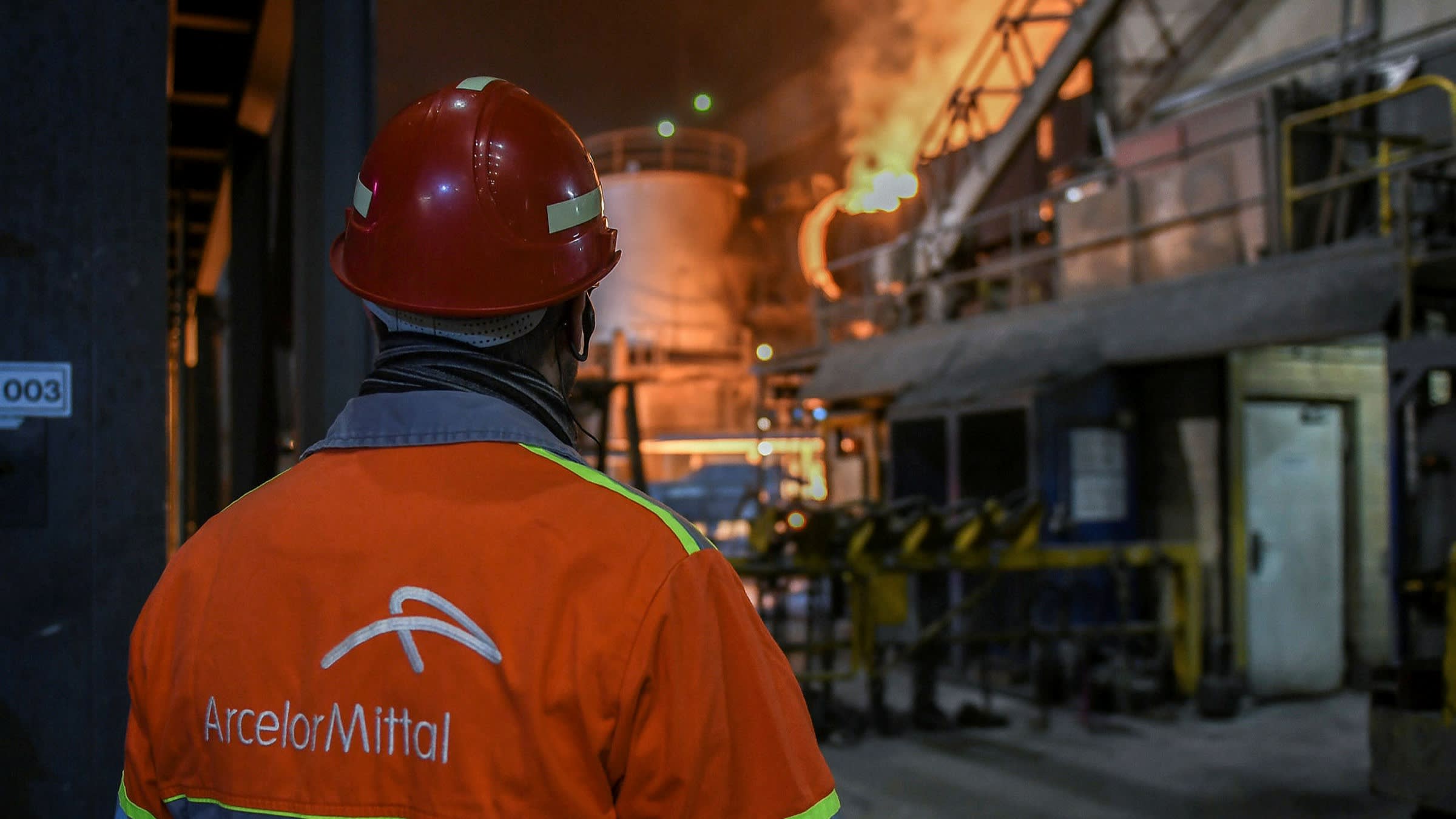
ArcelorMittal is teaming up with Mitsubishi Heavy Industries Engineering (MHIENG), BHP and Mitsubishi Development to develop carbon capture, utilisation and storage (CCUS) technology in Europe and the US.
The firms will first implement a large-scale multi-year trial of MHIENG’s system at ArcelorMittal’s steel plants in Ghent, Belgium, as well as at an unspecified US site.
The Ghent project involves two phases. During the initial stage, the CO2 top gas will be captured from the blast furnace at a rate of around 300 kg/day of CO2. The second phase involves testing the separation and capture of CO2 from the offgases in the hot strip mill reheating furnace, which burns a mixture of industrial gases, including coke gas, blast furnace gases and natural gas, ArcelorMittal says.
“We are developing two routes to decarbonise steelmaking: Smart Carbon and Innovative-DRI. Both routes will contribute in our journey to deliver carbon-neutral steelmaking. The Smart Carbon route also allows us to integrate carbon capture and re-use (CCU) or storage (CCS) technologies, capturing carbon emitted during the steelmaking process,” ArcelorMittal Belgium chief executive Manfred Van Vlierberghe says in a note sent to Kallanish.
The steelmaker aims to reduce CO2 emissions by 35% by 2030 in Europe, and by 30% by 2030 worldwide.
The 5 million tonnes/year capacity ArcelorMittal Gent steelworks will also start operating its “Steelanol” demonstration plant this year, which will capture gases from the blast furnace and convert them into ethanol.
Meanwhile, at one of ArcelorMittal’s North American plants, the firms will build a mobile direct reduced iron plant to test MHIENG’s technology in this steelmaking route.
While MHIENG will supply its technology, BHP and Mitsubishi Development will financially support the trial, which should last several years, ArcelorMittal reveals.
BHP is strongly involved in decarbonising steelmaking, and partnering on similar projects with players such as Posco, China Baowu, JFE Steel, HBIS Group and Tata Steel. Together with ArcelorMittal, these steelmakers account for more than 17% of global steel production.
According to the International Energy Agency IEA, CCUS technology, a key decarbonisation solution for the hard-to-abate sectors such as steelmaking, should be used in more than 53% of primary steel production by 2050 in order to realise European net-zero targets.
Despite being readily available, very few steelmakers globally and none in Europe have so far invested in CCUS technology, Kallanish notes.
Over the past 30 years, MHIENG has been developing its “KM CDR ProcessTM for CO2 capture” in partnership with Kansai Electric Power. The technology has been installed in 16 plants globally, of which two are under construction.
Natalia Capra France
Italian distributors fear continued weakening sales activity
Fear is spreading throughout the Italian distribution sector over future market trend in the first quarter, sources tell Kallanish.
From the service centres’ standpoint, sales activity is almost in complete deadlock. Smaller well-stocked service centres are managing to sell small but steady volumes. Apparent demand, however, no longer exists, and the heavily reduced consumption, particularly for coil derivatives, is forecast to continue until the end of the year. The major concern is over a price collapse in January, as mills will not be able to keep the reduced sales activity going for much longer.
The situation is being made worse by lower import prices from the Far East. While demand is down, Italian mills are still producing this month thanks to the government’s financial support designed to reduce the impact of energy costs for energy-intensive sectors. This will allow steel companies to benefit from a 40% tax discount at the end of the year, which will be calculated considering each producer’s real energy consumption. The move is acting as a stimulus for production but, at the same time, is causing excess supply amid the current low consumption levels.
All coil derivatives, such as sheet and welded tube, are under pressure. High stocks are reported. Tube discounts are increasing to 27-28 points. Because of the slow sales volumes, many service centres are adopting aggressive commercial behaviour and competing with mills’ prices. Today’s only driving factor is to decrease stocks and buy back-to-back, sources observe.
Sheet stocks are high throughout the country as the appliances and automotive sectors are not ordering. Like tubes, prices are also declining to €780-810/t ($782-812) ex-works for the lower grade, sources suggest.
Natalia Capra France

EU coil spot market overshadows annual contracts: Blechexpo
It will take some time before players in the northwest European coil market develop common ground for long-term supply contracts for 2023.
“People buy only what they need on short notice these days,” Kallanish heard from a Dutch buyer at this week’s Blechexpo trade fair in Hanover. “You buy for delivery in say, six weeks, but hardly beyond that. Actually, delivery these days is often much faster because mills have little to do and need business,” he noted.
All observers spoke of high inventories that might take until the end of the year to deplete to the point restocking can begin. “And year-end also sees stocktaking, so you should ideally have limited stock in the warehouse,” a German buyer voiced as an argument against a possibly buying spree in the next couple of months.
Managers from service centres and processors at Blechexpo stated in unison that, unlike in pre-Covid times, the fair will shed little light on next year’s contracts. Some even denied that initial talks are taking place. “It is much too early for that,” the managing director of a cold-roller said, pointing at the confluence of unpredictable elements this autumn.
Buyers’ eyes are therefore still more on the spot market, where mills are trying to maintain the mark of €700/tonne ($701) for hot rolled coil. “Maybe €680, but for less we cannot cover our costs,” one mill source let on.
But the Dutch buyer will not feed the mills’ hopes. “They are making losses already, and when you are serious about a deal, you will get it for €650,” he concluded.
Christian Koehl Germany
LME to launch new ferrous futures initiatives to boost screen trading liquidity
The London Metal Exchange is to launch a number of new initiatives to boost the screen liquidity of its cash-settled ferrous futures contracts, it announced during the LME Focus Day event on Oct. 27.
“We are delighted with the continued growth of our scrap and rebar contracts. The new liquidity windows on LMEselect are designed to enhance liquidity, and together with the new liquidity provider program we hope to see further expansion of the contracts’ user base,” Robin Martin, Head of Market Development at the LME, said.
“In response to industry feedback we have now made 15-minute delayed LMEselect quotes freely available on our website — an additional step towards bringing these instruments into the day-to-day price risk management toolset for physical market participants.”
The LME will launch two new ferrous liquidity provider (LP) programs, which will run from Nov. 1, 2022, to Oct. 31, 2023, as well as a daily liquidity window starting Nov. 1 for the LME Steel Scrap CFR Turkey and LME Steel Rebar FOB Turkey contracts, both of which settle against the monthly average of the respective physical assessments by Platts, part of S&P Global Commodity Insights.
The LME will also make bid-offer quotes for steel futures contracts from LMEselect, the exchange’s electronic member-to-member trading system (for the steel contracts), freely available on lme.com from Nov. 1.
“We are fully behind this effort to help build liquidity on the LME ferrous futures — making the forward curve available on lme.com will increase transparency and allow anyone, from physical players to hedge funds, to access the forward curve and build interest,” Julian Verden, managing director at global steel trader Stemcor, told S&P Global.
Starting Nov. 1, the LME’s daily liquidity window initiative for the LME Steel Scrap CFR Turkey and Steel Rebar FOB Turkey contracts will run between 16.00-16.30 UK time on LMEselect, for contract months 2, 3, and 4 ahead on the forward curve.
“The LME’s move to further encourage screen-based liquidity and trading in the [Turkey] HMS and Rebar futures contracts will help complement the liquidity already available via the call-around-broker market,” Steve Potter, Senior Director at US steel distributor Flack Global Metals, said.
“The new planned liquidity window as well as increased emphasis on Months 2, 3, and 4 will help aggregate two liquidity pools across time zones, as well as help encourage new market participants who focus on relative value and macroeconomic strategies to participate in the ferrous space,” Potter said.
One of the two LP programs will focus on the LME Steel Scrap CFR Turkey and Steel Rebar FOB Turkey contracts.
The participants of this LP program will each be required to provide bids and offer volumes of five lots (50 mt) each on outright trades – i.e. buying or selling contract for one particular settlement (or “prompt”) date – for the most liquid contract months 2, 3, and 4 on the LME scrap and rebar forward curves.
This means that, with four LP participants, up to 200 mt per side could be available on bid or offer for these contract months.
LP participants will also be required to provide a bid-offer spread for outright trades of $10 for the LME CFR Turkey scrap contract and $15 for the LME FOB Turkey rebar contract.
The LME CFR Turkey scrap futures contract has seen its highest annual trading volumes since 2018, with 3,531,400 mt traded between Jan 1-Oct. 26 in 2022, as sharp volatility in the physical CFR Turkey premium HMS 1/2 (80:20) market attracted greater futures interest.
The LME FOB Turkey rebar contract has seen its all-time highest annual trading volume since the launch in late 2015, with 849,460 mt traded so far over Jan 1-Oct. 26 in 2022. The next highest annual volume was in 2017 when 644,300 mt was traded.
The second ferrous liquidity provider program starting Nov. 1 will cover other LME ferrous futures contracts, including Steel HRC FOB China, LME Steel Scrap CFR Taiwan, and LME Steel Scrap CFR India, of which the latter also settles against the monthly average of the Platts physical assessment.
— Viral Shah


European mills push for higher hot-rolled prices, but demand barriers persist
Price indications for hot-rolled coil were heard in a wide range in the low-demand EU market Oct 27 as mills attempted to resist giving in to bearish sentiments.
Platts assessed hot-rolled coil in Northwest Europe up Eur10 at Eur660/mt ex-works Ruhr Oct 27.
Buyers saw a tradable value at or below the Eur650/mt price point, ex-works Ruhr, while mills reported Eur700/mt ex-works as a sell-side target.
Uncertainty as to the market price was accentuated by a lack of evidentiary transactional activity, with one mill source describing the market as dead, saying was no trading at all.
Buyers agreed, continuing to refrain from purchasing due to poor end consumption, thus restricting distributors’ capacity to reduce relatively large inventories of expensive material purchased in the wake of the price rally earlier this year.
Sentiments were not purely limited to pessimism, however, with some trader and mill sources seeing bullish indications for first-quarter demand revival, particularly tied to ongoing or planned infrastructural projects.
With the EuroBLECH fair coming to its close, mills still had yet to settle automotive contracts.
“There is too much speculation and mills are looking for shorter-term contracts,” a producer source said.
In the Italian market, the story was similar, although a trade was reported at Eur670/mt ex-works. Platts assessed Italian HRC at Eur670/mt ex-works Italy.
Market participants reported import offers as unchanged, with import HRC assessed stable at Eur620/mt CIF into both Antwerp and South European ports.
Platts is part of S&P Global Commodity Insights.
— Benjamin Steven, Maria Tanatar