


Miele secures Salzgitter green steel
Miele and Salzgitter Flachstahl have signed a declaration of intent to secure a defined quantity of “green” steel for Miele in the future, Kallanish hears from the steelmaker.
The steel will be produced and delivered by strip steel unit Salzgitter Flachstahl commencing at the end of 2025 under the SALCOS (SAlzgitter Low CO₂ Steelmaking) programme.
In March 2021, Miele was the first company to receive coils from Salzgitter’s newly defined low-carbon route. The steelmaker then said it valued a third-party authentication to present to further customers. Meanwhile, Salzgitter has entered into similar partnering agreements with companies in the automotive industry, cold-rolling specialists and domestic appliance manufacturers.
“This agreement with our long-standing customer Miele is another example of how a market is developing for sustainably produced steel products,” says Salzgitter Flachstahl chief executive Ulrich Grethe.
In a pilot project, Miele is already processing low-CO2 steel for use in stoves and ovens. Thanks to the use of climate-friendly energy sources and steel scrap, the volume of CO2 emitted in the manufacture of this material is reduced by more than 66%, it claims.
Christian Koehl Germany


Italian EAF production costs drop below blast furnaces
Crude steel production costs for electric arc furnaces are set to end the current year, on average, at below the production costs of blast furnace mills in Italy, according to the latest calculation made by Siderweb.
The production cost calculation takes into consideration all variable costs including raw materials, energy and other costs.
In 2021, the calculation indicated that the production cost of one tonne of steel at EAF mills equalled €594.98, against €563.04/t for integrated mills using the blast furnace route, Kallanish notes.
The trend has reversed this year despite scrap prices holding firmer than iron ore; coke costs have meanwhile doubled on average. As a result, production cost for one tonne of steel in an EAF is predicted by Siderweb to be on average this year at €681.28, while BF cost is at €778.25/t.
Going into 2023, Siderweb expects BF production costs to continue being elevated, though, in general, input costs will decline. EAF production costs are set to be, on average, at €603.39/t next year and BF costs at €666.23/t. According to Siderweb, in 2023, the differential will be at €63/t, below the differential of almost €100/t in 2022.
All raw material prices are set to decline in 2023, together with electricity and gas costs. Iron ore costs for Italian mills are set to be on average at €100.50/t in 2023, down from over €116/t in 2022. Meanwhile, scrap costs are set to be at €325.05/t, down from some €367/t in 2022.
Emanuele Norsa Italy

Benelux scrap exporters bemoan weak inflow, buyer pressure
Benelux scrap exporters are seen struggling to source material amid weak material flow in the EU.
Exporters’ dock prices were mostly at €295-310/tonne ($292-307) delivered on Monday, unchanged from one week prior. Activity was, however, quite limited on Monday as some countries in the EU were on holiday.
Due to flow being extremely weak, some exporters have been forced to increase prices to secure material to cover previous sales.
One Benelux supplier tells Kallanish: “We are trying to source HMS 1&2 80:20 at €305/t, although this level does not allow a profit for us. Inflow is still very poor. Two of my German suppliers said this level is not acceptable and they have already closed the year.”
Another exporter adds: “As we are approaching the end of the year, our suppliers, who had really profitable first-half-year financials, do not want to bear a loss and … want to sell the material in their inventories at a good price.”
Benelux exporters seem to be squeezed between high-priced material and buyers’ pressure on prices.
Turkish demand for scrap continues to remain lacklustre as mills do not find current prices workable amid decreasing steel prices and non-existent steel demand. Although a US-origin deal was concluded at $363.5/t cfr Turkey for HMS 1&2 85:15 last week, most mills will not pay this level, instead preferring to either buy cheaper billet or halt production. On the other hand, expectations for further hikes in energy prices in November are preventing them from buying scrap.
A Turkish mill says: “In February 2020, when iron ore was at today’s levels, scrap was at $260/t cfr. Due to costly scrap and energy, Turkey has completely lost its competitiveness in the global arena as all prices except for scrap and energy are falling.”
Most Turkish mills think scrap should fall at least to the low $300s.
In India, offers for containerised shredded stand at around $435-438/t cfr Nhava Sheva, unchanged from last week. However, activity was almost zero last week due to the Diwali holiday. Indian buyers are expected to bid at lower levels this week. Sentiment has now turned bearish due to the arrival of previous bulk purchases, which have increased the availability of material in India.
Burcak Alpman Turkey
Tata Steel UK says has started low-carbon steel sales
Tata Steel, the UK’s largest steel producer, has begun sales of certified low-CO2 steel to customers, the company said Oct. 31.
The lower CO2 certified steel, named “Optemis Carbon Lite,” is based on CO2 savings achieved by Tata Steel in the UK and is verified by independent assurance experts DNV, a company spokesperson said in an email.
Optemis Carbon Lite is being offered as a result of “growing demand from consumer-facing industries such as construction, automotive, packaging, and white goods makers,” according to a Tata Steel UK statement.
The UK launch follows the launch in July of Zeremis Carbon Lite by Tata Steel Netherlands. Zeremis Carbon Lite has an allocated carbon footprint reduction of up to 100% and is also aimed mainly at consumer-facing industries.
Optemis Carbon Lite’s customers have not yet been named. However, feedback from customers was described by the spokesperson as “very positive.”
“This is a flexible certificated scheme (using a mass balanced approach) allowing customers to specify the CO2 reduction they want,” the spokesperson said.
The premium charged for the new steel brand was described as a “commercially sensitive” matter.
Tata Steel UK aims to reduce all CO2 emissions by 30% by 2030 and be a CO2 neutral steelmaker by 2045 – in support of the UK’s ambition to be net-zero by 2050.
‘Speeding up our decarbonisation’
Tata Steel UK recently said it was to formally adopt science-based targets with respect to its program of emission reductions and carbon neutral steelmaking aspirations. The company has been working on a number of projects to reduce CO2 emissions which can now be passed on to customers in the form of certificates allowing them to make Scope 3 emissions savings.
The certificate-based insetting scheme, verified by external third party assurance organization DNV, is a flexible offering allowing customers to choose the CO2 intensity reduction they need, the company said.
Tata Steel’s chief commercial officer, Anil Jhanji, stated that production of the low-carbon steel is possible due to “investments we have made which have had a material impact on lowering our CO2 emissions.”
“Revenues generated from the sale of Optemis Carbon Lite certificates will be used to fund additional projects generating further CO2 savings,” Jhanji said. “These projects would then be verified by DNV, speeding up our decarbonisation. The savings will also help customers achieve their CO2 targets and flow down supply chains.”
Tata Steel UK also announced it is set to commit its integrated Port Talbot site in South Wales to become accredited to ResponsibleSteel certification, the first international standard to set out certifiable requirements for responsible processing and production of steel.
Projects including upgrades to the Port Talbot power plant, installing electric ovens, switching to renewable electricity and increasing steel scrap usage have the potential to reduce CO2 emissions by tens of thousands of tons a year, according to Tata.
Tata Steel UK is also working closely with other industries in the South Wales Industrial Cluster – of which Tata Steel is a founding member – to explore how they can support each other in the decarbonization of the region. The company is collaborating with the University of South Wales on biological fermentation to generate acetates, a high value chemical, from waste carbon and working with Project MESH, led by Swansea University, on thermochemical storage of heat from steelmaking operations, it said.
New ResponsibleSteel certifications
Two more major steelmaking sites have gained ResponsibleSteel certification, the not-for-profit standard and certification organization said Oct. 31. The Pohang and Gwangyang Steelworks in South Korea operated by Posco together with the Jamshedpur site in India operated by Tata Steel are the world’s largest steel sites so far to achieve this certification, the not-for-profit standard and certification organization said.
ResponsibleSteel now has around 13% of the world’s steel industry by volume in its membership, with certified sites on five continents covering the production of over 100 million mt of steel, the organization said in a statement.
“With Asia home to 72% of the world’s steel production, the achievement of site certification by these three substantial steel plants takes ResponsibleSteel into a new phase, one of global roll out,” said Annie Heaton, CEO of ResponsibleSteel, speaking at a Memphis forum on responsibly-produced steel.
The new additions to the ResponsibleSteel Standard mean that “103.5 million mt of steel and the working lives of 157,400 people are managed by sites that are now independently audited every 18 months,” Heaton said.
“Globally, the steel industry is at a critical juncture and the larger impact of how we produce and consume steel needs to be addressed urgently,” T. V. Narendran, CEO and managing director, Tata Steel, said.
Tata Steel, which started producing steel at Jamshedpur, India, in 1912, has now received ResponsibleSteel Certification for three of its facilities and will work towards achieving this recognition for all its production sites, he said.
— Diana Kinch

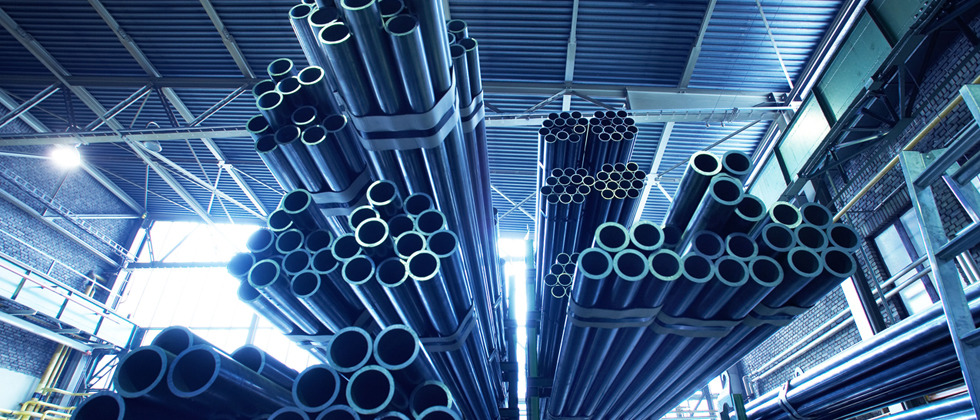
Marcegaglia increases stainless tube prices on high costs
Italian re-roller Marcegaglia is updating its stainless steel welded tube price list, in line with hiking processing costs and increasing prices of coil, Kallanish learns from the company.
The new price list will be effective this week and will involve stainless tube across the entire product range, including decoration and laser. Prices will increase by some €200-300/tonne ($198-297) depending on product thickness and dimension.
Prices of European hot and cold rolled stainless steel coil are increasing due to skyrocketing production costs in Europe. Re-rollers are curbing production to balance demand and supply. Demand for coil derivatives in Italy is also heavily reduced due to the economic crisis.
This week in Italy and France, most re-rollers and mills are implementing production stoppages to coincide with the 1 November public holiday and 31 October bridge holiday. Most players started the production stoppages on Friday and will resume later this week, Kallanish notes.
Marcegaglia is acquiring Outokumpu’s Long Products division for €228 million. The transaction, which represents Marcegaglia’s first foray into steelmaking, should be completed by the end of the year (see Kallanish passim).
Natalia Capra France