


European HRC buyers avoid bookings on
unclear trend, high stocks
The European hot-rolled coil market remained quiet on Friday November 4 with minimal trading activity reported because destocking among buyers was still not accomplished, Fastmarkets has heard.
Fastmarkets calculated its daily steel HRC index, domestic, ex-works Northern Europ, at €647.50 ($632.99) per tonne on November 4, up by €1.25 per tonne from €646.25 per tonne the previous day.
The latest calculation of the index was down by €12.25 per tonne week on week and down by €100.00 per tonne month on month.
Traded volumes remained low in the region, with distributors and steel service centers still being more focused on selling their expensive stocks of HRC, rather than purchasing new volumes.
Producers’ estimates of achievable prices were closer to €650 per tonne exw in the region, while buyers gave lower indications at €630-650 per tonne exw.
“It is hard to say what the price is when no trading is going on,” a steel mill source in the region told Fastmarkets.
In the face of challenging market fundamentals, ArcelorMittal has announced one more blast-furnace stoppage, at Fos-sur-Mer in France, Fastmarkets reported.
At the same time, several trading sources reported that the producer was purchasing steel slab from Brazil and other areas to keep its hot-rolling mills working.
Market sources agreed that more steelmaking output cuts in Europe were needed to balance supply and demand.
Fastmarkets’ calculation of its daily steel HRC index, domestic, exw Italy was €665.00 per tonne on Friday, up by €5 per tonne from €660.00 per tonne on Thursday.
The latest calculation of the Italian index was down by €12.00 per tonne week on week and down by €83.75 per tonne month on month.
Italy’s HRC market was more balanced, sources said, because the production cuts there had been more substantial than in Northern Europe.
“For the first time in years, we have a situation in which Italy’s HRC is traded at a premium compared with the Northern European market. We clearly can see the effects of the steelmaking reductions in Italy,” a source at a steel service center in Italy said.
Offer prices from Italy’s integrated mills were reported at €670-700 per tonne exw, while re-rollers’ offers were at similar levels of €660-680 per tonne exw.
Italian producers were reluctant to give discounts, citing reduced volumes and “biting” costs.
Trading activity in Italy’s market was also quiet. Buyers were still holding back, with the overstocking problem persisting.
Cheap import offers were also adding pressure on the domestic price.
Notably, HRC offers from Japan for January shipment were reported at €600 per tonne CFR.
Offers from other suppliers in Southeast Asia were reported at a similar level of €600-610 per tonne CFR.
“China has been really aggressive recently,” a trading source in Italy told Fastmarkets, “so suppliers from Southeast Asia are trying to increase their presence in the European market.”
– Julia Bolotova


German steel market expects prices, inventory levels to soften: survey
German steel producers and traders expect prices to soften over November amid weak demand and weak energy costs, according to data from S&P Global Commodity Insights’ monthly steel sentiment survey.
In the survey, market participants were overall bearish on pricing over the month, with the November index at around 35 points, down from approximately 41 points in October.
Traders and stockholders seemed more bearish regarding the near-term price trends with an index at 30 points compared to the index of 40 points in October, while the index for producers stood at about 40 points for November, compared to approximately 42 points in October.
“I think the mills had a really good start of the year and they figured out that even with current low prices and weak demand it would be better to fill production lines even if they cut prices further,” one flat steel distributor source said.
Platts, part of S&P Global, assessed TSI North European hot-rolled coil flat on the day at Eur650/mt ex-works Ruhr Nov. 3.
“Prices will be more stable in November,” one European long steel producer said. “It might be too early to expect prices to start moving up. We just want to see some positive sentiment from the customers, but I don’t think that we as a producer will be able to lower prices soon.”
“But we are hoping for a stability in energy prices. As you know, there has been a lot of correction in energy levels and they had been moving down because of all the interventions from the [European] governments, so I am hoping that trends will stabilize,” the source said.
Platts assessment of TSI Northwest Europe rebar dropped Eur10/mt to Eur850/mt ex-works Nov. 2. Platts assessment of European medium sections price (category 1, S235 JR) was flat Nov. 2 at Eur1,250/mt delivered.
Market participants expected production levels to be stable as European mills continued to operate at low capacity.
The index for production outlook stood at around 45 points for November, compared with approximately 28 points in October, indicating that production levels were expected to be stable without any indications for a significant increase in mills’ operating capacity. With 50 points on the index indicating a stable trend, the production outlook for trading sources stood at around 40 points, compared with 35 points for October. The index for producers’ sentiment stood at 50 points for the month, compared with approximately 21 points in October, indicating producers expected the current level of production capacity to be stable in the near term.
The long steel producer expected production levels to be stable at lower capacities as mills continued to try to operate at low energy timings, he told S&P Global.
Inventory expected to soften
The overall index for German inventory sentiment stood at approximately 33 points, compared with around 43 points in October. Some producers expected a dip in inventory levels during the month, deviating from traders’ flat expectations, according to the survey.
The index for steel producers for November stood at around 30 points, compared with 50 points in October. Traders’ expectations were unchanged with the index stable month on month at 35 points.
“I think most restocking activity in November is over, so I am not expecting much change in inventory levels,” the long steel producer said, noting that, according to market reports, stockholders were currently reporting inventories worth two month’s levels.
— Rabia Arif, Benjamin Steven


EU plate prices under pressure as demand limited
Domestic prices for heavy plate were under pressure from low demand in the week to Nov. 4, while Italian rerollers accepted lower prices and German mills held offers stable.
Platts assessed Italian heavy plate down Eur25/mt week on week at Eur875/mt ex-works Italy.
Tradable value has been reported at Eur850-900/mt ex-works, and bids have been heard at Eur850/mt ex-works.
Distributors have shown little interest in heavy plate purchases due to sufficient inventories and traditional destocking by the end of the year. Some sources said buyers have started to show interest in material that would be delivered in January-February 2023.
“Demand for plate is low as stockholders have enough material, but the situation is not too bad,” an Italian reroller said. “There are some inquiries for first-quarter delivery.”
Slab prices, in the meantime, have also moved down due to lower offers from Asia.
Offers of the semifinished products from China have been heard at $560-$590/mt CIF Italy and from Indonesia at $580/mt CIF Italy. Unconfirmed offers from Indonesia have also been reported at $540/mt CIF Italy.
A supplier from Iran has also been offering slab at $540/mt CIF Italy. Interest in the material has been limited despite the low price.
Platts assessed import slab into the benchmark Italian market at $575/mt CIF Nov. 4, down by $25/mt week on week.
In Northern Europe, German mills have been holding from trading in spot market and preferred to focus on long-term contracts and projects.
Platts assessed heavy plate in Northern Europe stable week on week at Eur1,000/mt ex-works Ruhr, reflecting achievable prices and offers.
A Scandinavian reroller continued to give competitive offers — of about Eur930-940/mt delivered Germany for s355jr plate. Some buyers, however, have been avoiding the material as Russian slabs have been used as feedstock.
Platts is part of S&P Global Commodity Insights.
— Maria Tanatar, Benjamin Steven
European HRC stable on weak trading activity
Domestic prices for hot-rolled coil were fairly stable Nov. 4 across Europe as trading activity remained limited.
Platts assessed hot-rolled coil in Northwest Europe stable day on day at Eur650/mt ex-works Ruhr Nov. 4.
Two mill sources reported offers at Eur650-660/mt ex-works Ruhr. Another producer estimated tradable value at Eur650/mt ex-works Ruhr.
A service distributor reported offers at Eur650/mt ex-works Ruhr. And a trader source reported achievable prices at a similar level.
A majority of Northern European steelmakers were reported to offer HRC with delivery time from four to six weeks, indicating that they have not filled order books for this year.
Demand has remained weak as distributors have been struggling to reduce high inventories. Demand from end consumers, in the meantime, have also been reduced, according to market sources.
“End-users are functioning, at slower pace, but they are alive,” an Italian source said. “The problem is stocks. We will not see any activity until stocks decrease. And it takes time. Big mills should have cut capacities during summer, but they didn’t, so we need to wait longer.”
On Nov. 4, ArcelorMittal said it planned to temporarily shut one of its two 2 million mt/year blast furnaces at the Fos-sur-Mer plant in France.
Platts assessed domestic HRC in Italy at Eur650/mt ex-works Nov. 4, down Eur5/mt day on day.
The assessment was based on tradable values reported at Eur650/mt ex-works Italy.
— Maria Tanatar, Benjamin Steven

Tenaris forecasts higher Q4 shipments on pipeline projects
European seamless steel tube producer Tenaris expects higher shipments in the fourth quarter, driven by pipeline projects and additional pricing gains that will also increase sales.
Overall, the company was advancing pipeline activity to support oil and gas developments, mainly in Argentina and the Middle East, Tenaris said in its Q3 earnings report.
Drilling activity had increased in 2022, with further increases forecast, it said, particularly in the Middle East and offshore with global demand for oil country tubular goods (OCTG) expected to surpass pre-COVID levels in 2023.
“In an environment of high geopolitical and macro-economic risk, global economic growth is slowing, and energy prices have come off their recent highs,” the company said.
“Conditions in the energy industry, however, remain supportive for an increased level of investment, with low levels of spare capacity and inventories, uncertainty about the impact of further sanctions on Russian exports and a renewed focus on energy security around the world.”
Q3 tube shipments fell 4% quarter on quarter but rose 15% year on year to 856,000 mt. Of these, shipments of seamless tubes, the core business of the company, dropped 8% quarter on quarter, but were up 11% on the year to 750,000 mt.
Q3 welded tubes shipments rose 41% quarter on quarter and climbed 49% year on year to 106,000 mt.
Tube net sales rise
In Q3, total tubes net sales increased 8% quarter on quarter to $2.83 billion, which was also up 76% year on year, as pricing gains more than compensated lower quarter-on-quarter shipments, which were affected by lower deliveries to pipeline projects and seasonal factors.
North and South American sales increased 11% and 30%, respectively, quarter on quarter to $1.76 billion and $600 million, while sales fell in other countries compared to Q2.
In North America, sales increased thanks to higher OCTG prices throughout the region and higher OCTG shipments in Canada, while in South America, Tenaris said there were higher OCTG sales to offshore projects in Guyana and higher sales for pipelines in Argentina.
In Europe, however, sales declined 27% from Q2 to $190 million due to lower sales for offshore line pipe projects and of industrial products, the company said.
In the Middle East and Africa, sales dropped 10% on the quarter to $234 million on lower sales in Saudi Arabia and lower sales of high alloy products in the UAE, while sales in Asia Pacific fell 31% to $46 million due to the discontinuation of sales from NKKTubes in Japan and lower sales in China.
To produce seamless tubes, Tenaris uses iron ore as its main raw material.
Platts, part of S&P Global Commodity Insights, assessed the 62% Fe Iron Ore Index at $95.95/dmt CFR North China at the end of Q3, up from $116.45/dmt at the start of the quarter.
Platts assessed the 62% Fe Iron Ore Index at $83.75/dmt CFR North China Nov. 3, up 29.9% since the start of 2022.
— Annalisa Villa
Transatlantic set-up supports Klöckner’s performance
Due to its international diversification in Europe and the USA, steel distribution group Klöckner & Co is more optimistic about its business than many other German or European steel companies these days.
“In our customer sectors, we see some normal softening of activity, but not a curve of recession,” ceo Guido Kerkhoff said during a telephone conference when presenting third-quarter results. “The call-offs are going fine, as far as we see.”
He noted that the outlook for 2023 is overshadowed by insecurity, especially for the company’s home country of Germany. Klöckner is more optimistic about business in the USA and even Switzerland, which together account for 60% of its sales volume.
“The price deterioration in the USA arrives in our books with a delay because we have a lot of contract business there,” Kerkhoff explained.
Despite the free-fall of spot prices in the third quarter, revenue was still 16% up year-on-year, to €2.37 billion ($2.35 billion), while volumes fell by only 3.5%, to 1.15 million tonnes. As the company reported earlier (see Kallanish 12 October), its Ebitda was massively lower y-on-y, from €277m to €16m, due to an inventory write-down. As a reaction to the significant steel price deterioration, it actively enforced an inventory correction to mitigate risk exposure, Klöckner stated.
Digital sales, which the group has been cultivating for the last three years, were slightly down y-on-y to 43%, following a pandemic-related boost seen in 2020/21. Also, Klöckner’s product mix lately leaned in favour of processing services, especially in the USA. Apart from those factors, “digital sales are in no way stagnating, let alone falling back,” Kerkhoff said.
Christian Koehl Germany


EU scrap ban threatens financial losses: Assofermet
A scrap export ban from the European Union to non-EU countries would strongly impact European companies in scrap collection and supply causing job losses, Italian trade association Assofermet says in a note sent to Kallanish. Environmental and authorisation issues would also arise, being linked to the progressive increase of unused scrap that would impose a limit on scrap production. It adds that lower-grade scrap collection requiring high processing costs would stop entirely.
The association’s comments add to concerns that have been recently voiced by other associations such as German BVSE and VDM regarding the importance of protecting free scrap trade between the European Union and outside countries.
Scrap within the Union is structurally redundant and in surplus compared to the market requirements of EU steelmakers and EU scrap consumption continues to be lower than collection, Assofermet notes.
From 2005, steel production in Europe has been steadily decreasing, falling from 182.3 million tonnes to 152.6m/t in 2021 with a low level of 132.2m/t registered in 2020 due to the global pandemic.
Last year, with the EU’s steel output standing at 152.6m/t, 87.9 m/t of ferrous scrap was remelted, and 19.5m/t was left unused. According to the global principles of the circular economy, the surplus must continue to be exported. From 2005 to date exports of ferrous scrap have increased by about 12m/t because production of crude steel in the EU has fallen by about 30 m/t. Also since 2005, scrap imports into the EU have been steadily decreasing, thanks to the abundance of scrap supply within the EU, Assofermet concludes.
Natalia Capra France

Portuguese court ends pollution lawsuit against Siderurgia Nacional
The Lisbon Court of Appeal (TRL) has confirmed the end of the class action lawsuit against Portuguese long steel producer SN Seixal for alleged contamination, Kallanish reports. The company is part of the Megasa group.
The court ruled that the steelmaker’s activity fulfils the environmental legislation and that it has not been proven that its production harms the health of the population, so it should not be suspended.
The civil class action against SN Seixal was filed in February 2019 by the local citizen association Terra da Morte Lenta, requesting an urgent assessment of the impacts of air and noise pollution produced by the steelmaker. The group also called on Brussels to define and implement the technical means of monitoring air and noise pollution. Terra da Morte Lenta complained that the national environmental agency renewed SN’s environmental licence without carrying out epidemiological studies or lung carcinoma and lung disease screening tests in the community.
The TRL now considers that there was bad faith litigation, condemning the association to pay €5,100 ($5,034).
Todor Kirkov Bulgaria

EU opens €3 billion funding call for clean energy projects
The European Commission has opened a €3 billion ($2.96 billion) funding call for innovative clean technology projects to decarbonise industry and accelerate its energy independence from Russian fossil fuels, Kallanish reports.
The third investment round will offer €1 billion for large-scale projects promoting green hydrogen production and hydrogen industrial application, as well as electrification methods to replace fossil fuels in industry. Another €0.7 billion will be available for projects, including those in manufacturing of final equipment for electrolysers and fuel cells.
General innovative decarbonisation projects to decarbonise energy-intensive industries have €1 billion funding available for grab. These projects could include renewable energy, energy storage, carbon capture and use, and alternative fuels for transport including maritime and aviation. That means hydrogen and ammonia-related projects may also be included in this funding criteria.
The EC said on 3 November the projects will be assessed by independent unnamed evaluators. They will look into their innovation level; potential greenhouse gas emission reduction; operational, financial and technical maturity; scaling up potential; and cost efficiency.
The call covers projects located in EU member countries, Iceland and Norway. Applications must be submitted by 16 March 2023. If “promising projects” that aren’t mature enough for this round, could benefit from project development assistance by the European Investment Bank, the EC says.
Successful applicants will be notified in Q2 2023, with a view to be awarded the grants and sign the projects in Q4 2023.
The previous two EU Innovation Fund calls offered €1 billion and €1.8 billion respectively to up to 17 projects.
Gabriela Farhangi UK
ArcelorMittal France to temporarily shut 2 million mt BF at Fos sur Mer
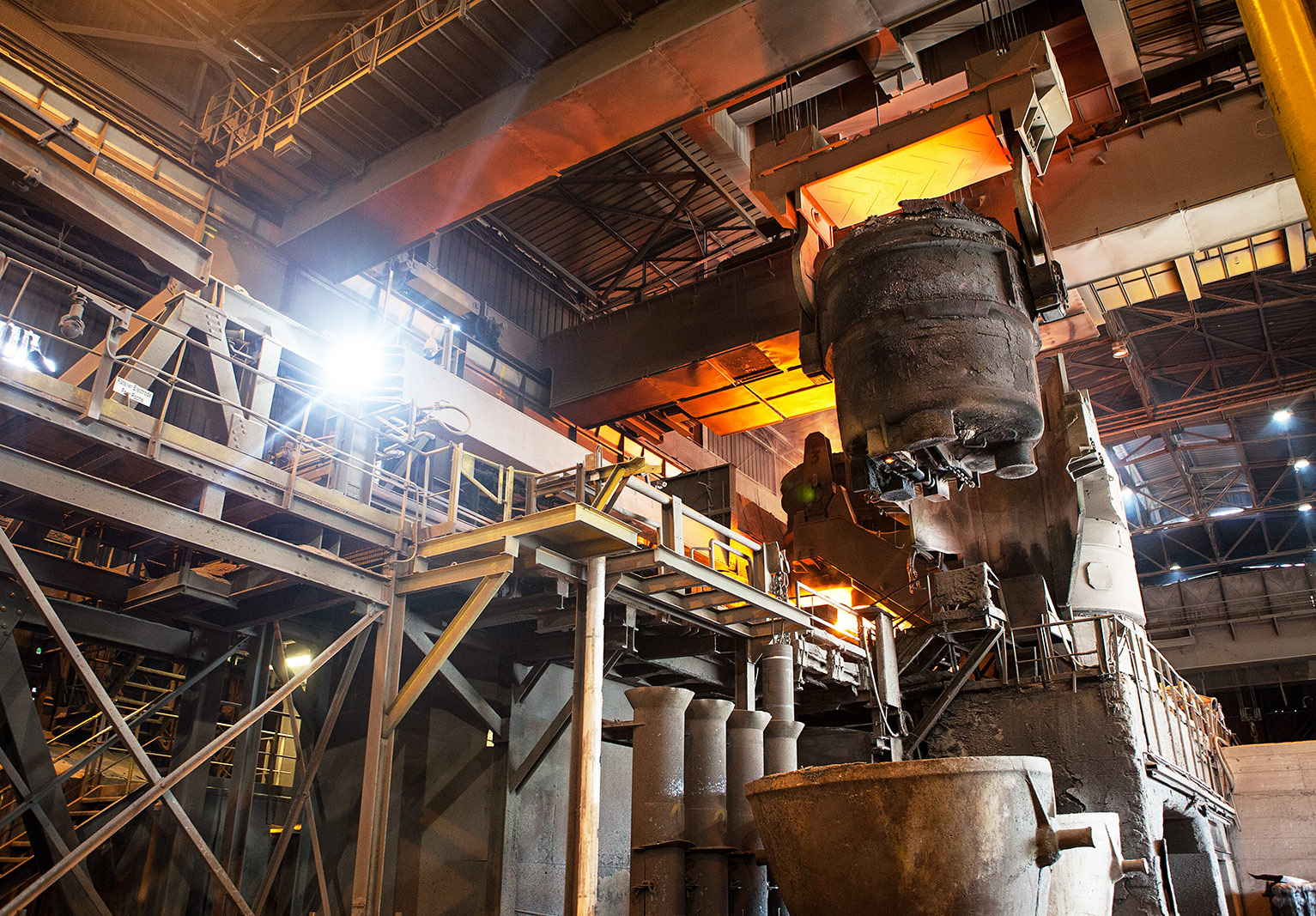
European steelmaker ArcelorMittal will temporarily shut one of its two 2 million mt/year blast furnaces in Fos-sur-Mer, France, it told S&P Global Commodity Insights on Nov. 4.
“In a strongly deteriorated macro-economic context, coupled with a major impact of soaring energy prices and an increase in steel imports into Europe, the Fos-sur-Mer site is facing a slowdown in demand for steel,” the company said
It forecast steel orders to be lower for the rest of 2022 and the beginning of 2023.
Partial activity measures will be put in place starting from the beginning of December to adapt the working hours of some staff up to a maximum one day per week.
“As soon as market conditions allow, we will relaunch a two-blast furnace operation at Fos,” ArcelorMittal Mediterranee CEO Bruno Ribo said.
Platts, part of S&P Global, assessed domestic HRC prices in Northern Europe at Eur650/mt ex-works Ruhr Nov. 3, down 29.5% since the start of 2022.
Currently, only three of the five BFs located in France are working, following the shutdown of a 1.5 million mt/year blast furnace No. 3 at the Dunkirk plant on Sept. 19.
Record-low nuclear power generation has lifted French power prices from a discount to Europe’s premium market over recent months and into 2023. Year-ahead power settled Nov. 3 at Eur485/MWh ($481/MWh) compared to Eur302.50/MWh in Italy, EEX data showed.
French power prices have at least tripled over the past year with Dec. 2022 contracts currently trading around Eur800/MWh compared to Eur274.67/MWh.
— Annalisa Villa