


Europe might see more anti-dumping cases as trade flows shift, EUROMETAL hears


The European steel market was likely to face a new wave of anti-dumping cases concerning flat steel products, delegates were told at EUROMETAL’s International Trade Day in Antwerp on Thursday November 10.
Russia’s invasion of Ukraine in February 2022 interrupted traditional supply chains of steel products and raw materials, Fastmarkets heard.
Ukraine’s steel export volumes have dropped drastically in 2022 since it lost a large portion of its steelmaking capacities due to military action, while blockades of key ports on the Azov and Black Seas have interrupted traditional logistics routes.
During the first nine months of 2021, Ukraine exported 11.89 million tonnes of metal products by rail, according to data from Ukrzaliznytsia, a Ukrainian state-owned rail transport company. That included transportation of products by railway to sea ports for export.
During the corresponding period of 2022, Ukraine’s exports by rail amounted to only 4.7 million tonnes.
Ukraine exported 615,442 tonnes of hot-rolled flat steel products to the EU in 2021, but in the first eight months of 2022 deliveries from Ukraine to the bloc fell to 376,165 tonnes, according to European steel association Eurofer.
Imports of Russia-origin finished steel products were banned in the EU in spring this year as a response to Russia’s military aggression.
The most recent European Commission sanctions package, which included two-year quotas for steel semi-finished products originating in Russia, was adopted in early October.
Russia supplied about 1.98 million tonnes of hot-rolled flat steel products to the EU in 2021, but in January-August 2022 the corresponding import volumes from Russia amounted to only 382,430 tonnes, according to Eurofer.
With traditional volumes of HRC from Ukraine and Russia missing from the market, European buyers have started to import more steel from Southeast Asia recently, Eurofer statistics showed.
Notably, hot-rolled flat steel imports from Japan to the EU amounted to 739,255 tonnes in January-August 2022, compared with 591,355 tonnes during the entire year of 2021.
HRC deliveries from South Korea to the EU also increased, amounting to 564,077 tonnes in January-August 2022, versus 463,487 tonnes in the whole year of 2021.
Deliveries from Vietnam, Taiwan and India have also increased in 2022.
HRC offers from Southeast Asia to Southern Europe have been reported at €600-610 ($603-613) per tonne CFR recently.
Despite the anti-dumping cases and safeguard measures in place, steel import volumes to the EU have remained high, adding to the pressure on the already-weak European steel market.
Yuriy Rudyuk, a partner in law firm Van Bael & Bellis, has said that a new wave of anti-dumping trade cases against hot-rolled flat steel products was likely, considering the persistently high import penetration into the EU market.
European steel producers were struggling to compete with cheaper imports because they faced significantly higher production costs, including carbon emissions allowances.
“Overseas steel suppliers benefit from much lower energy prices and are not exposed to carbon costs,” a steel mill source told Fastmarkets.
Domestic HRC prices in Europe have been falling consistently in the second half of 2022 due to a toxic combination of low demand, high inventories and pressure from imports, sources said.
Fastmarkets calculated its daily steel HRC index, domestic, ex-works Northern Europe, at €648.33 per tonne on Thursday, up by €0.35 per tonne from €647.98 per tonne on November 9.
The latest calculation of the index was up by €2.08 per tonne week on week but down by €79.17 per tonne month on month.
Published by: Julia Bolotova

EU needs traders to balance mill supply
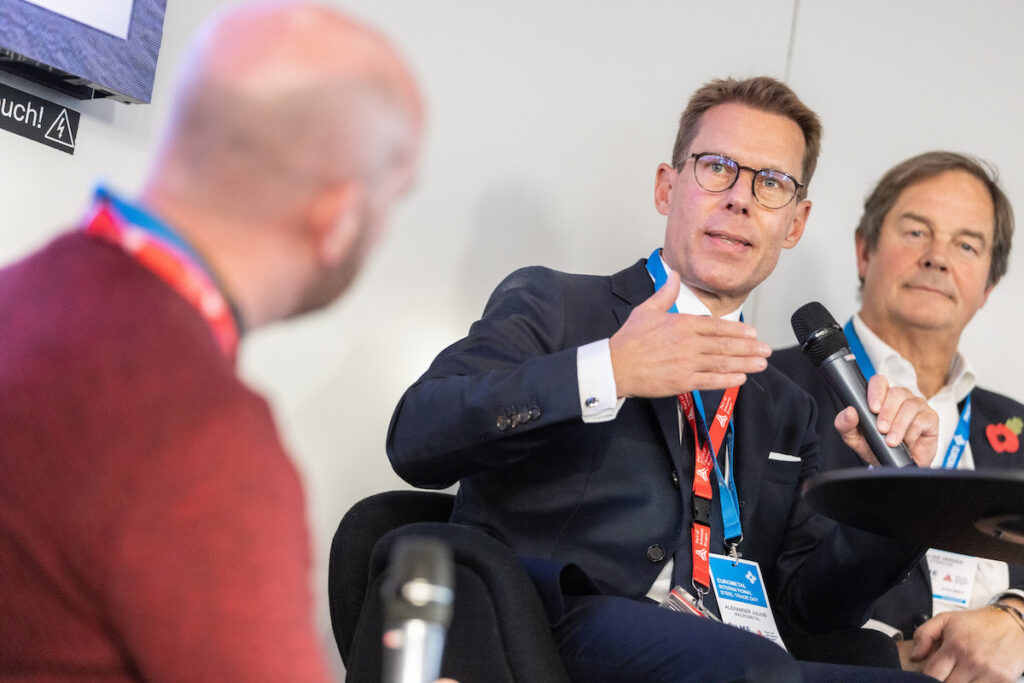
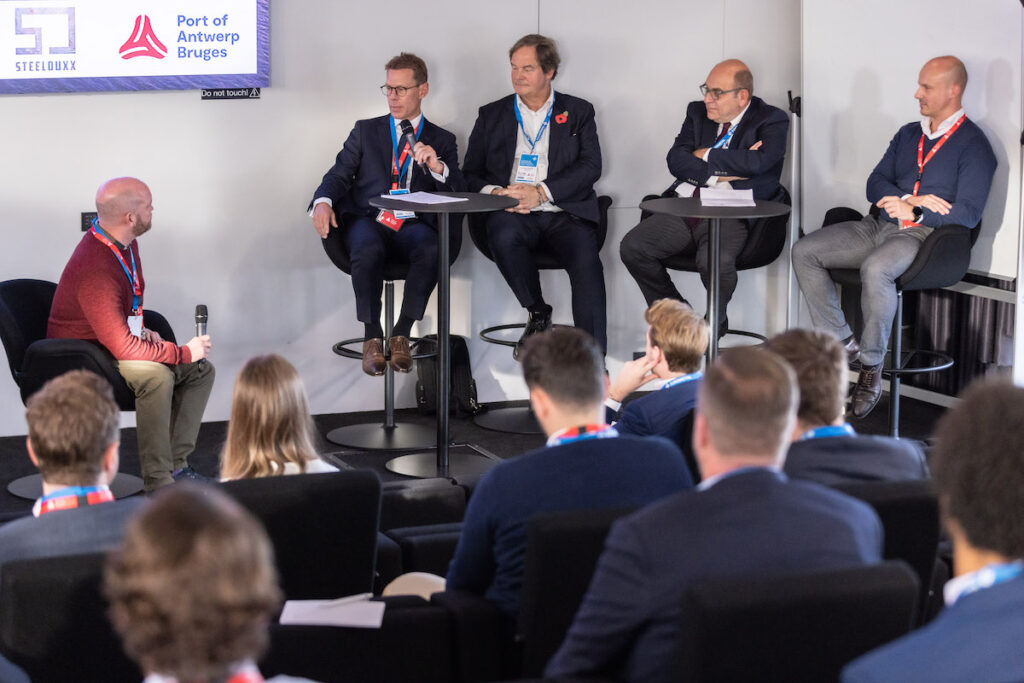
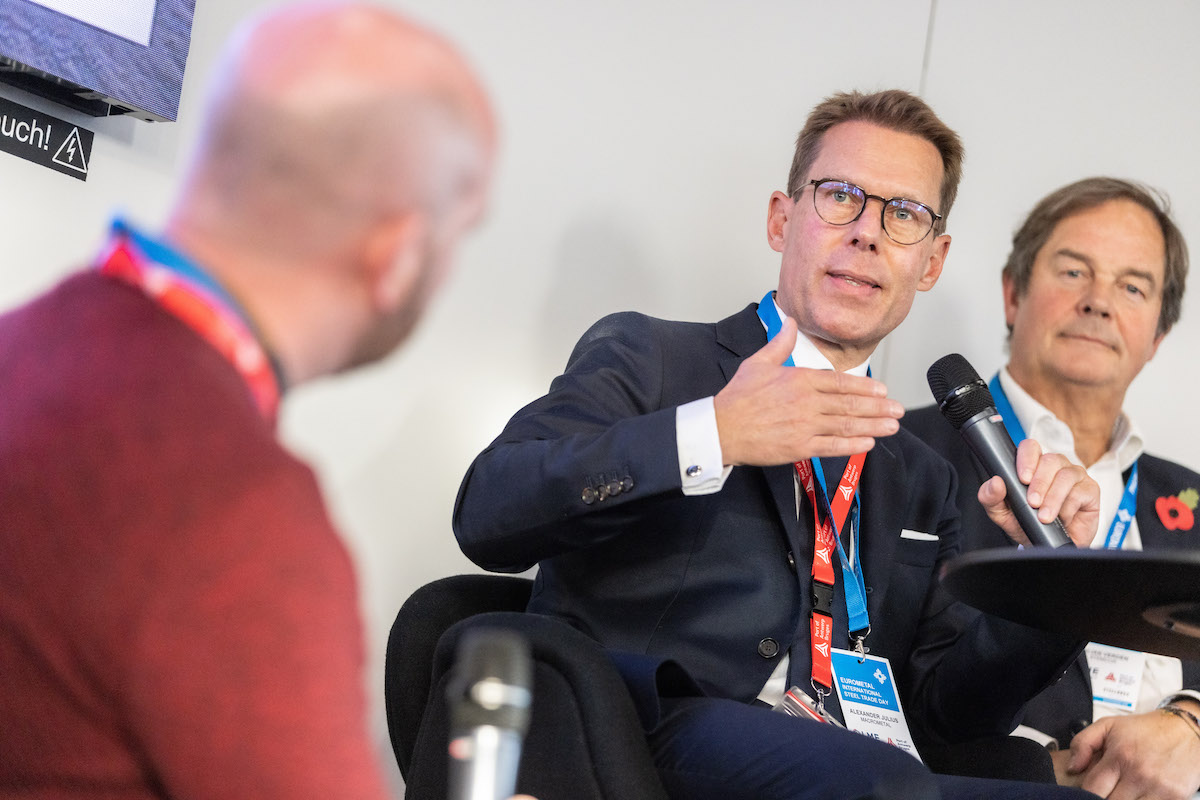
Importers of steel into the European Union are not harming their domestic markets, let alone intending to do so, but are a valuable supplement to local mills, traders claimed at Thursday’s EUROMETAL conference in Antwerp.
“Buying domestic is the natural way, and we are completing the picture,” Alexander Julius of MacroMetals stated at the event attended by Kallanish. He referred to periods when local mills could not supply sufficiently, like in 2021 when the post-Covid resurgence in demand gained momentum. “Mills underestimate the memory of customers of such periods, when we jumped in,” Julius said during the closing panel discussion of EUROMETAL’s International Steel Trade Day.
This was confirmed by Stemcor’s Julian Verden and Steelforce’s Laurent Taylor. “We do remember what happened last year,” Taylor reiterated, and advised that “nobody should buy 100% local, or 100% import”. He underlined that import buying is a skill that requires research, and a tool that can be used in purchasing negotiations.
Verden described the role of a trader as “an arm of the customer” and an “extension of mills”. Foreign producers exporting into the EU “would operate foreign offices elsewhere, but for them it works better with an external agent [EU trader] than having ongoing costs with permanent staff”.
Markus Fix of Ruhr-based service centre DM Stahl complemented the panel when he stated that “you traders were reliable partners when mills failed”. He highlighted their role as buyers of big volumes, to be distributed among buyers of various sizes. Against that, “smaller service centres would not be in the position to order a vessel of 30,000 tonnes,” he said.
Tayfun Iseri, who represents Turkish importers as well as mills, as president of Turkish flat steel association Yisad, concurred. Speaking of his experience in the US, he pointed out that “distributors, service centres and steel users just would not know how to import”.
Christian Koehl Germany
