


Trading quiet in European HRC market as buyers expect further price declines
There was limited trading in the European hot-rolled coil market on Tuesday November 22, with restocking only likely to be seen in the first quarter of 2023, sources told Fastmarkets
Fastmarkets assessed its daily steel hot-rolled coil index, domestic, ex-works Northern Europe, at €622.75 ($638.82) per tonne on Tuesday, down by €2.04 per tonne from €624.79 per tonne a day earlier.
The latest calculation of the index is down by €7.25 per tonne week on week, and down by €42.25 per tonne month on month.
Offers and tradeable values for December- and January-rolling HRC were reported by mills and buyers at €620-630 per tonne EXW in the region.
Some unconfirmed deals were heard at €600 per tonne EXW in Germany.
European producers still had December-rolling coil to sell, market sources said.
But one producer source said that they had sold some tonnages of January-rolling HRC in the Benelux area, but volumes were small.
“We are mainly seeing back-to-back business these days, and it is not likely to change before year-end,” the mill source said.
Stockholders and distributors continued to compete with one another in the secondary market to sell off their expensive stock and therefore were not actively restocking.
Furthermore, buyers would like to restock once HRC prices reach a bottom, and there was no clarity on whether prices had achieved that yet. In fact, some market sources said they still expected to see a downward correction in HRC prices during the fourth quarter.
For their part, producers were a little more optimistic and said prices would likely hold steady throughout the rest of this year.
“We have seen some increase in inquiries from buyers lately; of course, the volumes are not booming, but it is a nice change after weeks of silence,” a second mill source said.
The second mill source added that producers were trying to increase prices for first quarter-rolling coil, but the market fundamentals still seem to be too weak for that.
Fastmarkets’ assessment of the daily steel hot-rolled coil index, domestic, exw Italy, was €592.50 per tonne on Tuesday, down by €7.50 per tonne from €600.00 per tonne on Monday.
The Italian index is down by €28.13 per tonne week on week, and down by €90.00 per tonne month on month.
It is the first time since December 2020 that the index has fallen below $600 per tonne EXW, according to Fastmarkets’ data.
One mill in Italy was heard selling HRC at €600-620 per tonne delivered (€580-590 per tonne EXW) during the week.
Some buyers came back to the market to book HRC at those prices, but in general traded volumes remained rather low, sources said.
Market sources said that current transaction prices in Italy were already very close to the cost line, which they estimated to be €550 per tonne for HRC.
Overseas suppliers were not competitive compared to domestic EU mills, given the long lead times and small gap between prices.
In fact, the latest offers from Southeast Asian suppliers were heard at €570-585 per tonne CFR Italy for March delivery.
“There is no point in booking import material and waiting for several months, while the European mills can supply HRC in four weeks at almost the same price,” the trading source in Italy said.
Published by: Julia Bolotova


German industry proposes label system for green steel
German steel federation Wirtschaftsvereinigung (WV) Stahl has come up with a label system for climate-friendly steel which it says is the first worldwide that has been developed by an industry involving all producers.
Apart from the essential question when steel can be called “green”/climate-neutral, WV Stahl also addresses the issue to what extent intermediate investment for climate-neutrality at a later stage can be taken into account. Finally, it tackles the issue of what standards can ensure that all market participants adhere to the same rules so that the various paths to transformation can be compared and evaluated.
Unlike the system of, for example, the International Energy Agency, WV Stahl includes not only the steel mill but also the rolling mill and is therefore closer to the finished product, Kallanish understands.
A positive commentary on WV Stahl’s approach has come from south of the border, from Swiss Steel, which arguably participated in the system’s development, as most of its mills are located in Germany (Deutsche Edelstahlwerke). “Crucially, unlike other schemes, the current proposal clearly defines which two steel grades it applies to: C22 for the blast furnace route and C45 for the electric steel route,” Swiss Steel points out.
“In a next step, a rulebook will be developed which clearly defines how reference values for other, higher-alloyed grades can be determined taking the reference values for these two basic grades,” it states.
Swiss Steel claims to be Europe’s largest manufacturer of electrical steel, and the European market leader for green steel – although WV Stahl’s proposal does not give a ranking to that effect.
Christian Koehl Germany


Steel output growth flattens despite continued China rebound
The global crude steel production rebound stuttered in October. After rising in September for the first time since July 2021, output in the 64 countries reporting to the World Steel Association (worldsteel) was flat on-year in October at 147.3 million tonnes, Kallanish notes.
This came despite an 11% surge in Chinese production to 79.76mt in October. This figure was nevertheless down 9% from September. Indian output rose 3% on-year to 10.45mt. However, Japanese and South Korean production were down from a year earlier by 11% and 12% respectively to 7.35mt and 5.08mt.
EU27 crude steel production dropped 17.5% in October to 11.29mt, with German and Italian output down 14% and 9% respectively to 3.14mt and 2mt. French and Spanish output fell 19% and 29% respectively to 944,000t and 913,000t.
Compared to September, however, EU crude steel output was up by 5%, with both Germany and Italy raising production.
Turkish output fell 18% on-year to 2.87mt, but also rebounded versus September.
US and Brazilian output fell 9% and an estimated 4.5% respectively on-year to 6.7mt and 2.84mt. However, both were also up compared to September.
Russian output was estimated down 11.5% to 5.83mt and Ukrainian production dropped 80% to 318,000t.
Global production in January-October thus fell 3.9% on-year to 1.55 billion tonnes.
Adam Smith Poland

Italian coil demand surges
Italian hot rolled coil demand is increasing this week, as predicted. Asking values are hiking by some €20/tonne ($20.5) on average, supported by less competitive import offers, Kallanish hears.
Italian producers are now asking for €620-650/t base ex-works. Contracts, which until last week started at €570/t base ex-works, are seen rising to an average level of €620/t base ex-works this week. Multiple service centres and re-rollers say they are ready to book material this week for first-quarter delivery.
Meanwhile, cold rolled and hot-dipped galvanised coil prices continue to be under pressure in Italy and wider Europe, mostly due to the downturn in the home appliance and automotive sectors.
Asian offers and contract prices in Italy are particularly competitive, with service centres buying Asian CRC at €620-630/t cfr. Local CRC contracts start at €690-700/t base ex-works for the low point of the range and go up to €730-740/t, but sales are only for low volumes.
Domestic HDG values are at €730-750/t base ex-works on average. Demand for this product continues to stagnate but sellers are not ruling out some price recovery, in line with HRC.
Natalia Capra France
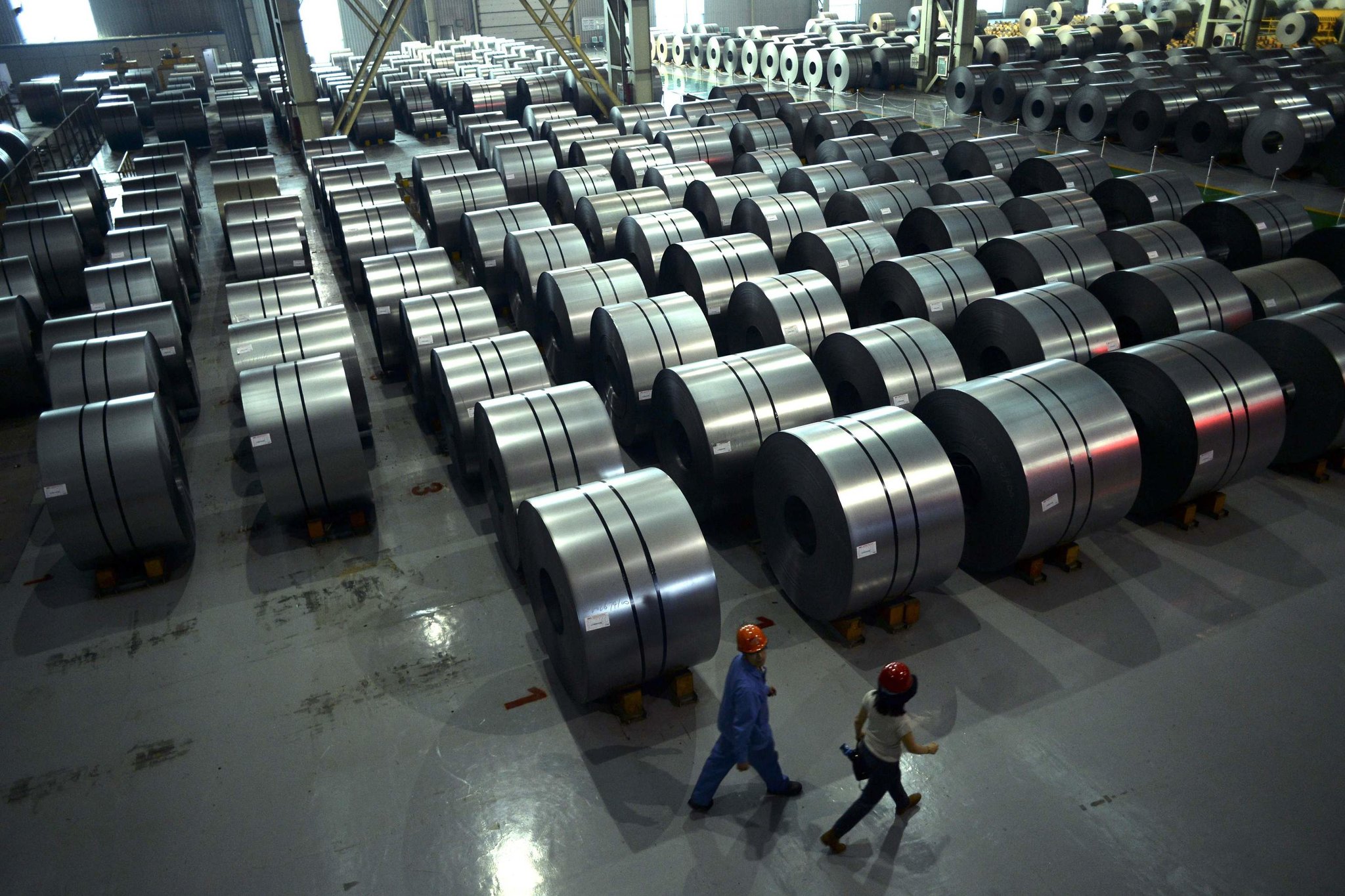
Northwest European coil prices near bottom, some sceptical
The floor for northwest European coil prices appears to be coming nearer and nearer, but still remains out of clear sight beneath a murky misty layer.
Sources from integrated mills, of course, claim that the bottom is nigh. “From what I see in the press, prices are no longer sinking,” one mill source says, but fails to give evidence. “I do believe that we are very near the bottom of this price spiral now,” another one says, stating that his company is starting to see improved activity in the market for the first quarter.
From the buyer’s side, views are more sceptical. A manager at a German fabricator speaks of “wishful thinking”, but also believes mills tend to further production cuts rather than to further price concessions.
Although signals of a recovery are heard from Italy, these have not even reached Austria yet. According to a buyer in the Alpine nation, prices for hot rolled coil are still at €660/tonne ($678) delivered, with hardly any difference between product from Italian or German mills. In the latter case, deducting delivery, the ex-works price would easily be at €630/t or lower, although official domestic offers tend to be higher. Swiss sources suggest offers from Italy are at €600 ex-works.
Sources in the Benelux tell Kallanish they do not see solid ground yet, citing continued lack of demand and still-too-high stocks at traders and service centres. One service centre manager, however, observes that some bets on a rebound are being taken at the customer end, too. “Some customers think that the lowest price level has now been reached and are actually considering ordering larger volumes at these prices to avoid possible price increases,” he says.
Christian Koehl Germany
Germany’s Salzgitter, Mubea partner on low carbon steel production, recycling
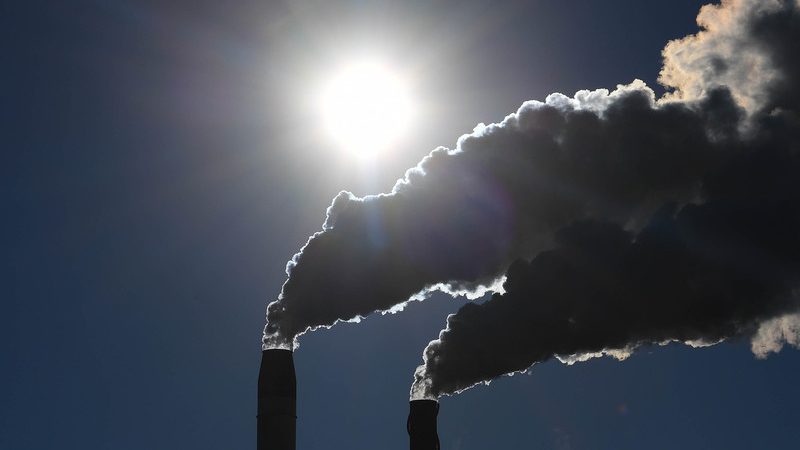
Salzgitter is to cooperate with German automotive components manufacturer Mubea on sustainable steel production, low carbon steel product processing and closed loop steel recycling, the German steelmaker said Nov. 22.
The two companies have signed a memorandum of understanding for the cooperation, which will assist Mubea in its aim of increasing its use of low carbon steel products.
Under the SALCOS low carbon steelmaking transformation program, Salzgitter plans to switch its steel production to hydrogen-based processes from end-2025 to become carbon neutral from 2033.
The steelmaker already produces low-CO2 steel products via a scrap-based process route in electric arc furnaces, it said.
Mubea has committed to reducing its emissions by at least 25% through to 2025.
“Wherever possible, we want to avoid, reduce, and ultimately eliminate future greenhouse gas emissions in order to achieve net zero through this approach by 2035,” Mubea Global Purchasing Director Division Body Tobias Klein said.
Salzgitter and Mubea have been long-standing partners for more than 20 years, with the latter sourcing deliveries of high-grade strip steel products that it processes further, primarily for the automotive industry.
“The cooperation with Mubea shows that customers trust in SALCOS as a path toward green steel production and perceive added value in the transformation,” Salzgitter Flachstahl Sales Director Phillip Meiser said, adding that markets for low carbon steel were emerging and different customer sectors were striving to work together.
For recycling, the two companies were establishing new logistics concepts between its integrated steelworks and a number of Mubea sites in Europe.
“Our partners are interested in realizing closed loops in order to take the supply of raw materials and the disposal recyclables to a new level,” Meiser said.
Platts, part of S&P Global Commodity Insights, assessed domestic HRC prices in Northern Europe at Eur615/mt ($631/mt) ex-works Ruhr Nov. 21, down 33% since the start of 2022.
— Jacqueline Holman
