

Metinvest’s operations in Ukraine affected by blackouts; Kamet Steel stopped
Metinvest’s facilities in Ukraine suffered an emergency stoppage due to a lack of power after Russian attacks on Ukraine’s energy grid during the week of November 21, the company said in an announcement on November 28.
“Russian attacks have resulted in a country-wide blackout and many major cities and towns being left without water supply,” the announcement said. “Metinvest, along with all other industrial companies operating in Ukraine, has also been affected, as for the first time since the commencement of the Ukrainian Events [Russia’s full-scale military invasion of Ukraine], production across Metinvest’s facilities in Ukraine suffered an emergency stoppage due to the lack of power supply.”
“As of the date of this announcement, all of Metinvest’s affected Ukrainian facilities have resumed operations, except for Kamet Steel [an integrated long steel producer located in Kamianske, in central Ukraine],” the company added. “An assessment of possible damage to the plant’s production facilities following the shutdown and the timing to relaunch output is still ongoing.”
Metinvest also said that a prolonged lack of supply of square billets from Kamet Steel could lead to a disruption of production at Promet Steel, Metinvest’s long steel products re-roller in Bulgaria.
At present, Zaporizhstal Iron & Steel Works in Zaporizhzhia is the only Ukranian steelmaking asset of Metinvest that is operating, but with reduced capacity. According to latest available estimations of Yuriy Ryzhenkov, Metinvest’s chief executive officer, Zaporizhstal was operating with a 50-60% utilization rate before the emergency stoppage. Zaporizhstal is partly owned by Metinvest.
Metinvest’s other two steelmaking assets, Azovstal and Ilyich Steel, are both located in the temporarily occupied port city of Mariupol and halted operations in February due to damage after Russia started its invasion of Ukraine.
The company continues to operate Central GOK and Pokrovske Coal, one of its three iron ore mining and beneficiation plants, which comprises several entities – the most significant of which are Pokrovske Colliery and Sviato-Varvarynska Concentrating Factory.
“Metinvest cannot predict how long Russia’s attacks on Ukraine’s power infrastructure could continue,” the company said in its announcement. “Despite the efforts of [the national power company] Ukrenergo power plants’ operators and distribution networks’ specialists to restore power supply, there remain substantial risks that the availability of electricity across the country will continue to deteriorate. As a result, production disruptions across Metinvest’s Ukrainian assets could also take place.”
ArcelorMittal Kryvyi Rih, the other major steel maker in Ukraine, has stopped steelmaking and rolling operations after another barrage of missile strikes by Russia on Ukrainian energy infrastructure, the company said on Thursday November 24.
Published by: Marina Shulga


European HRC producers bullish for Q1; buyers expect no major changes before year-end
European hot-rolled coil producers are continuing to book December tonnages at reduced prices, but are refusing to give discounts for the first quarter of 2023, given that progress has been made with long-term contract negotiations, sources told Fastmarkets on Monday November 28.
Fastmarkets calculated its daily steel HRC index domestic exw Northern Europe at €618.75 ($642.88) per tonne on Monday, down by €5.94 from €624.69 per tonne on Friday.
The latest calculation of the index is down by €6.04 per tonne week on week and by €41 per tonne month on month.
Tradeable values of HRC from integrated producers in the region were between €600 per tonne EXW and €620 per tonne EXW, buyer sources said.
A transaction was also heard for Italy-origin coil delivered to Germany at €590 per tonne, a distributor source said.
Only December tonnages were available at discounted prices, mill sources said, and for first-quarter volumes the minimum price idea was €650 per tonne EXW.
Producers expect demand from the automotive sector to start recovering next year.
“It won’t be booming, of course, but we do expect a recovery from the low levels seen in 2022,” a mill source in the region said.
Long-term agreements have been reached with automotive industry end consumers, but at higher prices than initially targeted, several sources said.
“Buyers saw the [long-term HRC] price as no higher than €700 per tonne EXW in October. Now the agreements have been settled at €800-850 per tonne EXW,” a stockholder said. “This is lower compared with 2022 levels, but higher than expected, so it is a positive sign for the market.”
Market participants said they expect production cuts to support HRC prices in the first quarter of 2023.
Fastmarkets’ calculation of its daily steel HRC index, domestic, exw Italy was €596.25 per tonne on Monday, up by €5 per tonne from €591.25 per tonne on Friday.
The latest calculation of the Italian index was down by €3.75 per tonne week on week and by €80.75 per tonne month on month.
Buyer estimates of achievable prices were about €590-600 per tonne EXW.
But Italian producers were trying to push for higher prices for January-February 2023, to about €630-640 per tonne EXW, up from recent transactions for December volumes at €580-600 per tonne EXW.
Buyers were skeptical about such a large price rise for the time being. Some trading sources, however, suggested that steel service centers and distributors will have to make bookings for February delivery to secure HRC availability in stock, which might help mills achieve some upticks in prices.
Overseas suppliers have reportedly been targeting higher prices as well.
Notably, new target levels were no lower than €600 per tonne CFR Italy from Japan, South Korea, Indonesia and India.
Buyers’ price ideas were no higher than €580 per tonne CFR Italy, several sources said.
Published by: Julia Bolotova
Italian car output increases unexpectedly
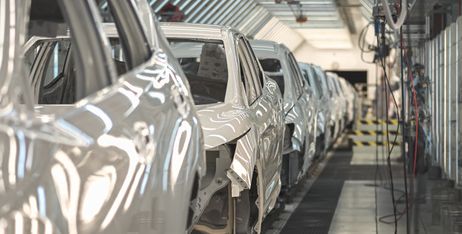
Italian passenger car output increased unexpectedly year-on-year in September following a long series of declines since the beginning of 2022, Kallanish notes from local carmakers’ association Associazione Nazionale Filiera Industria Automobilistica (Anfia) preliminary data.
Passenger car production stood at 39,938 units in September, a notable increase of 25.9% compared to September 2021. Output also grew by 4.1% over the first nine months of the year to 338,509 units, Anfia says.
By comparison, Spanish car output also increased by 6.3% in September to 151,418 cars and by 2.4% y-o-y in January-September to 1.2 million cars.
In Germany, meanwhile, January-October output increased 10% y-o-y to 2.7m units. In October alone, German production jumped by 30% y-o-y to 277,900 cars, Anfia reveals.
French car production fell 2% y-o-y in January-June, the latest data available, to 500,182 units.
Italian passenger car output decreased by 2.1% y-o-y in full-year 2021 to 442,432 units. It stood at 451,718 units in 2020 versus 542,472 units in 2019.
Italy has 23 car production plants. By comparison, Spain has 17 plants, France 31 and Germany 42.
Natalia Capra France

Feralpi Stahl invests in energy transformation
As a step in its ambitions for environmentally friendly steel production, German rebar mill Feralpi Stahl will be equipped with its own power transformation substation at its premises in Riesa, Saxony, Kallanish notes.
The German subsidiary of Italy’s Feralpi Group, formerly known as Elektro-Stahlwerke (ESW) Riesa, has lined up some €180 million ($187m) for improvement of equipment and logistics. This will include a new rolling mill, improvements in scrap handling and on-site logistics, and the power transformation substation. Site clearance for the construction will start imminently, the company says.
The mill will be partnering with Siemens Energy as technology provider, and points out a major source of emissions which it aims to avoid in future.
Until now, sulphur hexafluoride, or SF6 for short, was used in so-called gas-insulated switchgear, and is prone to escape through the smallest leakages. “These have a greater impact on the greenhouse effect than domestic air traffic,” says Henning Hamann, head of technical projects.
SF6 is the strongest known greenhouse gas, he explains. 100g have the same effect as 2.5 tonnes of CO2, and it is also broken down extremely slowly in the atmosphere, with a residence time of more than 3,000 years, 25 times as long as CO2. The new type of switchgear at Feralpi Stahl will work with “clean air” made up of natural gases nitrogen and oxygen.
Christian Koehl Germany

Liberty acquires Dongbu EAF, strip mill for Galati
Liberty has agreed to purchase the Dongbu Steel plant and associated equipment from South Korean parent company KG Steel, for installation at its Romania-based Galati steelworks, Kallanish notes.
The plant, located in Dangjin, South Korea, comprises two modern, Consteel 160-tonne electric arc furnaces, two single strand, vertically-curved thin slab continuous casters, and a hot strip mill. It has an installed liquid steel capacity of 3 million tonnes/year and finished steel products capacity of 2.85m t/y.
“Technical studies conducted by Liberty indicate that the Dongbu plant has the potential to perform at the highest standards in the sector against KPIs including CO2 emissions, energy efficiency, cost, operational flexibility and product range,” Liberty says.
The equipment will allow Galati to transition to low-carbon EAF operations several years faster than previously planned and at significantly lower cost compared with alternative options analysed, it adds.
Dongbu Steel was acquired by KG Group in 2019 (see Kallanish passim). Creditors attempted but failed to sell financially-troubled Dongbu in 2014 and 2017. As part of its restructuring, the firm sought a buyer for its EAFs but was unsuccessful until now.
Last summer, Liberty Galati launched the tender process for the supply of hybrid EAFs (see Kallanish passim). This is thought to be going ahead despite the latest acquisition from Korea. The new EAFs at Galati will replace the existing blast furnaces by 2025, allowing the Romanian mill to be more flexible by using hot metal, direct reduced iron (DRI/HBI) and scrap steel in the charge mix.
Adam Smith Poland
Aperam increases alloy surcharges
Aperam increases alloy surcharges
French stainless steel producer Aperam is increasing its December alloy surcharges by some €150/tonne ($157) on average compared to November for its austenitic range of flat stainless steels for Europe, Kallanish notes.
Aperam’s surcharges next month for grade 304 (1.4301) will increase from €2,464/t to €2,680/t, effective 1 December. Grade 316 will hike from €4,180/t to €4,264/t next month. Grade 309S, a heat-resistant stainless steel used in high-temperature applications, will tick up from €3,645/t in November to €3,731/t in December. The surcharge for the most popular ferritic grade, 409, will however decrease from €928/t to €851/t next month, the company reveals.
Nickel prices have been highly volatile over the past few days. The London Metal Exchange (LME) has been enhancing trading surveillance since mid-month due to sharp fluctuations that saw nickel values spiking to almost $31,000/t, only to fall sharply again on Wednesday last week to $28,555/t. This has brought back memories of the March trading suspensions.
Offers for nickel cash buyers meanwhile reached $25,600/t on 25 November.
Natalia Capra France

Italian hot-rolled coil prices begin to stabilize in otherwise bearish European market
Prices in the Italian hot-rolled coil market increased Nov. 28, with buyers more confident of stabilization moving into next year.
Platts assessed South European HRC up Eur5/mt on the day, at Eur605/mt ex-works Italy.
“Everyone is trying to move the market back towards Eur650/mt delivered and we’ve taken our first steps,” said a trader source.
With cheaper offers heard around Eur580-600/mt ex-works no longer available in the Italian market, buyers were indeed more positive on trading sentiments going into next year.
While current transactional activity has not yet risen to steelmakers’ Eur650/mt target price for delivered basis offerings – the equivalent of Eur620-630/mt ex-works Italy – deals were reported at Eur620-630/mt delivered, or Eur600-610/mt ex-works on the day.
Buyers awaited the reappearance of third country producers in the market, many of whom withdrew last week in aversion to a potential anti-dumping probe, particularly in relation to Japanese material. However, the current domestic price level has limited interest in import coil, at least until buyers perceive a stable pricing floor.
“There is no way for import to be competitive at all at the moment,” said a trader. “India was in the market competitively after other origins withdrew but offers expired on Friday with nothing new seen yet.”
The South European market is now trading at parity with North European mills, assessed stable at the same Eur605/mt ex-works Ruhr on the day.
Buyers in North Europe perceived opportunity to achieve prices below Eur600/mt ex-works Ruhr, with a trader reporting tradable value at Eur590/mt ex-woks Northern Europe.
In general, however, indications were received at Eur600-610/mt ex-works Ruhr and Northern Europe.
Platts is part of S&P Global Commodity Insights.
— Benjamin Steven
