


Revista InfoAcero Noviembre 2022
En el siguiente enlace pueden acceder a la edición de Noviembre de nuestra revista: INFOACERO
Destacamos a continuación algunos de sus contenidos:
- Opinión – D. Sergio Cobos – Junta Directiva UAHE.
- Evolución del Índice de Precios de Productos Siderúrgicos – UAHE
- Sector Siderúrgico: Evolución Consumo Real y Aparente de Acero en Europa – Eurofer-Informe 4º trimestre
- Información Asociativa: Conferencias virtuales UAHE, Jornada UAHE, Avance Steel Net Forum Iberia 2023 (Oporto)

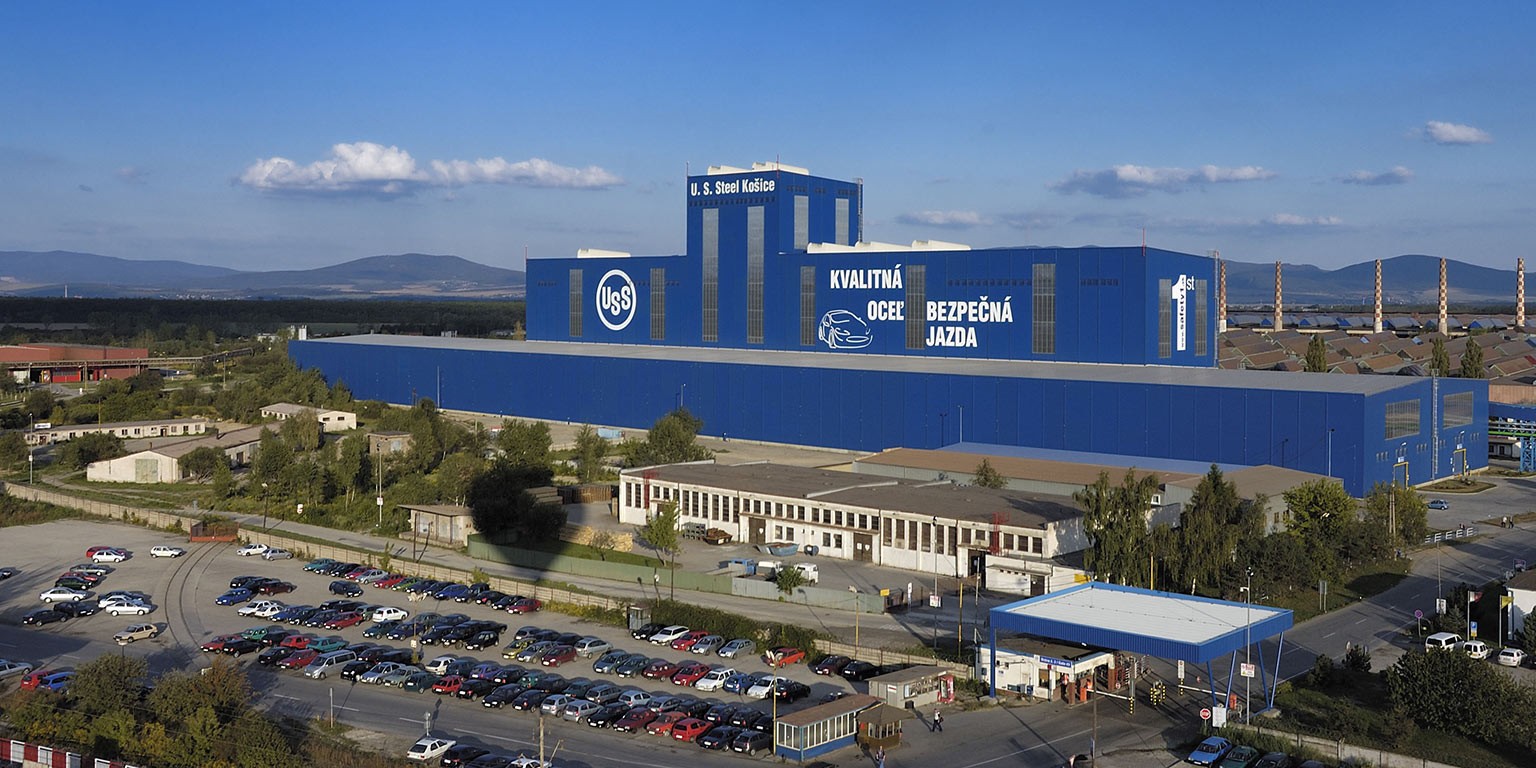
US Steel Kosice interest may return: Metinvest
Metinvest says its interest in US Steel Kosice may resume in future but the invasion of Ukraine by Russia is currently dampening any acquisition potential.
Asked by Kallanish if it is in talks with US Steel to acquire its Slovakian plant, a spokesperson for the Ukrainian steelmaking group says: “US Steel Kosice is a high-quality asset that, before Russia’s military invasion of Ukraine, could have been in the area of interest of Metinvest Group. In the future, interest in this asset may resume. However, at the moment, the group’s main priority is to maintain the efficiency of its enterprises and our employees.”
USSK meanwhile tells Kallanish it “does not comment on speculation”.
According to media reports, the idea of such a deal would be to restore the vertical integration of the Metinvest Group, which has several assets in Italy, Bulgaria and the UK, and lost its Mariupol-based steelmaking plants to Russian occupation.
Previously, the European assets received slab, mainly from Mariupol-based Azovstal (see Kallanish passim). Since the outbreak of war, the group has switched to purchasing semi-finished products from China and other countries.
The production capacity of US Steel Kosice is 4.5 million tonnes/year. The company produces a wide range of sheet products, including for the automotive industry. However, its rolling capacity has been underutilised in recent months due to falling demand for steel products in the EU. One of the plant’s blast furnaces has been decommissioned.
Metinvest decreased crude steel production in January-September by 62% on-year to 2.7 million tonnes due to the ongoing Russian-Ukrainian war (see Kallanish passim). Pig iron output decreased by 65% to 2.47mt.
However, it significantly increased its merchant iron ore pellet shipments to Central and Eastern Europe in the third quarter by 44% versus Q2 to 835,000 tonnes, despite iron ore products output falling overall.
Svetoslav Abrossimov Bulgaria


Kametstal halts production, Ferrexpo output suffers amid blackouts
Metinvest’s Kametstal steelworks has temporarily stopped production due to energy shortages after new shelling by Russia.
“During the week beginning 21 November, Russian attacks resulted in power outages throughout the country,” the company says. “Metinvest, along with other industrial enterprises operating in Ukraine, was also affected, as for the first time since the start of a full-scale military invasion, production at the group’s Ukrainian enterprises was stopped on an emergency basis due to a lack of electricity.”
However, power supply has been partially restored, although industrial producers use electricity within the available quotas, which can change every day, it adds.
As of 28 November, all Metinvest enterprises have resumed their activities, except for Kametstal. An assessment is being made of possible damage to production facilities resulting from the shutdown, as well as of the timing of a production restart, the enterprise claims.
According to Metinvest, a long-term absence of deliveries of square billet from Kametstal may lead to the suspension of production at its Bulgarian Promet Steel re-rolling subsidiary. “We cannot predict how long Russia’s attacks on Ukraine’s energy infrastructure will continue and there may also future interruptions in production,” it adds.
Ukrainian iron ore miner and pellet producer Ferrexpo has meanwhile announced that repair work has now sufficiently progressed to allow for the partial resumption of production activities at its operations in central Ukraine, the company tells Kallanish.
“The supply of power to the group’s operations, however, remains variable and limited, which has an impact on the cost effectiveness of production,” a Ferrexpo spokesperson notes. “As a result, the group is currently focused on drawing down on its stockpiles of finished iron ore products to maintain supplies to its customers. The ability to utilise such stockpiles has ensured a consistent supply to customers … and we can confirm that it has sufficient stockpiles to meet customer demand.”
Ukraine’s Sukha Balka mine, part of DCH Steel, has decided to temporarily shut down production processes at the Frunze mine in the face of declining production volumes, consumption of raw materials and limited supply of energy resources.
Earlier, stainless seamless pipe producer Centravis reduced capacity utilisation amid energy blackouts (see Kallanish passim).
ArcelorMittal Kryvyi Rih (AMKR) also critically limited electricity consumption and suspended most production processes.
Svetoslav Abrossimov Bulgaria

Italian HRC hikes but uncertainty remains
Italian hot rolled coil prices are increasing by some €20/tonne ($20.9) on average compared to last week, although demand remains patchy, Kallanish hears.
Italian producers are now asking for €610-630/t base ex-works. Contracts are rising to an average level of €610/t base. A large producer says its order intake is now solid after it sold to multiple buyers at €610-620/t. It is considering increasing its prices for December and January delivery.
Another confirms, after a long deadlock, it received some orders in recent days, particularly from re-rollers, but service centres’ purchasing attitude remains cautious. Some service centres in Italy are reported to have high stocks. Considering the latest import purchases and currently lower consumption, stocks are lasting for longer.
Asian-origin offers into Italy are becoming less competitive, at $600-620/t cfr. This reflects a significant increase compared to the low point of the range of $560-570/t cfr seen in November, sources say.
Despite some movement in price and demand, December HRC prices in Europe remain uncertain. Northern European producers are looking for volumes and some aggressive values are being reported in the market, particularly for lower-quality material from stocks. HRC contract values in Italy are yet to consolidate the current price hikes. The general fear is that if producers increase prices too much for December, sales activity will stall again.
Natalia Capra France

European galvanized coil could face overcapacity
With the start-up of two new German hot-dip galvanizing lines with a joint capacity of more than 1 million tonnes/year, the galv market might see some overcapacity next year.
“That is a question we all are wondering about,” an Austrian buyer of coil says. Any effect on market supply and prices will not be felt until sometime next year, though, he believes, adding: “We [already] have some oversupply anyway.”
A Swiss source states that he can reasonably assume HDG is going to be under pressure soon. “There’ll be no huge drop, but a slow decrease can be expected in the next weeks,” he tells Kallanish. In recent months, HDG prices kept up a façade of strength because they have been under less pressure from imports than hot rolled coil, meaning the price premium between the two grew unnaturally.
Despite reservation from carmakers, HDG from northwest European mills has not substantially dropped below €800/tonne ($828) ex-works, compared with the low of €600 seen for HRC. One German buyer notes that €800 was a fair price in recent weeks for material available from stocks, while new rollings in the first quarter could range between this level and €850.
Such diverging assessments may each come true in their own respective right, with more stable prices for new rolling, but also frequent bargain offers on the spot market. An argument in favour of price stabilisation comes a northern mill source, who points to the high energy consumption and costs involved in this process. “Regardless if the car industry recovers or not, mills will be considering whether closing production is a better option than producing, if prices are too low.”
Christian Koehl Germany

Spanish metal workers start five-day strike
Spanish metalworkers in the Basque region have started a five-day strike Nov. 28, with up to 85% of industry workers participating, a CCOO union spokesman told S&P Global Commodity Insights Nov. 29.
The strike could continue if an agreement on salary increases and other work conditions was not reached, he said.
The spokesman said that the whole chain was impacted from primary steel to the downstream segments, but declined to estimate how much production has been impacted at this stage.
As 85% of workers had adhered to the strike action, there would be a notable impact on production, the union said.
On the other hand, the regional metal association Federacion Vizcaina de Empresas del Metal said in a Nov. 28 statement that only 21% of the sector’s workers had taken part, with around two-thirds of companies operating normally.
Impacted companies include ArcelorMittal, Sidenor and Nemak, among others.
The Basque region is home to eight steel furnaces, or one-third of Spain’s total, with a combined capacity of 8,000 mt/year of crude steel.
The latest strike comes a month after the previous one. The two parties are negotiating for salary conditions covering 2022 to 2025.
— Gianluca Baratti


European HRC rises marginally as prices find a ‘floor’
The European hot-rolled coil market increased marginally Nov. 29, as market participants said prices found a floor and are expected to see an uptrend in the near term.
Platts assessed North European HRC up Eur5/mt on the day at Eur610/mt ex-works Ruhr.
North European tradable value was cited at Eur610/mt ex-works Ruhr, based on offers around Eur630/mt delivered North Europe.
A mill source said they were successful at Eur630/mt delivered price and saw a substantial rise in demand in the week ended Nov. 25.
“We really see a change in the market this week,” said the source. “We’ve sold more this week and last than in the last three months. Offers for December production are gone and prices for January and beyond are higher. It’s too early to bet on a price increase sticking but at least it seems the floor is there.”
The source said weakness in the Eastern European market and successful price increases in Italy are aiding the North European market.
HRC prices in Italy were assessed up at Eur610/mt ex-works Italy and at parity with North European levels.
Traders welcomed the increase because of a perceived unviability of imported material.
“Prices just don’t work at the moment for import as domestic producers are so competitive,” said a trader. “The market was quite bullish on imports last week, so we sold some good tonnages, but lead times are into March-April now which is too far for many buyers.”
Imported HRC in the South European market was assessed at Eur605/mt CIF Nov. 29, based on offers heard at Eur610/mt CIF Italy ex-India.
While many participants booked expecting that import material prices would increase with the domestic market, negative sentiment from the Chinese market tempered bullish expectations.
“Demand was good, but now with the Chinese protests and COVID closures, we’re no longer confident import prices will increase,” said a trader. “That said, we’re almost sure they won’t move further down.”
Platts is part of S&P Global Commodity Insights.
— Benjamin Steven