


Polish steel rebar prices stabilize, mills to seek rises for January volumes
Polish prices for steel rebar have finally fallen to rock bottom, and producers were intending to look for increases for their January output, Fastmarkets heard on Friday December 2.
Fastmarkets’ price assessment for steel reinforcing bar (rebar), domestic, exw Poland, was 3,250-3,350 zloty ($726-748) per tonne on Friday, stable week-on week.
Rebar prices in Poland have been coming down continuously since mid-September, but it appeared that this downtrend was finally over.
Several transactions were reported during the past week at 3,250-3,350 zloty per tonne ex-works, although sources said that these were the final tonnages to be sold at the low prices.
Most mills in Poland were reported to have closed their order books for December-rolling rebar.
One integrated mill in the country has already increased its offers to 3,700 zloty per tonne CPT for January material. This would net back to about 3,650-3,670 zloty per tonne ex-works.
The push for an increase was due to rising energy prices, market sources said.
The average wholesale electricity price in Poland was 646.30 zloty per MWh in October, but prices rose throughout November, eventually exceeding 750 zloty per MWh, according to market sources.
Buyers did not consider this level workable, however.
“[End-user] demand is still rather weak, and we are heading toward the year-end. But prices on the spot market should go up in December on some [activity for] restocking,” a trading source said.
Market sources expected rebar prices in Poland to rise to 3,400-3,500 zloty per tonne ex-works before the year-end.
Published by: Julia Bolotova


EC review may mean stronger safeguards against SE Asia steel imports, not early end
The European Commission is unlikely to terminate the safeguard measures in force on steel product imports from Southeast Asian countries a year earlier than scheduled, European market sources told Fastmarkets on Friday December 2.
On the contrary, restrictions could be strengthened against certain Southeast Asian nations, following an announcement by the Commission that it will conduct a review of the safeguards.
The review was scheduled to be concluded no later than June 30, 2023, which would be the end of the current safeguard year. In the review, the Commission will consider the possibility of terminating the safeguard measures imposed on 26 steel product categories one year early.
It was also planning to update the list of developing countries that are exempt from the measures, according to a notice published in the EU Official Journal.
During the review, the Commisison will decide whether the safeguard measures should be terminated by June 30, 2023, one year earlier than the current planned expiry date. But market sources considered that option unlikely.
“European trade protectionism is on the rise, [while] the [steel] market is weak and oversupplied. I don’t see any reason why the Commission would terminate safeguard measures early. In fact, we expect [there to be] new anti-dumping cases,” a market source in Northern Europe told Fastmarkets.
Regarding countries that are exempt, no safeguard measure can be applied to a product originating in a developing country member of the World Trade Organization as long as that country’s share of the union’s total imports of the specific product does not exceed 3%.
Market sources have suggested that Vietnam could be added to the list of developing countries to which the safeguard measure are applied, notably for hot-rolled coil.
During the first nine months of 2022, Vietnam exported 335,834 tonnes of HRC to the EU, which represented 5.2% of total HRC imports into the bloc during that period, according to statistics from regional steel industry association Eurofer.
During the entire year of 2021, Vietnam exported 399,403 tonnes of HRC to the EU, according to Eurofer’s data.
In the latest safeguards review, Vietnam was included in the list of developing countries to which the safeguard measures were applied for imports of hot-dipped galvanized coil products.
Several sources have also suggested that the Commission might add individual quotas for some other Southeast Asian suppliers, in light of the significant increase in HRC deliveries from that region to the EU so far in 2022.
With traditional volumes of HRC from Ukraine and Russia missing from the market, due to Russia’s war on Ukraine, European buyers have started to import more steel from Southeast Asia recently, Eurofer statistics showed.
For example, hot-rolled flat steel imports from Japan to the EU amounted to 785,329 tonnes in January-September 2022, compared with 591,355 tonnes during the entire year of 2021. Deliveries from Vietnam, Taiwan and India have also increased in 2022.
Currently, Turkey, India, South Korea and Serbia have individual quotas for HRC imports into the EU.
Russia used to have an individual quota, but imports of Russia-origin finished steel products were banned in the EU in spring this year as a response to the country’s military aggression against Ukraine.
Published by: Julia Bolotova

European HRC prices believed to have reached bottom; market expects increase announcements
European hot-rolled coil prices were largely unchanged on Friday December 2, with market participants believing the bottom of the market had been reached, Fastmarkets heard.
Fastmarkets calculated its daily steel HRC index, domestic, exw Northern Europe at €618.75 ($647.70) per tonne on Friday, up by €2.08 per tonne from €616.67 per tonne the previous day.
The latest calculation of the index was down by €5.94 per tonne week on week and down by €30.83 per tonne month on month.
Indications of tradeable values were reported by buyer sources at €610-630 per tonne ex-works on Friday.
Transactions for small volumes were reported within that range.
Producers are selling January-rolling material, according to market sources.
“Mills still need orders,” a distributor in the region said. “They closed immediate needs for December-January, but their order books are not great.”
But most sources agreed that HRC prices in the region have hit rock bottom and expect major European producers to announce price increases before stopping work for the Christmas holidays.
“It is not likely that the [HRC] price will rebound this year. But in the first quarter of 2023, rises of some €20-30 per tonne are likely,” another distributor source said.
“The market is still very quiet and most buyers are still in wait-and-see mode. But we do expect a price increase announcement before the year-end. The market is not really predictable,” a trading source said.
Distributors and steel service centers were reported to be competing for volumes in the secondary market, trying to preserve their margins.
Producer sources, in turn, confirmed the intention to increase HRC prices for the first quarter of 2023, but were still reluctant to make firm offers.
One integrated mill in the region estimated the minimum price for January-rolling HRC to be €650 per tonne ex-works.
Fastmarkets’ calculation of its daily steel HRC index, domestic, exw Italy was €615.00 per tonne on Friday, stable day on day.
The latest calculation of the Italian index was up by €23.75 per tonne week on week but down by €40 per tonne month on month.
Buyers’ estimates of tradeable prices were reported at €610-630 per tonne ex-works.
Offers from local producers were reported at €630-650 per tonne ex-works for January-delivery HRC.
Overseas HRC offers were not yet considered competitive by Italian buyers, given the long lead times and the small gap to domestic prices.
Notably, sources reported that offers from India to Italy were around €590-600 per tonne CFR for dry coil, and €620 per tonne CFR for pickled and oiled HRC.
HRC offers from Southeast Asia were reported at €590-610 per tonne CFR.
Published by: Julia Bolotova

Saarland mills line up €3.5 billion for conversion
Saarstahl and Dillinger Hütte will be investing €3.5 billion ($3.67 billion) to transform the steel industry in the German state of Saarland and enable production of green steel, Kallanish hears from the companies.
The decision by the supervisory boards of parent holding company Stahl-Holding-Saar (SHS) will provide for an annual production of 3.5 million tonnes of steel based on the direct-reduced iron (DRI) route starting in 2027. The official announcement of what SHS calls a “historic investment” was made on Friday in the presence of Saarland’s prime minister, Anke Rehlinger.
Over the next few years leading up to 2027, an electric arc furnace (EAF) and a DRI plant for the production of sponge iron will be built at the Dillinger in Dillingen. In addition, an EAF will also be built at Saarstahl’s site in Völklingen. A new product branding has been developed to visually represent the transformation: “Pure Steel +”, with the “+” referring to the carbon-neutrality of the products, SHS points out.
The availability of green hydrogen at competitive prices is a basic precondition for this project to succeed, along with prompt funding commitments from Berlin and Brussels. SHS notes. Local production of hydrogen will therefore be established as a first step together with the local energy suppliers, before connecting to the European hydrogen network, it says.
Christian Koehl Germany


Gestamp acquires 33.3% stake in scrap recycler
Spanish automotive component producer Gestamp has acquired a 33.3% stake in the Gescrap Group, Kallanish notes. It says the international recycling company is one of the European leaders in the management of high-quality scrap.
“We are convinced that this is an important milestone in the company’s history,” says Gescrap executive chief Iñaki Velasco. “Gestamp as a strategic partner is going to reinforce our commitment to leadership in new business opportunities in the world of the circular economy and recycling, sectors which are certainly in full growth,” the executive comments.
Gestamp has a circular economy business model. The automotive component supplier recycles almost 98% of its production activity waste.
The strategic investment in Gescrap will further promote the use of scrap as a secondary raw material in Gestamp’s low-emission steel output.
“We are very excited to participate in Gescrap, as this will allow us to join a profitable and growing business while reaffirming our competitive position with our clients and advancing our ESG strategy,” Gestamp executive director Francisco Riberas concludes.
No terms of the acquisition agreement were disclosed.
Todor Kirkov Bulgaria
Italian HDG, CRC demand increases
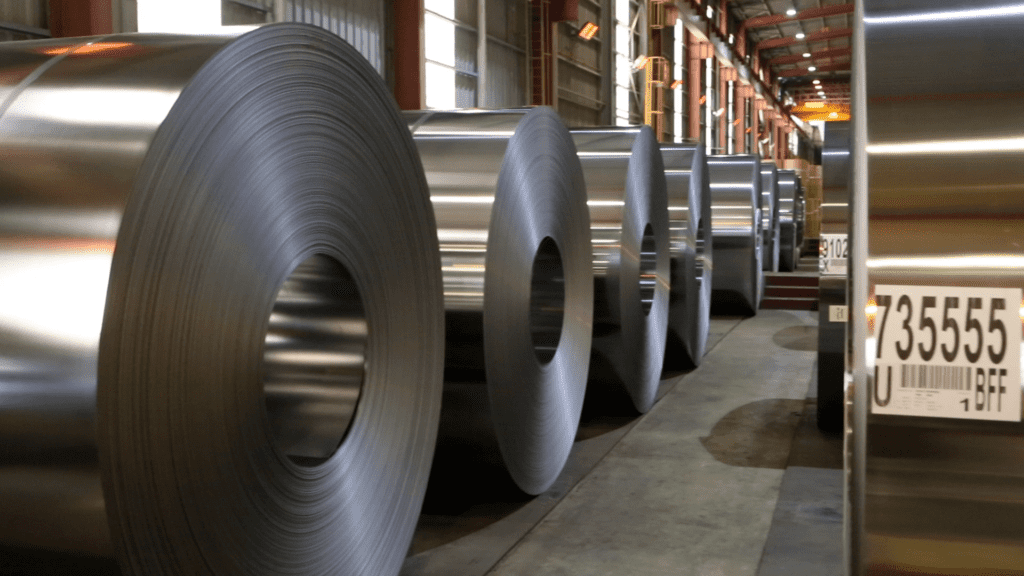
While Italian hot rolled coil demand and prices are surging compared to the low points seen in November, cold rolled and hot-dipped galvanised coil prices remain mostly stable compared to last must and sellers also report increasing demand, Kallanish hears.
Domestic HDG values are at €700-740/tonne ($737-779/t) base ex-works on average. These values however can often become delivered as prices not only in Italy but also in other European countries remain rather weak due to uncertainty and the downturn of the steel industry globally. In Northern and Eastern Europe, HDG is said to be sold at an average €730-750/t delivered, depending on volumes and clients.
In line with increasing HRC values, some producers are considering pushing up prices for HDG and CRC but are afraid that increases will slow demand. Asian offers for CRC are in the range $670-680/t cfr Italy while little import offers are reported for HDG. Italian CRC contracts start at €690-700/t base ex-works for the low point of the range and go up to €730-740/t, sources suggest.
Meanwhile, Italian HRC prices are increasing by some €20/tonne ($20.9) on average compared to last week, although demand remains patchy. Italian contracts are now rising to €610-630/t base ex-works (see Kallanish passim).
Natalia Capra France

NW European plate prices remain unstable
Plate prices in northwestern Europe have given in further since early November, and a clear sign of an uptick is not in sight, although some believe in a recovery of demand.
One German manager observes pessimistic as well as optimistic attitudes on the market. He himself opts for the latter view, but the recovery will not come this year any more, and possibly only in the second quarter 2023.
“The fact is, there is pressure for (public) investment, and there are enough projects in the pipeline, be it for wind farms, yellow goods, or infrastructure,” he says.
A source from a mill believes that the low point of prices is about to be reached, but that the first quarter will still start weak.
“Too many factors are just too volatile to identify a direction,” he tells Kallanish. He sees the lower end of prices from integrated mills at €950/tonne ($996/t) for S355. He also sees notably higher prices, reaching above €1,050/t, from mills with good demand for higher grade plate, and little interest in offering commodities.
Another source notes that especially material from stocks can be had at prices “which no one can understand, and which would only serve to empty the inventory.” On the other hand, there is a slight drift towards higher prices for segments which cannot be served from stocks, he says.
“It remains to be seen if that is sustainable; a visible recovery of prices will not come before the middle or the end of the first quarter,” he adds.
Christian Koehl Germany

EU reviews steel import safeguards, could terminate a year earlier than planned
The European Commission has initiated the review of safeguard measures concerning the import of 26 steel products to determine whether they should be terminated in mid-2023, a year earlier than planned, it said in a Dec. 2 report.
The EC imposed a definitive safeguard measure on certain steel products on Jan. 31, 2019, until July 16, 2021, with the measure then prolonged in June 2021 for a further three years from July 1, 2021, to June 30, 2024, after 12 EU member states requested it examine whether the measures should be prolonged.
The measures consist of country-based tariff-rate quotas for the biggest steel supplying countries combined with global quarterly quotas for all other countries for each of the 26 products. Once a quota has been reached, a 25% duty applies.
The safeguard was imposed in 2019 as a direct response to the US government’s introduction of import tariffs on grounds of national security under Section 232 of the Trade Expansion Act and replaced the previous provisional duties the EC introduced in July 2018, with the EC saying the Section 232 tariffs were causing a diversion of trade flows into the EU.
The new review will look at whether the safeguard measure should be terminated a year earlier than planned on June 30, 2023, using data from 2022 to update the last review that used 2021 data, it said.
The EC aims to conclude the review by June 30, 2023.
The review will include questionnaires sent to EU producers and end-users, to be filled in by Jan. 13, 2023, as well as written submissions from interested parties and the possibility of interested parties commenting on other parties’ submissions, without raising new issues.
The EC said it would not organize hearings for the investigation, unless there were exceptional circumstances, due to the short timeframe and the ability to comment on other parties’ submissions providing parties sufficient opportunities to defend their interests.
The 26 products include non-alloy, other alloy and stainless hot rolled sheets and strips, non-alloy, other alloy and stainless cold rolled sheets, as well as stainless CR strips, and electrical, metallic-coated and organic-coated sheets.
They also include tin mill products, non-alloy, other alloy and stainless quarto plates, non-alloy and other alloy merchant bars and light sections and wire rod, stainless bars and light sections, and wire rod and rebars.
Non-alloy and other alloy cold finished bars, non-alloy wire, seamless stainless tubes and pipes, other seamless and large-welded tubes and other welded pipes are also included, as are angles, shapes and sections of iron or non-alloy steel, sheet piling, railway material, gas pipes and hollow sections.
Domestic prices for HRC have been declining in Europe since the second half of March due to weak demand. Platts, part of S&P Global Commodity Insights, daily assessments for HRC in Northern Europe declined to Eur610/mt ex-works Ruhr on Dec. 1 and in Italy to Eur610/mt ex-works, down 33.8% and 27% respectively since the start of 2022.
— Jacqueline Holman
