


EU to introduce stricter rules on waste shipments to boost Europe’s circular economy
The EU Parliament’s Committee on the Environment, Public Health and Food Safety, or ENVI, has adopted a report by the European Commission on the reform of EU procedures and control measures on waste shipments, to boost Europe’s circular economy, resource efficiency and zero-pollution goals, it said Dec. 1.
The EC had initially presented its proposals on waste shipments in November 2021.
Under the proposal, all EU companies that export waste outside the bloc should ensure that the facilities receiving their waste are subject to an independent audit showing they manage the waste in an environmentally sound manner.
Members of the European Parliament supported the EC’s proposal to explicitly prohibit shipments within the EU of all wastes destined for disposal, except if authorized in limited and well-justified cases.
The EC would develop uniform criteria for the classification of waste to ensure that the rules are not circumvented, according to the adopted report.
The new rules would include digitalizing the exchange of information and documents within the internal market, according to the EU Parliament. Storing information in a central electronic system would improve data reporting, analysis, and transparency, the MEPs said.
MEPs also agreed that EU exports of hazardous waste to non-OECD countries should be prohibited. EU exports of non-hazardous waste for recovery would be allowed only to those non-OECD countries that gave their consent and demonstrated their ability to treat this waste sustainably, MEPs said.
The EC would draw up a list of such recipient countries, to be updated at least every year, and it would also monitor waste exports to OECD countries more closely to ensure that they manage waste in an environmentally sound manner, as required by the rules, and that they do not adversely affect the management of domestic waste in that country, EU Parliament said.
In addition, MEPs called for the creation of an EU risk-based targeting mechanism to guide European countries that carry out inspections to prevent and detect illegal shipments of waste.
Other measures proposed in the adopted report include the exclusion of exports of plastic waste to non-OECD countries and phasing out export of plastic waste to OECD countries within four years; making the requirements to demonstrate that the waste shipped is managed in an environmentally sound manner more stringent; and building a partnership with the waste sector in the context of climate dialogue and the EC’s annual reports.
“Fully utilizing waste as a resource should be an essential element of our transition to a circular economy,” MEP Pernille Weiss said.
“I am happy that today we could come together in support of a balanced approach on shipments of waste: it ensures safeguards for human and environmental health, while providing the necessary framework for industry to deliver on our ambitions. I hope that in this way, the EU can become a world leader in an innovative, sustainable use of waste,” he added.
The report is scheduled to be adopted during the January 2023 plenary sitting and will constitute the parliament’s negotiating position with EU governments on the final shape of the legislation.
The waste shipments include steel and non-ferrous scrap, meaning that EU scrap metal exports to third countries will be allowable only if it can be done sustainably.
The EU is the world’s largest exporter of ferrous scrap, with 2021 total export of ferrous metals scrap reaching 19.5 million mt, representing 48% of all exported recyclable materials, according to Eurostat data.
In October, Europe’s association of plastics manufacturers, Plastics Europe, joined a group of organizations representing all levels of the plastics value chain of Europe to call for the revision of the Waste Shipment Regulation by the European Parliament and Council, to support the EU’s 2050 circularity and net-zero targets.
— Sotirios Frantzanas at Chemical Week


EU steelmakers welcome parliamentary vote to restrict scrap steel, metal exports
European steelmakers’ association Eurofer Dec. 1 welcomed approval of a reform to the EU’s scrap steel and metals trade policy which could significantly curb scrap exports. Traders and scrap merchants are however expected to be alarmed by a move that may affect both EU and global scrap metals pricing.
Eurofer said in a statement that it considered changes brought by the European Parliament’s Environment, Public Health and Food Safety Committee (ENVI) vote to the bloc’s Waste Shipment Regulation “a welcome step in the right direction to ensure that environmental and social standards equivalent to the EU’s are met when waste is exported to third countries.”
“However, significant issues remain largely unaddressed with room for further improvement, in particular by strengthening monitoring for OECD countries and by pre-empting circumvention which risks to weaken the effectiveness of the new measures,” Eurofer said.
The European Parliament said Dec. 1 that ENVI had voted to adopt a report by the European Commission on the reform of EU procedures and control measures on waste shipments, to boost Europe’s circular economy, resource efficiency and zero-pollution goals. The report was adopted by 76 votes in favor, none against and five abstentions.
The vote means that all EU companies that export waste outside the bloc should ensure that the facilities receiving their waste are subject to an independent audit showing they manage the waste in an environmentally sound manner.
In addition, EU exports of non-hazardous waste for recovery would be allowed only to those non-OECD countries that give their consent and demonstrate their ability to treat this waste sustainably, the European members of parliament said.
The new measures are now due to be adopted in January. The EC had initially presented its proposals on waste shipments in November 2021.
The steelmakers’ association noted that the text adopted Dec. 1 contained some important improvements on the European Commission’s proposal, with respect to environmental, social, health and safety concerns.
“Ferrous scrap is a valuable secondary raw material and essential for the steel industry’s decarbonization. It does not make any sense to move waste challenges abroad, whilst the recycling of metal waste – where the European steel sector plays a central role – remains key for reaching the circular economy and CO2 emissions targets in the EU,” said Axel Eggert, Eurofer director general. “Our sector’s scrap needs will rapidly increase in the next years, as our green steel projects to be implemented by 2030 will require significantly more scrap.”
Ferrous scrap is by far the most exported waste from the EU, with exports totaling 19.5 million mt in 2021, equal to 59% of all EU waste exports, according to EU statistical office Eurostat.
Eurofer said the material currently being exported could be recycled domestically within the EU into new steel products, following the EU’s high environmental standards.
“For every ton of carbon steel scrap recycled, a saving of 1.5 mt of CO2 is achieved, and in the case of stainless-steel scrap this saving is even higher, reaching roughly 5 mt of CO2,” Eurofer said. “The recycling of ferrous scrap is therefore one of the clearest examples of how to reach the objectives that the EU has set for the upcoming decades: circular economy, decarbonization and energy saving.”
Brussels-based International Recycling Bureau, or BIR, a strong proponent of free trade, had no immediate reaction Dec. 1 to the long-awaited European Parliament vote on waste shipments.
BIR executives had earlier this year said the imposition of EU scrap steel and metal export controls risked distorting both international and regional scrap markets, particularly for ferrous scrap. Controls could reduce global market supplies, inflating prices in some markets, but at the same time inhibit scrap arisings and collection within the EU, potentially leading to lower regional prices. This in turn would play into the hands of EU steelmakers, reducing the cost to mills of ferrous scrap, which is likely to be increasingly sought after for their decarbonization programs.
Scrap-based electric arc furnace steelmaking produces significantly fewer carbon emissions than iron ore and coking coal-based integrated steelmaking.
Turkish import deepsea scrap prices climbed sharply Nov. 30, as tight cargo availability, slow scrap collection rates and continued mill restocking pushed prices higher.
Platts, part of S&P Global Commodity Insights, assessed Turkish imports of premium heavy melting scrap 1/2 80:20 at $371/mt CFR Nov. 30, up $5/mt on the day. The assessment has increased $34.50/mt since a recent low of $336.50/mt CFR two weeks ago.
— Diana Kinch

Italian automotive production declines
Italian automotive output, including heavy-goods vehicles and buses, fell by 3.4% on-year in the first nine months of 2022 to 580,843 vehicles, down from 601,079 units in January-September 2021, Kallanish notes from local carmakers’ association Associazione Nazionale Filiera Industria Automobilistica (Anfia) data.
While passenger car output increased on-year by 4.1% to 338,509 cars, production of light commercial vehicles declined by 11.6% to 202,376 units. January-September output of trucks decreased by 14.9% on-year to 39,750 units while production of buses hiked 6.1% to 208 buses, Anfia says.
In September alone, Italian passenger car output surged unexpectedly y-o-y to 39,938 units, a notable hike of 25.9% compared to September 2021 (see Kallanish 29 November). In the third quarter, passenger car production surged 29.5% y-o-y to 99,229 units, together with LCV output which grew by 22.9% to 61,520 units.
Italian passenger car output decreased by 2.1% y-o-y in full-year 2021 to 442,432 units. It stood at 451,718 units in 2020 versus 542,472 units in 2019.
Italy has 23 car production plants. By comparison, Spain has 17 plants, France 31 and Germany 42.
Natalia Capra France


EU avoids scrap export ban, monitors non-OECD exports
The Environment Committee (ENVI) of the European Parliament voted last week in favour of new changes to the Waste Shipment Regulation (WSR). These include a stronger monitoring of non-hazardous waste sales to non-OECD countries, with the possibility to limit sales to specific countries.
The vote confirms the increasing attention being given by European authorities to ferrous scrap materials trading. However, it has not resulted in a more general export ban, requested by some steel industry participants in recent months.
The latest decision indicates that exports will only be allowed to “those non-OECD countries that give their consent and demonstrate their ability to treat this waste sustainably”, the Parliament says. An annual list of such countries will be updated every year. Similar restrictions will not be implemented on OECD countries, including Turkey or the US. Non-OECD importers of European scrap include India, Pakistan, Bangladesh and China.
Eurofer, the European steelmakers association, welcomed some of the changes implemented, but notes that “significant issues remain largely unaddressed”. The association wishes, in particular, for exports to OECD countries to also be monitored and for a system to be applied to prevent circumvention of rules.
Eurofer explains that ferrous scrap is by far the most exported waste from the EU – 19.5mt in 2021, equal to 59% of all EU waste exports. It adds nevertheless that it has a vital role to achieve decarbonisation targets for European steelmakers.
While steelmakers have for a long time been in favour of restricting scrap exports to secure availability of a key raw material domestically, the recycling industry in Europe has explained extensively that limiting international trade could reduce the availability.
“Contrary to some false claims, export restrictions will directly damage the availability of raw materials from recycling to European energy-intensive industries as has been witnessed in non-European countries,” Euric, representing European recyclers, explains in a note seen by Kallanish. “The absence of competitive end-markets for recycled raw materials will negatively affect waste collection, recycling, and investments to scale up recycling capacities. As such, the proposed export restrictions will put at risk the ability to achieve EU recycling targets.”
The ENVI report is set to be presented and adopted during the January plenary sitting of the European Parliament. Negotiations will then begin with EU governments on the final shape of the legislation.
Emanuele Norsa Italy
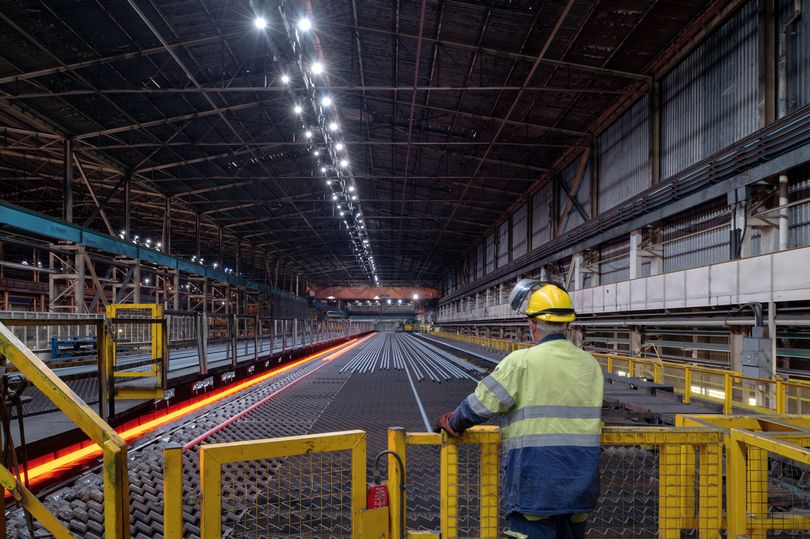
Liberty Steel Liege plants search for new owner The Liberty Steel Liege coil rolling plants in
Belgium have been given the green light by a local court to look for a potential new owner. Liberty Steel Group confirms the sale of the assets is one potential option for their restructuring.
The plants have been put under a restructuring programme, running until the end of April 2023, to “temporarily protect the business from its creditors, while ensuring the best possible ongoing relationships with them, and ensure the continuity of the company”, Liberty says.
Liberty Steel’s Belgium-based assets include a series of lines for packaging steel located in Tilleur and two hot-dip galvanising lines located in Flemalle. The units can produce up to 1 million tonnes/year of HDG and 200,000 t/y of packaging products. They were acquired by Liberty from ArcelorMittal in 2019. Liberty Steel also controls HDG capacity in neighbouring Luxembourg.
The Luxembourg plants have been operating some rolling lines intermittently this year, with HRC feedstock supply coming from Liberty Steel’s Galati works in Romania.
Liberty Steel stresses to Kallanish it has injected more than €28 million in the Liege units since December 2021 “to ensure that its employees continue to be paid and the plants remain operationally capable”.
Emanuele Norsa Italy
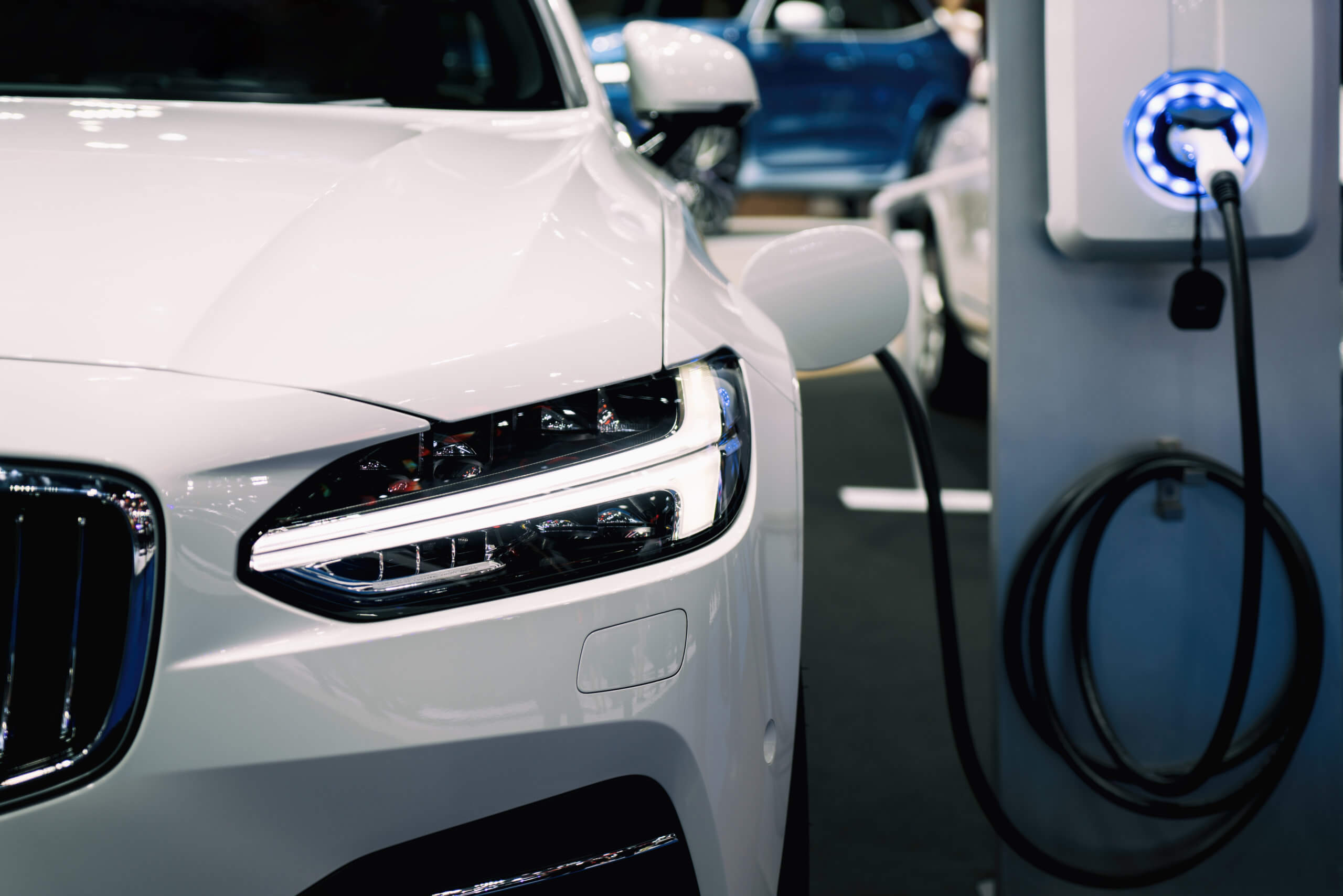
Norwegian November electric vehicle sales rise 41.2% on year: OFV
New zero-emission electric or hydrogen vehicle sales in Norway rose 41.2% year on year in November to a record high 15,915 units, according to the latest data released early December by the Norwegian Road Information Authority (OFV).
Zero-emission vehicle sales were also 63.6% higher month on month and accounted for 81.6% of the month’s total new passenger car registrations, which were up 27.3% year on year and 55.4% higher than October to the highest level since December 2021, the data showed.
For the first 11 months of 2022, zero emission vehicle sales totaled 105,915 units, up 5.6% year on year and making up 78.3% of the total 134,831 vehicles sold in Norway during the period.
Despite 2022 facing major production and delivery challenges as a result of the Russia-Ukraine war and the pandemic, the OFV noted that the rate of registration increased in November and was accelerating towards the turn of the year, with 2022 likely to be a “normal year” in terms of the number of first-time registered new passenger cars.
“Both at the port of Drammen and in other places in Norway where new passenger cars are driven ashore, new cars are lined up and waiting to be prepared, registered and handed over to waiting customers,” it said.
“Never before have so many cars been unloaded in the port of Drammen in one month as in November — almost 18,000 cars,” it added.
“Both importers and dealers are working at full speed to get new ordered passenger cars to Norway,” OFV Director Øyvind Solberg Thorsen said, adding that it was about getting as many people registered, as quickly as possible.
“Customers have often ordered their cars six months ago or even further back, and large order reserves are coming in,” he said.
Increased demand for EVs has driven up battery metal prices, with Platts, part of S&P Global Commodity Insights, assessed seaborne lithium carbonate and lithium hydroxide at $77,200/mt CIF North Asia and $83,000/mt CIF North Asia Dec. 5, up 128.4% and 161.8%, respectively, since the start of 2022.
Meanwhile, registrations of new hybrid cars in November dropped 10.1% year on year but increased 39.4% from October to an 11-monht high of 2,931 units, making up 15% of the total sales.
Of these, 1,502 were rechargeable hybrids and 1,429 were not rechargeable.
Sales of petrol engine cars amounted to only 229 units, or 1.2% of total new vehicle sales in November, the lowest market share on record.
The total dropped 35.7% on the year and also fell 13.9% from October to the lowest monthly level on record.
Sales of diesel engine cars in Norway in November climbed 5.3% from a year ago but fell 5.2% from October to a four-month low 438 units, a 2.2% share, which was also the lowest share on record.
According to S&P Global Commodity Insights, Norway’s plug-in light duty EV sales are forecast to reach 161,860 units in 2022, up from 147,120 units in 2021, with this rising to 200,520 units in 2025 and 206,800 in 2030.
Norway has been one of Europe’s front-runners in EV adoption, with its total 2021 light duty PEV sales ranking sixth in the world after China, Germany, the US, the UK and France, according to S&P Global.
EV sales have been boosted by government incentives, including no purchase/import taxes, exemption from 25% VAT on purchase, reduced annual road tax, 50% toll road and ferry charges, cheaper municipal parking fees and access to bus lanes, among others.
— Jacqueline Holman
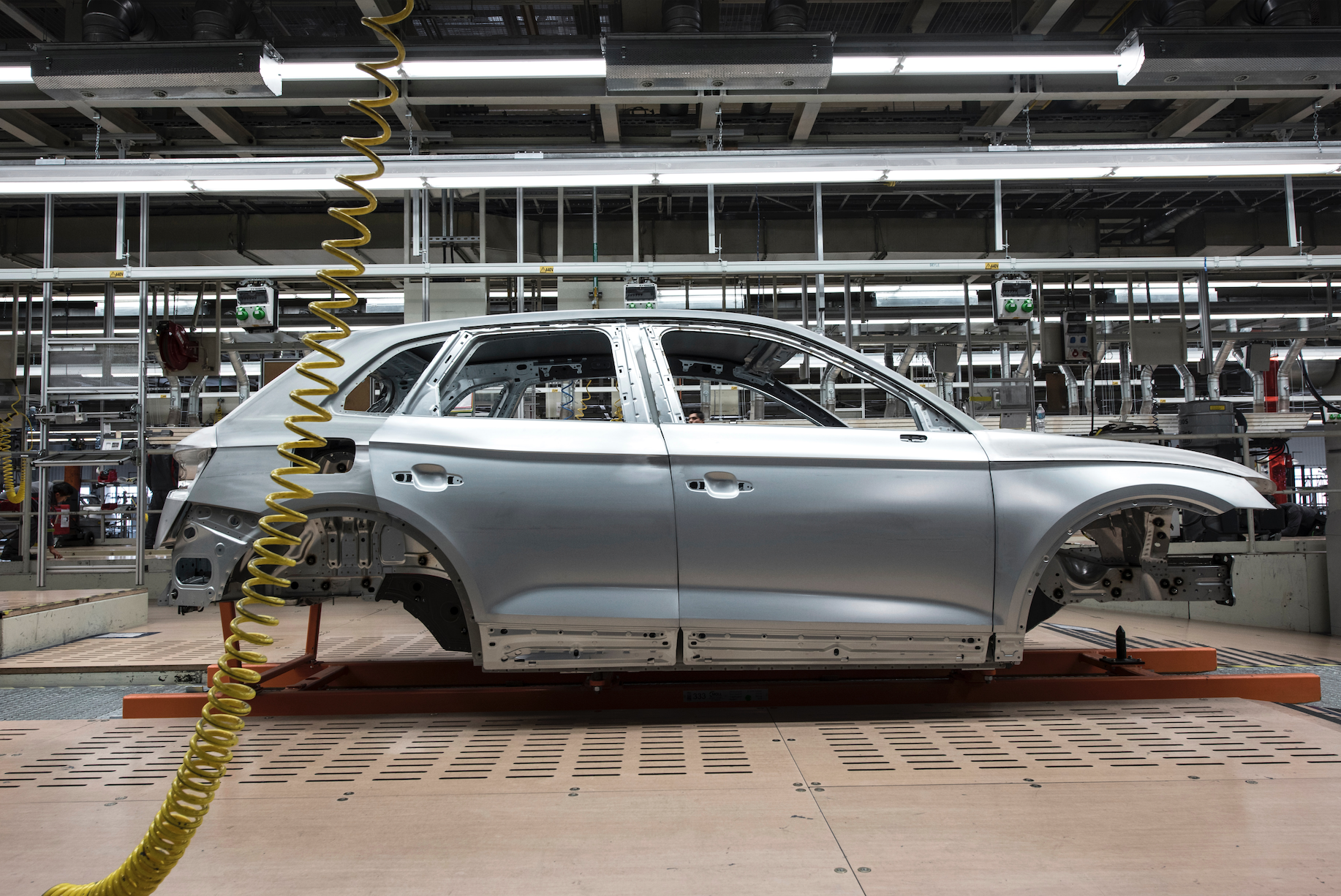
UK DATA: November car sales rise 23.5% on year: SMMT
New car registrations in the UK totaled 142,889 units in November, up 23.5% year on year, according to Society of Motor Manufacturers and Traders data Dec. 5.
It was the fourth year-on-year increase since February, according to the data, with manufacturers continuing efforts to fulfill orders amid erratic global components supply, although the volume was still 8.8% below pre-pandemic 2019 levels due to global and domestic economic challenges, the SMMT said.
The volume was 6.4% higher than October.
For the first 11 months of 2022, total new car registrations totaled 1.49 million units, down 3.4% year on year, the SMMT said.
“Recovery for Britain’s new car market is back within our grasp, energized by electrified vehicles and the sector’s resilience in the face of supply and economic challenges,” SMMT CEO Mike Hawes said.
“As the sector looks to ensure that growth is sustainable for the long term, urgent measures are required – not least a fair approach to driving EV adoption that recognizes these vehicles remain more expensive, and measures to compel investment in a charging network that is built ahead of need,” he said, adding that this would encourage consumer appetite and accelerate the UK’s journey to net0zero.
BEV sales up 35.2%
Battery electric vehicles sales rose 35.2% year on year in November to 29,372 units, which also up 20.6% from October, the data showed.
The BEV market share was 20.6% in November, up from 18.8% a year ago and a 14.8% share in October.
So far in 2022, 224,919 BEVs have been sold in the UK, up 38% year on year and making up 15.1% of total sales, up from 10.6% in January-November 2021.
According to the SMMT, plug-ins account for 27.7% of new registrations, as BEVs took their largest monthly share of the new car market in 2022.
Higher EV demand has been one factor boosting battery raw material prices. Platts, part of S&P Global Commodity Insights, assessed seaborne lithium carbonate and lithium hydroxide at $77,200/mt CIF North Asia and $83,000/mt CIF North Asia Dec. 5, up 128% and 162%, respectively, since the start of 2022.
The volume of hybrid EVs climbed 66.9% year on year to 16,066 units in November, which also increased 2.3% from the previous month and was a market share of 11.2%, up from an 8.3% share a year ago.
Sales of plug-in hybrid EVs, however, fell 5.7% year on year to 10,186 units, although this rose 14.5% from October.
The volume was 11.2% of the total market share, up from 8.3% a year ago.
ICE vehicles at 44.2% share
Meanwhile, the market share of petrol and diesel internal combustion engine vehicles fell on the year to 44.2% in November, down from a 48.4% share a year ago and from October’s 47.1% share to the lowest combined market share since December 2021.
Petrol cars continued to hold the largest market share at 40.3% or 57,590 units, which was down from a 43.3% share in November 2021.
The volume of petrol vehicle sales climbed 15% on the year in November and were 1% higher on the month, according to the SMMT.
At 5,605 units, diesel vehicles’ market share was 3.9%, down from 5.1% a year ago.
The diesel volume was down 5.6% year on year and 11.7% lower on the month.
For the first 11 months of 2022, petrol vehicle sales fell 11.1% year on year to 640,382 units, while diesel vehicle sales dropped 39.5% to 78,975 units, the SMMT data showed.
— Jacqueline Holman

Belgian court rules Liberty Steel must restructure, likely sell Liege plants
The Liège Enterprise Court has ruled that Liberty Steel’s Flémalle and Tilleur plants in Belgium must be restructured, with a provisional administrator and a legal representative appointed by the court to eventually oversee the sale of the plants.
“We can confirm that Liberty Steel Group, the management team of Liberty Liège and its unions jointly requested the Liège Enterprise Court’s opening of a judicial reorganization via transfer of business procedure for its Liège plants, which has now been granted,” a Liberty Steel spokesperson said in a statement sent to S&P Global Commodity Insights Dec. 5.
The judicial reorganization proceedings, or PRJ, would initially run until April 30, 2023, and would temporarily protect the business from its creditors while ensuring the best possible ongoing relationships with them, and ensure the continuity of the company, he said.
“The company’s management team, its unions and the court appointed administrators will now work collaboratively with other stakeholders to identify and realize strategic options for the business, including its sale,” the spokesperson said.
Liberty, part of the GFG Alliance, took over the Flémalle and Tilleur plants in 2018 and previously in May won its appeal against the Liège Enterprise Court’s decision to appoint administrators to the plants.
At the time, Liberty said it would be assisted by a mediator to support the restart of the plants and help it work with unions to implement its business plan.
However, the matter went back to court after workers at the plants requested a restructuring.
Liberty had invested more than Eur140 million ($147.4 million) at the Liège plants since July 2019, the spokesperson said, adding that of the total, more than Eur28 million has been provided since December 2021 to keep the plants operationally capable.
“Since the beginning of the year the European steel industry has been severely impacted by the very high energy prices with the additional taxes in Wallonia impacting Liberty Liège’s operating margins, while the overstocking by customers at the start of the war in Ukraine, combined with rising EU imports, has led to a collapse in customer demand,” he added.
Steel prices have been weak in the second half of 2022, with Platts assessing domestic HRC prices in Northern Europe at Eur615/mt ex-works Ruhr Dec. 2, down 33.3% since the start of 2022, S&P Global data showed.
The two plants have been idled for a number of weeks due to these factors, with the Flémalle steel galvanizing lines previously having been at a standstill since December 2021 due to a lack of feedstock and the ongoing restructuring process Production at the 200,000 mt/year tinning line at Tilleur was previously restarted in H1 after three months of maintenance work on the line and intermittent disruptions in raw material supplies, as previously reported.
In mid-November, Liberty reached an agreement to restructure its global debt with some of its main creditors, although it is still negotiating debt restructuring for its European business.
The group signed a term sheet with parties responsible for the main creditors of Greensill Capital, Greensill Bank and Credit Suisse Asset Management, its Restructuring and Transformation Committee said in a statement, adding that this was “a major step in the group’s refinancing.”
However, it did not provide an amount for the debt restructuring.
GFG’s main financier Greensill Capital collapsed in March 2021.
— Jacqueline Holman

Ukraine’s ArcelorMittal Kryviy Rih steelworks hit in missile attack: administration
The site of ArcelorMittal Kryviy Rih’s pig iron and steel works in Ukraine was subject to a missile attack overnight, the local administration of Dnipropetrovsk Oblast, where the mill is situated, said in an alert published Dec. 5.
The local government website added that three rockets were launched by Russian occupation forces in the night between Dec. 4-5 targeting the Kryviy Rih and Nikopol districts, with one causing a fire at the ArcelorMittal Kryvyi Rih industrial site. The fire has subsequently been extinguished, the alert said.
A spokesperson for ArcelorMittal Kryviy Rih declined to comment on whether the mill had incurred any damage in the attack.
The local administration report said that one employee had been killed and several others wounded.
The facility was already operating at a technical minimum rate.
On Dec. 3, parent company ArcelorMittal said it was deeply concerned about the situation in Ukraine and the threat to its employees and had decided to idle its steelmaking operations at Kryviy Rih to ensure the safety and security of staff and assets.
It commenced banking all the mill’s blast furnaces straightaway, with the process set to take 7-10 days.
— Ekaterina Bouckley

Prices rise in European HRC market
Prices for steel hot-rolled coil in the European market rose on Monday December 5, with mills looking to achieve higher prices before they start their Christmas holiday stoppages, Fastmarkets heard.Demand has improved and this has resulted in the market accepting the prices increases, according to market sources.
But whether the increased prices can be maintained during a period of market volatility is uncertain, Fastmarkets heard.
Fastmarkets calculated its daily steel HRC index, domestic, ex-works Northern Europe at €632.50 ($666.59) per tonne on Monday, up by €13.75 from €618.75 on December 2.
The latest calculation of the index was up by €13.75 week on week, but down by €15.00 per tonne month on month.
In the week to December 2, sources said the price floor had been reached and the downtrend in prices would soon reverse. But demand remained flat this week, leaving the market pessimistic about whether market conditions would support higher prices.
Rising consumption levels have been reported by market participants, however.
“The price trend is upward,” one buyer source told Fastmarkets. “I hear more and more customers are buying now.”
Buyers’ estimates of workable prices were reported at €620-650 per tonne ex-works.
Fastmarkets’ calculation of its daily steel HRC index, domestic, exw Italy was €633.33 per tonne on Monday, up by €18.33 per tonne from €615.00 per tonne on Friday.
The latest calculation of the Italian index was up by €37.08 per tonne week on week, but down by €31.67 per tonne month on month.
A similar movement in prices occurred in the Italian HRC market, sources said, adding that mills may continue to seek higher prices until they close for the Christmas holidays.
Published by: India-Inés Levy
