

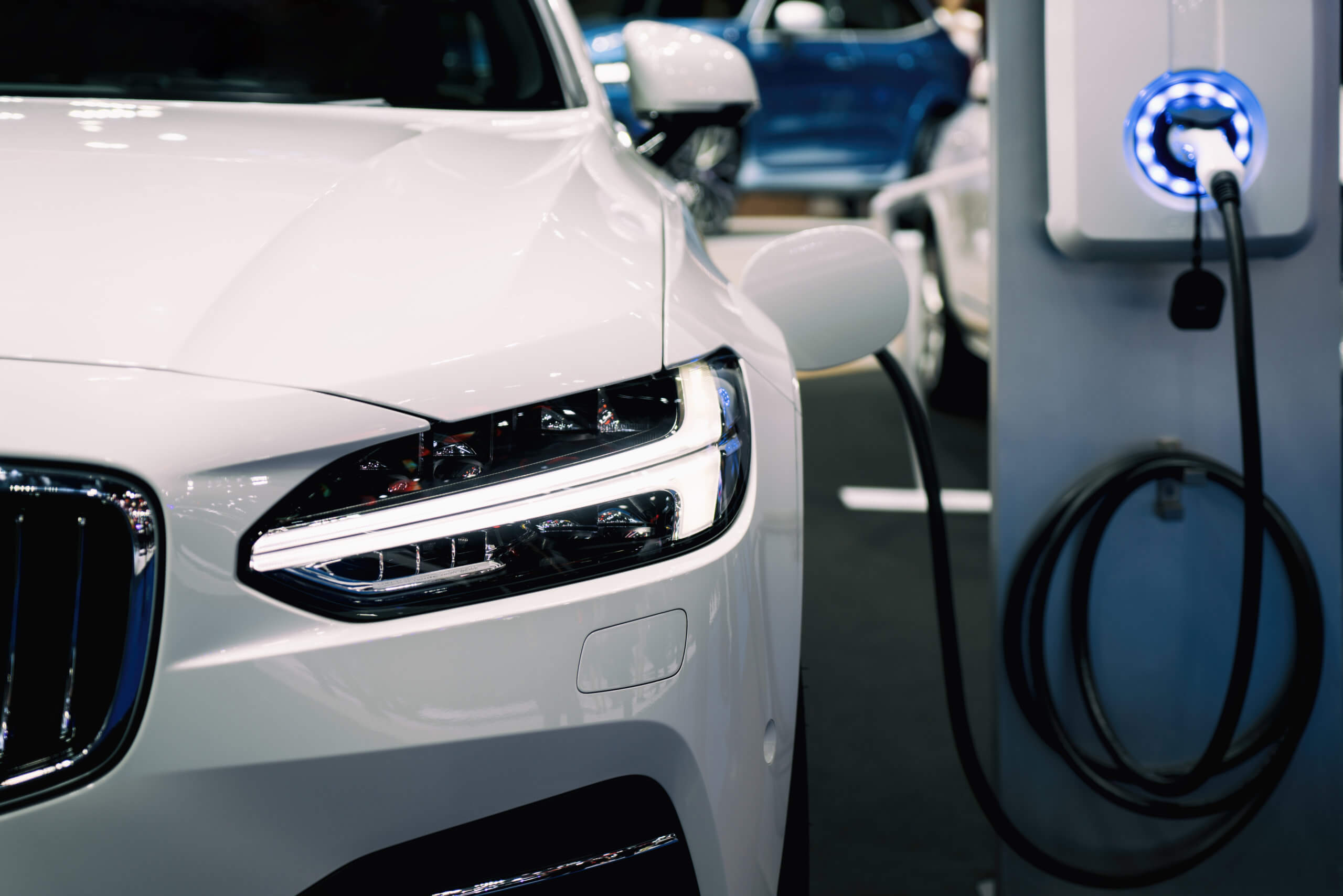
German electric vehicle sales up 50% on year in November to record 102,600: VDA
Sales of passenger electric vehicles in Germany rose 50% year on year in November to a record high 102,600 units and an overall market share of 39.4%, according to data from auto industry association VDA.
The market share was up from 34.4% a year ago and 32.5% in October to the highest share on record.
EV sales were also 51.2% higher month on month.
Of the volume, 57,980 units were battery EVs, up 44% year on year, while 44,580 were plug-in hybrid EVs, up 60%, the data showed.
With demand for EVs generally moving higher, battery raw material prices have been strong.
Platts, part of S&P Global Commodity Insights, assessed seaborne lithium carbonate and lithium hydroxide at $77,000/mt CIF North Asia and $82,500/mt CIF North Asia Dec. 6, up 128% and 160%, respectively, since the start of 2022.
Meanwhile, overall new vehicle registrations climbed 31% year on year in November to 260,500 units, which was up 24.9% from the previous month.
Of the monthly total, 171,200 units, or 65.7%, were German brands and the remaining 89,300 were foreign brands.
Overall new passenger car sales for the first 11 months of the year totaled 2.3 million units, down 2% year on year, although compared to the pre-coronavirus year 2019, the decline was 30%, the VDA said.
“Above all, the lack of primary and intermediate products and the high energy and raw material prices continue to have a dampening effect the market and production,” the VDA said.
Of those, 26.8% were EVs, totaling 659,200 units over the 10-month period, which was up 10% year on year.
some 280,100 vehicles were exported during November, up 26% from a year ago and rising 28.2% from October.
Exports over the January-November period rose 11% on the year to 2.4 million units.
According to the VDA, 385,700 passenger cars were produced in November, up 25% on the year and the seventh consecutive months of year-on-year gains and up 38.8% on the month.
In the first 11 months of 2022, 3.2 million passenger vehicles were produced in Germany, up 12% on the year, the VDA said, although it added that the production volume was still at a comparatively low level and was around 28% lower than pre-COVID 2019 levels.
According to S&P Global, plug-in light duty EV sales in Germany are expected to be 771,990 units in 2022 then reach 1.1 million units in 2025 and 1.9 million units in 2030.
— Jacqueline Holman

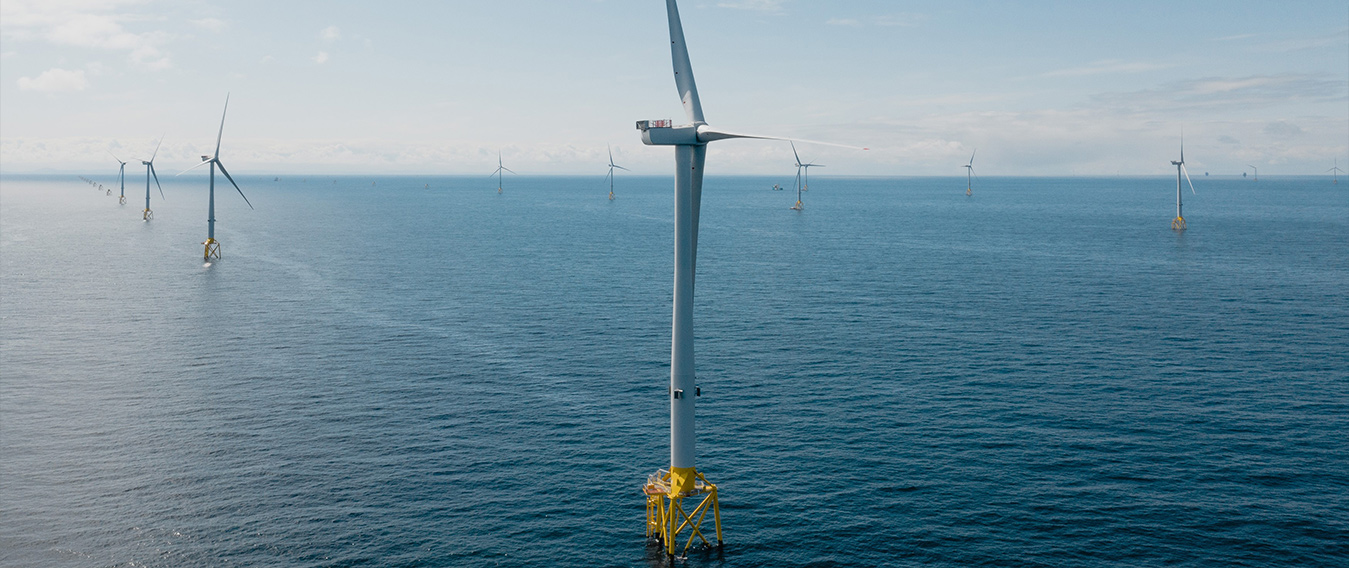
Steelmaker Salzgitter secures 250 GWh/year wind generated power from Engie
German’s steel producer Salzgitter said Dec. 5 it concluded a power purchase agreement with France’s multinational utility company Engie that’s effective at the start of 2023 and runs through end-2025.
The agreement covers the supply of 250 GWh/year of electricity during the period that will come from 10 onshore wind farms throughout Germany, including from turbines that no longer receive subsidies under the Renewable Energy Sources Act.
The PPA with Engie is an important building block for Salzgitter’s transformation into a producer of carbon-neutral, aka green, steel, and enables the producer to melt and process steel in electric arc furnaces with electricity verifiably coming from renewable sources as early as 2023, according to Ralph Schaper, the head of energy management at plate and coil products specializing steelworks Salzgitter Flachstahl.
Salzgitter aims for the highest possible availability of wind onshore electricity, said Schaper, with wind farms located in different regions with varying startup dates and technology standards.
The PPA allows urgently needed wind turbines to remain connected to the grid and new ones to be built, according to Salzgitter Senior Originator at Engie Energy Management Solutions Sarah Drevermann. “Strong signals and confidence in renewables are particularly important right now,” she said.
Salzgitter has been securing electricity supply from renewable power providers for a while, with its Salzgitter low carbon steel project, or SALCOS, at Flachstahl progressing well.
SALCOS will see the construction of two direct reduction plants and three EAFs at the mill that will incrementally replace its blast furnaces and converters. The first stage of the three SALCOS EAFs with a crude steel capacity of 1.9 million mt/year is scheduled to go live as early as the end of 2025, with full completion by 2033.
The transformation will enable steel production at Flachstahl, currently based on coking coal, to be replaced by a new hydrogen-based route and an electricity-intensive technology, which will require plentiful power supply.
Flachstahl, in Lower Saxony, is the largest steel subsidiary of Salzgitter. In 2021, it produced 4.3 million mt of crude steel and sold Eur3.2 billion worth of products.
— Ekaterina Bouckley
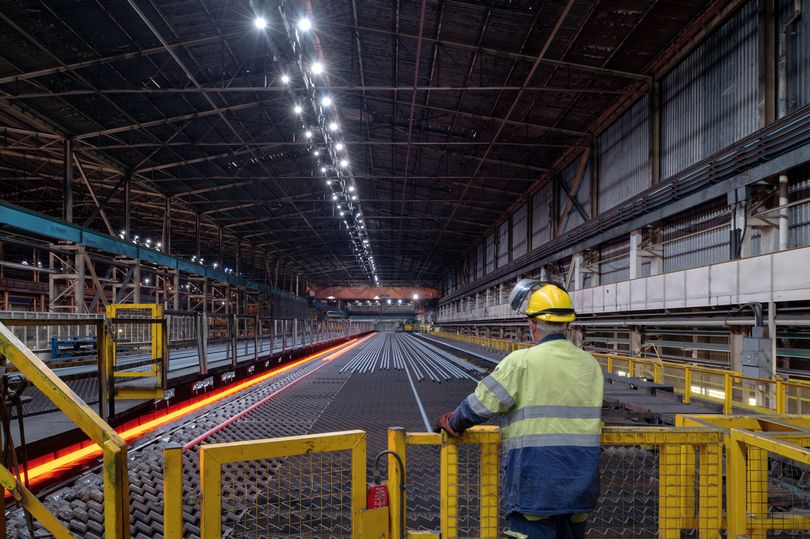
Liberty Steel Galati puts BF5 on $3.7 million care, maintenance program
Romanian steelmaker Liberty Steel Galati has put its blast furnace No. 5 on a Leu18.3 million ($3.7 million) care and maintenance program until the start of 2023, it has reported.
The program is due to improve the safety, stability, reliability and energy usage performance of the furnace, the company said late Dec. 5.
Work under the program would include replacing the wear plates and two of the bell-less top, or BLT, gears, unblocking the skip pit and the BF scrubber, and cleaning the BF shaft and top platforms.
“The timing of the program, with steel demand across Europe impacted by macro-economic issues, will allow Galati to make the improvements to its production processes without impacting customer delivery,” Liberty Galati said.
Throughout the program, Liberty Galati said its rolling mills would remain in full production and it would continue to serve its customers as normal, while reviewing its pricing strategy to ensure its sales maintain an “effective contribution.”
Romania’s largest integrated works, Liberty Galati produced 2.35 million mt of crude steel in 2021. Its hot strip mill produced 1.62 million mt of hot rolled coil products, while the galvanizing line produced 222,000 mt and the coating line 88,000 mt.
The works, which also produces heavy plates and longitudinally submerged arc welded steel pipes, was acquired by Liberty Steel Group, part of the GFG Alliance, in 2019.
In July, Galati launched a tender process for the supply of hybrid electric arc furnace technology to its steelworks as it aims to transform its operations to produce green steel.
The transformation plan for Liberty Galati will see new hybrid EAFs replace older, more polluting blast furnace production at the works by 2025.
Platts, part of S&P Global Commodity Insights, assessed domestic HRC prices in Northern Europe at Eur615/mt ex-works Ruhr Dec. 6, down 33.3% since the start of 2022.
— Jacqueline Holman

European mills aim for higher HRC prices on expected demand recovery
European steelmakers have been targeting higher domestic prices for hot-rolled coil, anticipating higher demand in the first quarter next year, market sources said Dec. 6.
No transactions have been reported at higher prices yet as buyers have been focused on managing their inventories by year-end. And the outlook for the start of 2023 has been mixed among market participants.
Some believe the need to restock after a couple of months of muted trading activity combined with effects from production cuts and high energy costs would push prices up.
Others think that demand from end-users would likely remain below normal rates and that stocks of the European distributors remain sufficient. As a result, a significant price rise is unlikely.
“I have mixed feelings about the outlook,” a Northern European service center source said. “I know that some people are quite optimistic, but I suspect that this could be wishful thinking and they could be confusing short-lived restocking with strong end-user demand.”
Platts assessed HRC in Northwest Europe at Eur615/mt ex-works Ruhr Dec. 6, unchanged day on day.
Offers have been reported at Eur630-650/mt ex-works, while buyers estimated tradable value at Eur610-620/mt ex-works.
A Central European source, however, said that the German mills have been still giving offers at prices below Eur600/mt ex-works Ruhr to the central part of the EU, at the equivalent of Eur580-605/mt ex-works Ruhr.
Platts assessed domestic HRC in the south of Europe stable at Eur620/mt ex-works Italy Dec. 6.
The assessment was based on a tradable value in Eur620-630/mt ex-works Italy and offers at Eur650/mt ex-works.
Platts is part of S&P Global Commodity Insights.
— Maria Tanatar

Salzgitter, SAP cooperate on digitising energy transition
Software forge SAP and Salzgitter are intensifying their long-standing business relationship to jointly expedite the digital transformation for climate-friendly steel production at the German steelmaker.
The company will be working even more closely with SAP from now on to achieve the digital transformation of its processes, it tells Kallanish. In 2017, Salzgitter initiated the group-wide transition to SAP S/4HANA. Collaborating with SAP in the field of data analytics and sustainability is the logical next step, Salzgitter says. “The cloud solutions developed by SAP play an important part in our journey to climate-friendly steel production,” says chief financial officer Burkhard Becker.
The SAP Footprint Management product, for example, will in future help to calculate the company-wide CO2 footprint of Salzgitter. SAP Environment Health and Safety Management will meanwhile support the secure and sustainable structuring of the company’s operating processes. In addition, with SAP Analytics Cloud, the steelmaker says it is putting down the technological foundations for efficient and well-founded sustainability reporting.
“In this way, we are enabling our customers to achieve end-to-end business process transparency,” says Sven Mulder, managing director of SAP Deutschland, calling the cooperation a “pioneering project for climate-friendly steel production.”
Christian Koehl Germany


AI optimises scrap flow at Hamburg mill
Employment of artificial intelligence (AI) has reduced the proportion of scrap in total production and improved product quality at ArcelorMittal Hamburg.
The mill started using an AI solution by Smart Steel Technologies (SST) last year to optimise the trimming process in wire rod production (see Kallanish passim). The AI-driven software combines real-time process parameters with historical production data to calculate, down to a fraction of a second, the perfect moment at which to cut the wire.
Due to the nature of the process, the quality and geometry of each wire rod is lower at the beginning and end than in the middle section, the filet, SST explains. Therefore, the head and tail of the wire are cut off with the help of shears. Trim scrap is produced as yield loss. The use of AI reduces this trim scrap by 20%. This results in savings in specific CO2 emissions as well as electricity and gas consumption, and in an overall improvement of quality, SST states.
“Previously, we cut the wire after 50 metres, for instance. The AI now determines the optimum cut length, which in this example is 35m,” says project manager Michel Wurlitzer of ArcelorMittal Hamburg.
Christian Koehl Germany

Trinecke Zelezarny trials bar peeling line
Trinecke Zelezarny (TZ) has belatedly begun trials at its new 30-80mm diameter bar peeling line, at an investment exceeding CZK 700 million ($30.2m).
The steel bars undergo automated material quality control using an online X-ray fluorescence spectrometer. The entire output section, in which the steel bars are bundled, preserved and packaged, is also automated. It includes the environmentally friendly processing of waste steel chips, which are crushed on site and then briquetted for further use, the firm says.
The 90,000 tonnes/year capacity line takes the firm’s peeled bar capacity to 150,000 t/y, thereby strengthening its market position, the steelmaker adds. Product is supplied mainly to the automotive industry, producing bearings, shafts and threaded rods for wind power plants. It is also used in the screwdriving industry and in forges.
Construction of the line began in May 2020 and it was initially scheduled for commissioning in December 2021 (see Kallanish passim).
TZ reported a 24% on-year surge in 2021 sales to CZK 43.7 billion ($1.82 billion), despite the 7% drop in crude steel production to 2.4 million tonnes.
Adam Smith Poland

ArcelorMittal further expands scrap access through acquisition
ArcelorMittal has acquired Riwald Recycling, a ferrous scrap business based in the Netherlands, further expanding its access to scrap feedstock, Kallanish notes.
The transaction is expected to be concluded by the end of January 2023. It is the third acquisition of a scrap business in recent months by ArcelorMittal, following the purchase of facilities from Alba International and the acquisition of John Lawrie Metals.
“This is the third metal recycling acquisition we have undertaken this year [2022], reinforcing the important role that scrap steel can play in our efforts to decarbonise and meet our target to reduce the carbon intensity of the steel we produce in Europe by 35% by 2030,” says Geert Van Poelvoorde, chief executive of ArcelorMittal Europe. “Securing access to the raw materials – scrap steel and direct reduced iron – required for low-carbon emissions steelmaking has a very important role to play.”
Riwald was founded in 1989 and operated two yards in Almelo and Beverwijk. In 2021, Riwald processed some 330,000 tonnes of ferrous scrap. Overall, the operations acquired this year by ArcelorMittal processed some 1 million tonnes of steel scrap in 2021.
“In its second climate action report, published in July last year, ArcelorMittal outlined five levers which will enable the Company to achieve carbon-neutrality by 2050, one of which was increased use of scrap steel,” the company explains.
“As well as using scrap in an electric arc furnace, the company can increase the use of low-quality scrap in the blast furnace-basic oxygen furnace steelmaking process by improving steel scrap sorting and classification, installing scrap pre-melting technology and adjusting the steelmaking process to accommodate scrap,” it concludes.
Emanuele Norsa Italy

EU HRC: Market rises, but sheet still lagging
North European hot-rolled coil (HRC) prices rose today as more buyers entered the market, expecting that the bottom had been reached following the Italian-led upturn.
Argus‘ daily northwest EU HRC index rose by €9.75/t to €622.75/t ex-works, while the Italian index increased by €4.25/t to €609.25/t ex-works.
Mills reported making sales around €630-640/t delivered into the Ruhr, and the market appeared to be more liquid. There was talk that the market leader had increased its offer to €700/t, but this could not be confirmed.
One buyer in the Benelux region tried to increase the volume on an order placed last week with an Italian mill and was told it would have to pay another €20/t, otherwise it would not be possible.
A trader said it finalised a purchase of Japanese HRC below €600/t cfr at the end of last week, but others said mills in the country remained off market. One trader said $620-630/t cfr was the best price from Japan, although Vietnamese HRC could be obtained for $540/t fob — putting a 20,000t vessel together to get freight of around $50/t was difficult, however. Vietnamese cold-rolled coil (CRC)was sold into Antwerp last week around $650-680/t cfr. Indian HRC was offered into southern Europe at $610-615/t cfr, with a deal reportedly done last week around $605/t cfr. Some buyers said around 100,000t has been sold from India into Europe over the past week. Indian CRC was offered at $700/t cfr, while South Korean CRC was quoted at $675/t cfr.
In Italy, where the recent uptick started, service centres said it was proving tough to increase sheet outsell prices, despite efforts to move up offers by €30-50/t. End-user offtake remained static, they said. Italian mills were quoting €610-640/t ex-works today, with some pushing up to €650/t, but after buyers purchased at lower prices in the second half of November activity has been limited, and certainly not at the levels currently targeted by mills. Buyers are expected to reassess the market in the first and second weeks of January and decide what prices to bid at and who to purchase from.
Liberty Galati announced on Monday that it would be taking down blast furnace five, meaning the mill would have no hot metal production and just be rolling stocked slab.
Lora Stoyanova
