


Liberty’s Galati shuts only working BF for maintenance; no market impact foreseen
Liberty Steel’s decision to suspend operations at a blast furnace (BF) at its Galati plant in Romania for the rest of the year for planned maintenance will have no impact on supply, it said.
BF5, which has capacity of 2 million tonnes per year of pig iron, will close for maintenance work before the end of the current week and will remain idle until the start of 2023, the company said on December 5.
The company expects the BF stoppage to have no impact on the market, considering the weak steel demand and approaching holiday period.
“The timing of the program, with steel demand across Europe impacted by macroeconomic issues, will allow Galati to make the improvements to its production processes without impacting customer delivery,” it said.
The rolling mills will remain fully operational during the BF downtime, apparently using slab from stock, Liberty Steel said.
The maintenance program at Galeti, which produces hot-rolled, cold rolled, hot-dip galvanized coil, plate and welded pipes, will cost 18.3 million Romanian leu ($3.9 million), the company said.
From September, several European steelmakers have announced output cuts and capacity closures, mainly in the flat steel sector, because of weak demand. Liberty Steel shut another BF in Ostrava over the summer without specifying when it will restart.
Published by: Julia Bolotova


European HRC prices mainly flat, mills target increases for Q1
European hot-rolled coil producers expect prices to rebound in the first quarter of 2023, while buyers are less optimistic, Fastmarkets heard on Wednesday December 7. Fastmarkets calculated its daily steel HRC index, domestic, ex-works Northern Europe at €626.88 ($657.70) per tonne on Wednesday, down by €2.50 from €629.38 a day earlier.
The latest calculation of the index is up by €5.63 week on week, but down by €23.54 per tonne month on month.
Both buyers and producers largely believe that a price floor has been reached. Some mills started to adjust their offers for January-February rolling coil upward at the end of last week.
Notably, the price idea from most mills for February-rolling HRC was no lower than €650 per tonne EXW.
Buyers, however, estimated trades would take place between €610 per tonne EXW and €650 per tonne EXW, depending on the tonnage and specifications.
“The market is a bit more active this week [and] there are fewer import offers available. And on top of that, more mills are shutting down blast furnaces and rolling mills. So, the availability of HRC will be reduced,” a buyer said.
HRC offers from an Italian producer to the south of Germany were heard at €670-680 per tonne CPT, compared with €650-660 per tonne CPT last week.
Buyers said they had doubts regarding a recovery in consumption early next year.
Additionally, some distributors still have stock that they bought at higher prices and were focused on selling it off.
Fastmarkets’ calculation of its daily steel HRC index, domestic, exw Italy was €624.50 per tonne on Wednesday, down by €3 per tonne from €627.50 per tonne on Tuesday.
The latest calculation of the Italian index is up by €13.67 per tonne week on week, but down by €41.75 per tonne month on month.
Offer from Italian mills were reported at €630-650 per tonne EXW, while buyers’ estimates of tradeable values were at €620-630 per tonne EXW.
Sources said that Italian mills were mainly sold out for January-rolling coil and were offering February-rolling material already.
HRC suppliers from Southeast Asia were mainly out of the market in the week to Wednesday. Sources suggested that overseas HRC sellers might come back to the market with higher offers next year.
India-origin HRC was the only foreign material available in the market. Notably, offers from India late last week were heard at €600-610 per tonne CFR Italy, while starting this week Indian mills were targeting €620 per tonne CFR minimum, sources said.
At the same time, buyers’ estimates of workable prices for import HRC were no higher than €590 per tonne CFR.
Published by: Julia Bolotova

ArcelorMittal acquires third steel scrap recycler this year
ArcelorMittal is to acquire Riwald Recycling, a Netherlands-based ferrous scrap metal recycling business, the steelmaker announced Dec. 6.
This will be ArcelorMittal’s third scrap processing business acquisition this year, as it seeks to reinforce the role that scrap steel can play in its efforts to decarbonize. The steelmaker, Europe’s largest, is working towards meeting a target to reduce the carbon intensity of the steel it produces in the region by 35% by 2030, it said.
Steelmaking using ferrous scrap produces significantly fewer carbon emissions than steel produced using primary raw materials, including coking coal and iron ore.
Steelmaking — a hard to abate industry — is held responsible for around 9% of total global carbon emissions, although the percentage varies by region.
The parties signed a transaction for the Riwald acquisition Dec. 5, with closing — subject to customary regulatory approvals — expected by the end of January, ArcelorMittal said.
Riwald Recycling was founded in 1989 and processed over 330,000 mt of ferrous scrap metal in 2021. It operates two fully certified scrap metal yards in Almelo and Beverwijk in the Netherlands, both of which have direct port access, and sources material from a wide range of suppliers, including industrial companies, OEMs, demolition companies, traders, car dismantling companies and regional and national government, ArcelorMittal said.
Geert Van Poelvoorde, ArcelorMittal Europe CEO, said the steelmaker looks forward to working with Riwald’s CEO, Gert Huzink, and the scrap producer’s employees, to further develop its business.
“Although it is ultimately the various low-carbon emissions steelmaking technologies which we are developing and deploying which will take us to net-zero, given the urgent need to make progress this decade we are working hard to move forward on all fronts,” van Poelvoorde said. “Therefore, securing access to the raw materials — scrap steel and direct reduced iron — required for low-carbon emissions steelmaking has a very important role to play.”
Earlier this year ArcelorMittal announced the acquisition of several metal recycling facilities from ALBA International Recycling and the acquisition of Scotland-based John Lawrie Metals. Together with Riwald, these three businesses processed over 1 million mt of scrap steel in 2021.
In its second Climate Action report, published in July last year, ArcelorMittal outlined five levers that will enable the company to achieve carbon neutrality by 2050, one of which was increased use of scrap steel. As well as using scrap in an electric arc furnace, the company noted that it can increase the use of low-quality scrap in the blast furnace-basic oxygen furnace steelmaking process by improving steel scrap sorting and classification, installing scrap pre-melting technology and adjusting the steelmaking process to accommodate scrap.
Turkish import deepsea scrap prices continued to rise Dec. 6, as purchasing for prompt and January shipments persisted, amid reports of market tightness.
Platts, part of S&P Global Commodity Insights, assessed Turkish imports of premium heavy melting scrap 1/2 (80:20) at $382/mt CFR Dec. 6, up $2/mt on the day. The assessment has increased $45.50/mt from a recent low of $336.50/mt CFR in mid-November.
— Diana Kinch


Outokumpu partners with Klöckner & Co to supply lower emissions stainless steel
Finnish stainless steelmaker Outokumpu has partnered with German steel distributor Klöckner & Co. to supply its emission-minimized stainless steel and gain industry market share, the companies said Dec. 7.
The first coil made of emission-minimized stainless steel, part of Outokumpu’s Circle Green product line launched in June 2022 to decarbonize the industry sector, had already been delivered, with larger quantities to start from 2023, they said.
According to Outokumpu, the Circle Green product is the first of its kind globally, with no other stainless steel manufacturer producing stainless steel with as low emission levels, taking into account the climate emissions from raw material extraction through the whole production chain.
“Partnering around sustainability offers the possibility to cut emissions and help companies to reach their climate targets,” Outokumpu CEO Heikki Malinen said, adding that both companies had strong aspirations to develop a sustainable metal sector.
“After securing significant quantities of CO2-reduced steel at an early stage, we are now also committed to increasing the availability of other CO2-reduced metals for our customers – Outokumpu’s first CO2-minimized stainless steel coil is another important step for our company in the right direction,” Klöckner & Co. CEO Guido Kerkhoff said.
“With this we enable even more of our customers to build sustainable value chains already today and strengthen our position as a pioneer of sustainability,” he added.
Klöckner had classified Outokumpu’s Circle Green products in its “Prime” category, allowing the distributor to expand its portfolio of CO2-reduced materials under its new umbrella brand Nexigen, it said.
In November, Outokumpu said it aimed to improve its energy efficiency by 8% across the group in 2023 and 2024, compared with the January-September 2022 level, which would save around 600 GWh of energy. It also said it would prioritize related investments amid the energy crisis in Europe.
— Jacqueline Holman
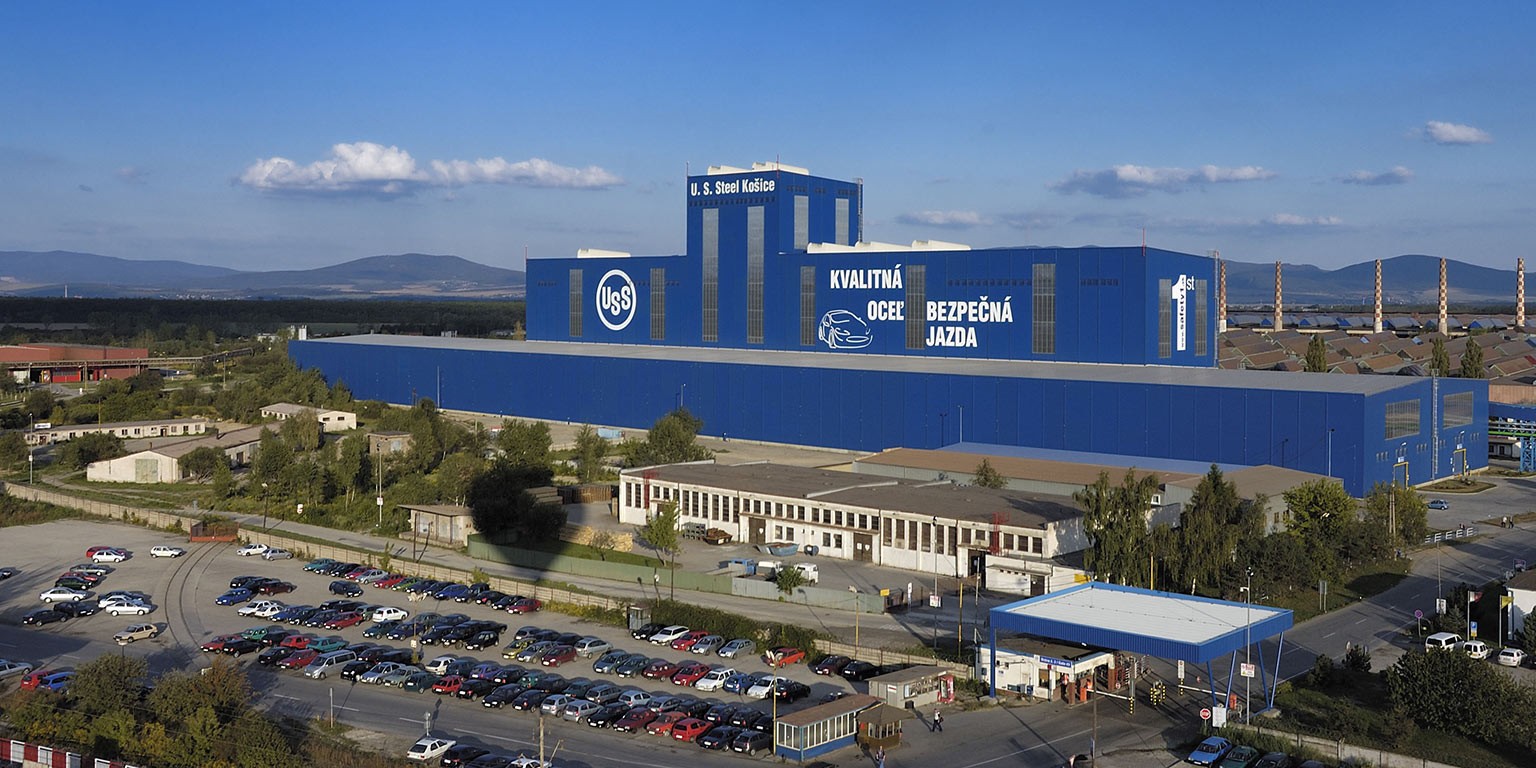
Slovakia’s US Steel Kosice temporarily idles a second blast furnace
Slovakian steelmaker US Steel Kosice has shut down a second blast furnace until early 2023, a spokesperson for parent company US Steel confirmed to S&P Global Commodity Insights Dec. 7.
“US Steel Kosice made the decision to temporarily idle blast furnace 1 on Dec. 2 as a result of very high energy prices, low market demand and surging imports,” the spokesperson said, adding that the company expected to resume operations at the beginning of 2023.
US Steel Kosice previously idled its BF2 on Sept. 4 for 60 days, keeping BF1 and BF3 operational.
At the time, the company described the BF2 idling as a planned outage and said it would continue to adjust maintenance schedules according to demand.
US Steel Kosice has a crude steel production capacity of 4.5 million mt/year.
A number of European steelmakers have cut production in recent months to realign supply and demand.
Platts, part of S&P Global, assessed domestic HRC prices in Northern Europe at Eur615/mt ex-works Ruhr Dec. 6, down 33.3% since the start of 2022.
— Jacqueline Holman, Maria Tanatar

EU steelmakers target HRC price rise on improving restocking activity
European steelmakers have been aiming for higher domestic hot-rolled coil prices on Dec. 7 as they expect demand to improve in the first quarter due to restocking.
Although some big producers have not officially moved prices up, they refused to give discounts, sources said.
The rising mood of the mills has been supported by anticipated restocking of distributors across Europe, the need to cover high production costs and the withdrawal of competitive import offers from the market this week.
Trading activity, however, has been restricted as distributors continued to focus on destocking by the year-end and the buyers have been evaluating end-user demand before making deals, according to market sources.
“It is expected that coil prices will go up in the first quarter, latest in the second quarter – but there are still no big deals done,” a German distributor said. “I guess customers are aware that prices will go up, but still hesitate to buy due to unclear demand.”
“Mills are holding back from sales, as they understand that the longer they wait the better the chances to get higher prices,” a German service-center source said. “Buyers are trying to talk prices down, but it seems that they do not have control over prices now.”
Platts assessed HRC in Northwest Europe at Eur615/mt ex-works Ruhr Dec. 7, up Eur5/mt day on day.
Distribution sources reported tradable value at Eur620/mt ex-works Ruhr. One distributor reported tradable value lower at Eur610-620/mt ex-works Ruhr. Another reported Eur620/mt ex-works Ruhr as a minimum price.
Official offers have been heard at Eur650/mt ex-works Ruhr.
Platts assessed domestic HRC in the south of Europe stable at Eur620/mt ex-works Italy Dec. 7.
The assessment was based on offers heard at Eur620-650/mt ex-works.
Platts is part of S&P Global Commodity Insights.
— Maria Tanatar, Benjamin Steven

European CRC, HDG markets signal increases, buyers resistant
Mills were heard as indicating higher CRC, HDG prices Dec. 7, though buyers still perceived opportunity to secure competitive volumes before the end of the year.
In the cold-rolled coil market, North European prices were up Eur20/mt on week, assessed at Eur720/mt ex-works Ruhr. South European CRC was stable on week, assessed at parity with the Northern market at Eur720/mt ex-works Italy.
Indications for North Europe were received at Eur710-720/mt ex-works Ruhr and Northern Europe, as reported by distribution sources. Higher offers were heard across Europe, with one Italian mill heard as offering in the mid-Eur800s.
Market participants did not view said price level as achievable, however, given the poor consumption outlook for distributors moving into next year, but did agree that the floor had likely been reached.
As for galvanized coil, the HDG ex-works Ruhr price was up Eur10/mt on week at Eur750/mt, with the Italian assessment increasing by Eur15/mt to Eur740/mt ex-works.
While offers in North Europe were generally heard at a Eur750/mt ex-works minimum, deals were rumored as achievable from German mills at Eur720/mt delivered Ruhr on firm bids.
Platts is part of S&P Global Commodity Insights.
— Benjamin Steven, Maria Tanatar
Thyssenkrupp Materials acquires data analysis firm
Thyssenkrupp Materials Services has acquired data analysis and data science company Westphalia DataLab GmbH. With the purchase, the materials distributor expects to strengthen its expertise in digital supply chain services and accelerate the development of concrete solutions, Kallanish hears.
As part of its “Materials as a Service” strategic development, tk Materials is investing in new digital business models, particularly in supply chain services. “The potential for digital solutions to make supply chains more resilient and reduce CO2 emissions is huge. Against the background of the dynamic market environment, we are focusing on innovations here and opening up new business areas,” says Ilse Henne, the company’s chief transformation officer.
As an example, the firm cites forecasting solutions used to improve service levels for customers and reduce their inventories with the help of data analysis along the supply chain. One project in this area is the Artificial Intelligence-based solution “Pacemaker”, which is currently being further developed.
Westphalia DataLab was founded in Münster in 2017 and offers its customers consulting and development services in the field of data science. In 2020, the company won the German Artificial Intelligence Award.
Christian Koehl Germany


Outokumpu, Klöckner cooperate on low-emission stainless
Outokumpu is starting a cooperation with Klöckner & Co by delivering the first coil made of emission-minimised stainless steel from its “Circle Green” product line, launched in June 2022. From 2023 onwards, the companies intend to supply larger quantities of the product, Kallanish hears.
Outokumpu’s Circle Green is classified in the so-called “Prime” category in Klöckner’s new categorisation for stainless steel. Through this collaboration, the distribution group will be able to significantly expand its portfolio of CO2-reduced materials, services, and logistics under the new “Nexigen” umbrella brand.
Outokumpu claims that its Circle Green production was the first of its kind globally for stainless steel with very low emission levels, and that it is now on sale in the market. “After securing significant quantities of CO2-reduced steel at an early stage, Outokumpu’s first CO2-minimised stainless steel coil is another important step for our company in the right direction,” says Klöckner chief executive Guido Kerkhoff.
Christian Koehl Germany

Hydrogen presents decarbonisation hope, challenges: Kallanish webinar
Decarbonising the global steel industry with hydrogen is possible and probably inevitable, but it will not be easy, according to presenters during Kallanish’s Hydrogen for Steelmaking webinar hosted on 7 December.
The global steel industry accounts for about 6-7% of global emissions, pointed out Kallanish Index Services managing director Steve Randall. Eliminating those emissions purely with hydrogen will be a challenge on two fronts – capacity and cost.
Nel Hydrogen chief executive Håkon Volldal said tackling the capacity side of the problem will involve a ratcheting up of next-generation capacity while meeting extant needs with proven technologies. Lower costs will follow as technology improves.
“If you invest hundreds of millions of euros in a DRI facility, you want to make sure the plant is actually working,” he commented.
Nel’s Herøya facility in Norway currently has a capacity of 500 megawatts. It is in the process of doubling that, and the facility may eventually be ramped up to 2 gigawatts. Sometime in the first quarter, the company expects to announce a US site for a 4GW facility.
SSAB vice president of sustainable business and public affairs Thomas Hörnfeldt added that his company’s HYBRIT joint venture anticipates shipping its first commercial product by 2026. The HYBRIT pilot plant produced its first fossil-free steel in 2021.
Crucially, fossil-free steel is identical to traditional steel once downstream processing begins, he pointed out. It is the shedding of carbon emissions during the crude steel production process that is truly revolutionary.
ArcelorMittal technical head of government affairs and climate change Stéphane Tondo anticipates the majority of EU steel production will be decarbonised by 2030. Getting there, however, will require massive investment in both green energy and electrolyser capacity.
Of the 157 million tonnes currently produced, about 60% – or 94mt – is suitable for conversion to the hydrogen process.
That will require 37-60GW of electrolyser capacity, 296 terawatt-hours of green electricity, and about €180 billion ($189.38 billion).
Such a massive effort will require a new slate of government policies to ensure an affordable, available, and stable hydrogen supply, Tondo said. “[Current] regulation is not helping the supply of hydrogen in a stable way for the steel industry,” he added.
Dan Hilliard USA