

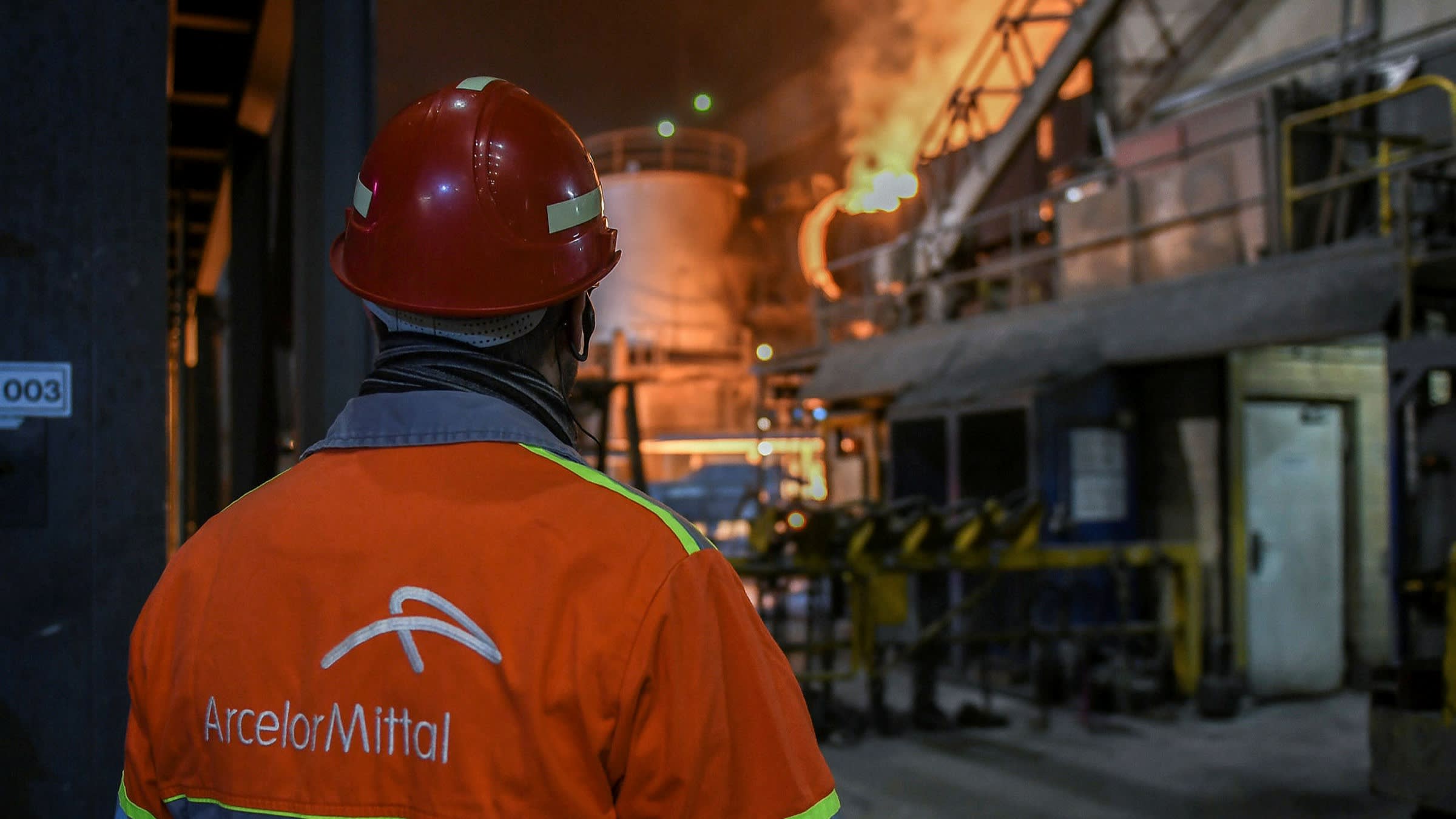
Kompetenzzentrum der ArcelorMittal für klimaneutrale Stahlproduktion in Deutschland
Die deutschen Standorte der ArcelorMittal in Bremen, Duisburg, Eisenhüttenstadt und Hamburg arbeiten intensiv an der Dekarbonisierungsinitiative XCarb®. Zu diesem Zweck wurde nun eine Forschungsabteilung eingerichtet, die ihren Sitz in Hamburg hat.
Wir sprachen mit Herrn Dr. Frank Schaub, dem Leiter des Kompetenzzentrums für Forschung und Entwicklung, über die Herausforderungen und Chancen, die sich durch die neu geschaffene Abteilung ergeben.
marketSTEEL: Wann hat die neue F+E-Abteilung ihre Arbeit aufgenommen?
Offiziell begonnen haben wir am 1. März dieses Jahres. Aktuell sind wir noch dabei, die Abteilung weiter aufzubauen. Das bedeutet, dass wir, einschließlich meiner Person, zu dritt die Zusammenarbeit mit anderen Abteilungen des Konzerns vorbereiten. Bei Forschungsförderthemen arbeiten wir zum Beispiel auch mit externen Partnern zusammen.
marketSTEEL: Wie viel Mitarbeiter sind mittel- und langfristig für die Abteilung vorgesehen?
Da es sich bei der Transformation der Stahlindustrie um einen enorm komplexen Themenbereich handelt, werden sich auch die Kompetenzen der Mitarbeiter aus vielen verschiedenen Fachrichtungen zusammensetzen. Im Lauf der kommenden zwei Jahre rechne ich mit etwa 10 bis 12 Mitarbeitern, die uns bei unserer Arbeit unterstützen werden.
marketSTEEL: In das Netzwerk der neuen F+E-Abteilung sind nur die deutschen Standorte eingebunden. Wie sieht die Zusammenarbeit global aus?
Nachdem ArcelorMittal insgesamt etwa 1.500 Mitarbeiter in den einzelnen F+E-Standorten hat, von denen der französische Standort in Metz mit 500 Mitarbeitern der größte ist, wird hier ein reger Austausch von Studienergebnissen mit den Kollegen stattfinden.
Allerdings legen wir natürlich den Schwerpunkt auf die deutschen Standorte und alle regionalen Herausforderungen, die mit der Transformation in unserem Land einhergehen.
marketSTEEL: Sind bei konkreten technischen Studienergebnissen auch Machbarkeitsstudien geplant? Wie praxisnah wird in der F+E-Abteilung gearbeitet?
Machbarkeitsstudien sind ganz wichtig. Wir müssen unsere Forschungen am Bedarf ausrichten. Daher wird praxisorientiert gearbeitet und wir koordinieren dies auch mit allen Standorten. Dennoch müssen wir für die Grundlagenforschung offen sein: Schließlich geht es um die Klimaneutralität einer gesamten Branche, die das Ziel schrittweise in den nächsten Jahren bis spätestens 2050 erreichen will. Und aus der Grundlagenforschung heraus ergeben sich immer wieder neue Ansatzpunkte.
Das bedeutet, dass auch neue Technologien immer wieder neu bewertet werden müssen. Schließlich geht es darum, wirtschaftlich und ökologisch vernünftige Lösungen zu finden und letztlich um Entscheidungen, welche Technik weiterentwickelt werden soll.
Aktuell müssen wir neben der Dekarbonisierung des Stahls insbesondere auch an die Nachhaltigkeit vieler weiterer Prozesse denken, wie z.B. die Verwendung der veränderten Stahlwerksschlacken sowie die Kreislaufführung von eisenhaltigen Hüttenreststoffen die in den Produktionsprozess zurückgeführt werden müssen.
marketSTEEL: Herr Dr. Schaub, wir danken Ihnen für das Gespräch.
Hubert Hunscheidt

Italy rebar price narrows upward; further rises expected in January
The price of rebar in Italy increased in the week ended Wednesday November 7, with the buy-side of the range seeing most of the upward movement.
Fastmarkets’s weekly assessment for steel reinforcing bar (Rebar) domestic, exw Italy was €850-870 ($892-913) per tonne, up from €810-860 per tonne a week earlier.
According to one distributor, mills have sold their December tonnages and were no longer competing for sales, and the lowest offers had disappeared from the market as a result.
“The producers have already sold the quantity that they will produce in December, that’s why they do not need to sell at cheaper prices,” said the distributor.
A similar sentiment was heard from a Spanish mill.
“We feel we have sold enough at previous price levels, and we don’t want to play with fire anymore. [We] want to protect ourselves a bit more, so we are trying to offer higher [prices].”
Rebar prices is Spain remained stable, however.
Fastmarkets’ assessment for steel reinforcing bar (Rebar) domestic, delivered Spain was unchanged on Wednesday at €730-760 per tonne.
Additionally, scrap prices have increased since mid-November, which has given further support to rebar prices.
Fastmarkets’ daily calculation for steel scrap HMS 1&2 (80:20 mix) North Europe origin, cfr Turkey was $381.09 per tonne on December 7, up from $361.44 per tonne a week before.
Market participants also said energy prices were expected to rise, which would lead to higher rebar prices in January.
Published by: Ross Yeo


Europe’s steel hollow sections market hits price floor, traders say
Prices for steel hollow sections in Europe remained unchanged in the week to Wednesday December 7, with traders saying the market had found the price floor.
Fastmarkets’ weekly price assessment for steel sections (medium) domestic, delivered Northern Europe was €890-920 ($934-965) per tonne on Wednesday, unchanged since November 23.
“Prices have reached a bottom, I would even say that the prices will go up again,” a source in Germany said. “Mills will push for higher prices for next year.”
Demand for sections remained low in the week, Fastmarkets heard, and traders said they expect weak construction consumption in the new year but greater price stability.
A second market participant in Northern Europe said they believed demand would pick up in January, while other traders felt the current trend of hand-to-mouth purchasing could continue up to the end of the first quarter, or first half, of 2023.
Prices for sections were heard offered at €800 per tonne in the week, but these levels were not widely confirmed by the market. Sources said any material sold at such low levels was likely older stock or imported material.
Some Italian mills have also announced longer-than-usual maintenance outages this year, which could last from three to four weeks, or up to a month.
Fastmarkets’ weekly price assessment for steel sections (medium) domestic, delivered Southern Europe was €880-920 per tonne on Wednesday, unchanged from November 30.
Fastmarkets heard sections prices to Poland had flattened at €745-760 per tonne levels, while sections prices to Romania were heard at €730 per tonne CPT.
Costs for the product’s feedstock, hot-rolled coil, moved up in the week, with producer sources expecting prices to rebound in the first quarter of 2023.
Fastmarkets’ daily calculation of its steel HRC index domestic, exw Northern Europe was €626.88 per tonne on Wednesday, up €5.63 per tonne from €621.25 per tonne a week earlier.
Published by: Holly Chant

European downstream flat-steel prices mostly unchanged despite producers pushing for increases 8
European cold-rolled coil (CRC) and hot-dip galvanized coil (HDG) prices were largely flat week on week, despite producers’ bullishness, sources told Fastmarkets on Wednesday December 7. CRC Insufficient end-user demand and still-high stock levels at buyers continued to limit buying interest for CRC in Europe.
European mills continued to push for higher prices, however, citing the increasing costs of raw materials and energy.
“We need to increase CRC and HDG prices by at least €100 ($105) per tonne to barely make a profit,” a steel producer in Northern Europe told Fastmarkets.
Buyers’ estimates of achievable prices for CRC in both Southern and Northern Europe ranged between €700 and €730 per tonne EXW. Producers were aiming higher, however, targeting €750-770 per tonne EXW.
Fastmarkets’ weekly price assessment for steel cold-rolled coil domestic, exw Southern Europe was €700-730 per tonne on Wednesday, unchanged since the previous week.
Competitive overseas CRC offers have been putting additional pressure on CRC prices in Southern Europe, sources said.
Offers for CRC with February shipment from Southeast Asian and Indian suppliers were reported at €650-670 per tonne CFR Southern Europe. The most recent bookings were reported within this range in late November.
But most overseas suppliers withdrew from the market to reconsider offers during the current assessment week, sources said.
Fastmarkets’ weekly price assessment for steel CRC domestic, exw Northern Europe was €700-750 per tonne on Wednesday, narrowing downward by €20 per tonne from €720-750 per tonne seven days earlier.
The assessment was based on the few concluded deals, the lower end of offers, and market sources’ estimates of achievable prices.
One buyer source reported a transaction for CRC at €680 per tonne EXW during the week, but it was not widely confirmed by other market participants.
Mill sources called €750 per tonne EXW “barely the cost line,” and they said they anticipate CRC prices in the region moving closer to €800 per tonne EXW in the first quarter of 2023 on expectations of a demand rebound.
HDG
HDG offers from mills in Northern Europe were heard at €750-760 per tonne EXW during the week.
Some mills were targeting even higher prices in the range of €760-780 per tonne EXW.
Buyers, however, indicated tradeable values to be at €730-750 per tonne EXW, with most recent deals reportedly closer to the lower end of the price range, but for small volumes.
European buyers’ HDG coil stock levels have generally been falling, and they are not ruling out the possibility of small upticks in stock levels before the end of the year, market sources said.
As a result, Fastmarkets’ weekly price assessment for steel HDG domestic, exw Northern Europe was €730-750 per tonne on December 7, unchanged from the previous week.
Fastmarkets’ corresponding weekly price assessment for steel HDG domestic, exw Southern Europe was €730-750 per tonne on December 7, also flat week on week.
Published by: Julia Bolotova
Published by: Julia Bolotova

Stalprofil reduces profit, cautions over withheld EU funds
Stalprofil’s revenue surged 56% on-year in the third quarter to PLN 575.95 million ($129.4m) but net profit slumped 41% to PLN 15.77m due to higher costs, Kallanish notes.
Steel product sales volumes rose 9.4% in Q3, the firm says without providing tonnages, with sales value up 24%. In the transmission infrastructure (pipeline) segment, which includes pipe coater subsidiary Izostal, revenue soared 121% thanks to sales to Polish pipeline operator Gaz-System, which were almost zero a year earlier.
Steel demand tapered off and supply increased in Q3, leading to a continuation of the pricing downtrend seen since Q2. Mills responded to this and rising energy costs by limiting production, which helped balance supply with demand, and stabilise prices at pre-Ukraine war levels, Stalprofil says.
The withholding by the EU of Recovery and Resilience Facility (RRF) funds for Poland creates significant uncertainty for Poland’s economy amid the onset of difficult times, Stalprofil says. Those funds were supposed to be allocated to infrastructure investments, meaning their blocking may result in a notable fall in investments.
In the nine months through September, consolidated revenue surged 54% on-year to PLN 1.76 billion but net profit fell 6% to PLN 87.74m.
Adam Smith Poland

Ferrexpo tightens 2030 carbon emission reduction target
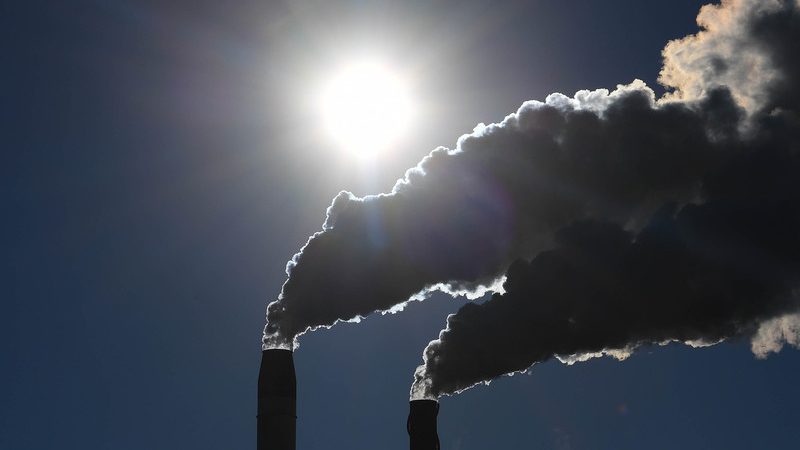
Swiss-headquartered iron ore miner and pellet producer Ferrexpo with assets in Ukraine has announced targets for the decarbonisation of its operations and has published its Climate Change Report, the company tells Kallanish.
The group has updated its carbon emissions target of a 50% reduction by 2030 for Scope 1 and 2 emissions. Earlier, the target was 30%.
The report also introduces new Scope 3 emissions reduction targets for Ferrexpo, setting 10% as a goal for reducing this category of emissions by 2030, and a 50% target for 2050.
“Our inaugural Climate Change Report represents the culmination of an initial phase of work looking in detail at climate change topics such as climate change risks and opportunities, as well as a bespoke study of one potential decarbonisation pathway for the Group, achieving net zero production by 2050,” says Ferrexpo chief executive Jim North.
“Despite the impact of the ongoing war on businesses like ours operating in Ukraine, I am pleased that we are able to present a clear strategy for the long-term future of our business, showing the significant opportunity that lies ahead through Ferrexpo producing an iron ore product that helps the global steel industry lower its emissions.”
Earlier, Ferrexpo partially resumed production activities at its facilities in central Ukraine after the stabilisation of energy supply following Russian shelling (see Kallanish passim). Russian missile strikes on state-owned electrical infrastructure had caused the firm to suspend output on 11 October.
Ukraine saw October crude steel output drop to only 350,000t, down by 77.7% on-year, according to worldsteel data. The country’s year-to-date output totalled 5.84 million tonnes, down 68%.
Svetoslav Abrossimov Bulgaria

ArcelorMittal starts new carbon-cutting ethanol plant in Ghent
ArcelorMittal has inaugurated its new carbon capture and utilisation (CCU) “Steelanol” plant in Ghent, Belgium, that will contribute to cut annual carbon emissions by 125,000 tonnes, Kallanish learns from ArcelorMittal.
The plant, which required an investment of €200 million ($209m), was developed by the steelmaker’s partners, LanzaTech, Primetals Technologies and E4tech. It uses biocatalysts to transform steelmaking waste gases into advanced ethanol, which can then be used to produce products such as transport fuels, paints, plastics and clothing. At full capacity, Steelanol will produce 80 million litres of advanced ethanol, “almost half of the total current advanced ethanol demand for fuel mixing in Belgium”, the steelmaker says in a note.
ArcelorMittal Gent is also building a €35m sustainable biomass “Torero” processing plant designed to cut coal use. Scheduled to become operational next year, Torero will process biomasses, such as waste wood, for use as a raw material in the blast furnace, cutting Gent’s CO2 emissions by 112,500 t/year. The company will add a second reactor to the facility over the next two years.
ArcelorMittal intends to cut CO2 emissions by 25% globally by 2030 and by 35% in Europe. The company is investing in decarbonisation technology through its XCarb Innovation Fund and is teaming up with Mitsubishi Heavy Industries Engineering (MHIENG), BHP and Mitsubishi Development to develop carbon capture, utilisation and storage (CCUS) technology in Europe and the US. The partners will first implement a large-scale multi-year trial of MHIENG’s system in Ghent, as well as at an unspecified US site.
This Ghent project involves two phases. During the initial stage, the CO2 top gas will be captured from the blast furnace at a rate of around 300 kg/day of CO2. The second phase involves testing the separation and capture of CO2 from the offgases in the hot strip mill reheating furnace, which burns a mixture of industrial gases, including coke gas, blast furnace gases and natural gas (see Kallanish 28 October).
“The work being undertaken here lays the ground for what the steel plant of the future will look like. This is a steel plant which is embracing the latest innovative technologies; which is using sources of circular carbon; which captures and re-uses as many of its waste products as possible, recycling them into something of value; and which is preparing for a future when green hydrogen will remove the need to use any fossil carbon,” Lakshmi Mittal said at this week’s inauguration in Ghent.
Natalia Capra France

French, Luxembourg scrap prices flatten amid shutdowns
French and Luxembourg domestic scrap prices are flat again in December after the stability seen in November. Some large merchants have lowered their scrap intake, but this is not pressuring availability as mill demand for scrap remains poor due to the European long steel downturn.
Lower sales of merchant bar and wire rod, and poor rebar sales are forcing some mills to shut down production for the month of December. Some will not buy any scrap while others will buy reduced tonnages in France, Belgium and Luxembourg.
The European price landscape is also showing mostly flat prices, with the market said to be “quiet”. Italian and Austrian mills are paying the same prices as in November, while Germany is going through a similar situation with mills and merchants negotiating flat on-month prices for old scrap and new scrap, sources tell Kallanish.
So far, French and Luxembourg domestic shredded E40 grade is pegged at €345-360/tonne ($362-377) delivered on average. The mixed E8 grade remains flat at €350-360/t on average. Demolition E1C and E3 are on average at €290-310/t and €330-340/t delivered respectively this month, sources suggest.
Meanwhile, scrap prices in the Benelux are seen continuing to rise amid tight supply and export demand. Most exporters’ dock prices were pegged at €305-315/t delivered on Monday depending on the region, up from €290-305/t a week earlier (see Kallanish 6 December newsletter). However, higher prices were also available from a few exporters that were purchasing more aggressively. Prices in largest export market Turkey have since inched up again.
Natalia Capra France
Salzgitter sells SZBE steel components business to FALK Bouwsystemen
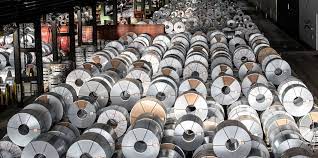
German steelmaker Salzgitter has sold its steel components business Salzgitter Bauelemente, or SZBE, to Netherlands-based FALK Bouwsystemen, it said Dec. 8.
The companies chose to not disclose the purchase price, but said FALK would take the business over from Jan. 1, 2023.
Salzgitter would retain its site on the steelworks premises and Salzgitter Flachstahl would continue to supply feedstock to SZBE, it said.
The sale was in line with the Salzgitter 2030 strategy, under which the company should achieve more active portfolio management, Salzgitter CEO Gunnar Groebler said.
“FALK’s takeover opens up considerably better strategic options for growth for SZBE and its employees compared with the former corporate group,” he said.
Meanwhile, FALK, which is focused on the construction of buildings in industry and agriculture, would use the acquisition to enter the German market, it said.
“To this end, we will be building on the existing know-how and endeavoring to expand the production volume at this location; similarly, the investment measures envisaged by management are to be progressed,” the FALK Group said.
“In the new corporate group, Salzgitter Bauelemente will benefit from greater visibility than before, which is also a reason for our positive assessment of the new arrangement,” SZBE General Manager Kai Bohmbach said, adding that the potential for cooperating in procuring material was also advantageous.
FALK has a production volume in the sandwich elements segment totalling 5 million sq.m, which Salzgitter said was around five times higher than Salzgitter Bauelemente’s volume, Salzgitter said.
It also recycles sandwich elements, reducing its environmental impact by around 40%, while SZBE manufactures sandwich elements from mineral wool to accommodate customers’ fire protection requirements.
Low-carbon steel supply accord with EMW
Salzgitter Group has also announced that its subsidiary Salzgitter Flachstahl GmbH has concluded an agreement with EMW Stahl Service GmbH to supply the steel service center – which intends to increase its sales of green steel products in the coming years – with a specified quantity of “green” steel.
An initial delivery will be made following the steelmaker’s successful conversion to low CO2 steel production under its “SALCOS – Salzgitter Low CO2 Steelmaking” transformation program, it said, without specifying quantities.
As from the end of 2025, the Salzgitter Group will gradually convert its steel production to hydrogen-based processes. The goal is to achieve virtually CO2-free production as from 2033.
EMW Stahl Service, one of Germany’s largest independent steel service centers, said the agreement with Salzgitter, an existing partner, “represents an important step for us in expanding our product portfolio in the area of CO2-reduced steel…… this is another building block towards achieving greater sustainability.” EMW’s parent group Schäfer Werke Group, aims to achieve climate neutrality by 2030.
This is one of a series of green steel supply agreements announced by Salzgitter this year.
— Jacqueline Holman, Diana Kinch


ArcelorMittal brings online capture and utilization project at Ghent steel plant
Major European steelmaker ArcelorMittal has started operations its Eur200 million ($210.5 million) flagship carbon capture and utilization, or CCU, project at its Ghent steel plant in Belgium, it said Dec. 8.
The Steelanol plant is the first of its kind in the European steel industry, ArcelorMittal said, adding that it was part of the company’s multi-technology strategy to reduce carbon emissions at the Ghent plant.
The project is due to reduce the Ghent plant’s carbon emissions by 125,000 mt/year.
Platts, part of S&P Global Commodity Insights, assessed the price of Tech Carbon Capture credits at $138/mtCO2 Dec. 7. The assessment has been valued consistently above $120/mtCO2 since early 2022.
The CCU project will use carbon recycling technology developed by partner LanzaTech, which includes using biocatalysts to transform carbon-rich waste gases from the steelmaking process and from waste biomass into advanced ethanol, ArcelorMittal said.
The ethanol will then be marketed by ArcelorMittal and LanzaTech for use in the production of a variety of chemical products, including transport fuels, paints, plastics, clothing and perfume, meaning it will also support the decarbonization efforts of the chemical sector, the company said.
At full production, the Steelanol plant will produce 80 million liters of advanced ethanol, which ArcelorMittal said was almost half of the total current advanced ethanol demand for fuel mixing in Belgium.
ArcelorMittal Ghent is also due to soon bring online its Eur35 million Torero project in the first quarter of 2023, which will process sustainable biomass for use as raw material input into the blast furnace, lowering the volume of coal used, the company said.
The Torero project is due to reduce carbon emissions at Ghent by 112,500 mt/year, with the company panning to double its size over the next two years.
The two projects are therefore due to decrease the Ghent plant’s carbon emissions by 350,000 mt/year once both are completed and at full capacity.
“The imperative to accelerate the road to net zero has never been greater,” ArcelorMittal CEO Aditya Mittal said. “Given the scale of the challenge, it’s important to be open to all technology solutions and certainly, at ArcelorMittal, we are open to all technologies that can take steelmaking to near zero.”
ArcelorMittal Europe CEO Geert Van Poelvoorde added that the CCU project was an important step in reaching the company’s Europe-wide target to reduce its steel’s carbon intensity by 35% by 2030 and achieve carbon-neutral steelmaking by 2050.
“A low-carbon European economy needs low-carbon emissions steel to build its renewable energy infrastructure, low-carbon buildings and electric vehicles…Projects such as Steelanol and Torero will help us to meet that demand through our suite of XCarb products,” Van Poelvoorde said.
To achieve its carbon neutrality goals, ArcelorMittal has to date committed to investing $222.5 million, including an investment of $30 million in LanzaTech.
“This is a steel plant which is embracing the latest innovative technologies; which is using sources of circular carbon; which captures and re-uses as many of its waste products as possible, recycling them into something of value; and which is preparing for a future when green hydrogen will remove the need to use any fossil carbon,” ArcelorMittal Executive Chairman Lakskmi Mittal said.
“The high ambitions of ArcelorMittal for sustainability and circularity fit within the climate targets of the Flemish government: a carbon neutral and circular society by 2050, while safeguarding industrial and economic activities in our region,” Flemish Minister-President and Minister of Foreign Affairs, Culture, Digitalisation and Facility Management Jan Jambon said.
— Jacqueline Holman