


European Parliament reaches provisional agreement on CBAM
The European Council and Parliament have reached a provisional agreement on the Carbon Border Adjustment Mechanism (CBAM).
The agreement is only the first step for the implementation of the new system aimed at preventing or limiting imports of carbon-intensive products into Europe, as domestic producers continue their path to reduce carbon emissions.
The provisional agreement stipulates that steel and iron products will be included in CBAM, Kallanish notes.
It has been decided the system will be launched from October 2023, initially with reporting obligations only. The full implementation of CBAM will then occur in line with the phasing out of allocations of free ETS allowances, though a timeline for this is still being negotiated.
Finally, the provisional agreement explains that further work still needs to be done to address issues related to exports.
European steelmakers support the will of the European Commission to implement a system aimed at controlling carbon-leakage from imports, but have warned that an acceleration of the phasing-out of free ETS allocations could hurt the industry significantly.
Emanuele Norsa Italy


EU HDG: Uptick continues
London, 14 December (Argus) — Prices have started rising in the European hot-dip galvanised (HDG) market in the last couple of weeks, with more deals heard concluded.
In the northwest, offers were heard in the region of €750-785/t delivered for base-grade material, with one leading European mill heard offering €800/t base. An effective price for 0.55mm was heard at €920/t delivered, although this was unworkable for buyers. Importing origins have been raising offers too this week. Offers from Vietnam have risen by at least $50/t in the last two weeks, with offers this week heard at $865-895/t for 0.57mm Z140 cfr Antwerp or Sagunto, depending on the reroller. Demand for 0.57mm was lower than in previous weeks, with customers requiring less-common specifications.
In Italy, prices were also rising. Last week, offers of €720-740/t base delivered were still on the table, while offers this week are at €750-780/t base delivered. Some Italian mills have stopped offering outside Italy in the last couple of days as they take advantage of domestic price increases.
In Spain, domestic purchases were made at €720/t base delivered last week, with the same mill offering €20/t higher today at €740/t delivered. South Korea has remained out of the market in the last couple of days, assessing the price increases. After securing substantial tonnage at $780/t cfr Sagunto, India increased offers this week to $820/t cfr for 0.57mm Z140, with further bookings totalling 20,000-40,000t heard. Turkey, mostly out of the market for weeks with prices too high to be workable to Europe, was offering at $800-820/t fob this week for 0.5mm z100. This would equate to a cfr price upwards of $900/t cfr, which, while uncompetitive, is closer to European offers than it has previously been.
Increased buying in recent weeks has largely come from stockists, steel service centres and traders. With Christmas approaching, real demand levels will be clearer in the new year.
Send comments and request more information at feedback@argusmedia.com
Copyright © 2022. Argus Media group. All rights reserved.


EU HRC: Liquidity picks up, prices rise
London, 14 December (Argus) — European hot-rolled coil (HRC) prices firmed further today, as mills pulled quotations, with some leaving the market until January.
One German service centre said there has been more activity in the past 36 hours than the last six weeks combined, with buyers taking more material and service centres restocking.
The buyer said he placed around €640-650/t ($682-692/t) on Monday, and when he tried to add more tonnage on Tuesday was told this was not possible. An Iberian buyer placed an order for a few thousand tonnes of hot-dip galvanised coil with a leading producer and was told it would be made across several sites because of capacity reduction.
A leading producer is offering at €680-690/t base for dry and pickled HRC. An Italian producer pulled back from the market.
Given the outputs cuts, some are concerned supply could be tight in the first quarter and have restocked as a result.
As mills are looking to achieve €800/t and above for automotive contracts, they need to push up spot prices to close the gap with contracts, sources suggest.
Argus’ daily northwest EU HRC index nudged up by €1.25/t to €651/t, while the daily Italian index rose by €1/t to €629/t.
Send comments and request more information at feedback@argusmedia.com
Copyright © 2022. Argus Media group. All rights reserved.

Europe’s provisional CBAM agreement extends scope to hydrogen
The European Parliament reached provisional agreement with the EU Council early Dec. 13 on a Carbon Border Adjustment Mechanism, extending the scope of the European Commission’s original proposal to hydrogen, indirect emissions and some downstream products, the European Parliament said in a statement Dec. 13.
The mechanism, to apply from Oct. 1, 2023, will oblige companies that import into the EU to buy so-called CBAM certificates to account for the difference between the carbon price paid in the country of production and the price of carbon allowances in the EU Emissions Trading System.
“CBAM will cover iron and steel, cement, aluminium, fertilizers and electricity, as proposed by the Commission, and extended to hydrogen, indirect emissions under certain conditions, certain precursors as well as to some downstream products such as screws and bolts and similar articles of iron or steel,” the EP said.
The deal is dependent on agreement on reform of the EU ETS, while the EP and EU Council would have to formally approve the agreement before it could come into force, it said.
Crucially, a yet-to-be-finalized CBAM transition period from Oct. 1, 2023, will see obligations on importers limited to reporting.
“To avoid double protection of EU industries, the length of the transition period and the full phase in of the CBAM will be linked to the phasing out of the free allowances under the ETS,” the EP said, noting the new instrument was in full compliance with World Trade Organization rules.
The phase-out of free EU ETS allowances is currently being negotiated in a separate trilogue between the EP, the Council and the European Commission.
EU ETS free allocations are likely to be reduced by around 50% by 2030, according to S&P Global Commodity Insights carbon analyst Michael Evans.
Before the end of the transition period, meanwhile, the European Commission would look at including other goods at risk of carbon leakage, including organic chemicals and polymers, with the goal of including all goods covered by the ETS by 2030.
The EC would also assess the methodology for indirect emissions and the possibility of including more downstream products, the EP said, without adding detail.
The US, Russia and Turkey accounted for more than 21% of total EU imports by value in 2021, data from Eurostat shows. China is also expected to be significantly affected by the mechanism. Of the largest affected countries by import value, only the UK has an ETS with a carbon price signal currently higher than the EU ETS.
Platts assessed the price of EU Allowances (nearest December) at Eur90.17/mtCO2 on Dec. 12, up 19% month on month, S&P Global Commodity Insights data showed. It assessed UK Allowances (nearest December) at Eur86.91/mtCO2 on Dec. 12.
US pressure
“The EU claims this is WTO compliant, but it will be interesting to see whether third countries – notably the US – now put pressure on the EU to grant broader exemptions from the measure, owing to the current level of EU ETS costs, to avoid exposure to trade flow distortions,” said S&P Global’s Evans.
CBAM may also accelerate ETS development where this is being considered, such as in Turkey, he said.
There appeared to be no form of export rebate for EU industries, with EU manufacturers having to wait to see how quickly they would need to hedge EUAs to protect them from exposure to EU ETS costs in the coming years, Evans said.
While bullish for market sentiment, this is unlikely to move prices much beyond current levels, he said, with outcomes still largely dependent on how quickly free allowances are phased out and the CBAM phased in, he said.
— Henry Edwardes-Evans


Düsseldorf expands major metals trade fairs to Egypt
German trade fair organiser company Messe Düsseldorf is extending its metal trade fair portfolio with events to be held in Cairo, Egypt, in 2023.
The expansion covers the Tube, Wire, Metec and (foundry fair) Gifa trade fairs, which are traditionally held in Düsseldorf, but have been exported to other regions already. The new set of fairs are the Gifa Middle East Africa, Metec Middle East Africa, Wire Middle East Africa and Tube Middle East Africa. They will be held for the first time at the Egypt International Exhibition Center as a special area of Metal & Steel Egypt from 2-4 September 2023, Kallanish learns from the organiser.
The original Metec and Gifa fairs are traditionally staged every three years in Düsseldorf in a block of four fairs together with Newcast (Castings) and Termprocess (Thermo Process Technology). Following the Covid interruption, they will take place again from 12-16 June 2023.
Christian Koehl Germany

EU hot-rolled coil prices inch up, mills aim for further price rise
Domestic prices for hot-rolled coil increased in Europe on Dec. 13 due to increase of restocking activity.
Steelmakers have either been aiming for further price increases or have withdrawn offers preparing to announce higher offers.
The bullish mood in the market has been supported by a combination of higher demand from distributors due to restocking and an increase of import offers and effects from production cuts implemented by the EU steelmakers in the second half of the year.
Some sources, however, believed that the coil prices would not see a substantial rise due to limited consumption from end users.
“Mills continue to negotiate long-term contracts with end users, they cannot find common ground regarding the price,” a distributor said. “But it is already clear that automotive industry will book at least 30% less steel than usual.”
A steelmaker said demand for commodity-grade flat steel remained weak, and that it was unclear what end user demand would be.
“There are more inquiries for products with higher added value,” the steelmaker added. “And generally, it seems that buyers are more active these days. They expect mills to increase prices again. so they try to keep an eye on the prices even if they do not plan to book.”
Platts assessed HRC in Northwest Europe at Eur655/mt ex-works Ruhr Dec. 13, up Eur5 day on day. The assessment excludes carbon surcharges some Northern European steelmakers have in place.
Tradable values have been reported at Eur650-Eur660/mt ex-works both Ruhr and Northern Europe. Offers were heard at Eur680-Eur700/mt ex-works.
Platts assessed domestic HRC in the south of Europe up Eur5 on the day at Eur645/mt ex-works Italy Dec. 13. The assessment was based on tradable values reported at Eur640-Eur650/mt ex-works Italy and at offers heard at Eur680/mt delivered.
Platts is part of S&P Global Commodity Insights.
— Maria Tanatar

Tata programme cuts UK blast furnace emissions
Tata Steel UK is implementing an improvement programme at its two Port Talbot blast furnaces that will reduce their CO2 emissions by 160,000 tonnes/year, Kallanish notes.
The BFs, which currently produce around 3.6 million t/y of liquid iron, are powered by high pressure hot blast air that is superheated to temperatures of more than 1,100°C. Recycled on-site process gases are used to heat the air in seven refractory-brick-lined stoves, before it is injected into the furnaces. Each stove is around 45m high and 8m in diameter.
“Any loss of efficiency in heating the air means we either have to use more gas than is optimum, or we have to replace that lost energy by using more metallurgical coke to chemically reduce the iron ore inside the furnaces,” says Tata Steel UK project manager Andrew McGregor.
The programme at three of the seven stoves will upgrade the burners that generate heat, with two new best-available-technology units being installed.
Many of the refractory bricks that store heat and make hot blast air are also being replaced. The work is being carried out while the remaining operational stoves are in use.
Adam Smith Poland

Thyssenkrupp Materials launches SteelBuy platform in UK
Thyssenkrupp Materials Services’ new online market place, SteelBuy, has been launched in the UK, Kallanish learns from the group.
The end-to-end platform primarily targets excess inventory. According to tk Materials, it stands out by anonymising buyers and sellers, reducing the effort required to close deals, managing payments and logistics, and offering sellers 24/7 access to a global market. As a result, the platform addresses aspects that have previously presented barriers to trade, the company claims.
“The need for sellers to keep their competitors in the dark about excess inventory, and to find buyers, are the root causes of problems in the market,” says SteelBuy chief executive Terry Sargeant. “The result is that it is difficult for buyers to find these inventories as well as for sellers to identify the appropriate buyers. SteelBuy solves this problem and brings the parties together.”
Tk Materials Services is Europe’s largest steel and materials distributor, and actually independent of its parent group and of sister company tk Steel Europe. Along similar lines, SteelBuy operates as an autonomous entity, thus ensuring the independence of the platform, the company claims.
Christian Koehl Germany
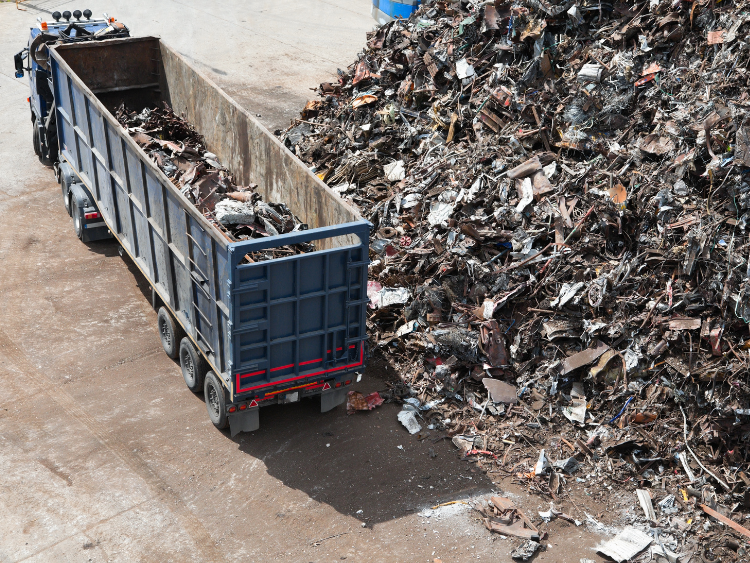
Italian stoppages weigh on January scrap demand: Assofermet
Italian mills’ December and January maintenance stoppages will be longer-than-usual this year and will have an impact on scrap demand in the first quarter, whose outlook appears uncertain, Italian steel trade association Assofermet says in its monthly market note sent to Kallanish.
Increases announced by some mills on certain finished products may be the prelude to a recovery starting in the first quarter but most probably more prominent in the second quarter.
Low scrap availability persists in Italy, which is contributing to stable month-on-month prices in December despite the uncertainty over finished products sales.
Meanwhile, demand for pig iron from steelmakers remains good overall, as does pig iron availability at ports. Production curbs at some CIS producers do not seem to have had an impact on prices so far, Assofermet says. It observes very different quotes on the market depending on country of origin, with Italian mills continuing to avoid hot-briquetted iron, meaning appetite for the feedstock remains limited in the country.
Natalia Capra France

European scrap prices expected to increase in January
European scrap prices are seen increasing in January, sources in France, Germany and some Eastern European countries believe.
Large steelmakers are seen increasing prices of finished long products for January and scrap is said to be in short supply in Europe, particularly E40 shredded grade. In Eastern Europe, sources say the snowy weather this week is not helping collection, and sellers also talk about poor availability, particularly for the lower grades. E8 new arisings is meanwhile largely available but not so much in demand.
Meanwhile, German suppliers are offering lower tonnages to Italian mills this month, due to short availability. Import contracts in Italy from France and Germany are stable compared to November. However, Italian mills will have to pay a €10-12/tonne ($10.5-12.6) rail freight increase for scrap delivered from Germany and some €5-7/t increase for scrap delivered with intermodal transport. While the transport increases are still being negotiated, all import contracts have been agreed with the option to pay some €10/t on top for rail transport from 1 January.
Imported scrap volumes are lower this month, also due to Italian mills shutting down for the Christmas holiday break. Contracts from France and Germany to Italy show E8 mixed grade remaining at €360/t, E40 at €370/t, E3 at €350/t and the lower E1 grade at €320-325/t, all on a delivered basis. Like last month, Italian steelmakers are requesting high volumes of E1 and E40, sources suggest.
Import contracts are in the process of being negotiated with Eastern European suppliers. They are forecast however to also remain stable month-on-month. Last month, Italian mills paid €355-360/t delivered for the mixed E8 grade, about €300/t for E1, €370/t for E40 and €330-340/t for E3, Kallanish notes. Importing material from Eastern Europe will also cost some €10/t more from January.
Over the past month, rail operators in various supplier countries have asked for a 30-40% freight tariff increase effective 1 January. While Italian steel companies are trying to negotiate the increases, both scrap suppliers and steel mills will be hit by the move, together with many Italian steelmakers selling coil and long products in Germany and Austria (see Kallanish passim).
Natalia Capra France