

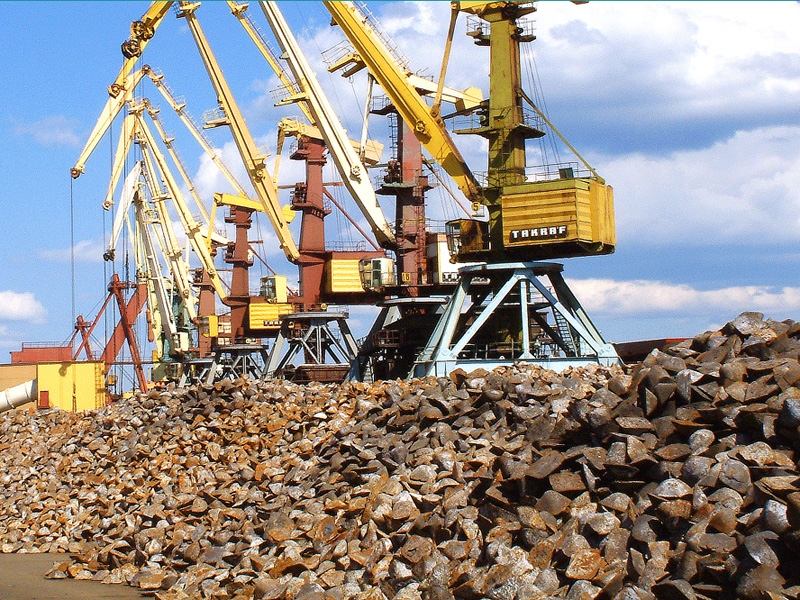
Fitch Solutions foresees iron ore, steel production decline
Fitch Solutions sees iron ore and steel production declining as the UK, EU and US economies slow alongside lower prices, Kallanish notes.
The research house says a decline in demand for steel alongside rising raw material prices will hit steel firms’ capital expenditure in 2023.
In the long term, it expects demand to rebound and production costs to stabilise.
However, it notes that steel producers will spend cautiously in 2023 as global economic growth stagnates.
Citing JSW Steel as an example, it says the firm announced in July that it will reduce its capital investment plan to $1.8 billion from $2.4 billion, on the back of downside supply and demand pressures.
Fitch Solutions also says that iron ore miners will face a significant increase in costs, with capex plans remaining tight.
Fortescue Metals, for example, has raised its annual cost guidance for 2023 from $18 per wet metric tonne to $18.75, and predicts capex to fall between $2.7 billion to $3.1 billion in 2023 relative to $3.1 billion in 2022, Fitch Solutions points out.
The research firm opines that higher costs and a drag in capital expenditure will lead to flat production growth for iron ore and a renewed focus on cost-cutting and managing current operations as opposed to investing in new projects.
Siew Mung Tan Malaysia

CBAM agreement ignores larger value chain: German fabricators
German fabricators are bemoaning that the provisional Carbon Border Adjustment Mechanism (CBAM) agreement protects mills, but not steel users.
The European Council and Parliament reached a provisional agreement on CBAM on Tuesday (see Kallanish passim).
“The climate tariff is fine in theory, but bad in practice,” says Christian Vietmeyer, manager of the German steel and metal processing association WSM. “It protects material producers, but will burden the international competitiveness and export activities of many German industries. And it will drive production out of the EU.”
CBAM, in its current form, “protects EU producers of steel from international competitors that produce more cheaply and with a higher carbon footprint. We welcome that. But this protection must not be at the expense of EU suppliers. We need a system that integrates the entire supply chain,” Vietmeyer explains.
In addition, other countries around the world are considering trade policy countermeasures in response to CBAM. “Protectionism is in the air. This would be another bitter setback for the German export industry,” he adds.
In its current form, CBAM is driving fabricators out of the EU, for existential reasons, to locations with fewer requirements, WSM fears. Vietmeyer concedes that the European Commission means to continue working on measures to avoid carbon leakage in exports. “That would be extremely important. Otherwise, the benefits for the global climate would be lost again and the local jobs along with them,” he concludes.
Christian Koehl Germany

European mills increase CRC, HDG offers despite limited demand
European steelmakers have increased official offers for cold-rolled and hot-dipped galvanized coil in the week to Dec. 14 despite weak interest from buyers.
The price rise is much needed to cover production costs of the downstream coil, which jumped after energy prices rose, sources said.
Low demand from end-consumers, including the automotive industry, as well as from distributors, combined with competitive import offers for CRC made it hard for the mills to achieve targeted prices.
Platts assessed domestic CRC prices in Northern Europe at Eur740/mt ex-works Ruhr Dec. 14, up Eur10/mt day on day and up Eur20/mt week on week.
The assessment was based on tradable values reported at Eur720-760/mt ex-works Ruhr.
“CRC is the weakest market segment now,” a German service center source said. “It seems that demand from the automotive industry will drop by at least 30% compared to normal rates, and competitive import offers do not allow European steelmakers to push prices up.”
Although import offers of CRC have increased, they remain competitive compared with a targeted level of the EU mills heard at around Eur800/mt ex-works.
Platts assessed prices for imported CRC at Eur720/mt ex-works Ruhr Dec. 14, up by Eur30/mt day on day. The assessment reflected offers heard in the market.
The assessment for domestic CRC in the south of Europe increased by Eur20/mt week on week to Eur740/mt ex-works Italy.
Tradable values have been heard at Eur700-780/mt ex-works Italy.
The situation has been slightly better in HDG segment mainly due to the absence of cheap import alternatives.
Spot buyers, however, have been showing limited interest in purchasing due to limited end-user demand. In addition, European steelmakers and big end-consumers, such as the automotive industry, still have not reached an agreement on prices for next year’s contracts.
Platts assessed domestic HDG in northern Europe at Eur760/mt ex-works Ruhr Dec. 14, up by Eur10/mt week on week.
Achievable prices have been reported at Eur750-770/mt ex-works Ruhr and offers at Eur800/mt ex-works Ruhr.
The assessment for domestic HDG in Southern Europe increased by Eur20/mt week on week to Eur760/mt ex-works, reflecting tradable values reported at Eur750-800/mt ex-works and offers reported at Eur800/mt ex-works.
Platts is part of S&P Global Commodity Insights.
— Maria Tanatar


Spain’s October steel output slips, scrap consumption rises
The Spanish steel sector saw production fall, while scrap melting increased on-month in October, Kallanish notes. Both activities, however, remained weaker compared to the same period last year.
According to Spanish steelmakers association Unesid, the local steel industry produced around 979,000 tonnes of crude steel in October. This was 3.9% less than September’s output of 1.01 million tonnes and down by 24.1% year-on-year.
Spanish ten-month output totalled 10.01mt, a fall of 16.8% or 2.02mt versus the January-October 2021 volume of 12.04mt.
Spain used 863,000t of ferrous scrap for steelmaking in October, up 10.9% or 85,000t more on-month. This volume, however, was 16.2% less over the same month in 2021. Cumulative scrap usage was 7.62mt, representing 76.1% of total crude steel production in January-October 2022, Unesid data show.
Todor Kirkov Bulgaria
UK Steel demands government confirms energy support extension
UK Steel has called on the government to confirm an extension and improvement of the Energy Bill Relief Scheme (EBRS) beyond March to ensure domestic steel industry competitiveness next year. This come as electricity prices have risen to over £1,500/MWh ($1,855) this week, over 30 times the historical average, the steelmakers’ organisation says.
“Massive electricity price spikes this week have all but broken the Energy Bill Relief Scheme, which aims to shield industry from sustained unsustainable price levels,” UK Steel director general Gareth Stace says in a note sent to Kallanish. This has forced some steel companies to cease production at key times during the day.
“A long-term solution will be found in infrastructure investment and fundamental market reform, but in the interim we need a bridging solution that ensures UK steel producers can make steel at the same cost as their European competitors,” Stace continues.
“The steel sector is looking to the Government to announce that it will continue to cap electricity and gas prices for vulnerable sectors, such as steelmakers, when it publishes its review of the EBRS, expected before the end of the year. Critically, the price cap must be updated to reflect new market conditions and actions being taken in competitor countries,” Stace comments.
The German government is already planning a scheme for all of 2023, where it will guarantee wholesale electricity prices at €130/MWh, well below the UK’s cap of £211/MWh. This should be matched by the UK government, Stace observes. A failure to extend EBRS could result next year in reduced production, shrinking market share and increased imports, he concludes.
Adam Smith Poland
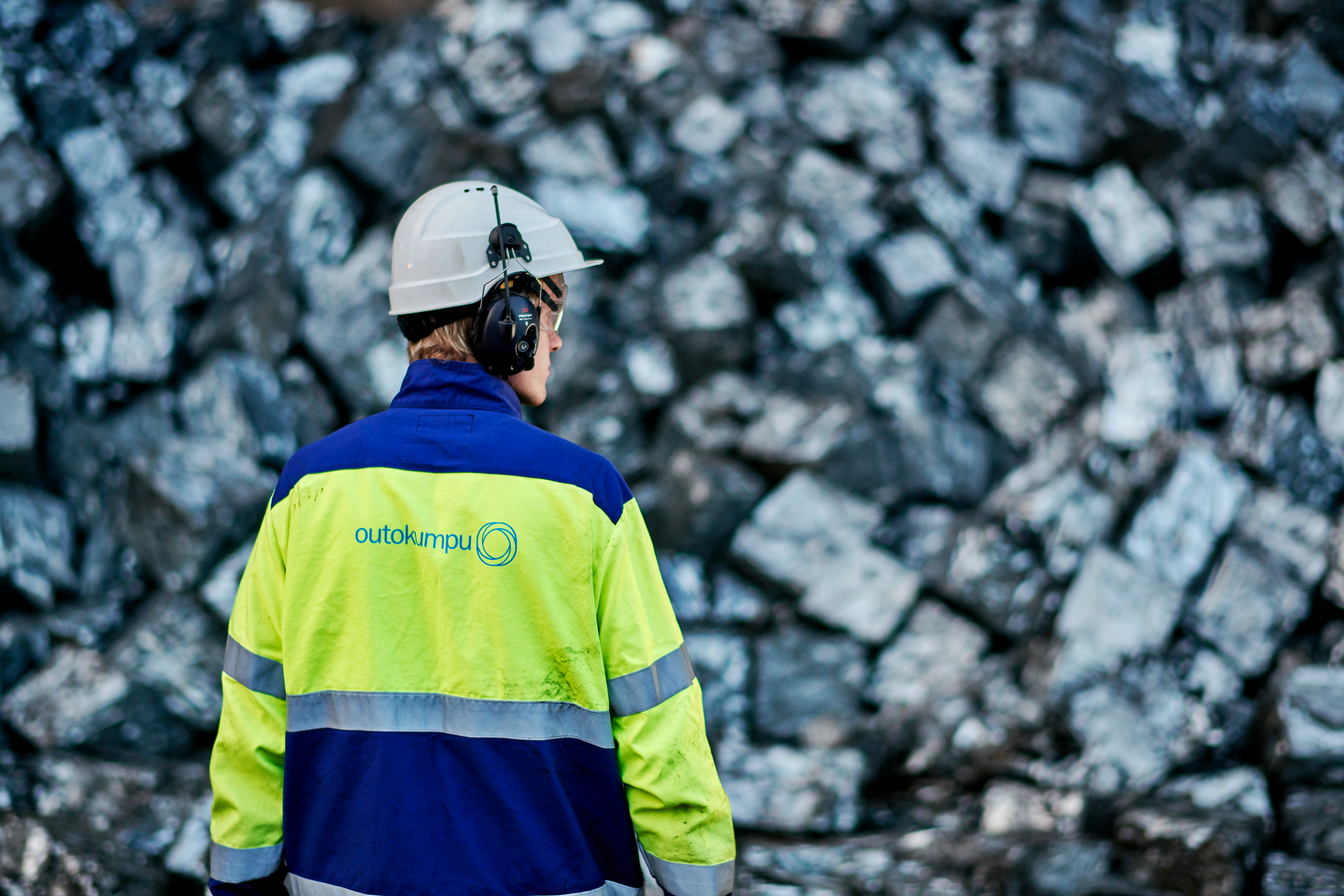
Competition authorities approve Marcegaglia’s
Outokumpu longs unit acquisition The European Commission and the US competition authority have approved Outokumpu’s divestment of its long products division to Italian re-roller Marcegaglia, Kallanish learns from the stainless steelmaker.
The merger remains subject to closing conditions and antitrust regulatory approvals. Outokumpu expects it to be completed at the beginning of 2023.
Marcegaglia will buy an electric arc furnace mill for speciality steels, a wire rod rolling plant and bar production plant in Sheffield, UK, a bar production plant in Richburg, US, and a wire rod mill in Fagersta, Sweden. The transaction does not include Outokumpu Long Products AB operations in Degerfors and Storfors, Sweden.
In October, Marcegaglia agreed to acquire Outokumpu’s Long Products division for €228 million ($243m). The transaction represents Marcegaglia’s first foray into steelmaking (see Kallanish 1 November). In 2021, the Long Products division achieved revenue of €810m, with Ebitda of €47m. It employs about 700 workers.
Outokumpu now intends to focus on its core business of flat stainless steel products. The sales generated by Long Products accounted for approximately 8% of Outokumpu Group’s revenue in 2021.
Natalia Capra France
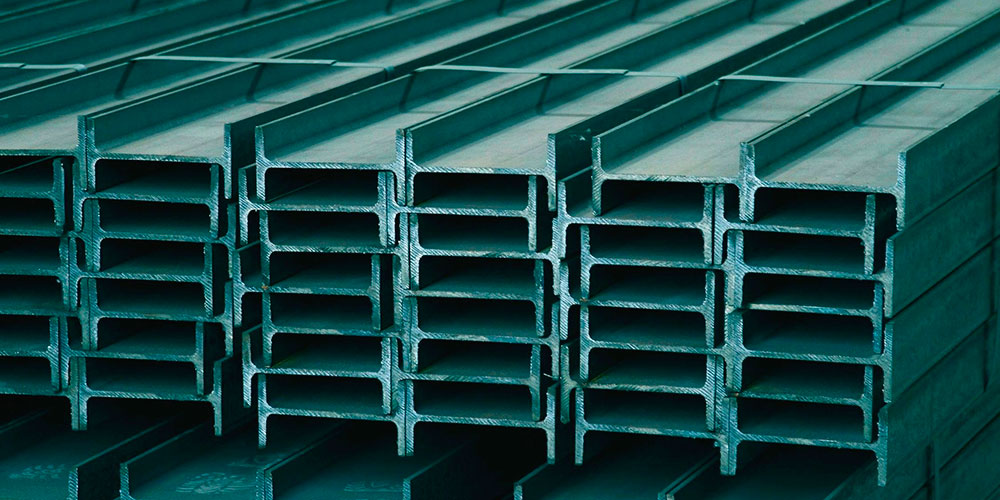
Italian merchant bar deadlock continues
Italian long products sales activity continues to be slow this month. Buyers are refusing to purchase product, particularly merchant bar, and have only bought limited quantities this month, sources tell Kallanish.
Merchant bar prices remain on a declining trend. Contract values lost some €50/tonne ($53) compared to November and buyers believe the fall will continue in January. According to one source, unless prices fall much further below the level of €1,000/t ex-works, demand will not resume.
At present, values have reached €540-550/t base ex-works or €560/t base delivered. Including size extras, quotes are at €960-970/t ex-works.
Sections prices have also declined under the pressure of cheaper Spanish material, but demand remains more sustained compared to other long products. The first category of sections stands at €1,050-1,080/t ex-works, depending on tonnage and client, sources suggest.
Natalia Capra France

SPAIN DATA: October steel production declines 24% on year
Spanish crude steel production fell 24% year on year to 979,000 mt in October, a twelfth consecutive monthly decline, according to data published by industry group Unesid Dec. 14.
The latest decline means trailing 12-month production is down 15% year on year to 13.2 million mt as producers continue to limit output amid weaker demand, high energy prices and competition from imports.
Spain is Europe’s fourth largest steel producer, behind Germany, Italy and France with a maximum capacity of nearly 23 million mt.
Besides ongoing production cuts announced for Q4, which have been accompanied by temporary lay-off schemes, production in December to date is likely to be further affected by a week of industrial action in the Basque region at the start of the month and two national holidays falling on working days in the week started Dec. 5.
Spanish energy costs for large energy consumers have increased 53% year on year to Eur170.76/MWh ($181.87/MWh), according to Industry Association AEGE.
In terms of Spain’s steel recycling, the October volume was a six-month high of 863,000 mt, Unesid said, with the proportion to crude steel production at 88%, the greatest since September 2020.
The trailing 12-month volume was nonetheless 17% lower year on year at 10.2 million mt.
Platts, part of S&P Global Commodity Insights, assessed domestic HRC prices in Southern Europe at Eur645/mt ex-works Italy Dec. 13, down 23% since the start of 2022.
— Gianluca Baratti

EU HRC buyers question sustainability of bullish trend
Some European buyers were seen concerned on Dec. 14 about the hot-rolled coil price recovery, which might not be sustainable after restocking ends, market sources said.
Domestic coil price recovery started at the beginning of December, as distributors returned to the market looking for volumes to restock for the first quarter of next year. In addition, import offers also moved up following the revival in the Asian market.
“Now demand is better than it used to be, but it is far from normal,” a German distributor said. “And I think that this recovery might be short-lived, as distributors will buy material they need to put in stock by the middle of January, and the market will become silent again.”
“Apparent demand is indeed better due to destocking by the year-end and restocking for the first quarter, but real demand is stable at the low level,” an Italian service center said.
As a result, buyers believed that transaction prices for domestic HRC might not reach a target level of Eur680-700/mt ex-works Ruhr, which might decline in early January-February.
Platts assessed HRC in Northwest Europe at Eur655/mt ex-works Ruhr Dec. 14, stable day on day. The assessment excludes carbon surcharges some Northern European steelmakers have in place.
Tradable values and offers were reported around Eur640-660/mt ex-works Ruhr and Eur680-700/mt ex-works Ruhr, respectively.
Platts assessed domestic HRC in the south of Europe also unchanged on the day at Eur645/mt ex-works Italy Dec. 14. The assessment was based on tradable values reported around Eur640-Eur650/mt ex-works Italy and offers heard around Eur680-700/mt delivered Italy.
Suppliers from Asia showed reduced activity in the European market due to concerns regarding potential anti-dumping cases into HRC from Japan, South Korea, and India. Additionally, stronger Euro against the US dollar partially offset the import price rise.
Platts assessed imported HRC in southern Europe at Eur620/mt CIF Italy, unchanged on the day. The assessment was based on offers reported at Eur610-630/mt CIF Italy.
Platts is part of S&P Global Commodity Insights.
— Maria Tanatar