


European HRC market slow; ArcelorMittal targets higher prices
A wait-and-see attitude among buyers and weak demand continued to inhibit trading activity in the hot-rolled coil market in Europe on Thursday December 15.
Even so, ArcelorMittal announced that it would be increasing its offer prices for the material across Europe from Thursday.
But despite that move, market participants said a significant uptrend in demand or price levels before the end of the year remained unlikely.
Fastmarkets calculated its daily steel HRC index, domestic, ex-works Northern Europe, at €630.00 ($670.83) per tonne on Thursday, down by €8.13 from €638.13 on Wednesday.
The latest calculation of the index is up by €5.00 per tonne since last week and stable month on month.
Hand-to-mouth bookings, a pessimistic outlook and weak market conditions resulted in prices remaining largely stable in the HRC market.
“It has been a tough end to the year. Buyers have booked coil for January delivery, but they are not yet booking coil for February,” a buyer source said.
“Market participants are trying to understand whether an uptrend is sustainable,” the buyer source added.
ArcelorMittal is increasing its offer prices by around €50 per tonne across Europe, trading sources told Fastmarkets.
As of Thursday, new offers for HRC were heard at €680 per tonne EXW for February rolling, sources said – up from €630 per tonne EXW.
Some sources remained doubtful that these price rises would be accepted by the market given the fact market conditions have not significantly altered.
“I see mainly hand-to-mouth bookings [and] everyone is cautious. I don’t expect any real changes to occur before the year end, regardless of ArcelorMittal’s announcement,” a buyer source told Fastmarkets.
Buyer estimates of workable prices were reported at €605-650 per tonne EXW.
Fastmarkets’ calculation of its daily steel HRC index domestic, exw Italy, was €630.00 per tonne on Thursday, unchanged from Wednesday.
The latest calculation of the Italian index is up by €8.85 per tonne from a week earlier and up by €9.37 per tonne month on month.
Buyer estimates of workable prices in Italy were reported at €630 per tonne EXW. One buyer estimate came in at €670 per tonne EXW, but that was widely considered as unworkable in the current market.
Sources said that steel mills were likely to continue targeting higher prices until they close for the Christmas holidays.
Published by: India-Inés Levy


Irepas braces for dismal first quarter, EU uncertainty
The first quarter of 2023 could be the worst quarter for the global long products market in a long time, amid increasing raw materials costs, high energy prices and reduced business activity, says the International Rebar Exporters and Producers Association (Irepas).
The association said last month that the Q1 market may be worse than at the height of the Covid pandemic (see Kallanish passim).
Although mills are set to finish 2022 with strong earnings thanks to the first half-year, they will be forced to reduce output further next year in order to minimise losses on their balance sheets. Moreover, if they continue to maintain their production levels and sell at a loss, it is very likely they will face trade measures. “In these circumstances, it will take some more time for a new supply-demand balance to be seen in the market,” Irepas says in its December short-range outlook.
“Steel buyers in the EU market have started to become nervous about what will happen after the holidays, as the anticipated longer revamps by mills will very likely limit supply,” Irepas continues. “On the other hand, there is a big question mark over the weather conditions in the first quarter of next year. If temperatures remain mild, then demand for construction, which has been healthy so far, will pick up earlier and help mills to raise their prices.” Energy prices will ultimately underpin everything.
In the US, the new Buy American investment package will be in force from 1 January and “will be a huge challenge for the EU”, Irepas projects. “A new trade battle could be in the offing.” In China, meanwhile, the “quiet” potential dismantling of the zero-Covid policy may lead to increased steel demand post-Lunar New Year.
Adam Smith Poland


ArcelorMittal establishes climate-neutral steel R&D unit in Germany
ArcelorMittal has established a German research and development (R&D) unit for the production of climate-neutral steel.
The department is headquartered in Hamburg, where a newly created team will work closely with ArcelorMittal’s global research and development department and the four German sites in Bremen, Duisburg, Eisenhüttenstadt and Hamburg.
Research into the use of hydrogen and other decarbonisation technologies in association with direct reduced iron making is high on the agenda of the new centre, Kallanish understands. The Hamburg mill is Europe’s only DRI plant, so far using natural gas, which is to be replaced by hydrogen in the future.
The first low-emission steel is expected to be produced at the sites in Hamburg, Duisburg, Bremen and Eisenhüttenstadt as early as 2025. Larger joint projects to build a hydrogen infrastructure are already being planned.
“We are taking another step on the way to the decarbonisation of our steel production,” says Reiner Blaschek, chief executive of ArcelorMittal Germany. “The new department is working vigorously on the diverse issues, which are significantly more complex than simply replacing natural gas with hydrogen.”
The R&D team will also work on further use of by-products and scrap-technologies as well as how steel production facilities need to be adapted to use more renewable energy. The head of the new centre is Frank Schaub, a chemical engineer with a doctorate from Bremen, who is currently putting together a team of younger and experienced colleagues from various technical fields.
Christian Koehl Germany

Klöckner supplies green steel to Siemens
Klöckner & Co has handed over an initial tranche of CO2-reduced steel to Siemens, Kallanish hears from the German steel distributor. In total, it has delivered around 40 tonnes to two Siemens plants in Frankfurt and Cham, Germany, via its subsidiary Becker Stahl-Service.
The steel in question is galvanized sheet steel that Siemens Smart Infrastructure will test in the manufacture of switchgear and power distribution systems. The steel products supplied fall within Klöckner’s two categories – “Pro” and “Prime” – within the “Nexigen” categorisation for green steel developed by Klöckner. This means that CO2 emissions during production were over 80% lower compared with conventional steel production, it explains.
The two companies intend to expand their cooperation, and to open up access to larger quantities of green steel for Siemens, they say in a statement. “We are very pleased to support our long-standing customer Siemens in developing new products and achieving its sustainability goals by supplying green steel,” say Becker Stahl-Service chief executive Francois-David Martino.
Only last week, parent group Klöckner was bestowed with the German Sustainability Award (Deutscher Nachhaltigkeitspreis) in the Climate Transformation category. Meanwhile, Siemens Group, as part of its “DEGREE” sustainability framework introduced in 2021, says it keeps strengthening its existing activities for physical decarbonisation along the entire value chain. Like Klöckner, Siemens is committed to the Science Based Targets initiative (SBTi).
Christian Koehl Germany

Riva France to buy shredders from Dericheboug
Steelmaker Riva Acier France is in the process of buying eight plants from recycling group Derichebourg.
Last year, Derichebourg bought metal recycling group Ecore. The European Commission gave the go-ahead for the acquisition on the condition that Derichebourg divests four shredders in France and four collection sites. According to Derichebourg, the eight sites will be taken over by Riva Acier from 1 January 2023.
Derichebourg reported strong results in its fiscal year through September 2022. Global revenue increased by over 45% on-year to €5.3 billion ($5.6 billion). Derichebourg sold over 4.5 million tonnes of ferrous scrap, up from 3.9mt in 2021, reflecting a 29.4% y-o-y increment. Scrap revenue also hiked by as much as 59.7%, reaching €2.1 billion, up from €1.3 billion the previous year, the company says in its financial report monitored by Kallanish.
In 2022, Ebitda reached a record level of €510.1 million, representing 9% of turnover. The estimated contribution of Ecore was around €115m, the report states.
In the first month of the new financial year, sales scrap volumes were impacted by the global economic downturn, causing clients to keep their stocks low against the backdrop of high energy costs. However, the company says recent lower energy prices and a slightly more favourable economic outlook are forecast to support a volume recovery.
The integration with Ecore is currently underway. Last year, while the EC was examining the merger, competition policy vice president Margrethe Vestager said the two firms would have had a strong position in the European market. Authorities said they approved the acquisition of Ecore thanks to Derichebourg’s guarantee of comprehensive divestments “that will ensure that competition remains vibrant in the French recycling market” (see Kallanish passim).
Natalia Capra France

ArcelorMittal Spain’s hybrid EAF project receives environmental approval
ArcelorMittal has received the positive environmental impact statement (EIS) for the installation of a hybrid electric arc furnace at its Gijón plant in Spain, Kallanish learns from the Asturian regional government.
The project, which is a priority for the steelmaker’s CO2 emissions reduction goals in Europe, is still awaiting Spain’s €500 million ($530.4m) co-funding contribution as part of the national government’s recovery and resilience plan.
The old converters of the plant will be able to work simultaneously with the future hybrid EAF for a maximum of 12 months once it starts operations. During this period, “ArcelorMittal must extremely control its emissions with appropriate measures to guarantee the effectiveness of the capturing and purifying systems,” says a note in the Asturian government’s official gazette, BOPA.
In case of activation of the Pollution Protocol in Asturias following unfavourable weather conditions, the steelmaker must stop the use of scrap and avoid any planned maintenance activities or operational start-up processes.
The Environmental Determination will lose its validity if the execution of the project has not begun within a period of four years, starting from 13 December, the Asturian government confirms.
The €1 billion investment includes constructing a 2.3 million tonnes/year green hydrogen-based direct reduced iron unit, complemented by the 1.1m t/y hybrid EAF. The new DRI unit will be the first of its kind in Spain and will also feed the company’s Sestao works.
Todor Kirkov Bulgaria

EU passenger car registrations rise 16% on year in November: ACEA
New passenger car registrations in the EU rose 16% year on year in November to 829,527 units, the fourth consecutive annual increase, according to European Automobile Manufacturers Association (ACEA) data released Dec. 15.
The November sales volume was 11% higher than the previous month but still well below pre-pandemic sales from November 2019, when 1 million units were registered, the ACEA said.
Total sales for the first 11 months of 2022 were 8.4 million units, down 6.1% year on year, the data showed.
The latest sales data indicates that the supply chain issues that have hindered European car production through 2022 are steadily easing although a deteriorating economic outlook threatens to weigh on sales during the months ahead.
Weaker car production has also weighed on steel demand, with Platts, part of S&P Global Commodity Insights, assessing domestic HRC prices in Northern Europe at Eur655/mt ex-works Ruhr Dec. 14, 30% lower than it was at the start of 2022.
All three top European markets — Germany, France and Italy – accounted for year-in-year increases in November.
Largest EU car market Germany saw new car registrations increase 31% year on year to 260,512 units, rising 25% on the month.
German car registrations for the January-November period totaled 2.34 million units, down 2.4% on the year.
In second-largest market France, sales rose 9.8% on the year in November, and increased 7.2% on the month to 133,960 units.
Car sales in Italy also climbed 15% on the year to 119,853 units, which was also up 3.5% from October to a five-month high.
January-November car sales in France totaled 1.37 million units, down 8.7% on the year, while sales in Italy declined 12% to 1.21 million units.
In Spain, 73,221 units were sold in November, rising 10% on the year and 11% on the month, bringing the total for the January-November period to 739,469 units, down 4.4% year on year.
— Euan Sadden


Klöckner & Co delivers 40 mt of low-carbon steel to Siemens
German steel distributor Klöckner & Co has delivered 40 mt of low-carbon steel to two Siemens plants in Frankfurt and Cham, Germany, according to a statement the company issued Dec. 15.
The initial delivery is part of a strategic partnership between the companies aimed at increasing the availability of low-carbon steel for automation company Siemens, it said.
The shipment was facilitated through Klöckner’s subsidiary Becker Stahl-Service and involved galvanized steel sheet reportedly produced with 80% lower emissions than conventional steel production.
Siemens will now evaluate the sheet for utilization in switchgear and power-distribution systems.
“We are very pleased to support our long-standing customer Siemens in developing new products and achieving its sustainability goals by supplying green steel,” said Becker Stahl-Service CEO Francois-David Martino.
The new partnership aligns with Siemens’ targets of reducing emissions from its operations by 55% by 2025 and 90% by 2030, below 2019 levels.
“Further decarbonization along our value chain is a key component of our sustainability strategy,” Siemens AG Vice President Corporate Category Manager Metals Uli Bauer.
Platts, part of S&P Global Commodity Insights, assessed domestic HRC prices in Northern Europe at Eur655/mt ex-works Ruhr Dec. 14, down 30% from the start of 2022.
— Euan Sadden

EU, US remain Turkey’s top metals export markets in 2022: IDDMIB
Turkey’s ferrous and nonferrous metals exports rose 3.5% year on year to 2.9 billion mt in the first 11 months of 2022, with revenue from the exports increased 19% to $13.2 billion, Istanbul Ferrous and Nonferrous Metals Exporters’ Association, or IDDMIB, said in a Dec. 15 statement.
The exports increased despite unfavorable global market conditions, IDDMIB Chairman Cetin Tecdelioglu said, adding that the sector’s unit export price also rose 15% on the year to $4.63/kg.
The EU and the US remained Turkey’s top export markets in 2022, he said.
“Germany was the top export market at $1.8 billion, while shipments to Italy and the US totaled $990 million and $870 million, respectively,” Tecdelioglu said without giving tonnages or a breakdown of the figures.
“Aluminum and iron and steel industries remained the top exporting sectors,” IDDMIB said, although the association expected that some output cuts by European steel and aluminum producers, amid the possible energy crisis, could generate advantages for Turkish mills looking to boost exports to Europe in 2023.
However, energy costs in Turkey have also jumped due to consecutive hikes in electricity and natural gas prices for industrial use since Sept. 1, which, combined with low demand have resulted in some steelmakers reducing output and some pausing output temporarily.
Steel pricing has also remained under pressure from high energy costs and slow demand.
Platts, part of S&P Global Commodity Insights, assessed Turkish exported rebar at $662.50/mt FOB Dec. 14, down from an intra-year high of $960/mt FOB April 1.
— Cenk Can
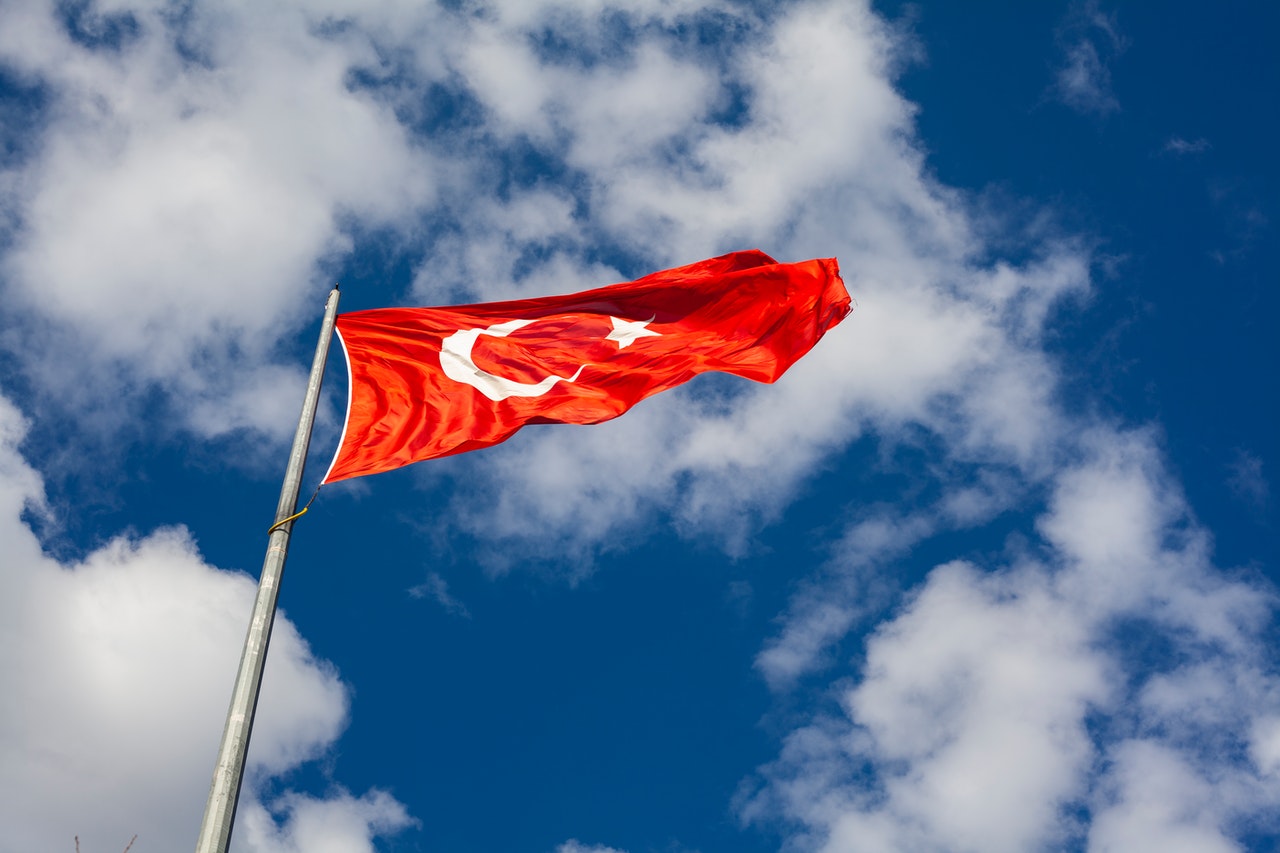
Uncertainties shadow Turkish steel sector 2023 outlook: steelmakers
Uncertainties arising from the Russia-Ukraine war, which harmed global economy dynamics in 2022, continued to shadow the outlook for 2023, amid an ongoing supply-demand imbalance and protectionist approaches in the steel sector, according to some top Turkish steelmaker executives.
The war’s duration and energy prices were the top uncertainties for 2023, Colakoglu CEO and Turkish Steel Exporters’ Union Vice President Ugur Dalbeler told S&P Global Commodity Insights Dec. 15.
“On the other hand, the relative decline in inflation figures in the US and the slowdown of the rise in interest rates, amid concerns for the decline seen in growth rates and shrinkage in demand, could bring some movement to the market in the coming months,” he said.
A supply-demand imbalance and falling steel prices due to sanctions narrowing Russia’s playground, however, remained the most important topics for the steel sector, Dalbeler said.
“A balance could be reached in Q1,” he said. “However, as raw material and energy costs seem to remain higher than the rise in sale prices, the profitability could continue to remain low in 2023.”
Turkey’s energy prices rose fourfold year on year in 2022, increasing their share of mills’ total production costs to 28%, up from 8% a year ago, according to Turkish Steel Producers’ Association, or TCUD, data.
The US and the EU were expected to remove protection measures against Turkey in 2023, following the World Trade Organization’s Dec. 9 panel decision that US steel and aluminum tariffs were inconsistent with international trade obligations, TCUD General Secretary Veysel Yayan said in a Dec. 14 statement to local media.
TCUD was expecting the same move from the EU, as the WTO took a similar decision on April 2022 regarding the EU’s protectionist measures started on 2018, he said.
“The EU asked for time from the WTO until Jan. 15, 2023, for the conformity of their measures to the WTO rules. However, their decision still remained uncertain,” Yayan said.
Protectionist measures, low priced imports and slow demand have been pressuring Turkish steel pricing.
Weekly Turkish hot-rolled coil was assessed by Platts, part of S&P Global, at $650/mt ex-works Dec. 9, down from an intrayear high of over $1,200/mt reached mid-March.
— Cenk Can