


EU HRC: First-half contracts settled
The first January-June hot-rolled coil (HRC) contracts for the automotive supply chain have been concluded above €800/t.
Cold-rollers and service centres reported doing deals at around €820/t, down by around €180/t from the settlements for July-December this year. Some are still in negotiations and aiming for a larger decline of around €220/t.
Some mills have also offered six-month deals direct to automakers, as opposed to the typical 12-month agreements — it is not clear whether any have shifted their terms, however.
Mills will be likely to use the contracts to try and support spot pricing, to avoid a large gap between the two — given the increasing volatility in the market, there is regularly a large delta between spot and contract prices.
In the spot market, north European HRC prices firmed further today as mills pushed offers to €700/t and above, and service centres continued to restock.
Argus‘ daily northwest EU HRC index rose by €15.50/t to €673.50/t.
One German service centre said it has booked so much January-March volume for the general industry segment that stocks are likely to stretch out for the first half of the year.
Service centres have restocked in the past fortnight in anticipation of more meaningful production cuts going into next year, and as they expect firmer automotive demand. One German producer said it is booked out until March — probably at reduced run rates — because of brisker demand from domestic carmakers.
An Indian producer sold 13,000t of HRC into Antwerp at $660/t cfr yesterday, probably for a few service centres, sources said.
A north European producer that is typically not very active in the spot market was again the most aggressive, with one service centre receiving offers around €650/t base before it had even countered. One large producer was reportedly offering over €700/t base, but nobody reported paying such levels.
The Argus daily Italian HRC index rose by €8.25/t today to €641.75/t ex-works. Mill offers were at €650-680/t delivered, but in some cases €650-660/t ex-works was the lowest price available. Offers are mostly for February deliveries, and mills are warning buyers they do not have much capacity left.
Imports are not very attractive for many buyers at the moment, despite some deals being concluded over the past 10 days or so at €620-630/t cfr equivalent for the first quarter. With many buyers expecting prices to move higher from EU sellers, these levels would be workable, with several saying they would buy imports at these prices, but most import offers stand higher now.
In the meantime, sheet prices have started to move up too, with service centres still reporting that they are being undercut by mill-linked suppliers or by mills themselves. Yet price targets have been adjusted to a minimum of €720-730/t delivered, and up to €780/t delivered for independent deals for February.
Some SSCs reported today December new orders at a 10-15pc increase on October and November. Their clients are also indicating that they would like to close contracts for the first half of the year instead of only the first quarter — a sign that they are also prepared for further price increases at the start of 2023.
Much of the Italian market will be absent until 9 January — while some production will resume on 2-4 January, commercial activities will only restart in the second week of the new year.

Lora Stoyanova
Send comments and request more information at feedback@argusmedia.com

Proliferation of steel decarbonization standards ‘creating uncertainties’, coherence needed: WTO
A proliferation of different steel decarbonization standards or initiatives may “create uncertainty for [steel] producers, increase transaction costs, and risk trade frictions,” the World Trade Organization Secretariat said Dec. 21.
Coherence and alignment are needed in this area, it said.
More than 20 different standards and initiatives exist or are under development to support steel decarbonization efforts, the WTO Secretariat said in a note entitled “Decarbonization Standards and the Iron and Steel Sector: How Can the WTO Support Greater Coherence?”
“Work is needed to enhance the alignment of standards, including by finding areas for further convergence on specific measurement methodologies, definitions, and performance thresholds for decarbonization,” the note states. “It is also crucial to ensure that developing countries’ perspectives and challenges are considered and addressed.”
The WTO noted that there are multiple pathways and technologies to decarbonize steelmaking, including hydrogen-based steelmaking, electrolysis, and carbon capture, storage, and usage. Many options are still relatively costly, however, and require government action to provide the necessary framework for scale and global dissemination, it stated.
“Governments have a pivotal role to play in push-and-pull mechanisms for near-zero emission steel, including for the commercialization of breakthrough technologies and green public procurement,” the WTO said in its note. “Public–private partnerships are crucial in driving innovative technologies to decarbonize emission-intensive industries. These include efforts to bring forward demand signals for near-zero and zero-emission products by creating buyer’s clubs for these products.”
The note was issued ahead of the WTO Secretariat’s planned March 9, 2023 event in Geneva entitled “Decarbonization Standards for Trade: Promoting Coherence and Transparency in the Steel Sector.”
The event aims to bring together WTO members with industry leaders and experts in a multi-stakeholder dialogue on how coherent and transparent standards have a crucial role to play in accelerating the global scale-up of low-carbon steelmaking technologies and avoiding trade frictions.
Speakers will include stakeholders from the steel sector, academia, international organizations, and civil society, the Secretariat said.
Steelmaking accounts for around 8% of total global CO2 emissions, it noted.
Developing nations should play part
At the United Nations Climate Change Conference (COP27) held last month in Sharm el-Sheikh, Egypt, WTO Director-General Ngozi Okonjo-Iweala called for greater international cooperation on trade-related climate policies, including decarbonization standards.
“Achieving global net-zero targets will require consistent and comparable greenhouse gas emissions measurement,” the WTO note said. “However, the proliferation of divergent carbon standards and certifications across countries and sectors risks fragmentation undermines environmental credibility, and creates barriers to trade and investment.”
The shift toward new technologies and processes for low-carbon steelmaking may involve the development of new supply chains and trade patterns to deliver the needed inputs, such as green hydrogen, the note continued. “This shift may create new opportunities for developing countries to integrate into green steel supply chains. Developing countries should be supported to exploit these opportunities given the expected future demand for steel products concentrated in developing markets and the need to ensure a just transition to a low-carbon economy.”
— Diana Kinch


Salzgitter’s Mannesmann to supply ‘hydrogen-ready’ steel pipes to German LNG pipeline
German steel pipemaker Mannesmann Line Pipe GmbH, a subsidiary of steelmaking and technology group Salzgitter AG, has booked an order from German energy network operator EWE NETZ GmbH for pipes for a new liquefied natural gas pipeline that will help boost Germany’s energy security, Salzgitter said in a Dec. 21 release.
The order, involving delivery of around 16,000 mt of “H2ready” pipes, is set to contribute significantly to expansion of the LNG gas infrastructure in northwest Germany, Salzgitter said. The term “H2ready” means that green hydrogen can also be fed through the pipes at a later date, it added.
The new pipeline, to be commissioned at the end of 2023, will connect to European gas transmission operator OGE’s “WAL” connection pipeline running from Wilhelmshaven to Etzel, currently under construction. The natural gas is transported from the Wilhelmshaven LNG terminal to EWE’s Huntorf and Nüttermoor/Jemgum cavern storage facilities on the one hand, and on to industrial and household customers via the downstream gas networks on the other, the steelmaker said.
The new pipeline has a capacity of up to 6 Bcm of natural gas from the LNG landfall. Given sufficient LNG is delivered to Wilhelmshaven, this could supply around 4 million households in the Ems-Weser-Elbe region with LNG.
“The planned pipeline is a further building block in diversifying Germany’s gas supply and making it more crisis-proof…[contributing] to the development of an efficient infrastructure that will also benefit the emerging hydrogen economy, ” said Salzgitter CFO Burkhard Becker.
Mannesmann Line Pipe is supplying a total of around 4,100 pipes in the DN 600 size range in lengths of 18 and 12 meters. The pipes will be transported by rail from the Hamm plant to Sande and Leer and then further distributed on to the pipe storage yards along the pipeline. This not only serves to ensure logistics, but also saves CO2 during transport, Salzgitter said.
The planned pipeline is around 70 km long in total.
Platts, part of S&P Global Commodity Insights, assessed North European hot-rolled coil steel stable on the day at Eur665/mt ($706.80/mt) ex-works Ruhr on Dec. 20, as the market slowed down ahead of the end-of-year holidays.
— Diana Kinch

EU steel section prices soften in quiet market ahead of holidays
European domestic steel sections prices softened on the week on Dec. 21, with demand quiet ahead of the upcoming holidays.
Platts assessed European medium sections (category 1, S235 JR) down Eur15 to Eur980/mt delivered on Dec. 21.
“Prices are almost stable,” one Benelux-based distributor said. “They can be fluctuating around Eur10/mt on week, but they are almost flat.”
The distributor said mills wanted to increase prices, and that current sales seemed to be from stocks and for December deliveries. However, for January shipments, the distributor saw prices around Eur20-Eur30 higher, and cited a workable level for medium sections category 1 around Eur980-Eur985/mt delivered.
Another distributor source in the Benelux region indicated a workable level for beams around Eur980/mt delivered. The source noted that demand was mostly quiet ahead of the upcoming holidays.
One Europe-based mill source also cited slow demand, adding that there was some activity in the market, but it was weak. The source put a tradable level for category 1 medium section around Eur970-Eur990/mt delivered.
Meanwhile, Platts assessed TSI Northwest Europe Rebar down Eur5 week on week at Eur745/mt ex-works to Dec. 21.
Another Europe-based mill source indicated a workable level for rebar in Northwest European market around Eur780-Eur790/mt delivered, adding that Eur770/mt delivered might also be possible, but lower that that was not. One seller source indicated a workable level of Eur745/mt delivered, while a third Benelux-based distributor source put a tradable value for domestic rebar at Eur765/mt delivered.
Platts is part of S&P Global Commodity Insights.
— Rabia Arif, Staff

EU CRC, HDG prices remain fairly stable in slow market
Domestic prices for cold-rolled and hot-dipped galvanized coil have been fairly stable in Europe in the week to Dec. 21 due a to seasonal slowdown.
Some Northern European mills, however, have been trying to increase offers for HDG.
Apart from traditional slowdown of market activity in the second half of December, market participants have also indicated that demand for CRC has been weaker compared to other coil products. This was mainly due to limited interest from the main end-consuming industries, including automotive and white goods.
Negotiations for H1 2023 and full-year 2023 contracts between end users and steelmakers have continued as the parties struggle to reach agreement.
“The mills will try to move spot prices close to their aimed long-term agreement prices to get addition argument in the negotiations,” a steelmaker said.
Platts assessed domestic CRC prices in Northern Europe at Eur750/mt ex-works Ruhr Dec. 21, unchanged day on day and up Eur10 week on week. The assessment was based on achievable prices estimated my market sources at Eur740-Eur750/mt ex-works Ruhr.
The assessment for the region’s domestic HDG prices has been stable over the week at Eur760/mt ex-works Ruhr.
Few deals have been reported at Eur770-Eur780/mt ex-works Ruhr and at the equivalent of Eur740-Eur760/mt ex-works Northern Europe.
Market sources estimated tradable value at Eur760/mt ex-works Northern Europe. Meanwhile, offers have been heard at Eur800-Eur830/mt ex-works Ruhr, making upper end of the range Eur30 higher previous indications.
The assessment for domestic CRC in southern Europe has been stable week on week at Eur740/mt ex-works Italy, reflecting tradable values heard in the market.
Platts also assessed domestic HDG in Southern Europe unchanged on the week at Eur760/mt ex-works, reflecting tradable values reported at Eur760/mt ex-works.
Platts is part of S&P Global Commodity Insights.
— Maria Tanatar, Benjamin Steven

Recent HRC activity engenders cautious optimism in EU market
Participants in the European hot-rolled coil market were cautiously optimistic Dec. 21, expecting the recent recovery to continue in the first quarter.
The market was quiet leading into the holidays, with most distributors having restocked material to fill gaps in inventories.
“People booked what they need to for January,” a distributor source said, positive on next month’s trading. “I think we’ll see trading activity recover in January with restocking for the rest of the first quarter.”
A mill source agreed with the sentiment, evidenced by deals at higher levels as compared with previous weeks.
“There were deals at very low prices a few weeks ago, but now we’ve already managed to get a Eur30/mt increase or so,” the source said.
“Buyers are ready to pay higher prices, it seems. It’s a good indication of continued recovery.”
Indeed, deals in the market were generally higher, though some trades did settle lower on a delivered basis at Eur650/mt delivered Northern Europe, the equivalent of Eur620-630/mt ex-works.
Other deals, especially from German mills, were heard at Eur670-680/mt ex-works Ruhr.
This price level was generally more in line with tradable value indications, reported at Eur650-660/mt and Eur650-670/mt ex-works Ruhr.
Platts assessed hot-rolled coil in Northwest Europe stable on the day, at Eur665/mt ex-works Ruhr.
Italian HRC was assessed higher at Eur650/mt ex-works on tradable value indications reported at Eur650/mt ex-works Italy, derived from firm offers at Eur680/mt delivered.
Platts is part of S&P Global Commodity Insights.
— Benjamin Steven, Maria Tanatar

Liberty enters discussions to sell Luxembourg unit: minister
Luxembourg economy minister Franz Fayot said during a local parliamentary meeting that Liberty Steel is looking for a buyer for its Luxembourg galvanizing unit and has already started discussions with interested parties.
The minister did not give further details or a timeline, but added that local authorities will supervise the process to secure a future for the rolling mill at Dudelange.
Liberty Steel confirmed earlier last month the possibility of also selling its facilities in Belgium.
Liberty Steel in Dudelange continues to remain idled at the moment. The company has two HDG lines with a capacity of over 600,000 tonnes/year in Luxembourg, together with cutting and slitting operations. In Belgium the company can also roll HDG as well as produce packaging products, Kallanish notes.
Emanuele Norsa Italy

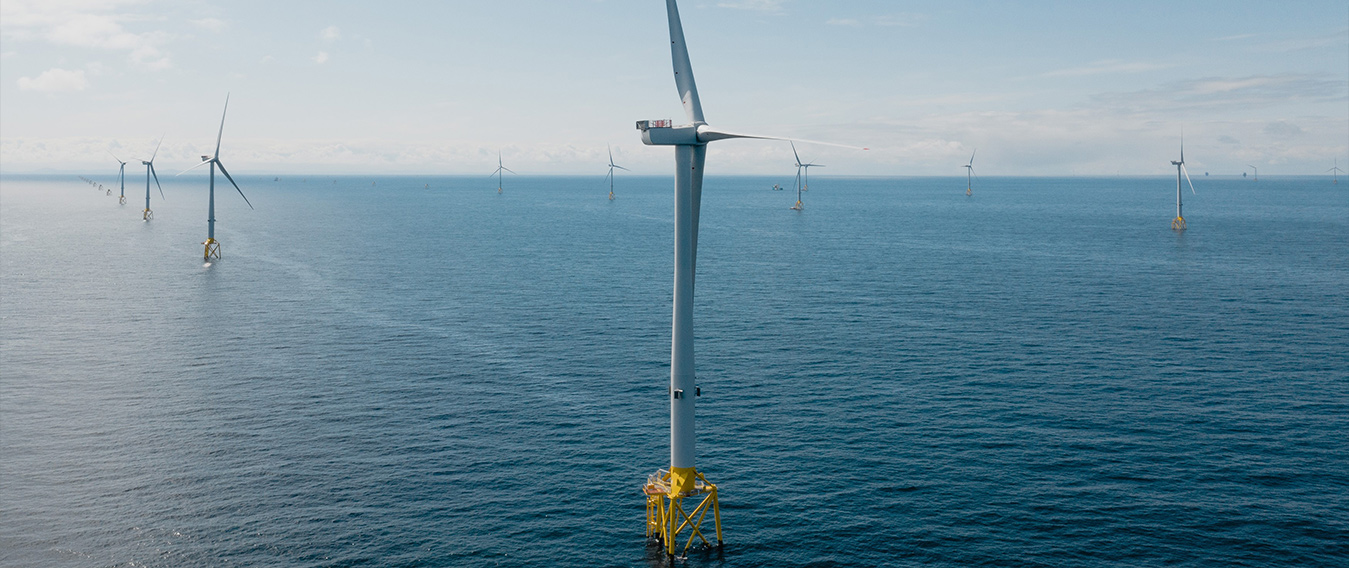
Energy costs impact EU coil contract talks
The massive oscillation in energy prices in many EU countries should have some influence on the current negotiations for annual coil supply contracts for next year, Kallanish notes.
Following a historic peak in August, prices for electricity and gas in Germany had come down by October to levels seen back in January – the time when most annual contracts for 2022 were signed. Hence, October would have been the ideal time for negotiating parties in the upcoming talks, as it simplified the basis of comparison, one German consultant remarks. At that time, however, distributors’ inventories were still too saturated to think of replenishing.
Meanwhile, energy prices have surged again and buyers may need to prepare for higher steel prices if mills are successful in handing down the cost. And it seems they are, as spot prices appear to have bottomed out and are set to increase.
According to the consultant, talks are in full swing “with widely diverging ideas on pricing”. He adds: “Serious offers from the mills came in only in very late November or the first week of December.” He says mills are meanwhile basing their argumentation on last January’s contracts, then at around €1,000/tonne for hot rolled coil.
A Dutch service centre manager sees “offered [contract] base prices are at least around €850/t”, and that this figure is likely to go up. The impression is confirmed by other observers, with one proposing that €50/t more should be possible if sentiment keeps brightening, as it seems to be doing at the moment.
The gap could be even wider, the German consultant finds. After talking to various buyers, he sees a gap of €120-180/t between figures currently circulating, and still wider, if set against the spot market for comparison. HRC spot market quotes at below €650 are diminishing, with quotes inching towards €680 heard more often now.
According to a Dutch service centre manager, mills “do stand somewhat stronger now in their negotiating position”. He notes that delivery times have stretched until the end of February or first half of March 2023, and that the automotive supply chain has recovered noticeably. “Daily prices are now rising,” he says, and notes that “we think it is realistic to expect a rising trend in current steel prices for the foreseeable future.”
Christian Koehl Germany