


European hot-rolled coil market approaches 2023 with cautious optimism
Bullish sentiment is prevailing in the European coil market, reinforced by a demand revival that is generally expected to continue in the first quarter of 2023.
The sustainability of the price rise and recovery in market activity, however, have been questioned by many market participants. In addition, following the turbulent market in 2022 due to effects of the global geopolitical situation, sources have been reluctant to make forecasts that stretch into the second half of 2023.
“I think over the past years the traditional market yearly cycles have changed, so it’s hard to predict the market over the course of the year,” a Southern European distributor said. “There are more important factors except for usual restocking in the first quarter or September.”
For the beginning of 2023, however, the outlook is upbeat, with lower domestic availability, reduced competition from imports and a revival in demand among the factors cited that are supporting a higher coil price. But market participants have questioned whether the uptrend, which began in December, can be sustained as end-user demand declines and the economic and geopolitical situation remains uncertain.
Impact from production cuts
In 2022, European steelmakers faced skyrocketing energy costs. In response to low demand and high costs a number of steelmakers stopped steelmaking equipment, cutting production in an attempt to support domestic coil prices.
The effects of the output reduction, however, were not visible until the close of the year and this is expected to remain a price supporting factor in the first half of 2023.
“I think the mills have been delaying stoppages this year as they feared the post-lockdown scenario when supply rose slower than demand,” a source at a German service center said. “So we see the reduction of material availability only now, at the year’s end. Buyers need to get rid of their stocks first, and now they are looking for orders. Oversupply is over, so prices will continue to rise.”
A North European trader agreed: “European mills are going to have more power in the first quarter as inventories are not as strong and import prices aren’t competitive enough.”
Less competitive imports
The anticipated start of new antidumping investigations against imported HRC has also made exporters less active in Europe and buyers have been cautious when planning bookings of non-EU material. Market participants cite hot-rolled coil from India, South Korea and Japan among possible subjects of a new trade case.
“With rumors about new antidumping cases and the imminent introduction of the Carbon Border Adjustment Mechanism, buyers will have to strengthen their relationship with European mills to secure volumes,” a source at a Southern European service center said.
In addition, overseas suppliers already increased offers in the second half of December by about Eur20-30/mt for HRC and they are expected to push for further price rises in January, sources said.
“There isn’t enough confidence in the domestic price increase yet on the domestic side to encourage import buying, so domestic steelmakers will have a majority market share as buyers have been very patient,” a trader said.
Shaky ground for recovery
Although sentiment has been largely upbeat towards the end of December, there are still concerns that the price recovery will end after buyers restock their required volumes by mid-January.
European steel association Eurofer said steel demand contraction was expected to continue for at least the first half of 2023, predicting a decline of 1.9% year on year in the period to 142.4 million mt of steel products.
“I think we might see a similar picture as we saw in September — prices rose as it seemed that demand improved, but as soon as restocking was over it became clear that end-user demand was not there to support,” a steelmaker source said.
Mills have not yet finalized long-term contracts negotiations, and there is likely to be at least a 30% reduction in steel demand from automotive sector in the first quarter, a source at a Central European service center said.
“I think that this price rise is more wishful thinking than the reality,” the source said. “Sure, it is needed to cover energy costs, but without the backing of real demand I do not think that a recovery is possible until the geopolitical situation stabilizes.”
Volumes this year will be lower than last year but still at a relatively reasonable level, according to a trader.
“It’s next year when we’ll see the real dampeners on the market,” the trader said. “Especially in the first quarter, or even first half of the year, activity will be substantially reduced but a recovery isn’t outside the bounds of possibility — just unlikely when considering the macroeconomic picture.”
Platts, part of S&P Global Commodity Insights, assessed North European domestic hot-rolled coil prices at Eur680/mt ex-works Ruhr Dec. 29, reflecting tradable values reported at Eur650-700/mt ex-works Ruhr. One German steelmaker had also increased official offers to Eur740/mt ex-works Ruhr in the second half of December and another mill moved HRC offers up to Eur730/mt ex-works Ruhr.
A negative trend had sustained in the European coil market from mid-March to late November due to high distributor inventories, competitive import offers, reduced demand from end consumers and general uncertainties caused by the war in Ukraine.
— Maria Tanatar, Benjamin Steven


EU HRC stable in slow market, upward trend to restart in January
Domestic prices for hot-rolled coil were unchanged on Dec. 30 due to slowdown in seasonal activity by the year end.
The prices are expected to resume the positive trend that had started in December after both buyers and sellers return to the market by mid-January, sources said.
“Market seems positive for January, but now the market is just dead,” a trader said.
Northern European steelmakers have increased HRC offers to Eur730-740/mt ex-works Ruhr. But tradable values have been heard at Eur680-700/mt ex-works Ruhr.
Platts assessed North European hot-rolled coil unchanged on the day at Eur680/mt ex-works Ruhr Dec. 30.
The bullish market sentiment has been supported by improved demand from distributors those need to restock, reduced domestic supply caused by production cuts and less competitive import. In addition, the steelmakers need higher coil prices to cover energy costs, sources said.
The assessment for domestic HRC in Southern Europe was also stable day on day at Eur670/mt ex-works Italy Dec. 30.
Platts is part of S&P Global Commodity Insights.
— Maria Tanatar

German service centre pre-orders green steel from Salzgitter
Stahlo Steel Service Center and Salzgitter AG’s strip steel unit Salzgitter Flachstahl have concluded a partnering agreement on the supply of green steel, Kallanish hears from the steelmaker.
Stahlo, which is part of the Friedhelm Loh Group of miscellaneous fabricators, is thereby already securing CO2-reduced steel that will be produced and supplied as from the end of 2025. The steel will come from the SALCOS – Salzgitter Low CO2 Steelmaking – transformation programme, with which the group will gradually convert its steel production to hydrogen-based processes.
Salzgitter is already producing CO2-reduced steel products by way of the scrap-based electric steel route. In 2021, Stahlo had already included these products in the company’s delivery programme.
“Many of our customers are pursuing a decarbonisation roadmap that outlines savings in consistent steps over the next few years. Our goal is to support them in achieving their CO2 optimisations in steel procurement for the coming years and in meeting the upstream Scope 3 requirements,” says Oliver Sonst, managing director of Stahlo.
Stahlo operates service centres in Dillenburg, Gera and Nordhausen. It supplies both Friedhelm Loh Group companies as well as customers in the processing and automotive industries with a range of flat steel products.
Christian Koehl Germany


ArcelorMittal continues scrap recycler acquisition spree
ArcelorMittal has agreed to acquire Polish scrap recycler Zlomex as it seeks to expand its global scrap procurement and processing infrastructure, Kallanish notes.
This was the fourth scrap merchant in Europe the steelmaker contracted to acquire in 2022 after Riwald Recycling, certain Alba International facilities, and John Lawrie Metals. The Polish transaction closing is subject to customary regulatory approvals and is expected during the first half of 2023.
Zlomex operates scrap yards in Krakow and Warsaw which last year processed and shipped almost 400,000 tonnes of ferrous scrap metal. ArcelorMittal’s Warszawa electric arc furnace mini-mill also based in Poland’s capital city uses predominantly scrap as feedstock.
Zlomex supplies a range of steel mills and has also been a long-standing supplier to ArcelorMittal’s steel plants in Dabrowa Gornicza and Warsaw. Zlomex is focused on ferrous scrap metal and in 2022 expanded its Krakow operations with the installation of a new shredder and separation equipment, and invested into an enlargement of its Warsaw yard.
“We have worked hard this year to secure greater access to the input materials we need for low-carbon emissions steelmaking. Acquiring four specialist scrap metal recyclers during the year is a very positive development and will play an important role in enhancing our ability to deliver low-carbon emissions steel,” ArcelorMittal Europe chief executive Geert Van Poelvoorde said in a note last week.
Adam Smith Poland
OEMs pursue dual strategy in annual steel negotiations
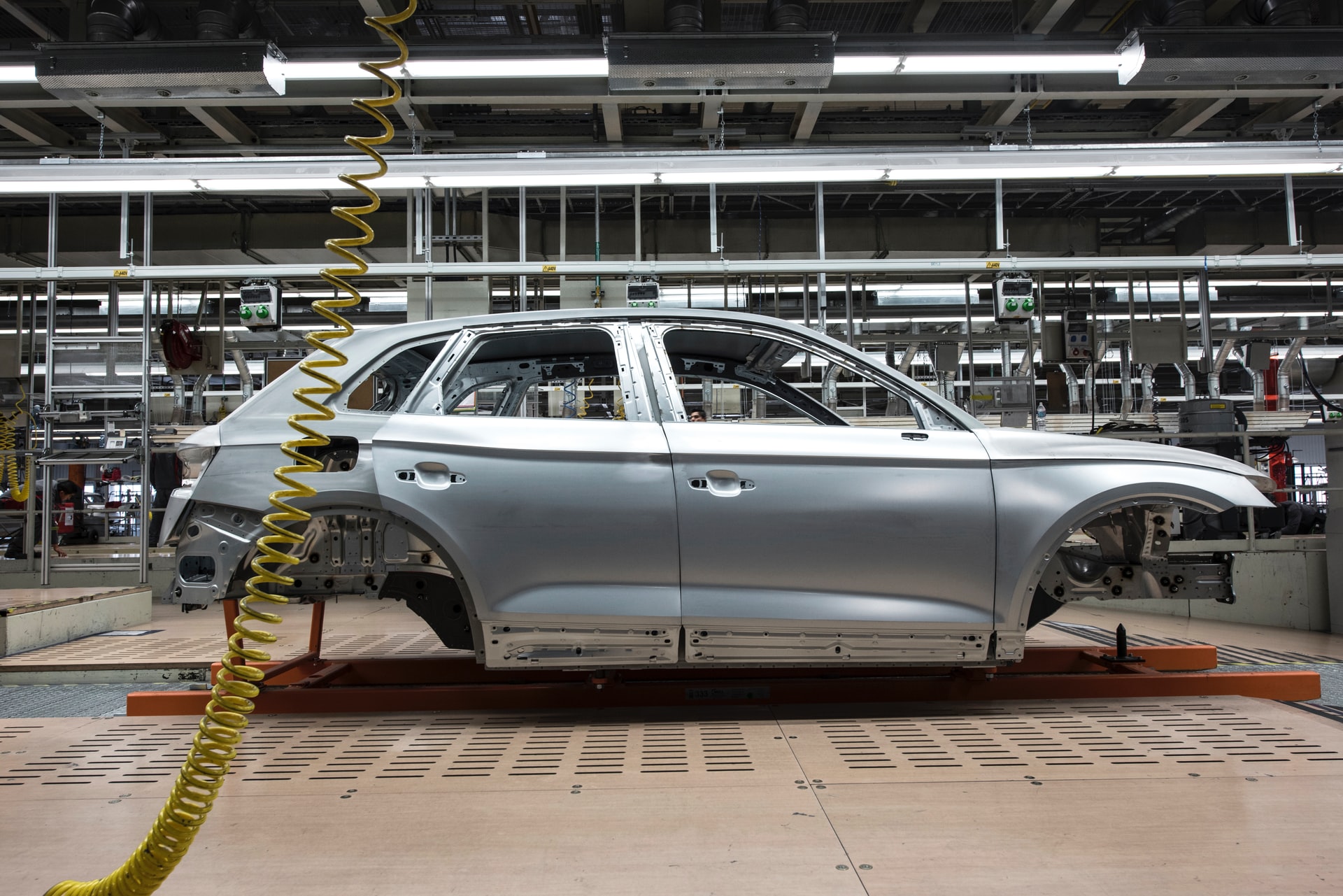
In the negotiations for annual coil supply contracts, big automotive customers have reportedly treated mills with relative sympathy, but played tricks with their supplier base.
“I heard the OEMs [original equipment manufacturers] were rather moderate, and did not force the mills to take the spot market as the common ground,” Kallanish hears from a market observer. Apparently, the manufacturing industry is becoming increasingly aware of the massive challenges and investments the steel industry is facing to convert to direct reduced iron, in the interest of cleaner steelmaking.
In fact, OEMs are encouraging steelmakers to go for cleaner production. “If you look at the new [car] models planned as of 2025, each inquiry coming from the OEMs our way has a passage that asks for green steel with a defined footprint. We ourselves have signed memoranda-of-understanding to that effect,” says a source at a big automotive supplier.
Contrasting that impression, rumour has it that OEMs pursued two contradicting strategies in the negotiations. On the one hand, the big carmakers themselves were among the first to conclude deals, thus setting a quick pace. On the other, they wanted their tier suppliers to keep dragging on their negotiations with mills, and to try to get better deals.
OEMs struck their deals at a €200/t ($213) reduction to the previous year, arriving at around €830/t ($885) for hot rolled coil, and apparently at €950+ for hot-dip galvanized coil. But they then asked their tier suppliers to keep bargaining, and to target a year-on-year reduction of €300, which became increasingly irrational with each December week.
“It is weird that OEMs drive their suppliers crazy, while themselves signing on early,” one buyer comments. Any tier company signing late will likely pay higher prices. OEMs speculate on that, as it gives them a stronger position when bargaining with their suppliers, the buyer believes.
Christian Koehl Germany

Annual EU coil contract prices to rise in January
In the wake of the relatively sudden acceleration in negotiations for long-term coil contracts in northwest Europe in mid-December, many steel users will be entering the new year with volumes secured at acceptable prices. Contracts that are still in the forging phase are likely to end at higher values going forward.
“Until early December still, I was positive that signatures will take until January,” says one market player, in accordance with many others that had taken a wait-and-see attitude. In the two weeks before Christmas, the attitude had widely changed, talks accelerated, and many industrial buyers and OEMs have now reported finalised deals for 2023.
The yardstick for negotiations was the roughly €1,000/tonne ($1,066) achieved one year ago for hot rolled coil throughout 2022 – a figure easy to remember. Many players entered and ended the talks with a year-on-year reduction of €200. One seasoned buyer tells Kallanish his company even undercut the mark of €800 for HRC still in around mid-December. But he will be one of few, as offer prices kept surging, and are expected to keep doing so.
A clear word has been heard from a northern mill that offered a y-on-y reduction of only €180, which it says will shrink to €150 y-on-y as January starts. For any deals taking longer, figures are not yet available.
“Those who did not sign in December will have a hard time in January getting the prices we did,” one buyer says, summarising the mood. “We have signed with four of the five mills we do business with, so we have secured 50% of our volumes,” says the buyer of a supplier company. One mill was not yet willing to conclude a deal, but after four successful deals the buyer sports confidence that the fifth will not take long. “They need our volumes,” he is sure.
Christian Koehl Germany