


What does the rise in micromobility mean for the auto industry?
In recent years, there has been a noticeable rise in micromobility in many cities around the world. Should the auto industry be worried?

In many cities around the world, the rise of micromobility has become increasingly apparent in recent years, spurred on, as the pandemic deterred the use of shared public transport. Micromobility can take the form of bicycles, e-bikes, electric scooters and so on, which may be privately owned or supplied on a rental basis; there has also been a rise in golf cart-type vehicles, which provide a little more protection from the elements and storage. With car prices at elevated levels — November 2022 saw an all-time high in average transaction prices in the US — these somewhat more competitively priced options provide an alternative way of tackling people’s transport needs. But does that mean they pose a genuine threat to the car ownership model?
As I look out of the window and see the cold wet winter ahead, the thought of using a golf cart-type vehicle rather than a car does not fill me with enthusiasm. I suspect that the majority of the inhabitants of Europe and the northern states of America would feel the same way. People buy a car because they invariably need it for varying journey lengths, some short and some, occasionally, longer. Having a car and a cart might work for some but there is still an outlay to have the additional cart, its storage, and the safety aspect may be a cause for concern — as the vehicles on the roads around you continue to grow in size, there would surely be an increasing sense of vulnerability. That said, for some southern US states, I’m sure it would work given the climate. Another unresolved issue is where these vehicles are allowed to travel. Can they use cycle lanes/bus lanes and what dangers do they pose to the mobility user or those around them — this uncertainty would deter some from opting for the micromobility option, as would any delays to the adoption of related legislation.
There is an argument that micromobility could be complementary to a car journey. If, for example, the journey in the car takes you to the outskirts of a city or town where that car is parked and alternative onward travel is sought (maybe because of congestion or that parking in the centre is restricted), the likes of an electric scooter might well be a viable alternative. In that sense, the scooter could then be a competitor to public transport. Again though, the lines are blurred as micromobility can also act as a complementary good to public transport as it may connect an otherwise disjointed bus journey, for example. And of course, as the name suggests, micromobility is not for longer journeys, so it cannot replace the flexibility of the car for all an individual’s travel needs.
There is also a demographic element to the use of these rising modes of transport, with younger people more open to micromobility. Young people tend not to be the target buyer for car companies though (despite the marketing!) as it’s older generations that have the money to buy new vehicles. Added to this, over time, peoples’ preferences may alter as they may move away from city-centre living, start to have families, and so on, where larger, more robust vehicles are required.
In emerging markets, the prestige of having a full-size vehicle will win out when income ensures they become affordable (that well-trodden path of car density moving up the S-shaped diffusion curve). And mopeds/e-bikes/push bikes already exist as alternative modes of transport, so in that sense, the disruption is already a part of the market — in China, 30-40 million e-bikes are sold each year and that has not knocked rising car ownership off course, or the market comfortably being the most important in volumes terms globally.
In summary, should the auto industry be worried about the encroachment of micromobility? Probably not. That’s not to say that there will be no impact at all; rather, it won’t redefine mobility as we know it, or the need for cars.
by JONATHON POSKITT, DIRECTOR, GLOBAL SALES FORECASTS


Toyota achieves record 2022 new car sales in the UK despite ongoing supply issues
Automaker Toyota said Jan. 9 that it has achieved record new car sales in the UK in 2022, despite ongoing supply issues.
The company sold 101,641 passenger cars during the year, taking up a record 6.3% share of the overall market, with the total sales in the Toyota group at 125,332 units, comprising a record 6.61% total share.
Although not a record, light commercial vehicle sales also took a 4.6% share at 13,016 units, which it said placed Toyota third among OEMs in the UK, its highest place yet.
It noted that alternative fuel vehicles, such as hybrid electric, plug-in hybrid electric, fuel cell electric, and battery electric vehicles, accounted for 75% of all new Toyota brand sales in 2022.
Increased EV demand has been one factor boosting battery metal prices. Platts, part of S&P Global Commodity Insights, assessed seaborne lithium carbonate and lithium hydroxide at $74,200/mt CIF North Asia and $80,900/mt CIF North Asia Jan. 9, up 119.5% and 155.2%, respectively, since the start of 2022.
In 2022, Toyota also surpassed 4 million sales since its vehicles were first introduced in the UK in 1965, it said.
“Despite the supply issues which our entire industry has had to deal with, we continue to perform strongly thanks to the quality of our products, the introduction of competitive new models and the increasing appeal of our hybrid electric and plug-in hybrid technology as an affordable, accessible and practical way for people to help reduce overall carbon emissions,” said Toyota (GB) Operations Director Mark Roden.
“This year we will be further strengthening our vehicle ranges, with more new model announcements to come, and ensuring that our sales platforms and mobility products meet the needs and preferences of today’s customers—both for retail and fleet/business users,” he added.
Toyota previously said it was planning to expand its global electrified portfolio to 70 products, including 15 battery electric vehicles, by 2025 as it aims to achieve carbon neutrality globally by 2050.
— Jacqueline Holman


Tata Steel’s European production drops 12.5% in Oct-Dec, deliveries down 9.5%
Tata Steel’s European-based steel production fell by 12.5% year on year during the three months to Dec. 31 while its deliveries declined 9.5%, according to company data released Jan. 6.
Tata Steel Europe’s production totaled 2.25 million mt in its third quarter, dipping 12.5% from 2.57 million mt during the same three-month period the year before and down 6.3% from the July-September quarter.
Quarterly European deliveries totaled 1.96 million mt, down 9.5% from 2.16 million mt a year earlier but up 4.8% from 1.87 million mt delivered during the prior quarter.
The latest quarterly output figures bring the cumulative production total for the nine months to Dec. 31 to 7.08 million mt, down 10.2% year-on-year, while corresponding deliveries reached 5.98 million mt, down 9.7% year-on-year.
Many European producers have been forced to curtail steel production in recent months due to high energy prices arising from Russia’s invasion of Ukraine.
Platts, part of S&P Global Commodity Insights, assessed Northwest Europe hot-rolled coil at Eur700/mt ($747mt) ex-works Ruhr on Dec. 30, down 24% from the start of 2022.
Indian production, deliveries up across all segments
In India, Tata Steel reported output at 5.00 million mt for the October-December quarter, up 4.0% year on year and 4.1 % higher than production volumes for the prior quarter. The latest production figures lifted cumulative production for the nine months to Dec. 31 to 14.72 million mt, up 4.0% year on year.
Indian deliveries for the quarter increased to a 4.73 million mt, up 7.0% year on year, but were down 3.7% on a quarterly basis. Total deliveries for the nine months to Dec. 31 were up 4.3% year-on-year to a record 13.71 million mt.
Deliveries to the Automotive & Special Products segment during the nine months to Dec. 31 increase 7% year on year to approximately 2 million mt while deliveries across the Industrial Products & Products and Branded Products & Retail segments rose to around 5.2 million (up 13% year on year) and 4.1 million mt (up 10%).
Tata Steel also said that the Neelachal Ispat Nigam plant in Kalinganagar, which the company acquired in July, has started operations and is in the process of increasing production to rated capacity of approximately 1 million mt/year.
Indian steel demand has risen over the past year, supported by government investment infrastructure projects and a recovery across the domestic automotive industry.
Platts assessed the India domestic hot rolled coil price at $687.06/mt ex-works Mumbai on Jan. 9, up 0.8% from $681.28/mt on Dec. 1.
— Euan Sadden

German car production rises further in 2022
Production of passenger cars at German assembly lines has seen a continuous increase over the past eight months, although figures in total remain a long stretch behind those achieved prior to Covid-19.
In full-year 2022, carmakers delivered 3.4 million units, which was 11% more than in 2021, Kallanish learns from automotive industry federation VDA. The overall year-on-year increase is little surprising, given the earlier production stoppages induced by the shortage of semiconductors, from which carmaking recovered gradually last year.
December saw output of 253,700 units, up 2% y-o-y, making it the eighth month in succession in which the figure was higher than in the corresponding month of 2021. Still, in comparison with the pre-Covid year of 2019, production was still a considerable 26% lower, VDA notes. Export figures developed similarly, with an increase by 10% to 2.6m units over the full year. Compared with 2019, this means a drop of 25%.
New domestic registrations showed a different trend, rising by only 1% y-o-y to 2.7m units. Here, the insecurity over rising energy prices and the war in Ukraine caused reservation among buyers, especially in the first half. In the later course of the year, the market recovered from the initial shock, and sales rose notably. In December, 314,400 cars were newly registered, an increase of 38% over December 2021.
Christian Koehl Germany

First-quarter safeguard quotas confirm Chinese return to Europe
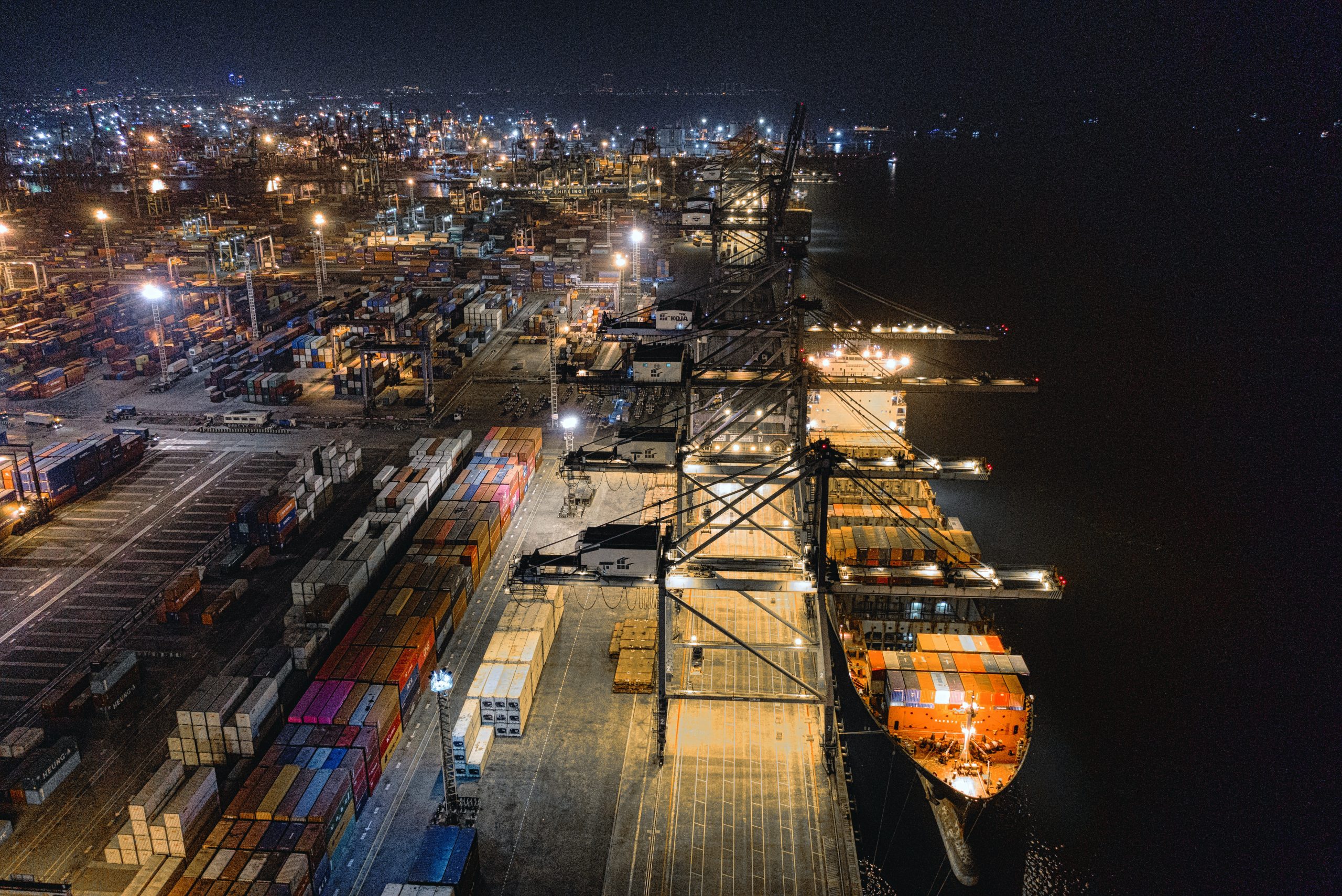
Data on the utilisation rate of EU safeguard quotas for the first quarter indicate a sudden increase in Chinese-origin imports into the bloc, Kallanish notes.
According to data compiled by UK Steel, during the first four days of January, as new safeguard quotas became available, China fully exhausted six of its country-specific product allocations. These include tinplate (sub-group 6), electrical steel coils (3b), merchant bars and light sections (12), stainless bars and light sections (14), sheet pilings (18) and seamless tubes (24).
For electrical steel coils (3b), for example, a quantity equal to double the available duty-free quota of 29,000 tonnes has already been cleared by EU Customs.
According to steelmakers’ association Eurofer, in 2022 a new record level of finished steel products was imported into Europe, surpassing 31 million tonnes. In Q4, nevertheless, the utilisation of overall EU duty-free quotas was down 22 percentage points on Q3 and 26pp on Q4 2021.
Eurofer data also indicate that China supplied in 2022 its highest volume of finished steel products into Europe since 2017, reaching almost 3 million tonnes.
Emanuele Norsa Italy
Italian scrap prices forecast to rise
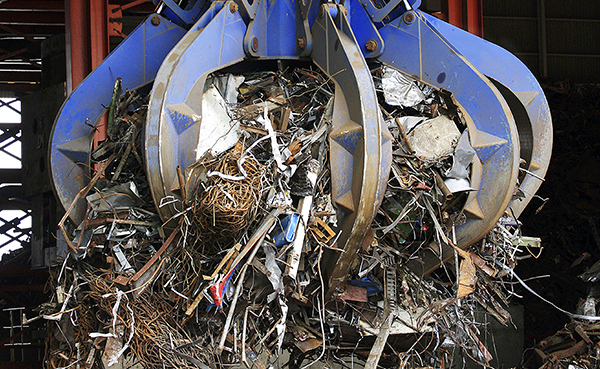
Italian mills will be paying more for domestic and imported scrap in January. The scrap market is this week resuming work after the Christmas holiday break. Mills also resumed production and sales activity on Monday and are looking for material, sources tell Kallanish.
Steelmakers will start buying scrap towards the middle or end of this week. Most are adopting a wait-and-see attitude, while others are beginning to say they will grant €10-15/tonne ($10.6-16) increases compared to last month.
The price tension in the international market, short supply of grades such as shredded and chiselled, E40 and E1, and increasing European transport costs are likely to push up Italian prices significantly this month. Large metal recyclers will wait a few days to start quoting but intend to demand increases of at least €10-15/t.
One source notes many requests were made for E40 on the first day of work after the holiday. Merchants have optimistic views of sales volumes and margins for this and next month.
Domestic prices remain flat on the beginning of December as the first contracts will be agreed by the end of the week. Before the holiday break, domestic E8 mixed grade was sold at €350-360/t delivered and at €380-390/t for the very high grade. Old thick scrap E3 was at €340-355/t delivered and at over €360/t for the railway quality. E40 mixed grade was hovering at €350-360/t and premium automotive grade at €380-390/t, while E1 was being transacted at €320-350/t delivered, depending on quality.
Natalia Capra France

Benelux scrap exporters remain cautious, eye Turkey
Scrap prices in the Benelux rose further throughout last week amid strong export markets, with dock prices reaching €350/tonne ($376) delivered.
However, exporters have had a cautious start to this week due to the demand slowdown in major export markets such as Turkey and India at the end of last week. These markets’ appetite for procuring scrap remained low on Monday as buyers initially wanted to gauge the overall situation in export markets.
The latest EU-origin booking in Turkey was concluded at $414/tonne cfr Turkey for HMS 1&2 80:20 last week. Although Benelux exporters were aiming to sell at above $415/t cfr, Turkish mills withdrew from the market after the number of imported scrap offers increased.
Although some scrap dealers believe prices in Turkey are likely to increase further due to Turkey’s incomplete procurement of February-shipment cargoes, some doubt this will happen unless rebar demand provides support.
A Benelux supplier tells Kallanish: “Turkey found rebar demand only in its domestic market in previous weeks, while export demand was almost nil. However, domestic rebar demand slowed last week as prices reached unacceptable levels for buyers. Rebar market demand will most probably determine Turkey’s demand level for scrap in the near term.”
Demand for containerised shredded scrap has also slowed in India while it is livelier in Pakistan. Offers in India and Pakistan stood at $450-455/t cfr Nhava Sheva and $465/t cfr Qasim respectively on Monday.
Burcak Alpman Turkey
ArcelorMittal seeks higher flat steel prices; output cuts support bullish mood
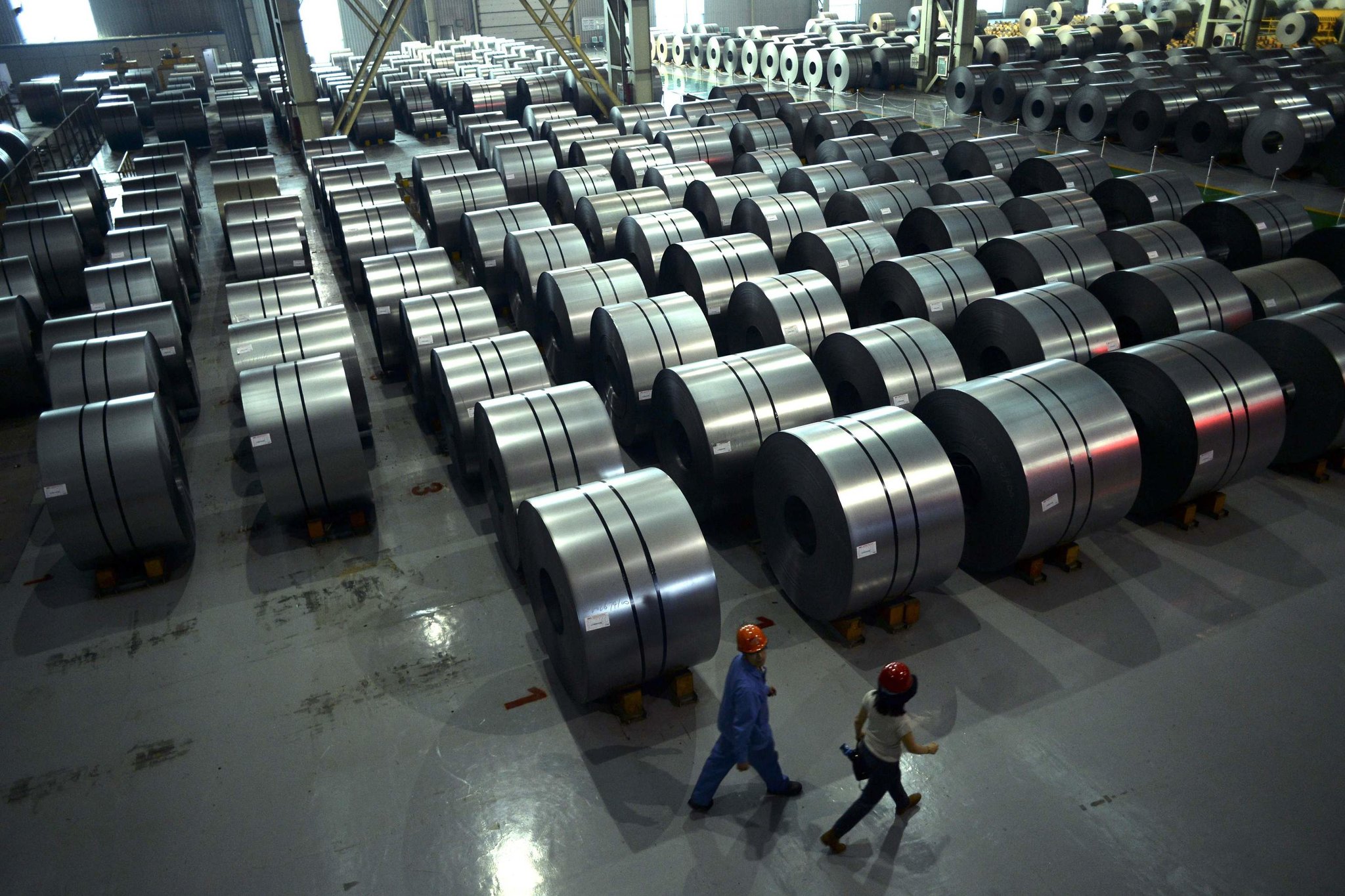
ArcelorMittal has raised the offer prices for its steel coil products across Europe, while other steelmakers are expected to follow with increases of their own, several trading sources told Fastmarkets on Monday January 9.
As of Monday, ArcelorMittal’s offers for hot-rolled coil with lead times in March were heard at €760 ($809) per tonne delivered, sources said.
This is up from the most recent tradeable values heard at €680-700 per tonne delivered late last month.
At the same time, cold-rolled coil offer prices have moved up to €860 per tonne delivered while hot-dipped galvanized coil offers from the producer were reported at €880 per tonne delivered, Fastmarkets heard.
Trading in the European steel market has been slow in the past two weeks due to the holiday lull. Most buyers and producers were only just returning to the market from Monday onward, and were still mostly assessing the situation.
Market sources expected other steelmakers in Europe to follow the bullish move by ArcelorMittal, and in general, believe that the higher flat steel prices will eventually be accepted by buyers.
Notably, because of numerous output cuts announced by the European flat steel producers in the fourth quarter 2022, the supply of coil might fall short of demand in early 2023, sources said.
Additionally, sources said that stock levels at distributors are trending downward.
“The stock situation is much better compared to the last quarter of 2022. In fact, some steel service centers are complaining about shortage of some positions [of HRC],” a distributor in Northern Europe said.
Published by: Julia Bolotova


European HRC prices move up on higher offers; production cuts support uptrend
European hot-rolled coil producers are aiming for higher prices and reduced supply in the region could support the uptrend, sources told Fastmarkets on Monday January 9.
European mills are offering HRC with early March delivery to the market, several sources told Fastmarkets.
But buyers are expecting delays to deliveries due to the output cuts announced by many European mills during the fourth quarter of 2022.
Meanwhile, stocks at distributors are trending lower.
“The stock situation is much better compared with the last quarter of 2022. In fact, some steel service centers are complaining about the shortage of some positions [of HRC],” one distributor in Northern Europe told Fastmarkets.
Fastmarkets calculated its daily steel HRC index, domestic, exw Northern Europe at €707.50 ($752.99) per tonne on Monday, up by €38.33 per tonne from €669.17 per tonne on Friday.
The latest calculation is up by €38.75 per tonne week on week and up by €80.25 per tonne month on month.
Market activity is slowly restarting after a holiday break, with participants expecting more clarity on prices acceptance in the coming days.
“It looks like the buyers’ market is turning into a sellers’ market,” a steel service center source in Northern Europe said.
Indications of tradable values from most buyers were reported close to €700 per tonne EXW. One trading source estimated at €660 per tonne EXW, but sources largely agreed that mills in the region were no longer accepting such a low price.
Offers for March-delivery coil from mills in the region were heard at €700-730 per tonne EXW on Monday.
Notably, ArcelorMittal announced offers for March-delivery HRC at €760 per tonne delivered across Europe, which nets back to about €730-730 per tonne EXW.
Market sources called the offer price “realistic” for now, but pointed out that the market has just resumed after a long holiday and it was too soon to say if the uptrend was sustainable.
Fastmarkets’ calculation of its daily steel HRC index, domestic, exw Italy was at €689.17 per tonne on Monday, up from €652.50 per tonne on Friday.
The latest calculation was up by €36.67 per tonne week on week and up by €67.92 per tonne month on month.
The Italian market is also slowly restarting after the holiday break. But sources largely believe a price rise will be fixed in deals due to improving demand and reduced supply amid output cuts.
Tradeable values were reported at €680-700 per tonne EXW on Monday.
Published by: Julia Bolotova