


SSAB signs fossil-free steel distribution deal with Stena
SSAB has signed an agreement with Stena Stål for the distribution of fossil-free steel in the Swedish market from 2026, Kallanish notes.
As a result, Stena will be the first distributor of such products in the Swedish steel market. The company has operations in both Sweden and Norway, and is part of the Stena Metal Group.
SSAB plans to offer in the market from 2026 fossil-free steel products. It is also aiming at largely eliminating carbon dioxide emissions from its operations by 2030. SSAB is developing Hybrit, a renewables-powered, hydrogen-based direct reduced iron-making plant, together with partners LKAB and Vattenfall.
Emanuele Norsa Italy


Logistics group Rhenus takes over steel transporter
German logistics company Rhenus Group is taking over Robert Schmitz GmbH, thus adding extensive expertise in storing, procuring and transporting products for the forging and cold rolling industry.
Robert Schmitz has its headquarters in Hagen in the German state of North Rhine-Westphalia, home of most German independent cold rollers. The company operates across Europe and has more than 20,000 square metres of storage space available, Kallanish learns from Rhenus.
Its core expertise is warehousing and providing multimodal transport services for wire rod, coils, slit strips and stamping products. These highly sensitive materials require particular handling and special storage conditions, with heated storage areas and regulated moisture, Rhenus points out.
For this type of product, Robert Schmitz has a fleet of 25 trucks. It can handle more than 250 railway wagons per week at the company’s own sidings. Founded in 1926, it has most recently been managed in the third generation of the family by Hans-Georg Schmitz. The company will continue to operate under its own name.
Rhenus Group is a logistics specialist with 37,500 employees at 970 sites worldwide, and annual turnover amounting to €7 billion ($7.5 billion).
Christian Koehl Germany

ArcelorMittal to supply low-emission steel to Gonvarri
ArcelorMittal will supply Spanish steel processor Gonvarri Industries with low-emission steel, Kallanish learns from the steelmaker. The companies signed a memorandum of understanding to jointly develop sustainability projects, strengthening their performance in the automotive market.
“This MoU is the culmination of months of collaboration, with the objective of further reducing CO2 emissions and exploring every opportunity we have to strengthen the sustainability of our businesses,” observes ArcelorMittal Europe – Flat Products executive chief Yves Koeberle.
The collaboration includes the use of ArcelorMittal’s XCarb reduced and low-carbon products. The project is also focused on identifying ways to improve the circular economy both within and beyond the manufacturing and purchase of steel, he adds.
“Our companies create an enhanced framework to advance the decarbonisation of our processes and those of our customers,” comments Gonvarri chief executive Jon Riberas.
The company has committed to reducing its Scope 1 CO2 emissions by 50% since 2030, as well as operating solely using renewable electricity by 2030. Gonvarri aims to be carbon neutrality by 2050.
Gonvarri Industries, which is one of the largest flat steel customers of ArcelorMittal Europe, has an annual capacity to process around 5 million tonnes of material.
Todor Kirkov Bulgaria

Energy crisis, sanctions benefit Polish trade position: CMC
The European energy crisis and Ukraine war-related trade sanctions have resulted in Poland becoming a net rebar exporter, thereby benefiting its trade position, points out Barbara Smith, president of US steelmaker CMC which has a steel mill in Poland.
“The European energy crisis, combined with trade sanctions, have impacted historical trade flows in the region, which has benefited Poland on a relative basis. Poland has recently moved into a net rebar export position compared to a fairly large net import position a year ago,” Smith said during CMC’s November-quarter earnings call this week monitored by Kallanish.
“Electricity price volatility relative to the broader EU has tended to be less extreme in Poland over the last year due to a variety of factors, which has created a favourable cost dynamic for Polish producers. Energy costs have been both lower and more stable, providing some protection from imported materials originating from other European Union countries,” she added.
Non-EU rebar imports have meanwhile gone to EU countries that are more logistically accessible and experiencing higher energy costs. The supply side of the economic equation is thus helping to offset much of the detrimental economic impact on CMC Poland, Smith observed.
As for natural gas costs, chief financial officer Paul Lawrence said gas contracts are reset twice a year in October and May. CMC Poland was paying pre-war prices until October, and then saw a six-fold rate hike thereafter. Luckily, the mill’s natural gas consumption is limited to the reheating furnace and therefore not a major cost, he concluded.
According to Poland’s Central Statistical Office (GUS) latest available data, the country imported 344,411 tonnes of HS code 721420 rebar in January-October 2022, down 41% on-year. Germany remained top supplier, but intake from Russia and Belarus reduced notably. Exports meanwhile surged 40% to 292,051t, with Germany remaining the top market.
CMC Poland increased shipments 30% on-year in its first fiscal quarter through November 2022 to 473,000t (see separate story).
Adam Smith Poland

Bentley Motors achieves record sales in 2022, up 4% on year
Luxury UK automaker Bentley Motors sold a record 15,174 vehicles in 2022, up 4% year on year and the first time it had exceeded the 15,000 level in a year, it said Jan. 10.
Bentley attributed the rise to new models, increased demand for Mulliner personalization and its new hybridized models.
“In what was another year of unpredictability, the business overcame significant headwinds and demonstrated great resilience to deliver the third consecutive record sales year,” Chairman and CEO Adrian Hallmark said.
The company aims to achieve full electrification and net carbon neutrality by 2030.
The Americas was Bentley’s biggest selling global market at 4,221 units, representing 28% of the automaker’s total sales, although only 1% higher year on year.
Sales to China dropped 9% on the year to 3,655 units, making up 24% of total sales. Asia-Pacific sales made up 13% of total sales at 2,031 units, up 23% year on year.
European sales rose 11% to 2,809 units, 19% of the total share, while UK sales increased 12% to 1,490 vehicles, a 10% share.
Middle East, Africa and India sales accounted for 6% of total sales at 968 units, rising 6% year on year.
Platts, part of S&P Global Commodity Insights, assessed domestic HRC prices in Northern Europe at Eur720/mt ex-works Ruhr Jan. 9, down 21.9% since the start of 2022.
— Jacqueline Holman

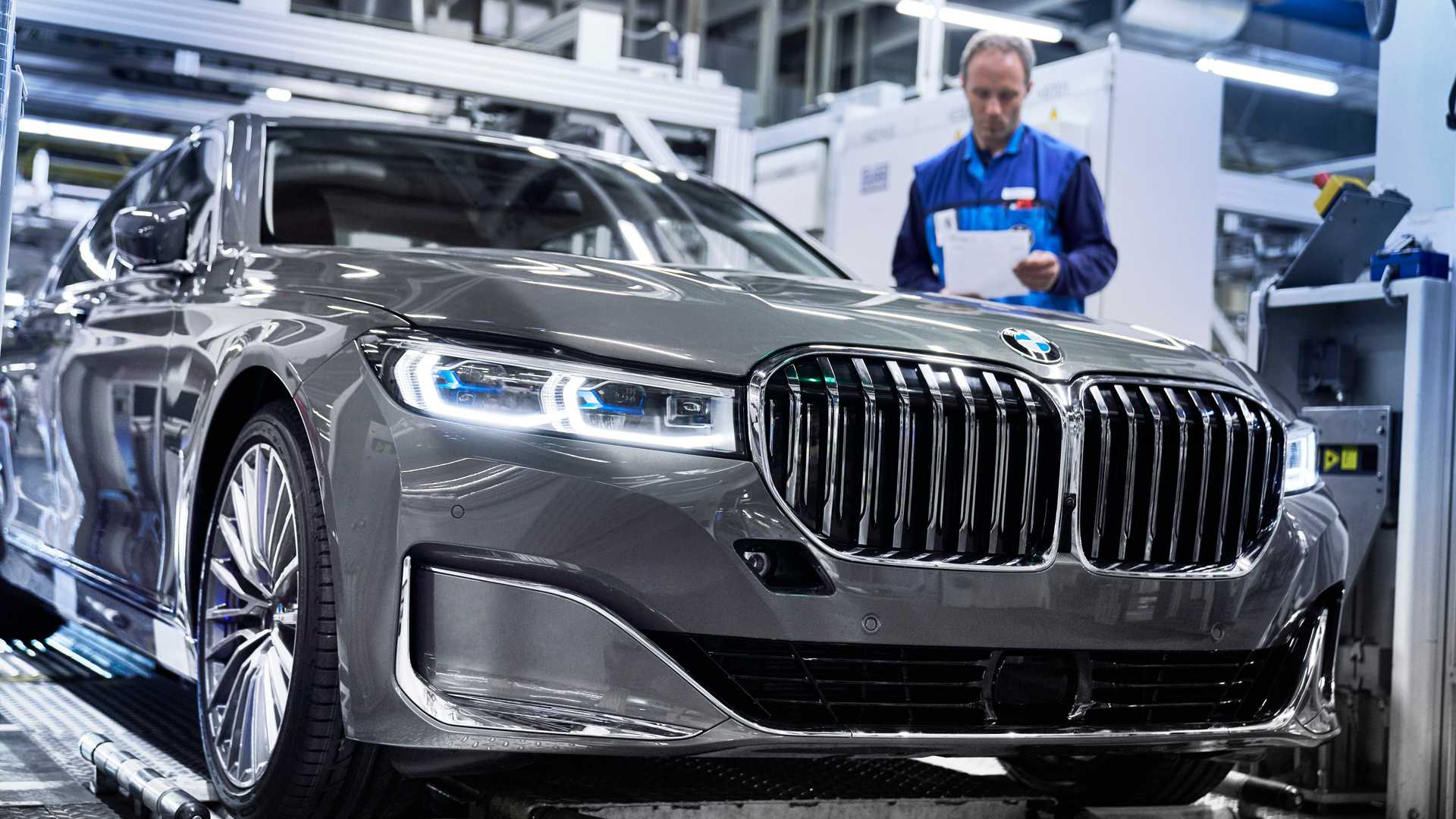
BMW 2022 sales fall 4.8%; BEV sales more than double
BMW Group delivered 2.4 million units in 2022, down 4.8% year on year due to supply bottlenecks, China’s pandemic lockdowns and the Russia-Ukraine war, the German automaker said Jan. 10.
The fall was mainly seen in the first half of 2022, with total sales for the fourth quarter rising 10.6% on the year to 651,798 units.
BMW continued to ramp up electromobility sales in 2022, with battery electric vehicle sales more than doubling to 215,755 units and the company delivering its 500,000th BEV before the end of the year.
Combined deliveries of BEVs and plug-in hybrid EVs rose 32% year on year to 433,795 units in 2022.
“Our strong product line-up is the best response to a challenging environment – and enabled us to more than double our sales of fully-electric vehicles again in 2022,” BMW board member responsible for Customer, Brands, Sales Pieter Nota said.
The company’s focus in 2023 would be to continue to ramp up electromobility, with it aiming for 15% of total sales to be BEVs, up from 9% in 2022, Nota said.
Of the 2022 deliveries, BMW models totaled 2.1 million units, down 5.1%, while Mini models totaled 292,923 units, down 3%, and Rolls-Royce models totaled 6,021 units, up 7.8% to the highest full-year sales in its 118-year history.
Increased EV demand has been one factor keeping lithium prices strong.
Platts, part of S&P Global Commodity Insights, assessed seaborne lithium carbonate and lithium hydroxide at $74,200/mt CIF North Asia and $80,900/mt CIF North Asia Jan. 10, up 119.5% and 155.2%, respectively, since the start of 2022.
European deliveries fall
The BMW Group’s deliveries of BMW and Mini vehicles to Europe totaled 877,369 units in 2022, down 7.5% year on year, with sales to Germany at 252,087 units, down 6%, according to provisional registration figures.
In the Americas, BMW’s full-year sales were 439,585 units, down 2.3% on the year, with US deliveries edging 1.3% lower on the year to 361,892 units.
Asia’s 2022 deliveries dropped 3.5% year on year to 1.03 million vehicles, of which 791,985 were in China, down 6.4%.
— Jacqueline Holman

Volkswagen 2022 global BEV sales up 24%
Volkswagen sold around 300,000 battery electric vehicles in 2022, up 24% year on year as it progressed with its transformation to e-mobility, the German automaker said Jan. 10.
VW delivered around 170,000 units of its all-electric ID. models in 2022, with the ID.4 being its top EV globally.
VW said it had delivered more than 580,000 models from the ID. family globally since September 2020.
In China, ID. model EV sales more than doubled to 143,100 units, while sales in North America rose 28% to 22,700 ID.4 models.
The ID.4 model was also the bestselling car in Sweden at around 8,900 units, VW said.
VW plans to introduce 10 new electric models by 2026.
Increased EV demand has been one factor keeping lithium prices strong. Platts, part of S&P Global Commodity Insights, assessed seaborne lithium carbonate and lithium hydroxide at $74,200/mt CIF North Asia and $80,900/mt CIF North Asia Jan. 10, up 119.5% and 155.2%, respectively, since the start of 2022.
Total sales down 6.8%
Despite the rise in BEV sales, total Volkswagen brand sales dropped 6.8% to 4.56 million vehicles due to the strained supply situation, it said, adding that the order backlog remained high, with around 640,000 customers in Europe having placed orders for Volkswagen models across all drive types, which was up 18%.
“We achieved a solid sales result in 2022 despite persistent supply bottlenecks,” VW Board Member for Sales, Marketing and After Sales Imelda Labbe said.
“We are doing our utmost to reduce delivery times for our customers still further and to lower the high order backlog as quickly as possible,” Labbe said.
VW noted that SUVs had been its fastest-growing market segment, with the share of SUVs in total deliveries rising to 45%, which was up 4% on the year, and SUVs making up more than 80% of total deliveries in the US.
Looking forward, VW said it expected 2023 to be “another volatile and challenging year due to persistent semiconductor supply bottlenecks” although it also expected a gradual improvement in the supply situation, with production due to stabilizing as the year progressed.
— Jacqueline Holman

UK Steel warns updated government energy support puts producers at global disadvantage
UK Steel has warned that government’s latest energy support scheme will put UK steel producers at a significant global disadvantage, in a statement released Jan. 9.
The government announced Jan. 9 that energy intensive industries including producers of steel and other metals will receive a higher level of support under an updated Energy Bill Relief Scheme, or EBRS, with maximum discounts of GBP40/MWh for gas and GBP89/MWh for electricity on thresholds of GBP99/MWh for gas and GBP185/MWh for power.
The current EBRS was introduced by the UK government on Sept. 21 and capped industrial electricity prices at GBP211/MWh and gas prices at GBP75/MWh between Oct. 1, 2022 and March 31, 2023.
While welcoming the certainty and stability provided by the extended government support, UK Steel warned that the scheme falls short of those introduced across its key global competitors and said that the new measures do not afford adequate protection in instances of heightened market volatility.
UK Steel noted that the German government guarantees an electricity price of Eur130/MWh for the whole of 2023, giving its steel industry a significant advantage over UK producers.
“The reformed EBRS provides a discount for electricity prices above GBP185/MWh, leaving UK steel producers paying an estimated 63% more for power than German steel producers this year,” said UK Steel.
“This situation will maintain a long-standing competitive disadvantage for UK producers, resulting in higher production costs and a reduced ability to compete this year,” it added.
The association called on the government to address the higher costs UK steel producers face relative to their competitors.
“Given the disparity in relief provided in the UK and competitor countries, it is essential that the government now delivers on its Energy Security Strategy and addresses the outstanding disproportionate costs UK steel producers face in electricity bills, including high renewable levies and network costs,” it said.
Platts, part of S&P Global Commodity Insights, assessed the weekly UK hot-rolled coil price at GBP620/mt ($755/mt) DDP West Midlands Jan. 5, down 49.4% from the all-time high of GBP1,225/mt on April 22.
Northwest Europe HRC was assessed at Eur720/mt ($772/mt) ex-works Ruhr on Jan. 9, down 51% from a high of Eur1,460/mt assessed on March 22, 2022.
— Euan Sadden

EU HRC buyers question recent offer increase
European buyers of hot-rolled coil have doubts that the recently announced price rise reflects the current market state, although some factors support the increase, sources told Platts Jan. 10.
Earlier this week, a big European steelmaker increased its offers for HRC to Eur760/mt ex-works Ruhr.
Although the offer rate has been widely confirmed in the market as general target price of the mills in the north of Europe, buyers have been estimating achievable prices at significantly lower rates — between Eur670/mt and Eur730/mt ex-works Ruhr.
Platts assessed hot-rolled coil in Northwest Europe down Eur20/mt day on day to Eur700/mt ex-works Ruhr Jan. 10. The decline returned the assessment to the last week rate. Offer prices have been excluded from the assessment due to lack of actual trading after holidays across Europe.
Buyers generally acknowledge that market revival in Asia, effects from production cuts across Europe, high energy costs, lack of competitive import and some demand revival support the price rise. The sources, however, also cited reduced end-user demand and resistance of end-consumers to accept higher prices as negative factors.
“The efforts of the European mills to increase prices is mainly an attempt to mirror the situation in Asia,” an Italian trader said. “Obviously recovery in Asia creates a domino effect that helps Europe, but fundamentally demand in Europe remains weak. It is better than it used to be, but way below normal rates. It would make more sense for the European mills to keep production low and try smaller increases at a time to avoid resistance of the buyers.”
“The demand is getting better, but the price recovery is on shaky ground,” a German service center source said. “The situation is unstable, and the prices might collapse again. There are too many risks, and the buyers would not buy too much material to put in stock.”
Platts assessed domestic prices for hot-rolled coil in the south of Europe down Eur20/mt day on day to Eur680/mt ex-works Italy Jan. 10.
The assessment was based on tradable values heard at Eur650-700/mt ex-works Italy and offers reported at Eur760/mt delivered Italy.
Platts is part of S&P Global Commodity Insights.
— Maria Tanatar

Prices stable in steel rebar market in Italy, Spain after holiday closures
Steel rebar prices in Southern Europe remained stable in the week to Wednesday January 11 following a period of relative inactivity due to seasonal mill closures.
Mills had targeted higher prices before closing for Christmas and New Year holidays. Producers sought to maintain these increased prices throughout the first quarter of 2023.
Market participants remained largely pessimistic regarding future demand levels, however. Input costs such as steel scrap prices have risen, although energy prices have fallen, Fastmarkets heard.
Italy
Few trades were heard to have taken place in the week to January 11 due to Christmas closures.
Fastmarkets’ price assessment for steel reinforcing bar (rebar), domestic, exw Italy, was €835-870 ($896-934) per tonne on Wednesday, stable since mid-December.
Production cuts have resulted in some mills not planning to restart until next week, sources said.
While some market participants did not think the production cuts would affect prices, other sources thought that prices could be driven upward as a result of constricted supply.
“Demand is slow,” one buyer source said. “Most producers have not even restarted production yet. Feralpi, for example, will begin on January 12 instead of its normal restart date of January 7.”
Some sources remained bearish regarding future prices.
“Buyers are waiting for better prices. I don’t think producers are confident that they can maintain the current price levels,” one buyer source said. “Energy and gas costs are lower than in December 2022, and this could be the reason why the producers are not able to keep the price at a higher level.”
Some sources told Fastmarkets that they expected prices to fall again over the coming weeks.
“Demand was good on the day of reopening, but now customers are waiting,” one source told Fastmarkets. “They want to figure out where the market will be next day, and if the price will stabilize or decrease. We think it will go down, but we hope it will do so slowly.”
International scrap prices have risen since late 2022.
Fastmarkets’ daily calculation of the index for steel scrap, HMS 1&2 (80:20 mix), North Europe origin, cfr Turkey, was $414.22 per tonne on January 11, up from $397.59 per tonne a week earlier.
Spain
Christmas and New Year holidays resulted in there being few trades in the Spanish rebar market, Fastmarkets heard.
Fastmarkets’ price assessment for steel reinforcing bar (rebar), domestic, delivered Spain, was €730-760 per tonne on Wednesday, stable since late November.
Published by: India-Inés Levy
