

Onshore wind: will profitability improve in 2023?
The onshore wind industry was hit by profit margin pressure in 2022. Western markets grappled with a perfect storm of supply chain challenges and capex increases. Chinese turbine original equipment manufacturers (OEMs) were shielded by a massive domestic market and localised supply chain.
Heading into 2023, those issues persist. Western wind turbine manufacturers and their suppliers face a difficult year, despite sustained efforts to increase price in light of global supply chain challenges. The Chinese onshore wind industry could now leverage its low-cost position and economies of scale to approach global markets, threatening the market share of entrenched OEMs.
But does unprecedented policy momentum mean a return to profitability is imminent for western players? What changes in global trade dynamics, investment and pricing do we expect? Drawing on insight from Lens Power, Global onshore wind energy: 5 key things to look for in 2023 picks out our predictions for the year ahead.
Onshore wind supply chain pain continues in 2023 – but a profitability turnaround begins for western suppliers
2022 was nothing short of a disastrous year for wind supply chain profitability. The largest western wind turbine OEMs accumulated billions in losses over the course of the year, leading many to close factories, lay off employees and increase pricing for wind turbine equipment.
The reasons for these struggles are multi-faceted but primarily tied to supply chain issues, raw material inflation, dramatic increases in specialised logistics costs and a backlog of unfavourably priced supply contracts. These issues are expected to linger into at least the first half of 2023.
We expect to see a profit turnaround and pathway to growth in 2023.
Aaron Barr, Global Head, Onshore Wind Energy Research
However, we expect to see a profit turnaround and pathway to growth in 2023. Policy clarity in the US in the form of guidance from the US treasury on domestic content incentives should lead to a rush of new turbine orders in early 2023. Permitting acceleration in the EU will also likely lead to a significant increase in orders there. Supply chain constraints and raw material price volatility – the primary drag on OEM profitability – should subside in 2023.
Read the full report for more detail, including a chart on the new build onshore wind market to 2025, by region.
Wind PPA and auction prices will rise to reflect wind energy capex growth, cost of capital increases and strong demand
Capex increases will ultimately propel power prices up for wind energy projects. Western turbine OEMs have been raising turbine prices in reaction to sustained supply chain and profitability challenges. The rise in prices has led to a drop in new orders, but it will ultimately drive wind energy offtake agreement power prices higher in the long term.
Undersubscribed auctions in Europe will drive auction price caps higher. Spain, Germany and France have all experienced severely undersubscribed renewable power auctions in 2022. Many developers view historically-high merchant power prices as a more attractive option to long-term contracts, particularly with current price ceilings in place. Many auction price caps will be increased in response to low subscription levels.
Strong demand from corporate and institutional offtakers will prompt a power purchase agreement (PPA) price premium.
What’s the forecast for wind’s levelised cost of energy (LCOE)? And will China continue to buck the global trend? Read our view in the full report.
Chinese wind companies are set to take market share from western OEMs
Chinese OEMs are gaining strength while western OEMs are on the ropes. Economies of scale in the Chinese supply chain, reduced exposure to raw material inflation and lower logistics volatility has delivered profitability that contrasts with the significant losses their counterparts in the west have suffered.
What’s more, Chinese OEMs are leapfrogging western technology. The average turbine size for orders placed in China for 2022 was over 5.4 MW, which eclipses the 4.2 MW average rating for western OEMs. This discrepancy contrasts the historical trends, where the Chinese market has traditionally deployed smaller turbines.
Which markets are the primary focus for Chinese exports? Read the full report to find out more.
What other factors will shape onshore wind in 2023?
How will protectionist policies affect capital costs in 2023? How will turbine technology develop? Read Global onshore wind energy: 5 key things to look for in 2023 in full for our predictions.


Metais Jaime Dias joined as member of EUROMETAL
We are pleased to inform you that Metais Jaime Dias S.A joined as associate member of EUROMETAL.
Located in Guidões-Trofa (Portugal), on a 180,000 m2 site, Metais Jaime Dias S.A, founded in 1998, has since developed as a company dedicated to the global management of industrial waste.
Second Choice Materials
Twelve years ago, MJD expanded its scope, integrating the sale of second choice materials and becoming a specialized service center. Metais Jaime Dias SA, commercializes steel products, namely plates, tubes and beams.
In addition to the vast range of flat and other steel products, MJD is also a service center which possesses the right equipment to provide its customers with the following services:
- cut to length
- slitting
- plasma cutting
- laser cutting
- bending

ArcelorMittal, Spain’s Gonvarri to work on reducing auto steel emissions
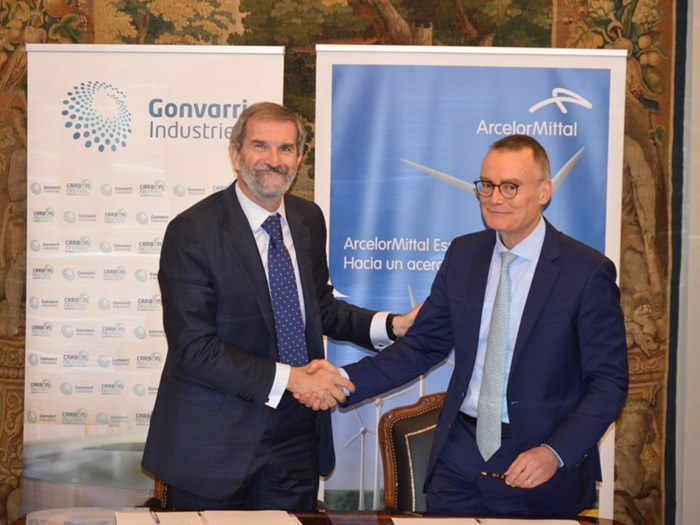
Steel group ArcelorMittal is to cooperate more closely with international metals processing group Gonvarri Industries on reducing carbon emissions and improving sustainability for materials in the automotive sector.
A Memorandum of Understanding includes use of ArcelorMittal’s XCarb range of reduced carbon emissions and low-carbon steel products, which may drive demand for steel produced using adapted feedstocks and processes.
ArcelorMittal, which mainly produces flat steel via the blast furnace route while it has an electric arc furnace operation in Spain making coils with lower emissions, plans to expand use of direct-reduced iron in Europe and North America to lower emissions.
Under the MoU, the two companies will focus on “working on common sustainability projects … as well as identifying ways to strengthen the circular economy both within and beyond the manufacturing and purchase of steel products,” ArcelorMittal said.
Spain’s Gonvarri is a major customer of ArcelorMittal’s European Flat Products business unit, processing 5 million mt/year of steel with operations globally, including in Europe, China and South America. The MOU will look at strengthening both companies’ sustainability performance in the automotive market, it said.
The MOU creates an enhanced framework to advance the decarbonization of its processes, with benefits for customers, Gonvarri’s executive chairman Jon Riberas said in the statement.
Madrid-based Gonvarri in 2020 committed to reducing its Scope 1 CO2 emissions by 50% and its Scope 2 emissions to zero by 2030, as well as operating solely using renewable electricity and further committing to carbon neutrality by 2050, it said. The company is seeking to work with steel producers and other suppliers to reduce Scope 3 emissions in the company’s supply chain.
ArcelorMittal’s Europe business has a target to reduce CO2 emissions by 35% by 2030, and to reach carbon neutrality by 2050.
In 2021, ArcelorMittal launched XCarb, covering a range of lower emissions steel and low and zero-carbon initiatives, including green steel certificates and recycled and renewably produced steel made using a very high proportion of steel scrap and 100% renewable electricity.
Gonvarri supplies flat steel, aluminum and steel rods to major automotive producers, through service centers with specialist processing services, and manufactures high-precision carbon steel tubes.
— Hector Forster

NLMK restarts steel coil rolling at Belgium’s La Louviere mill
Belgian flat rolled steel producer NLMK La Louviere has resumed hot rolling operations at its 1.7 million mt/year hot strip mill, which had been idled in the second half of December, Russian parent company NLMK told S&P Global Commodity Insights Jan. 11.
The mill’s rolling operations are currently limited to a smaller range of coil thicknesses, an NLMK spokesperson said, adding that the team is working to return to full-capability operations as soon as possible while also taking actions to limit the impact on customers.
NLMK did not specify the reason for the unplanned shutdown nor did it say when the outage started, but market sources have previously said the plant suffered “issues with their hot-strip mill and a fire.”
NLMK La Louviere has also restarted its 600,000 mt/year cold rolling mill, which had been temporarily offline since mid-December for planned year-end maintenance, NLMK said.
The Belgium mill, a supplier of coils to the auto, machinery and construction industries, is part of NLMK Belgium Holdings, a joint venture between Belgian investment fund SOGEPA and Russian mining and steel company NLMK. Apart from La Louviere, NBH owns strip mill NLMK Strasbourg (France), NLMK Manage Steel Center (Belgium), and plate producers NLMK Clabecq (Belgium), NLMK DanSteel (Denmark) and NLMK Verona (Italy).
All of the plants process slab that NLMK delivers from its Novolipetsk Iron and Steel Works in west Russia.
Platts, part of S&P Global Commodity Insights, assessed North European hot-rolled coil price at Eur700/mt ($754) ex-works Ruhr on Jan. 10, down 2.8% on the day.
— Ekaterina Bouckley
EU cold-rolled, hot-dipped galvanized coil offers higher despite limited demand
Offers for cold-rolled and hot-dipped galvanized coil in Europe increased in the week to Jan. 11 despite limited interest of the buyers in the material.
Demand remained muted as market participants have just resumed activity after holidays. And although restocking is expected to start soon the situation is unlikely to change drastically due to reduced demand from end consumers.
“It seems that downstream coil is not doing as good as hot-rolled coil, we still do not fully understand what the demand from automotive would be,” a distributor said.
The bullish approach of the mills has been supported by expected demand recovery, revival in Asian market and need to cover high energy costs.
Platts assessed domestic CRC prices in Northern Europe at Eur830/mt ex-works Ruhr Jan. 11, up by Eur30/mt day on day and by Eur45/mt week on week.
Offers from Northern European mill have been reported at the equivalent of Eur830-840/mt ex-works, offers from a German steelmaker – at Eur860-880/mt ex-works Ruhr. An a producer estimated tradable value at Eur840-880/mt ex-works Ruhr.
The assessment for domestic CRC in Southern Europe increased by Eur10/mt on week to Eur770/mt ex-works Italy on Jan. 11. The assessment was based on tradable values and offers heard at Eur760-780/mt ex-works Italy.
Platts assessed domestic hot-dipped galvanized coil prices in the region at Eur780/mt ex-works Italy, unchanged on week. Offers of the material have been heard at Eur750-770/mt ex-works. A buyer estimated the price is likely to reach Eur820/mt ex-works Italy soon and a producer estimated near-term achievable price at Eur880/mt ex-works Italy.
Platts assessed domestic hot-dipped galvanized coil prices in Northwest Europe at Eur830/mt ex-works Ruhr on Jan. 11, up Eur30/mt on the week.
Offers of the material have been heard in the range from Eur800-880/mt ex-works Ruhr.
Platts is part of S&P Global Commodity Insights.
— Maria Tanatar
NLMK Louviere restarts production, with limitations
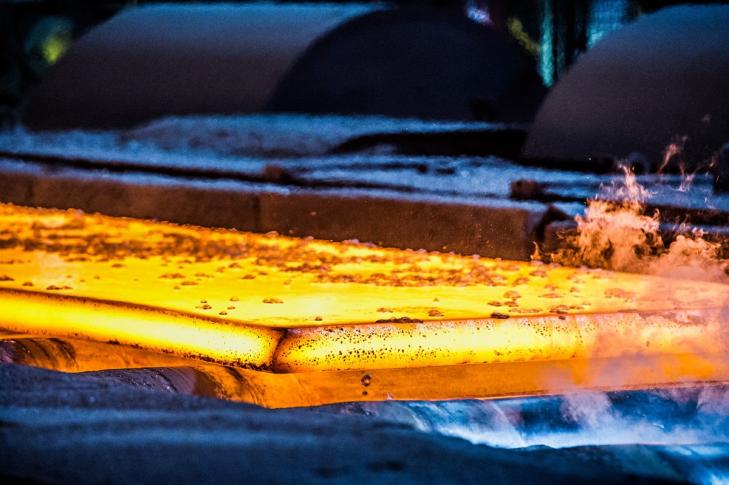
NLMK confirms to Kallanish that its rolling mill in Louviere, Belgium, restarted production last week following the fire incident that occurred on 21 December.
Production restarted in the hot strip mill as well as the cold rolling area, though with limitations to the coil thickness. “Our team is working on solutions to find the quickest way to return to full-capability operation, whilst we are taking actions to limit the consequences to our customers,” NLMK says.
NLMK Louviere can produce over 1.5 million tonnes/year of hot rolled coil and over 1.2m t/y of pickled coils, rolled from slab supplied by NLMK’s Russian works.
Emanuele Norsa Italy

French, Luxembourg scrap prices rise
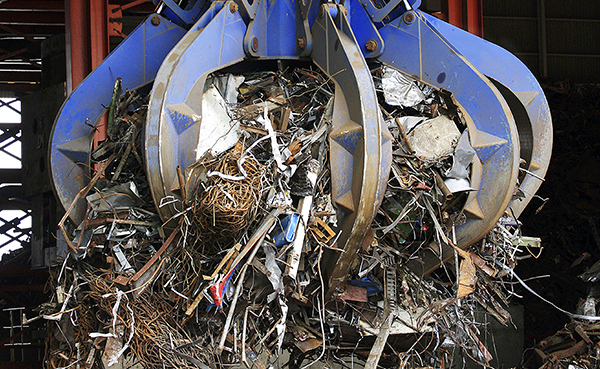
French and Luxembourg domestic scrap prices are increasing in January contracts by €25-30/tonne ($26-32) month-on-month, depending on the mill and its need for this month. The increases are mostly due to rising international scrap prices and short supply of shredded and chiselled E40 and E1 grades.
E8 new arisings remains in large supply and one of the least fashionable grades with buyers after E1, E3 and E40. Demand is considered to be at average levels from most steelmakers, apart from a smaller one that is well stocked and not in need of material.
The European price landscape is also showing €25-35/t increases depending on each country in the first contracts of the year, with steelmakers actively looking for domestic and imported scrap, sources tell Kallanish.
So far, French and Luxembourg domestic shredded E40 grade is pegged at €370-380/t delivered on average. Rather unpopular, the mixed E8 grade remains flat at €350-360/t on average. Demolition E1 and E3 are on average at €320/t and €345-355/t delivered respectively this month, sources suggest.
Meanwhile, scrap prices in the Benelux rose further throughout last week amid strong export markets, with dock prices reaching €350/t delivered. The latest EU-origin booking in Turkey was concluded at $414/t cfr Turkey for HMS 1&2 80:20 last week. Although Benelux exporters were aiming to sell at above $415/t cfr, Turkish mills withdrew from the market after the number of imported scrap offers increased (see Kallanish 10 January newsletter).
Natalia Capra France

High input material prices throttle German construction
The increase in construction material costs – mainly steel, but also cement, glass, insulation, and others – put a break mainly on residential construction in Germany, says industry association Hauptverband der Deutschen Bauindustrie.
The industry’s order intake through October was 14% lower than in the first ten months of 2021, with residential construction suffering most, Kallanish learns from an update by Hauptverband this week. Projects have been postponed or suspended due to rising material costs. In the first 11 months, these were more than 16% above those of the corresponding prior-year period, according to the federal statistics office.
In December, the association stated that headwinds had not waned during the fourth quarter, and in fact became fiercer. It warned that its previous forecast of a 5% revenue drop year-on-year will have to be adjusted once more, adding it will give a figure in the course of January.
Compared with commercial and public projects, the steel used in residential construction is mostly rebar. Prices here actually came down considerably towards year-end, essentially matching those of late 2021, with a low-point base price of €550/tonne ($592), plus size extras of €265 translating to €815/t delivered.
However, even before Russia’s invasion of Ukraine sent prices skywards, that level was already considered expensive, after massively surging electricity costs since mid-2021 pushed up EAF mills’ steel prices.
One rebar distributor has already informed its customers that the radical price correction towards year-end is likely to be followed by gently rising prices over the following weeks, in view of continued high energy tariffs. Some mills had already lifted offer prices before Christmas by €20-30/t, encouraged by temporarily filled order books.
Christian Koehl Germany

Italian plate prices increase as demand surges
Italian plate prices are increasing by some €50/tonne ($53) in late-December and early-January contracts. Sentiment in January is more optimistic than last month when prices fell below the level of €800/t ex-works for the basic S275 quality, Kallanish learns from market participants.
After a difficult start in December, however, sales volumes picked up significantly over the last two weeks of the month. Sellers are reporting contracts were implemented during the Christmas and New Year’s break when the country was on holiday.
As order intake increased in the course of December, also in other European countries, lead times are now longer. Italian plate makers are quoting between end-February and March delivery. Domestic contract prices have gone up this month to €820-830/t ex-works for S275 and about €20/t ex-works more for the higher 355 grade. Sellers are now asking for €850-880/t ex-works but are mulling further increases by mid-January.
The hikes are mostly due to increasing prices of slab, improved demand and short supply due to longer plate delivery times.
Natalia Capra France