


Europe mbars, beams: Price hikes yet to materialise
13 Jan 2023 16:50 GMT
London, 13 January (Argus) — European beams and merchant bar suppliers started this week with announcements of significant price increases, referring to rising scrap and finished product offers in the international market, but concluded that most customers have low stocks.
The latest workable levels were reported at lower prices than in early December, as mills were trying to stimulate sales after decreased energy costs reduced pressure on prices.
Tradable values for Italian H-beam 100-180mm S275JR decreased by €40/t since early December to €1,030-1,050/t ex-works in the domestic market earlier this week, with further discounts of about €30/t heard available for sizeable tonnages.
But some EU mills have yet to restart production, offering material mainly from stocks. Nevertheless, this week market leader ArcelorMittal was reported as targeting price hikes of €50/t across the EU region, with a £65/t price rise announced in the UK today during more substantial increases in input costs. British Steel hiked official offers by £75/t earlier this week, targeting levels of about £925/t delivered for H-beam of S355JO grade over 180mm, and slightly higher for smaller tonnages. But customers in the UK were reluctant to accept new levels, as their stock levels were not so low as in continental Europe, a UK market participant said. Also, consumption is expected to be slower this year, the participant added. As a result, some customers were quite pessimistic about new price hikes, expecting orders to be placed closer to previous levels, at mid-£850/t delivered, while others were expecting sale levels of no lower than £900/t delivered for larger volumes.
Italian small-sized merchant bar prices fell by €20-30/t to €960-980/t ex-works. But sentiment was reported to have improved during the upward trend in Europe and outside the region. As a result, some demand was heard from larger-scale projects for both local and imported material.
Turkish small-sized round and flat bars of S235JR quality were quoted at $750-770/t fob this week at a time of higher scrap costs. But customers were willing to place orders only at older prices, a Turkish market participant said.
Send comments and request more information at feedback@argusmedia.com
Copyright © 2023. Argus Media group. All rights reserved.
As a registered user of ArgusMedia.com, you may amend your preferences in the My Argus section of www.ArgusMedia.com. This will enable you to filter news by subject and region and turn email alerts on and off.

TMK deconsolidates EU steel mills; Rusal about to lose alumina refinery to Ukraine: sources
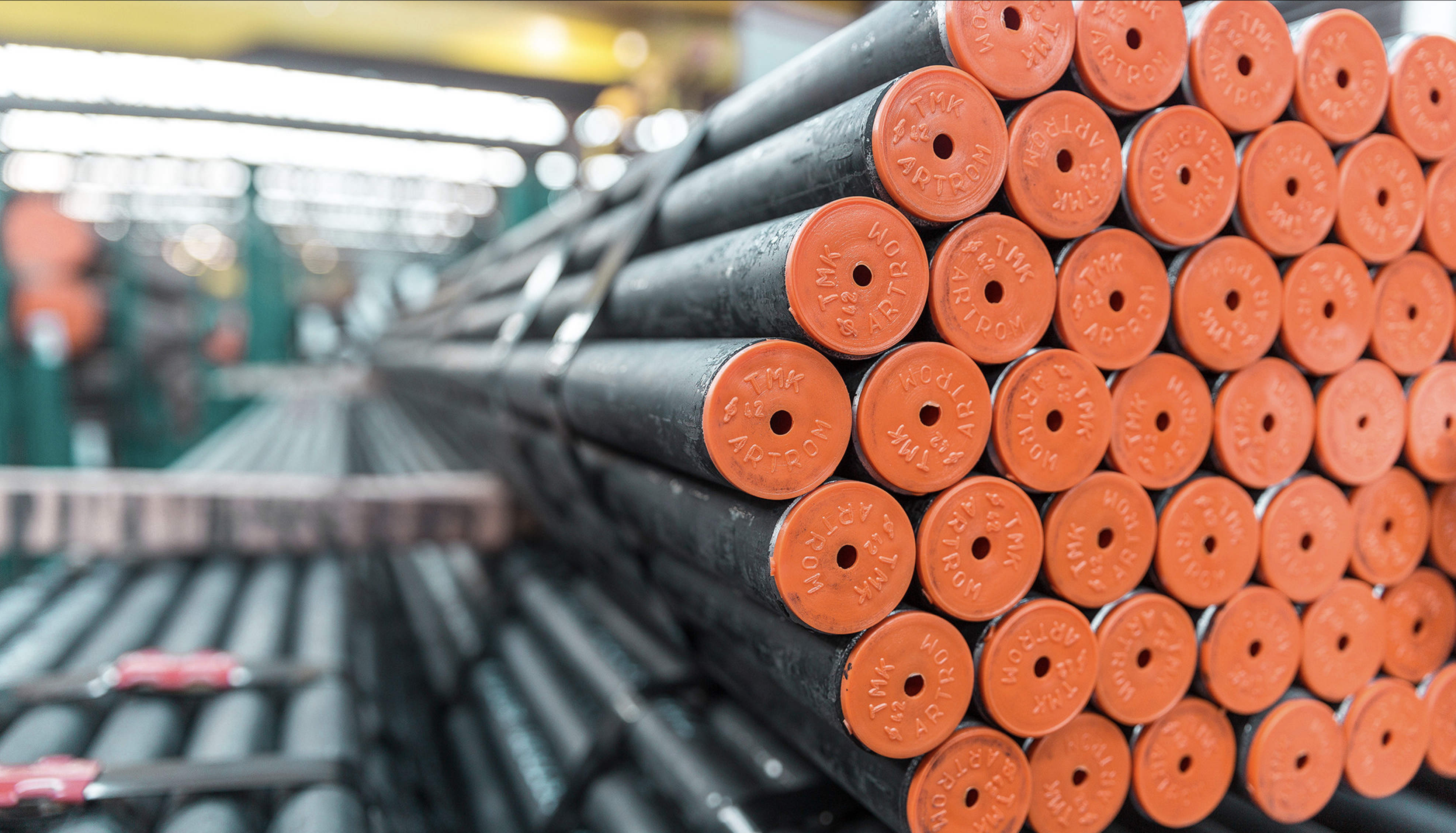
Russian steel pipe maker TMK and Russian aluminum producer Rusal are set to lose some of their foreign assets — the former in the EU and the latter in Ukraine, industry sources told S&P Global Commodity Insights Jan. 12.
Romanian steel pipe manufacturer TMK-Artrom is changing its name to Artrom Steel Tubes due to a change of ownership; the enterprise no longer belongs to TMK, having been sold to an unnamed Serbian company, a source at Artrom told S&P Global Jan.
An Artrom spokesperson declined to comment, saying the company would issue an official announcement soon. A TMK spokesman declined to confirm the deal.
However, on its website, TMK said it had excluded from the list of affiliated entities its only manufacturing division in the EU — TMK-Artrom – along with several EU-based procurement and marketing firms, including TMK Europe and TMK Italia.
Romania-based seamless pipe producer TMK Artrom, now Artrom Steel Tubes, comprises the 450,000 mt/year Resita steel billet casting mill and the 200,000 mt/year Slatina pipe rolling mill, as well as sales offices in Italy and Germany.
It is not clear whether the deconsolidation of Artrom is a decision taken under pressure from sanctions, or whether TMK had been seeking buyers for the Romanian mills before Russia’s invasion of Ukraine, but the latter has clearly accelerated the process.
In March, shortly after the EU imposed sanctions on then-TMK owner Dmitry Pumpyansky, Romania’s tax authority blocked TMK-Artrom’s bank accounts, disrupting its sales operations and prompting union members at the Slatina and Resita mills to stage a protest to force the government to lift the restrictions, as S&P Global reported.
At the time TMK-Artrom said it had contracts with more than 600 customers from the EU, the US and Canada.
TMK invested Eur250 million in the two plants over several years. However, this amount is unlikely to fully include the project TMK announced in 2019 that was aimed at increasing TMK-Artrom’s rolling capacity by 60% to 320,000 mt/year by 2024.
Ukraine moves to take over Rusal refinery
In Ukraine, the government has initiated the nationalization of a significant Rusal alumina asset, a move not without precedent; shortly after Russia annexed the Crimean Peninsula in 2014, Ukraine took ownership of an aluminum smelter owned by Rusal.
Rusal may lose its 100% ownership of Ukraine-based Nikolaev Alumina Refinery for good; Ukraine’s justice ministry said Jan. 10 that it had asked the country’s anti-corruption high court to approve its seizure on the grounds that Rusal supplies the Russian defense industry, according to the information available to the ministry, arguing that Ukraine’s aluminum-making raw materials must not be made available to the Russian company for that purpose.
Apart from the Nikolaev (or Mykolaiv in Ukrainian) alumina refinery, the ministry also asked the court to sanction the expropriation and transition to Ukrainian state ownership of Glukhiv Quarry Quartzite, Zaporizhsky Aluminum Combine and several other assets, most of which are minor and are affiliated to Russian oligarch Oleg Deripaska, according to the ministry.
Rusal had obtained a license for the extraction of quartzite at the Glukhov mine in 2017 and the permit was due to remain valid until 2037, the company said in its 2017 annual report.
However, Zaporozhye (aka Zaporizhsky) Aluminium Combine, or ZALK, has long been deconsolidated. Rusal had lost control of ZALK, 98% of which it used to own, in March 2015, when Ukraine’s Supreme Court upheld a previous court decision to renationalize and transfer to the State Property Fund of Ukraine 68% of ZALK’s shares, according to Rusal’s report for 2015.
— Ekaterina Bouckley

Ukraine’s Metinvest officially confirms interest in Hungarian steel slab and coil producer Dunaferr
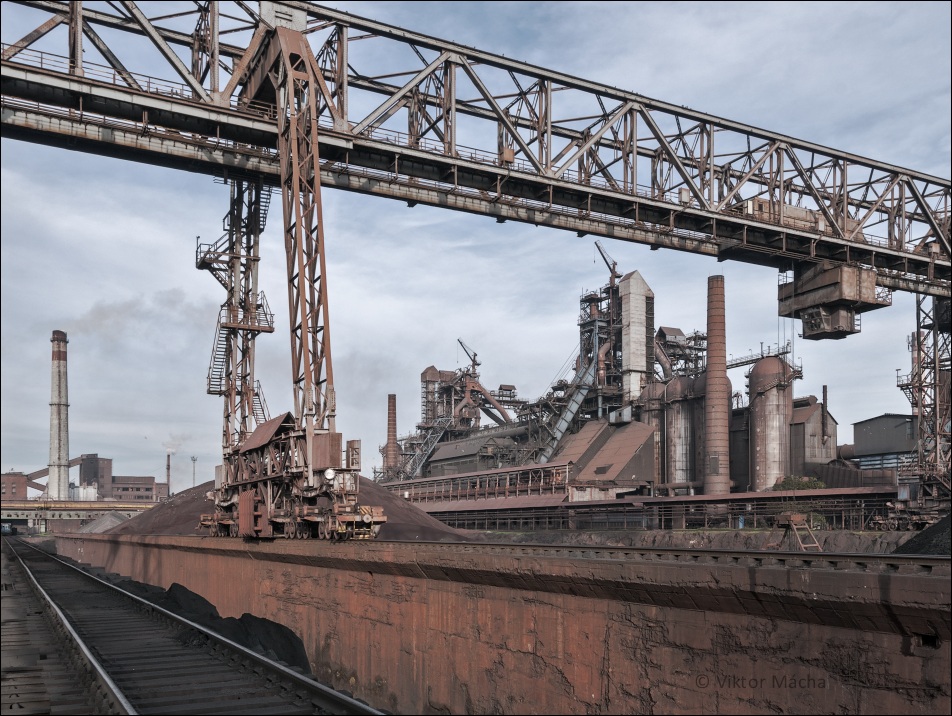
Ukrainian mining and steelmaking company Metinvest has a certain interest in Dunaferr, a Hungarian integrated flat steel producer that recently entered into administration, a Metinvest spokesperson confirmed to S&P Global Commodity Insights Jan. 12.
Metinvest may be the only steel company in Europe that, thanks to its proximity to Hungary and captive iron ore production, can ensure continuous operations at Dunaferr, the spokesperson said, adding that the company is closely monitoring the situation around Dunaferr.
A Hungarian municipal court issued a final and binding ruling ordering the liquidation of ISD Dunaferr to begin Jan. 5, according to the mill’s website.
Dunaferr has been idled since the third quarter of 2022, when it suspended its two blast furnaces with a combined capacity of 1.2 million mt/year due to disruptions to raw material supplies, S&P Global reported previously.
Aside from Metinvest, other potential bidders for the Hungarian mill that once belonged to Ukrainian steel group Industrial Union of Donbass, or ISD, and more recently was co-owned by Russian bank Mezhekonombank and two Ukrainian businessmen, include trading group Duferco, Liberty Steel Group and Chinese steel company Hesteel, S&P Global reported.
By acquiring a functioning steelmaking plant such as Dunaferr, Metinvest would be able to resume operations at its iron ore mining and processing plants in Kryvyi Rih, which it was forced to idle as it was no longer able to process significant iron ore tonnages within the group, or export them since access to Ukraine’s seaports remains blocked.
The war in Ukraine deprived Metinvest of its two flagship steel mills in Mariupol, where the group used to process a lot of its captive iron ore. The mills, the Ilyich and Azovstal steelworks, for their part, used to supply slab to Metinvest’s re-rolling mills outside Ukraine. To feed its plants in Bulgaria, Italy and the UK, Metinvest continues to source third-party slab, but sees this as a temporary solution as it seeks ways to return as a fully integrated steelmaking group.
— Ekaterina Bouckley
Liberty Steel to curtail UK production in response to high energy prices
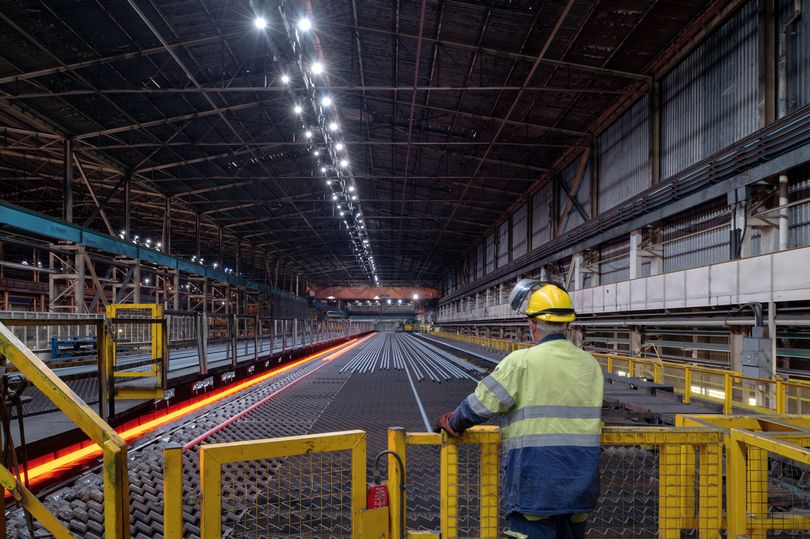
Liberty Steel UK will reduce primary steel production and idle downstream processing capacity in response to challenging operating conditions arising from high energy costs and strong competition from importers, it said in a statement released Jan. 12.
“Despite the injection of GBP 200 million in shareholder capital over the last two years, the production of some commodity grade products at Rotherham and downstream mills has become unviable in the short term due to high energy costs and imports from countries without the same environmental standards,” Liberty said.
Under the four-point restructuring plan, primary production at the 1.22 million mt/year Rotherham electric arc steel plant will be curtailed with demand at the company’s rolling and finishing lines at Rotherham, Stocksbridge and Brinsworth to be temporarily met with imported billet and slab.
Once operating conditions improve, the company stated that it intends to progress with the long-term objective of developing the Rotherham plant into a 2 million mt/year low-carbon steel production hub.
In addition, the company will idle production at the Liberty Performance Steels in West Bromwich and at the Liberty Steel Newport rolling mill in Wales with the latter set to be reconfigured into a specialty storage and distribution hub.
Liberty also warned that the restructure plan my impact up to 440 roles across the business.
“Refocusing our operations will set the right platform for Liberty Steel UK’s high-quality manufacturing businesses to adapt quickly to challenging market realities,” said Liberty Steel chief transformation officer Jeffrey Kabel.
“The support of our marquee customers will enable us to produce high value, differentiated products through 2023 and beyond for strategic sectors such as aerospace, defense and energy,” he added.
The announcement from Liberty Steel was followed by a statement from UK Steel in which it called for further government support to mitigate the effect of high electricity prices on domestic steel production.
“High energy prices have played an important role in the decisions announced today, with long-standing uncompetitive electricity prices having constrained UK investment and steel production for some time,” said UK Steel director general Gareth Stace.
“This highlights again the need for government to fully address the UK’s structurally high industrial energy prices, looking beyond the important announcements made regarding the Energy Bills Discount Scheme earlier this week,” he added.
The UK government announced Jan. 9 that energy intensive industries including producers of steel and other metals will receive a higher level of support under an updated Energy Bill Relief Scheme, or EBRS, with maximum discounts of GBP40/MWh for gas and GBP89/MWh for electricity on thresholds of GBP99/MWh for gas and GBP185/MWh for power.
Platts, part of S&P Global Commodity Insights, assessed the weekly UK hot-rolled coil price at GBP620/mt ($755/mt) DDP West Midlands Jan. 5, down 49.4% from the all-time high of GBP1,225/mt on April 22, 2022.
— Euan Sadden

ResponsibleSteel, SSPA agreement to facilitate financing decarbonisation
ResponsibleSteel has agreed a memorandum of understanding with the Sustainable STEEL Principles Association (SSPA) that will facilitate the financing of technological breakthroughs and accelerate decarbonisation, says ResponsibleSteel.
The Sustainable Steel Principles (SSP) provide a framework for banks to assess the decarbonisation of the steel companies within their portfolios, as well as the climate alignment of their steel lending portfolio. ResponsibleSteel meanwhile provides an international standard for steel sites to be certified against.
Pragmatic, global solutions to tackle emissions will not be possible “without a radical step change in how we finance these breakthroughs so industries like steel can decarbonise rapidly and be a force for good”, ResponsibleSteel chief executive Annie Heaton says in a note sent to Kallanish.
“The MoU between the SSPA and ResponsibleSteel signifies a continued determination by banks, the steel industry and wider stakeholders to achieve real progress towards net zero by 2050, and all the complexities which that entails,” she adds.
Amid the proliferation of initiatives now focusing on steel decarbonisation, this MoU also signals a clear recognition that more work must be done to avoid a divergence of standards and work towards alignment, ResponsibleSteel comments.
Erik van Doezum, Global Steel Lead at ING and Chair of the SSP says: “The decarbonisation of the steel sector globally requires significant investments to be made, and financing will be needed to facilitate these. Banks, therefore, will have to identify high-quality decarbonisation business plans, allowing them to guide their assets into investments compatible with a 1.5C future. Building consistent and transparent data via reporting requirements for the steel sector will be paramount to facilitating financing for the decarbonisation of the sector. This will enable all parties – steelmakers, lenders and other stakeholders – to use and understand common measures of progress.”
ResponsibleSteel is also setting up a Finance Working Group (FWG) with key voices from the steel industry, global finance, investment and civil society. Its goal will be to facilitate dialogue including benchmarking carbon requirements within the ResponsibleSteel Standard and certification programme in order to facilitate capital flows to meet decarbonisation requirements. The initial round of discussions will start this month and the FWG hopes to report on its recommendations by December 2023.
Adam Smith Poland


Europe HRC import volumes continue to move down
Hot rolled coil import volumes in Europe fell significantly during 2022, as a result of the sanctions on Russia, limited availability from Ukraine and the overall weakness of EU downstream demand, Kallanish notes.
According to official data, during January-November 2022, EU HRC imports fell some 25% year-on-year. The reduction was mainly noticed during the second half of the year. In 2021, imports of HRC reached almost 10 million tonnes, while in 2022 these remained well below 8mt.
The trend of lower HRC imports is continuing during the first weeks of 2023. According to data compiled by UK Steel, only 7% of EU safeguard quotas for HRC have been used during the first 11 days of January. South Korea used 28% of its allocated quotas, while India has not yet used any of the available allocation.
Other coil product imports suffered in 2022. Cold rolled coil intake was down almost 17% in January-November, while hot-dip galvanized coil was down 25% for non-automotive applications and 12% for automotive.
Organic coated sheet imports, on the other hand, jumped almost 18% y-o-y in the 11 months.
Emanuele Norsa Italy
Metinvest says best-placed to ensure Dunaferr survival
Metinvest is interested in Dunaferr, the company tells Kallanish, but declined to comment on whether it was in talks with authorities to purchase the troubled Hungarian flat steelmaker.
Dunaferr went into liquidation last month after a long period of well-publicised financial troubles, which were exacerbated last year by the growing energy crisis in Europe. It shut down one blast furnace in August followed by its second in September after its supplier refused to deliver coke feedstock.
“The loss of control over Metinvest’s enterprises in Mariupol has led to a substantial decline in domestic iron ore consumption in the country, while the aggressor’s [Russia] blockade of Ukrainian ports has made it practically impossible to export iron ore by sea,” Metinvest says. “As a result, Metinvest has been forced to suspend or partly curtail the operation of its own mining and processing plants.”
Dunaferr is a major coal and iron ore consuming plant in close proximity to Ukraine and Metinvest considers it necessary to monitor the situation at the Hungarian steelmaker, it says.
“For Ukraine, a functioning plant would provide work for Ukrainian mining and processing plants in Kryvyi Rih,” the company observes. “Metinvest is probably the only company in Europe that, thanks to its favourable geography and own iron ore production, can ensure continuous operations at Dunaferr and protect the plant from liquidation. That is why the group is demonstrating a certain interest in the developments at Dunaferr.”
Earlier this week, Hungarian media reported that, in a letter last month to Hungarian Prime Minister Viktor Orban, Metinvest chief executive Yuriy Ryzhenkov wrote that his company “is still considering Dunaferr as a potential valuable addition to the group”.
Reports suggest Metinvest is proposing an investment of €150 million ($162m) to restore production and maintain it at a level of at least 60% capacity. The Ukrainian firm would also carry out the investments necessary to reduce CO2 emissions from the steelworks by 55% by 2030, as required by the EU.
In November, Metinvest said its interest in US Steel Kosice may resume in future but the invasion of Ukraine by Russia is currently dampening any acquisition potential (see Kallanish passim).
Svetoslav Abrossimov Bulgaria

British Steel raises sections prices amid increased costs
British Steel has raised sections prices by £75/tonne ($91) for all new orders with immediate effect, due to increased steelmaking costs, Kallanish notes.
Last October, the firm extended its range of “Advance” structural sections for the construction sector by 71 additional beams and columns (see Kallanish passim).
Compatriot steelmaker Liberty Steel UK announced on Thursday it will reduce primary production at its Rotherham works and import billet and slab to feed some rolling mills, as energy costs are significantly hampering operations (see separate story).
Adam Smith Poland

German scrap market expects price increase amid restocking
German scrap prices are expected to increase in January amid new demand and exports after the holidays, say local market participants.
“Currently, the market is showing signs of new trade movements, but it’s too early to say what the prices will look like in the first month of 2023,” a buyer tells Kallanish. “That will become clearer next week.”
German scrap prices decreased in December by €10-20/tonne ($10.76-21) amid low demand and holidays.
Nationwide average prices for old thick scrap sort 3 were at €325/t ($349/t), while new scrap sort 2/8 was at €320/t. E40 shredded scrap was at €330/t.
In Austria, scrap prices remained unchanged in December. Old thick scrap sort 3 remained at €360/t and new scrap sort 2/8 was at €340/t.
“There is also an expectation that most steel plants will resume production in January, after they have decreased output in the past two months due to high energy and raw material costs,” another market participant notes. “However, it is unclear when this restocking will happen. Scrap producers are also hoping for new exports to Turkey and Italy.”
The 30-40% increase in rail freight prices in Germany from 1 January will inevitably have an impact on scrap trade.
Earlier, German steel recyclers federation BDSV urged for more scrap transport by rail due to logistics problems on road and waterway routes in Germany (see Kallanish passim).
Svetoslav Abrossimov Bulgaria