


European HRC prices inch up on higher offers, limited availability
European hot-rolled coil prices moved higher amid reduced availability on Monday January 16, sources told Fastmarkets.
Fastmarkets calculated its daily steel hot-rolled coil index domestic, exw Northern Europe at €717.88 ($777.51) per tonne on Monday, up by €7.17 per tonne from €710.71 per tonne on Friday.
The latest calculation of the index was up by €10.38 per tonne week on week and by €73.09 per tonne month on month.
European mills generally have good order books, with most offering HRC with April delivery.
One mill in Germany said it was sold out for April as well.
Output cuts, implemented by many European mills in the fourth quarter of 202, are finally starting to be felt in the market, compensating for still-limited end-user demand. Aggressive HRC sales in December also contributed to the tighter availability.
Official offers ranged between €750 per tonne and €780 per tonne EXW from producers in the region.
Tradeable values heard from buyers were between €700 and €730 per tonne EXW on Monday.
Fastmarkets’ calculation of its daily steel hot-rolled coil index domestic, exw Italy was €708.75 per tonne on Monday, up by €12.12 per tonne from €696.63 per tonne on Friday.
The latest calculation of the index was up by €19.58 per tonne week on week and by €80.42 per tonne month on month.
Local mills were offering HRC to the market at around €750 per tonne delivered, according to sources – equivalent to €720-730 per tonne EXW.
Some buyers estimated tradeable values at €690-700 per tonne EXW, but these levels were not considered workable by most mills.
Italian steel producers were said to be able to offer March-delivery coil
Offers of HRC to Europe from India and Southeast Asia were consolidating at around €700-710 per tonne CFR Italy for March-April shipment.
But this level is not considered workable by European buyers, given the small gap with domestic offers, the longer lead times and safeguard-related risks.
Published by: Julia Bolotova


Polish rebar prices remain flat amid subdued buying
The bullish sentiment that emerged in the Polish rebar market in end-December faded early in January 2023 amid insufficient demand, sources told Fastmarkets on Friday January 13.
Steel rebar producers in Poland were maintaining offers at 3,430-3,450 zloty ($789-793) per tonne CPT (3,400-3,420 per tonne EXW) in the week to Friday, largely unchanged from the end of last month.
Attempts from one producer to push offers to 3,700 zloty per tonne CPT at the end of December were unsuccessful, sources said.
Fastmarkets’ price assessment for steel reinforcing bar (rebar), domestic, exw Poland was 3,400-3,450 zloty per tonne on Friday, unchanged since December 23.
Buying was quite slow during the assessment week, sources said.
“End of December was quite active; people were buying [rebar] for January, so now it’s slower,” a trading source said.
In the secondary market, rebar was offered and traded at around 3,500 zloty per tonne CPT, down from 3,540-3,570 zloty per tonne CPT at the end of December.
Buyers expected rebar prices in Poland to remain flat throughout January, while a downward correction in February was not unlikely should demand not pick up.
“In February it can go either way; electricity and gas prices are low now, so if there is not enough demand mills can lower the [rebar] price,” a second trader said.
Published by: Julia Bolotova

HRC prices expected to rise further in Europe
European hot-rolled coil market participants have generally positive expectations about further price increases, Fastmarkets heard on Friday January 13.
Fastmarkets calculated its daily steel hot-rolled coil index domestic, exw Northern Europe at €710.71 ($767.09) per tonne on Friday, up by €0.71 per tonne from €710.00 per tonne on Thursday.
The latest calculation was up by €41.54 per tonne week on week and by €75.00 per tonne month on month.
Buyers’ estimates of tradeable values were reported between €690 per tonne EXW and €730 per tonne EXW. Offers were reported at €700-760 per tonne EXW.
“Mills are pushing for higher prices due to improved purchasing and limited availability [of HRC], thus longer lead times,” a trading source said.
Some mills in the region were already offering HRC for April delivery. Several sources pointed out that most mills were firmly refusing to provide any discounts so far.
Market participant’s expectations were quite optimistic, even though buying activity has been slow in the week to January 13 because buyers have just come back to the market after year-end holidays and were evaluating the situation.
Sources suggested that higher offers would be accepted eventually, supported by output cuts, reduced stock levels at buyers and surging import offers.
Fastmarkets’ calculation of its daily steel hot-rolled coil index domestic, exw Italy was €696.63 per tonne on Friday, up by €0.38 per tonne from €696.25 per tonne on Thursday.
The latest calculation was up by €44.13 per tonne week on week and by €69.96 per tonne month on month.
Tradeable values were estimated by buyers at €680-700 per tonne EXW. But producers’ price ideas were generally higher than €700 per tonne EXW, according to sources.
Overseas HRC suppliers to Europe were also seeking higher prices, sources said, with offers from Southeast Asia, Egypt and India all heard at €670-700 per tonne CFR Italy for March-April shipment.
In early January, sales from Egypt to Italy were reported at €660-680 per tonne CFR.
An offer from a Japanese supplier was reported at $770 per tonne CFR Italy, although several sources suggested that the mill would adjust its offer to around $750 per tonne CFR next week.
A Turkish producer was said to be offering HRC at €740 per tonne CFR Italy, including an anti-dumping duty, but sources said that this was significantly above the price that European buyers would pay.
Published by: Julia Bolotova

Northwest European plate prices to inch up
Plate prices from northwest Europe mills have largely reached bottom, with observers believing current levels will not be undercut any further. The rebound is expected to be gentle, however.
The low point for standard grade S355 is largely seen at around €950/tonne ($1,026), “little more, little less”, as a northern German distributor puts it. One mill-owned distributor, however, says he had lower quotes of “above €900”, without being specific. But he also expresses sympathy for mills for their high energy costs which he says will make higher prices necessary.
“It won’t leap up by €100 that soon, but the bottom is reached,” he tells Kallanish. “For energy costs, we have avoided the worst case, but they are still bad enough for mills to need to return to a four-digit figure.” Prices of €1,000/t might not be seen for several weeks, but will come later in the first quarter, he is sure.
One visible factor is stretching lead times. “Before Christmas, you could still get newly rolled material in a matter of 3-4 weeks. If I order today, it will rather be 6-8 weeks, and can easily take into early Q2,” he observes. One German mill only re-started post-holiday rolling activity in the middle of last week, he notes.
Towards late last year, prices seemed to differ widely, with some mills still heard charging up to €1,050. According to the northern manager, these were deterrent offers from prime mills that were well-utilised with orders for higher-grade material. “They quoted so for the sake of not refusing altogether, but it showed that they had little interest using their capacities for commodity grade,” he explains.
Christian Koehl Germany

Spanish scrap, rebar prices tick up
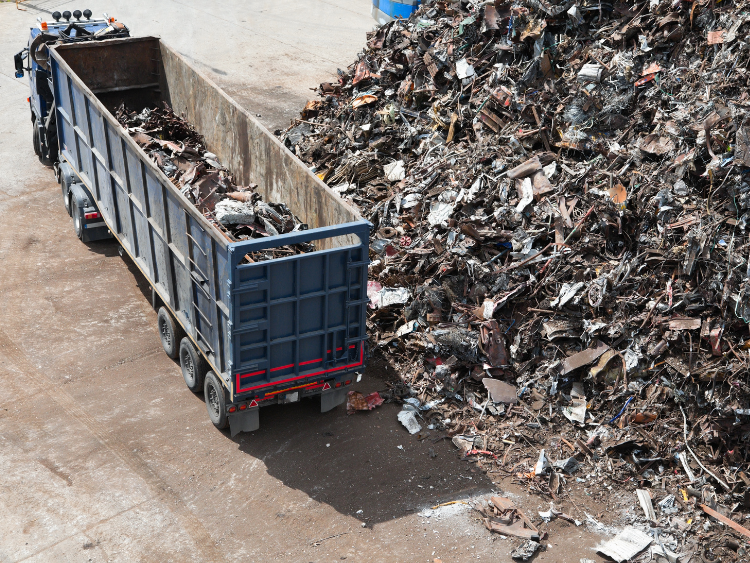
Spanish scrap and rebar markets have seen prices recover, with large mills increasing raw material purchasing prices for all grades while raising their long steel offers, market sources tell Kallanish.
“Large mills returned from holidays by increasing their scrap purchasing prices by almost €20/tonne,” one trader says. “Demand is picking up and most suppliers and distribution centres believe collectors’ activity will improve notably in the last few weeks of this month, supported by general higher production activity,” a source observes. The general expectation is that scrap prices will be stable through most of January following the recent hike in the international market.
After two upward corrections last week, new arisings grade E8 scrap is now offered in Spain at €420/tonne ($455.73/t). E40 quality stands at €390/t and demolition grade E3 is priced at €375/t, both delivered. E1 quality is at €325/t on the same basis.
Spanish rebar prices also started to recover last week. Since the beginning of January, 16mm material increased by almost €20/t, supported by the return of construction activity in the country.
The sector began progressively demanding the usual volumes of rebar for this period of the year, a market participant observes. “The construction companies, in general, assumed that the problem of the cost of energy will be a factor in the medium term. Faced with the alternative of getting into even more debt, they began to unblock their investments,” a source comments.
Rebar is currently sold domestically in Spain at €460/t ($498.92) base. Including €262/t size extras and €23/t loading expenses, transaction values are at €745/t ex-works.
Some long steel traders anticipate a new increase in rebar prices in the coming days.
Todor Kirkov Bulgaria

Fossil-free power, regulatory framework essential to deliver low-carbon steel: SSAB
The CEO of SSAB said Jan. 13 that access to fossil-free electricity and an appropriate regulatory framework are essential to the company’s ability to start deliveries of low-carbon steel from 2026.
Speaking as part of a panel discussion associated with the European Commission and Swedish government’s visit to Kiruna, Sweden, SSAB CEO Martin Lindqvist stated that EU member states have much to gain from a competitive and green EU and noted the importance of policy mechanisms like the Carbon Border Adjustment Mechanism, or CBAM, and the EU Emissions Trading Scheme, or ETS, in strengthening green competitiveness.
“We need both a green competitive market in Europe and a green transatlantic market,” Lindqvist said.
According to a statement from SSAB, the panel discussion also included the CEO’s of LKAB, Volvo Group, Northvolt and Boliden.
In January 2022, SSAB’s board of directors decided that it would seek to largely eliminate the company’s carbon dioxide emissions by around 2030.
“However, to succeed we will need access to fossil-free electricity, hydrogen and biocarbons,” said Lindqvist.
The statement from SSAB’s CEO follows an announcement Jan. 9 that the company signed a letter of intent with Swedish steel distributor Stena Stål making it the first external distributer to deliver low-carbon steel to the Swedish market beginning in 2026.
“I am happy to welcome Stena Stål as a fossil-free steel partner. Together, we are contributing to reduced carbon dioxide emissions when we introduce fossil-free steel to the Swedish market,” said SSAB head of sales for Sweden and Norway Matts Nilsson.
“This is very important for our customers and we aim to reduce our CO2 footprint by 50% already by 2030 and by 100% in 2045,” said Stena Stål managing director Stefan Svensson.
Platts, part of S&P Global Commodity Insights, assessed hot-rolled coil in Northwest Europe at Eur710/mt ex-works Ruhr Jan. 12, up from Eur650/mt at the beginning of November 2022.
— Euan Sadden


EBRD lends Eu21.4 mil to Metalfer for low carbon steel production
The European Bank for Reconstruction and Development has given Serbia’s Metalfer Steel Mill a loan of Eur21.4 million ($23.14 million), EBRD said late Jan. 12.
The loan will finance the construction of a new rolling mill for processing scrap metal and semi-finished products, which will improve efficiency and reduce emissions, as well as a new rooftop solar photovoltaic mini-plant, producing up to 4 MW of renewable power to meet production needs, EBRD said.
The higher production will allow Metalfer to meet high demand from the construction industry, domestically and potentially across the region, which has been hit by supply-chain disruptions in recent years, EBRD Director for the Western Balkans Matteo Colangeli said.
Platts, part of S&P Global Commodity Insights, assessed TSI Northwest Europe rebars at Eur762.50/mt ex-works Jan 11, down from Eur1340/mt ex-works reached March 30, 2022.
Metalfer operates a rolling mill and a melt shop with a capacity of 500,000 mt/ year and produces steel billet, rebar and wire rod, using locally sourced scrap metals.
— Cenk Can

Pedal to the metal: Iron and steel’s US$1.4 trillion shot at decarbonisation
The industrialised world cannot function without steel. It is essential to everything from the buildings we live in to the ways we get around. From iron ore mining to steel manufacturing, the industry is highly carbon intensive. And while steel itself is recyclable, iron and steel production emit a combined 3.4 billion tonnes of carbon annually, equal to 7% of global emissions.
How will industry respond to the challenge of achieving net zero in steel and its value chain?
In this month’s Horizons thought leadership, we speak on fragmented geographical implementation, sectoral vulnerability to energy price fluctuations, green premiums and the ensuing cost inflation as well as greenwashing.
Read the insight now to discover more.

EU HRC prices rise on support from strong orderbooks, uncompetitive imports
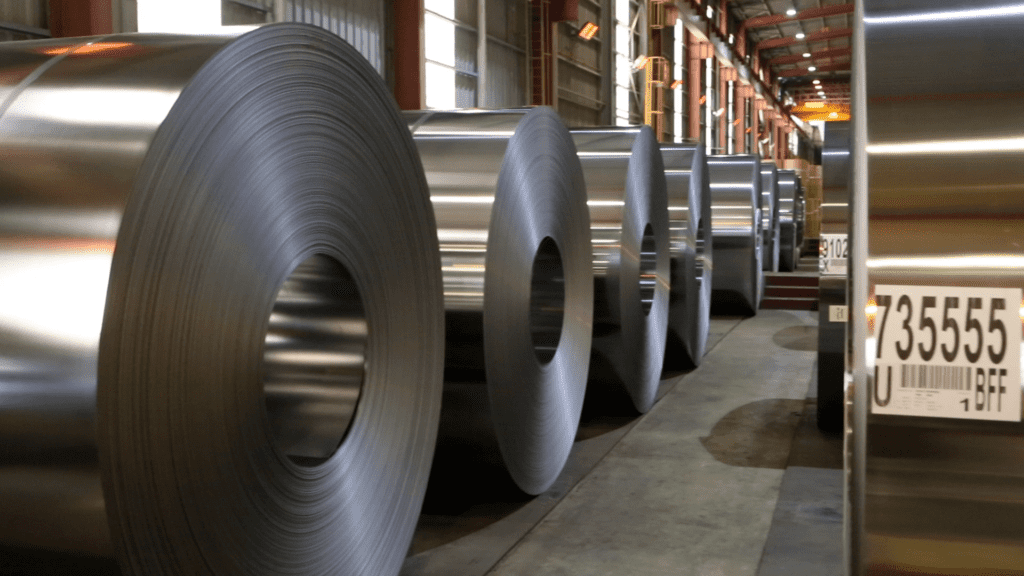
Domestic prices for hot-rolled coil in Europe increased on Jan. 13 due to combination of long lead times for both domestic and import coil and rising offers for overseas material.
Platts assessed hot-rolled coil in Northwest Europe up Eur20 day on day at Eur710/mt ex-works Ruhr Jan. 13. The price assessment excludes carbon emission surcharges introduced by some Northern European steelmakers.
Deals were reported at the equivalent of Eur730/mt ex-works Ruhr and at Eur750-760/mt ex-works Northern Europe. Market participants estimated tradable values at Eur720-Eur750/mt ex-works Ruhr, and offers were heard at Eur750-Eur760/mt ex-works Ruhr.
Platts assessed domestic prices for hot-rolled coil in Southern Europe up Eur10 day on day at Eur720/mt ex-works Italy Jan. 13.
Both achievable prices and offers were heard at Eur700-Eur730/mt ex-works Italy.
Some Europe-based steelmakers were reported to have filled order books for first-quarter-rolling HRC, while others have limited availability of March production material. This was caused by effects from extensive production cuts across Europe and by increased restocking activity in December.
“Buyers have started to accept new prices and lower offers have been disappearing from the market,” a Northern Europe-based steelmaker said. “Mills say that they can give April delivery earliest and good order books and absence of competitive import help the price rise.”
Import offers have increased, and this, combined with long lead times for overseas coil, made some buyers show more interest in domestic HRC.
“There are seasonable fundamentals for price increase – domestic production is down by about 25% and import is down by 30%,” a steelmaker said.
Meanwhile, an Italy-based trader said the market was waiting to buy time and get higher prices.
“End user demand is not great, but it is not silent either,” the trader added. “The real consumption is not critically low. And with rising prices and long lead times apparent demand will increase.”
Platts assessed prices for imported hot-rolled coil in Southern Europe up Eur15 on the day at Eur700/mt CIF Italy on Jan. 13.
Offers were reported at Eur680-Eur740/mt CIF Italy.
Platts is part of S&P Global Commodity Insights.
— Maria Tanatar

EU plate prices increase on longer lead times, high costs
Domestic prices for heavy plate increased in Europe in the week ended Jan. 13, supported by strong mill order books and seasonal demand revival.
In addition, re-rollers have had to aim for higher prices and were expected to continue attempts to move prices further due to high slab and energy costs, market sources said.
Platts assessed heavy plate in Northern Europe up Eur15 on the week at Eur940/mt ex-works Ruhr.
Market participants have estimated tradable value in a range of Eur920-Eur950/mt ex-works Ruhr.
A Germany-based steelmaker was offering heavy plate at Eur950/mt ex-works Ruhr. A re-roller said the mill had sold excess volumes at a low price in December and were now moving prices up.
Offers from another German mill have been heard at Eur1,000/mt ex-works Ruhr. The steelmaker, however, has been predominantly focused on fulfilment of long-term contracts and supplying material to projects, limiting its involvement in the commodity plate spot market.
The earliest shipment European plate producers can provide is March, several market sources said, with limited volumes available for the month.
Platts assessed domestic heavy plate in Southern Europe at Eur840/mt ex-works Italy on Dec. 13. The assessment decreased Eur40 week on week, with the previous week’s assessment based on offers from Italy to Northern Europe at higher prices.
Italian re-rollers have resumed domestic trade this week following holidays, and the assessment increased Eur40 as sales increased from the week ended Dec. 30.
Transactions have been reported at Eur820-Eur850/mt ex-works Italy, with bids and offers heard at Eur800/mt ex-works Italy and Eur840-Eur880/mt ex-works Italy, respectively.
Italian re-rollers were expected to target Eur900/mt ex-works Italy to cover high slab costs, sources said.
Platts assessed import slab prices in Italy unchanged on the week at $640/mt CIF Italy Jan. 13.
Deals for semi-finished products from Asia were reported at $620-$650/mt CIF Italy.
Toward the end of the week, however, sources suggested prices of $650/mt CIF were longer achievable and that some suppliers had increased offers to $700-$750/mt CIF Italy.
Platts is part of S&P Global Commodity Insights.
— Maria Tanatar, Benjamin Steven