


Italy’s Danieli to supply Lucchini RS Group with open-die forging press
Italian equipment manufacturer Danieli will provide Italian steel products manufacturer Lucchini RS Group with a new open-die forging press for its site in Lovere, Bergamo, Danieli said Jan. 17.
The press, to be manufactured at Danieli’s Italian workshops, is due to start operation by early 2024 and have a 7,000-mt force to shape metal into ingots for automotive and industrial applications.
The new equipment will allow Lucchini to enlarge its product portfolio while supporting its aim to optimize energy and raw-materials and reduce costs, it said, adding that it would be the most powerful and energy-efficient open-die forging press being run by Lucchini.
The hydraulic equipment will reduce energy consumption and optimize plant layout and electrical infrastructure configuration, Danieli said.
Platts, part of S&P Global Commodity Insights, assessed the daily HRC price in Italy at Eur720/mt ($778.58/mt) ex-works Jan. 16, down 13.9% since the start of 2022.
— Jacqueline Holman


Primetals Technologies to upgrade wire rod mill for Swiss EAF-based steelmaker
Swiss long steel products maker Stahl Gerlafingen, part of Italian merchant bar manufacturing group Beltrame, has contracted Primetals Technologies to upgrade its wire rod mill, the Europe-based plant maker said Jan. 17.
The scope of supply includes an Intelligent Pinch Roll and High-Speed Laying Head, the units that will boost performance by ensuring uniform packaging of the coils.
By improving coil packaging, Stahl Gerlafingen, in the canton of Solothurn in the northwest of Switzerland, will ensure its reheating furnace is fully utilized. With the new equipment, the overall coil can be shortened too for ease of transportation.
The startup of the new high speed pinch roll and laying head assemblies is expected in the summer of 2023.
The wire rod mill produces 600,000 mt/year of coils, while the bar outlet has an annual capacity of 80,000 mt/year. Both machines are fed from the same roughing and intermediate mill train.
The upgrades will lower the vibration levels, which will result in reduced wear.
New automatic control motors will be supplied for the pinch roll and laying head. The motors are controlled by high performance low voltage variable frequency drives with an active front-end rectifier.
The largest producer of recycled steel in Switzerland, Stahl Gerlafingen primarily produces rebars for domestic and international markets.
Platts, part of S&P Global Commodity Insights, assessed last week Northwestern European rebar price at Eur762.50/mt ex-works, up 2.35% week on week.
— Ekaterina Bouckley
Eurofer calls on EU to ensure standards on scrap exports by closing loopholes
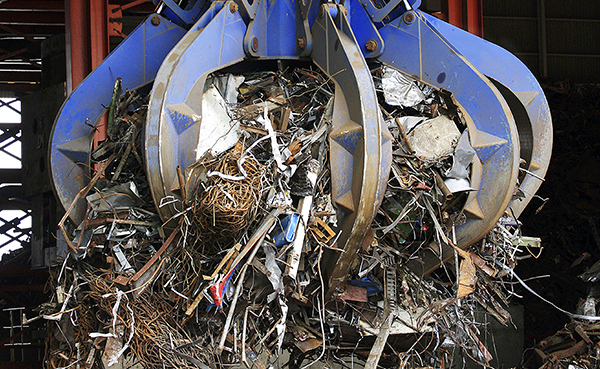
European steel industry association Eurofer welcomed the revision of the Waste Shipment Regulation adopted by the European Parliament in a vote Jan. 17, but warned that existing loopholes must be closed in order to avoid circumvention of the new measures.
Eurofer said that while the new text represents an improvement over the initial proposal, the risk of circumvention remains as long as the “level playing field” between the EU and other countries is not ensured.
“Europe should not allow to export its waste challenges abroad, even more so when waste such as ferrous scrap is a strategic secondary raw material in the circular economy and for decarbonization,” Eurofer’s director general Axel Eggert said in a statement.
“Scrap should be rather considered a critical raw material, as already today it is acknowledged to be a scarce resource, and our low-carbon projects will need significantly more ferrous waste already by 2030 and even larger quantities by 2050 to produce green steel,” he added.
Eurofer called for the introduction of “a comprehensive monitoring system” including the “effective verification of environmental sound management, or ESM compliance at a country level” to ensure that standards are met.
“It is of utmost importance to get this right early on, otherwise we risk jeopardizing the EU’s climate, environmental and social targets as well as its strategic autonomy,” said Eggert.
— Euan Sadden

European steel HRC buyers question sustainability of price uptrend
European hot-rolled coil buyers were questioning the sustainability of the recent uptrend in prices, given the limited end-user demand, Fastmarkets heard on Tuesday January 17.
Fastmarkets calculated its daily steel hot-rolled coil index, domestic, exw Northern Europe, at €715.42 ($774.83) per tonne on Tuesday, down by €2.46 per tonne from €717.88 per tonne on Monday.
The latest calculation of the index was up by €8.96 per tonne week on week, however, and by €70.63 per tonne month on month.
European producers were largely sold out of HRC for first-quarter deliveries, market sources said.
“We have no allocation for March-[delivery] HRC, while it’s too early to offer for April,” a mill in Northern Europe told Fastmarkets.
Offers from mills in the region were heard at €750-780 per tonne delivered on Tuesday, which would net back to about €720-750 per tonne ex-works.
Several sources told Fastmarkets that one producer in Central Europe had cancelled 50-60% of non-binding orders for HRC, apparently in an attempt to push buyers to conclude binding agreements and to try to increase prices.
Buyers’ estimates of achievable prices were around €700-720 per tonne ex-works, Fastmarkets heard.
A producer source told Fastmarkets that his company was not ruling out a new round of price rises in February.
But several buyer sources told Fastmarkets that the recent uptick in HRC prices was largely driven by reduced coil availability resulting from production cuts, rather than improved demand. In fact, demand for HRC from end-user sectors remained low, several sources said.
“The market situation is difficult now. Those traders who did not restock in December are trying to close some gaps [in stock], but it is very hard to pass higher prices downstream,” a trading source in the region said.
Distributors largely preferred to do back-to-back business, which has become a trend in the EU steel market due to high levels of volatility.
“We are mainly selling small batches [of HRC], 200-300 tonnes. Nobody is buying thousands of tonnes these days,” a second trading source said.
Fastmarkets’ calculation of its daily steel hot-rolled coil index, domestic, exw Italy, was €706.67 per tonne on Tuesday, down by €2.08 per tonne from €708.75 per tonne on Monday.
The latest calculation of the index was still up by €15 per tonne week on week and by €68.34 per tonne month on month.
Local mills were offering HRC to the market at around €750 per tonne delivered, according to sources – equivalent to €720-730 per tonne ex-works.
Some buyers estimated the workable price at €690-700 per tonne ex-works, but levels below €700 per tonne ex-works were not considered viable by most mills.
Trading in Italy’s market was rather slow on Tuesday. Similarly to Northern Europe, buyers said that it was difficult to pass on higher HRC prices to end-users.
Import offers were mainly stable day-on-day at high levels.
An offer from a Japanese supplier was reported at $750 per tonne CFR to Italy, for March-April shipment.
Offers of HRC to Europe from Southeast Asian suppliers were reported around €700-710 per tonne CFR Italy for March-April shipment.
But a sharp import price rise compared with levels late last year, and also longer lead times, has kept European buyers away from trading with overseas suppliers so far.
Published by: Julia Bolotova


Ukraine’s mining, steel industries in survival mode, but still have prospects, leaders say
Ukraine’s mining and steel industry is working in “survival mode” because of what has happened since Russia’s invasion of the country in February 2022, Oleksand Kalenkov, the president of national steelmakers’ union Ukrmetallurgprom, said in a recent interview with local press.
Steelmaking mills were operating at 15% of their capacity, while mining was at 20%, he said.
Earlier in January, the association reported statistics that indicated that the country produced a total of 6.26 million tonnes of crude steel in 2022, down by 70.7% in comparison with 2021. Rolled steel output totalled 5.35 million tonnes, which was 72% less than in 2021.
Stanislav Zinchenko, the head of Ukrainian commodities think tank GMK Center, who participated in the same interview, said that the destruction and damage to enterprises in Mariupol (the Ilyich Iron & Steel Works and Azovstal, both owned by Metinvest) was one of the biggest hits suffered by the industry.
The Mariupol plants used to produce around 40% of Ukraine’s total output, Kalenkov said.
Zinchenko added that, due to the loss of those two assets, Ukraine had lost 100% of its steel slab exports and 30% of its hot-rolled coil exports, which together “used to provide the biggest export revenues” for the country.
The shelling of enterprises located within the territory still controlled by Ukraine, a lack of staff, power supply problems and the blockades of the country’s Black Sea ports were cited as other important negative factors weighing on Ukraine’s mining and steel sectors.
The Black Sea was formerly the principal transport route for Ukraine’s steel exports. As a result of the port blockages, Ukrainian steelmakers have had to use other options to deliver their products. Some sent goods to Europe by truck or rail, as well as using shipments from Black Sea ports in Romania and Bulgaria, and from Baltic Sea ports in Poland.
“Since the beginning of war, logistics costs have increased 4-5 times,” Kalenkov said, adding that this meant that exports to some destinations, such as China, were no longer economically viable.
He also said that Ukraine traditionally exported 50% of its mining products and 80% of its steel.
“The parity of export and domestic sales has not changed, but sales geography has. If earlier we supplied one-third of our products to Europe, in 2022 the EU consumed 60% of our export volumes, other European countries 10% and Turkey 15%,” Kalenkov added.
“Had there been no port blockades, even considering other problems in mining and the steel industry, we would have been able to export 1.3 million tonnes of iron ore, 150,000 tonnes of pig iron, 200,000 tonnes of [semi-finished steel products] and 220,000 tonnes of finished steel per month,” Zinchenko said.
He added that this would have kept the country’s production at 30-45% of full capacity.
Prospects
Regarding the prospects for the steel industry, Kalenkov said that post-war reconstruction would play a significant role.
“If we stick to European construction standards, steel consumption will surge to 15-20 million tonnes per year,” he said.
This would compare with 4.5-6.0 million tpy over the 15-20 years before the war against Russia, and 2 million tonnes in 2022.
“It is very important that these needs are supplied by Ukrainian steel,” he added.
Zinchenko was, however, cautious about that, saying that there were already signs that Ukrainian infrastructure would be rebuilt with imported steel.
“Ukrainian Railways signed an agreement with a French rails supplier while the State Road Agency of Ukraine contracted French producer Matiere to supply construction [materials] for bridges for €25 million [$27 million],” Zinchenko said. He added that all these products could instead be produced in Ukraine.
Tightening fiscal and monetary policies in the Western world were another area of concern for the Ukrainian steel industry, Zinchenko said.
“Even before the war [begun by the Russian invasion], construction activity in Europe was declining. And it keeps falling,” he said.
“This has resulted in production cuts across the region, which means that iron ore, semi-finished steel and pig iron production dropped too,” he added.
“Earlier,” he said, “when we had [the use of our] Black Sea ports, our market was agile and we could sell to Asia or the Middle East-North Africa region, depending on the situation. Now we do not have this opportunity, and we are directly reliant on the European economy and its development.”
Published by: Vlada Novokreshchenova

Centravis registers parent company in Switzerland
Ukrainian stainless seamless pipe producer Centravis has registered its parent Centravis Ltd. in Switzerland, the company tells Kallanish. It was previously registered in Cyprus. The firm says the change of jurisdiction will help it improve its credit rating and attract longer and cheaper funds for the development of production in Ukraine.
“This is a step to strengthen financial stability and strengthen the company’s position on the world market,” says Centravis financial director Alexandre Joseph. “The Swiss jurisdiction will help in attracting a credit resource at better terms than before. We can also get more favourable terms of cooperation with international insurance companies, and this is important in the context of deferred payments for billet and other materials for the production of seamless pipe.”
Centravis is also completing work on the opening of a new production site in Uzhgorod. The new base in the west of Ukraine will produce pipe for fuel systems of cars. It plans to employ 100 workers. Thanks to the new automated line, a minimum number of people will be involved in the production.
According to the company, January is the time for the implementation of ambitious plans and the war has pushed Centravis to expand.
In December, Centravis put on pause production in order to temporarily redirect electricity to the region’s most critical infrastructure amid blackouts after Russian missile strikes (see Kallanish passim).
The company is waiting for a complete restoration of power supply in the Ukrainian energy system so it can resume operating at full capacity.
Centravis reduced output in January-November by 34% on-year to 10,600 tonnes.
Ukraine’s pipemakers decreased exports in January-November to 375,100t, down by 32% on-year (see Kallanish passim). In November alone, pipe manufacturers decreased exports by 45.7% on-year to 30,120t.
Svetoslav Abrossimov Bulgaria

Italian car output increases
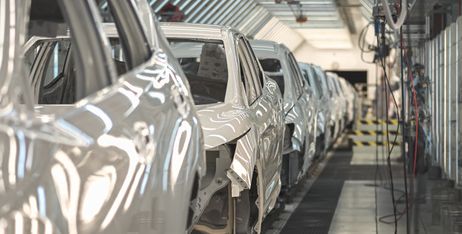
Italian passenger car production stood at 46,277 units in November 2022, representing an increase of 7.6% compared to November 2021.
In October, the country produced 40,608 units, also up by 14.9% year-on-year, Kallanish notes from local carmakers’ association Associazione Nazionale Filiera Industria Automobilistica (Anfia) preliminary data.
By comparison, Spain produced 184,406 units in November, a 18.4% y-o-y rise, while the UK produced 80,091 cars, an increase of 5.7%, Anfia reports.
Output in Italy decreased by 4.2% on-year over the first 11 months of last year to 425,394 units.
Italian passenger car output decreased by 2.1% y-o-y in full-year 2021 to 443,819 units. It stood at 451,718 units in 2020 versus 542,472 units in 2019.
Italy has 23 car production plants. By comparison, Spain has 17 plants, France 31 and Germany 42.
Natalia Capra France
ArcelorMittal to restart Gijón blast furnace in February
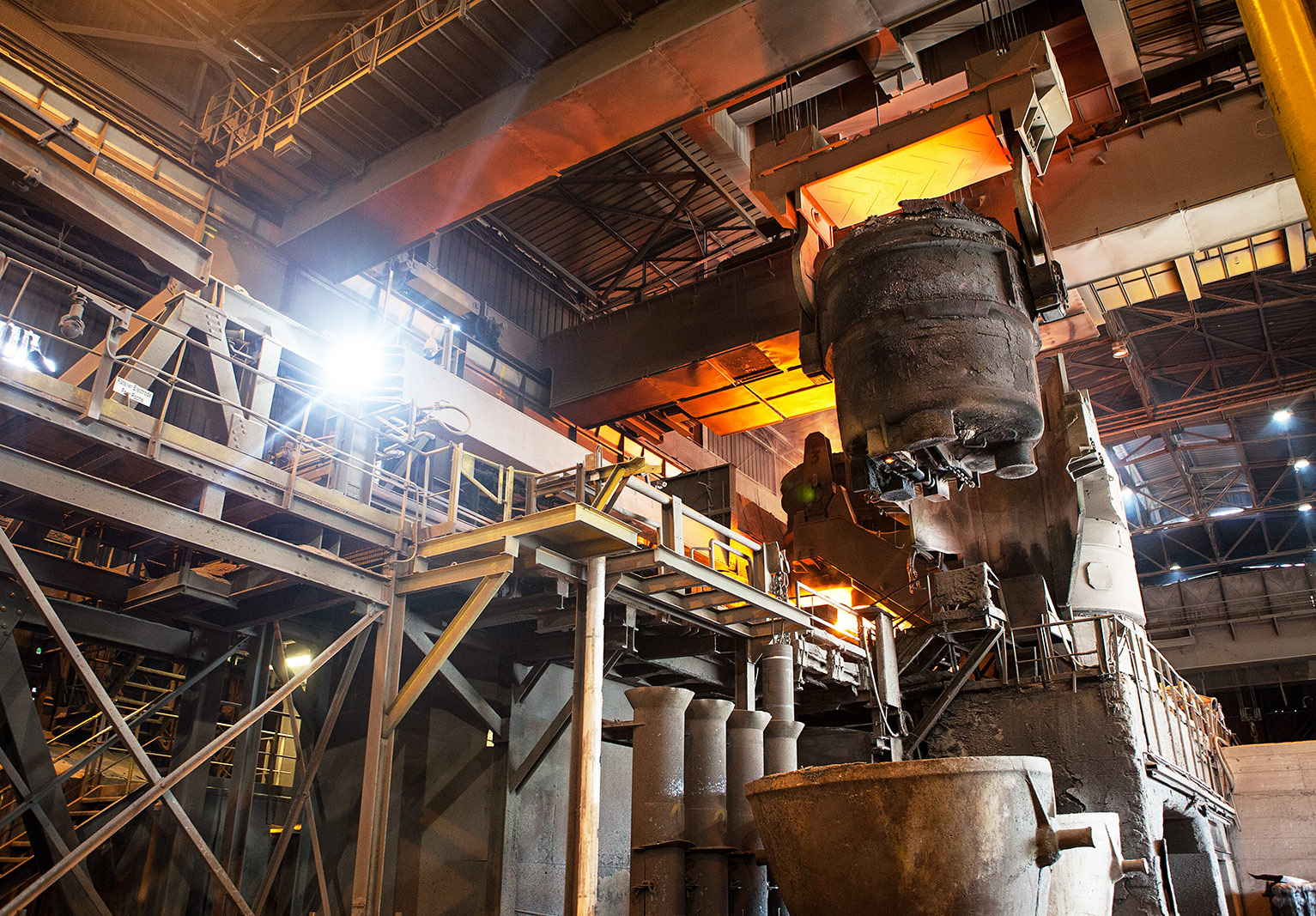
ArcelorMittal tells Kallanish it is planning to restart blast furnace A at its Gijón mill in northern Spain next month. The equipment remains idle since late September due to the uncertain economic scenario and poor market conditions.
“We are working on the possibility of restarting BF A with a reduced production rate at the beginning of February,” according to a company spokesperson.
The decision has been highly welcomed by workers’ unions, which saw it as essential ahead of Tuesday’s meeting between Spanish Prime Minister Pedro Sanchez and ArcelorMittal chairman Lakshmi Mittal at the World Economic Forum in Davos. One of the main points of the talks was on accelerating ArcelorMittal investments in Spain with the installation of a hybrid electric arc furnace at Gijón.
The project, which is a priority for the steelmaker’s CO2 emissions reduction goals in Europe, is still awaiting Spain’s €500 million ($530.93m) co-funding contribution as part of the national government’s recovery and resilience plan.
Meanwhile, the steelmaker has finished the €10m upgrade of galvanizing line No.1 at its Avilés plant. ArcelorMittal projects it could begin production of Magnelis, the firm’s product with anti-corrosion metallic coating, in the coming weeks. The plant has already been producing this at galvanizing line No.2 since 2017.
The new corrosion-resistant steel products, whose characteristic is a composition coating with a higher content of aluminium and magnesium, will be in thicknesses of 2mm and 3.5mm, sizes not produced at line No.2. This product is manly supplied to the solar energy sector for the construction of photovoltaic park infrastructure.
Todor Kirkov Bulgaria

European stainless flat steel market stagnates
The European stainless flat steel market remains uncertain and slow to restart after the winter holiday break. Despite some relatively good downstream demand, there is concern about high prices, and distributors tend to refuse any attempts at increases.
European mills intend to lift their hot and cold rolled coil prices for February delivery but are not succeeding. Lead times are still short and stocks in Europe are medium to medium-high, with no rush to secure coils.
In northern and southern Europe, end-users are reported to have a good order intake. However, after the skyrocketing financial results of 2021 and 2022, the market is finding it challenging to return to a level of “normal consumption”, as opposed to a “drugged post-pandemic consumption”, a service centre comments.
Overall, re-rollers and service centres see a positive year ahead in terms of flats sales, but with reduced consumption that will result in “normalisation” of prices and volumes.
While demand for flats is said to be average although slow, stainless tube sales are significantly slowing due to very low demand downstream. Tube buyers are putting off investments and new projects. A poor level of orders is said to be coming from the construction sector. Because of uncertainty in Italy, distributors are keeping prices low and refusing any increases, sources tell Kallanish.
Meanwhile, Asian coil producers have increased prices by some $100-150/tonne, but sales activity in China and Taiwan is also reported to be slow. While some large EU buyers purchased from Asia last month, one says that material from the Far East will arrive towards the end of April or in May, which is discouraging importers in such uncertain times.
Northern European stainless CRC values are now hovering at €3,050-3,100/t ($3,299-3,353) on average and at approximately €2,900-2,950/t delivered for HRC. Italian prices are some €150/t lower, sources suggest.
Natalia Capra France

Italian coil prices hike as availability lowers
Italian hot rolled coil prices are increasing in quotes and contracts by some €70/tonne ($75/t) on average compared to the lowest levels seen last month, Kallanish hears.
All European producers are now quoting longer lead times. In Italy, some mills have few allocations left for the end of March and will soon begin quoting April delivery. Prices have been pushed up to €750/t base ex-works or €760-770/t base delivered, sources say.
Buyers have gone quiet since steelmakers announced increases last week, but both service centres and their clients will have to start ordering to replenish their depleting stocks.
Sellers from Japan, Korea, Taiwan and India also have low availability for Italy. Some are not offering while others proposed limited-time allocations at €695/t cfr that expired quickly. These steelmakers are expected to also push up their prices to well over €700/t cfr in the coming days, but with delivery only in June and clearance not likely until July.
Italian buyers have the option to purchase from Turkey, which is offering at €740/t cfr duty paid for service-centre quality material and arrival by the end of March. Amidst low availability and longer lead times, buyers are left with little choice but to order in Italy or Europe.
While there is some resistance to higher prices, service centres and re-rollers, in need of material for second-quarter delivery, are expected to start purchasing this week. Steelmakers’ price hike attempts are likely to be successful considering the low availability and good demand downstream.
One large service centre says that even if demand from the automotive and appliance sectors remains subdued, all other industry sectors have full order books, some until the end of the year. The general view of 2023 is positive, Kallanish notes.
Italian HRC contracts are now being transacted at €680-720/t base ex-works. This reflects a strong increase from €620-650/t base ex-works at the beginning of December.
Natalia Capra France