

Spain’s 2022 car production improves, outlook uncertain
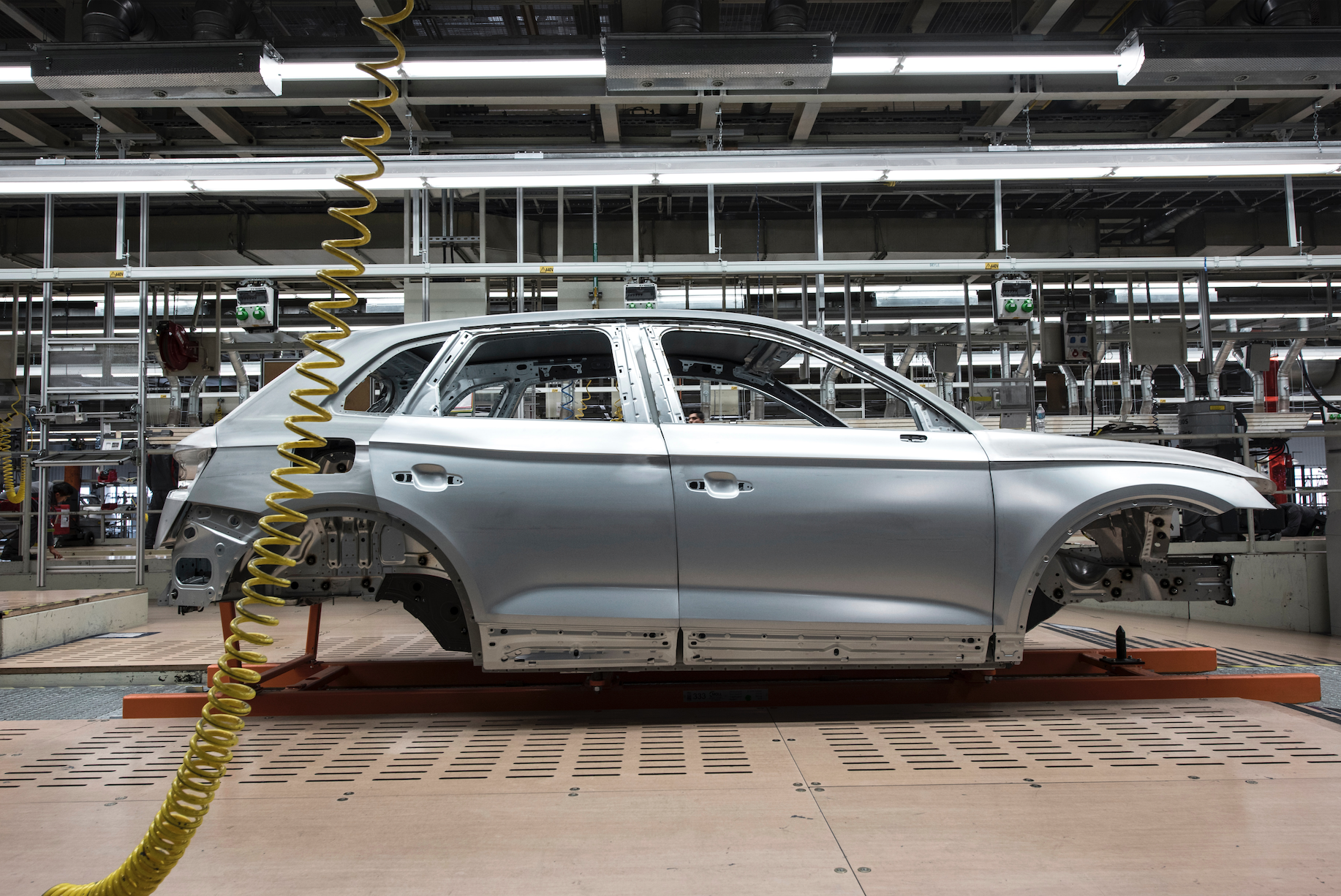
Spain’s automotive industry improved its activity in December, seeing production and exports rise on-year, Kallanish notes. The sector ended 2022 surpassing the previous year’s figures, but still remains very cautious about future market development.
“We prudently observe a certain improvement, although this does not mean that a recovery has been achieved, nor do we believe that it implies a change in trend,” says national automotive association Asociación Nacional de Fabricantes de Automóviles y Camiones (Anfac). “Car production is still 600,000 units lower compared to prior to the pandemic year of 2019 and the industry remains exposed to the microchip crisis, economic uncertainty and distribution problems, among other external factors.”
The association is concerned over the new bottleneck caused by the disruption of vehicle supplies both by sea and road, which could limit export capacity throughout this year. It considers it very important to promote the advancing of the sector’s transformation towards electrification and new mobility.
In 2022, Spanish car production amounted to 2,219,462 vehicles, or 5.8% more compared to 2021. December’s output represented 175,245 units or 18.9% more on-year.
Meanwhile, a recovery in sales in major European markets supported Spanish vehicle export growth in 2022. Shipments abroad were up 3.3% compared to 2021 to 1,881,164 vehicles. In December alone, exports were 148,434 units, a growth of 16.2% on-year.
The European market had a 69.4% share in Spanish deliveries in 2022, up 7.6% y-o-y, the automotive association confirms.
Todor Kirkov Bulgaria


SSAB restarts blast furnace at Raahe
SSAB has restarted the blast furnace at its Raahe plant, which was taken out of operation in November, Kallanish heard chief executive Martin Lindqyist say during the group’s annual results conference on Friday.
By idling the BF, SSAB joined the trend of many European oxygen-route mills cutting capacity on account of very low demand. Also, Raahe’s restart is in line with BF resumptions at US Steel Kosice and ArcelorMittal Gijón. The motivation is slightly different, though, as SSAB had projected an outage for maintenance anyway, which it advanced in view of the overall market situation.
The European market remained weak during the fourth quarter; therefore, to adjust production, SSAB brought forward maintenance of the Raahe BF, the company states. The annual capacity of the BF at the Finnish mill is 1.3 million tonnes.
Another irregular occurrence lately, Lateqvist pointed out, are relatively high stocks of PCI coal stored at Öxelesund. With the Ukrainian invasion, SSAB immediately stopped its intake of Russian coal and looked for alternatives.
“When you look for new suppliers, you naturally buy more than you need,” he explained. “So, at the end of 2022, we had an inventory of more than 400,000 tonnes, while the normal is 200,000t.”
Christian Koehl Germany

Semiconductors could hurt automotive output until 2026: VDA
The ongoing shortage of semiconductors in the automotive industry could lead to a global drop in production of 20%, or around 18 million vehicles, by 2026, shows a study by the German Association of the Automotive Industry (VDA).
According to VDA, this may happen unless suitable countermeasures are taken in the industry. “In 2021, the shortage led to a global decline in car production by 9% on-year,” according to the document seen by Kallanish.
“Demand for semiconductors in the automotive industry will triple by 2030,” the association notes. “This means that the growth in chip demand in the automotive industry is 1.7 times higher than the average for other industries and the car industry is therefore hardest hit in a sector comparison. As a result, the share of chips required for the automotive industry to be supplied by 2030 will increase to 14% of global semiconductor capacities. For comparison, today’s market share is 8%.”
The high demand is due in particular to the ramp-up of electromobility and an increasing proportion of driver assistance systems and functional extensions, including autonomous driving, VDA observes.
Another result of the study shows that by 2030, the automotive industry will become the third most important chip buyer after mobile communication and data storage, and China has already recognised this.
According to the document, Chinese semiconductor companies, in particular, are investing in the node size of 90 nanometres or larger, to promote domestic automobile companies.
“In order to counteract the impending sustained decline in production in Europe and to make the supply chain much more resilient, additional production capacities in the automotive-relevant node sizes in Europe must be promoted,” VDA claims.
The message is “expansion, expansion, expansion”, along a comprehensible concept using pragmatic approval procedures, it adds.
“The EU Chips Act must now be followed by action and Europe must now invest in the production of automotive-related chips and ramp up production of large chips,” says VDA president Hildegard Müller. “This is the only way to minimise dependence on Asia for semiconductors and strengthen the resilience of the German and European automotive industry. And only then can the German and European automotive industry continue to play a leading role worldwide.”
Svetoslav Abrossimov Bulgaria

Strong demand returns for Italian HRC
Italian hot rolled coil prices are increasing in quotes and contracts by some €30/tonne ($32/t) on average compared to last week. Downstream demand and demand from service centres and re-rollers is strong, with prices hiking throughout the value chain, Kallanish hears.
Italian and European producers are now quoting April lead times after quickly closing March allocations. Asking prices have been pushed up to €780/t base ex-works or delivered, depending on client and tonnage. Contracts are now hovering at €760-770/t base delivered, sources say.
Import offers are missing in the Italian market. Traditional HRC sellers to southern Europe, such as Japan, Korea, Taiwan, and India, are not quoting apart from limited-time offers for small allocations that expire fast.
Italian producers intend to push up prices again, to €800/t base ex-works, possibly next month but will attempt to first consolidate at €780/t. While service centres supplying the automotive industry continue to suffer, others report sustained orders, a very good January in terms of shipping and order intake, and full order books for February. They are also being successful with increasing their prices.
If Asian sellers remain out of the Italian market, the price increases and strong demand for domestic material are forecast to last. Small tonnages of imported material from Turkey and Asian countries transacted in Italy this month at between €735-750/t cfr.
Future Asian quotes into Europe will also depend on the resumption of Chinese market activity after the Chinese New Year. European producers are nevertheless expected to play a key role in maintaining some price stability and not exaggerating with increases, sources suggest.
Natalia Capra France
Liberty Steel Group investigating restart of Dunaferr: union official
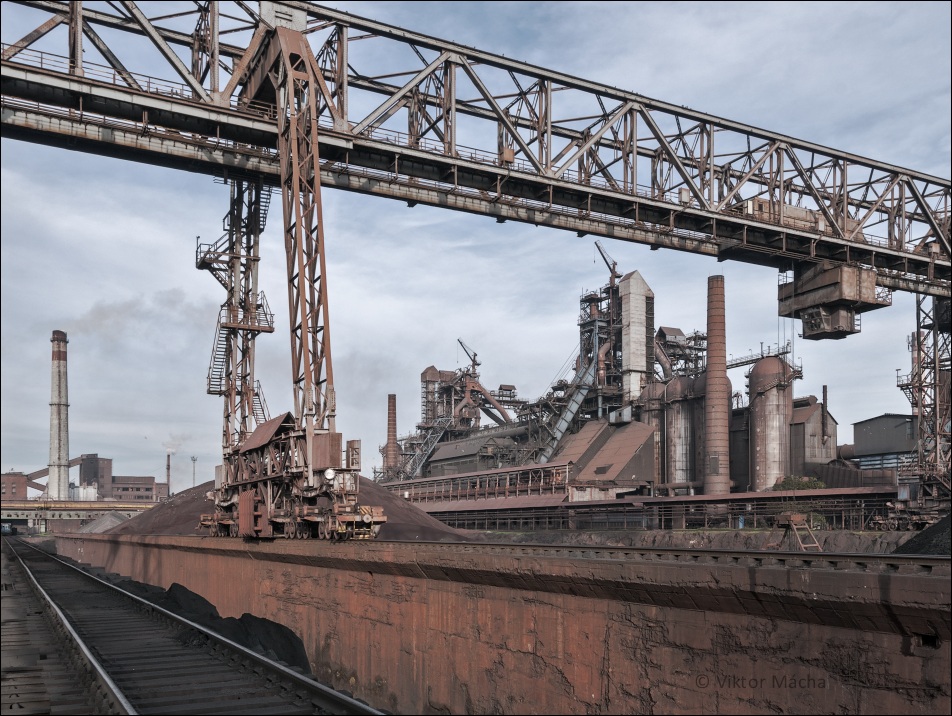
Liberty Steel’s specialists are investigating the restart of Hungarian integrated flat steel producer Dunaferr, a representative of the steelworks’ trade union told S&P Global Commodity Insights Jan. 27.
Liberty Steel Group is also negotiating a possible acquisition of the plant with the government and the liquidation commissioner, he said.
The UK-based company declined to comment on the matter. There have been media reports that Liberty secured a three-month contract to operate Dunaferr.
The coking plant is the only unit currently operating at Dunaferr, with no clarity as to when the rest of the plant’s shops can come back online.
The 1.6 million mt/year steelworks went into administration less than a month ago.
Liberty Steel and Metinvest have been mentioned among interested parties more often than others. According to the municipality of Dunaujvaros, the industrial town where the mill is located, Metinvest has also actively promoted itself as a bidder, having forwarded a letter in December to Hungarian Prime Minister offering to provide all the necessary resources and raw materials to operate Dunaferr, including the required Eur150 million ($163 million) cash injection to restart the plant’s furnaces and ramp up operations to 60% of capacity. However, the Ukrainian company has not yet received a response to the letter.
— Ekaterina Bouckley


Demand for heavy plate up in Italy, mills aim for higher prices
Domestic prices for heavy plates inched up in South Europe in the week to Jan. 27 due to improved buying activity as steelmakers aim for higher prices.
Platts assessed domestic heavy plate prices in South Europe at Eur865/mt ex-works Italy, up Eur5/mt week on week.
Deals with big stockholders have been settled at Eur850-860/mt ex-works Italy and with smaller buyers at Eur870-880/mt ex-works Italy. Offers, in the meantime, have been reported at Eur900/mt ex-works Italy.
“Big buyers that had been avoiding restoking in December started to return looking for orders,” an Italian re-roller said. “They are not booking big orders, but this is already a good sign.”
Anticipated rise of import slab prices from Asia after the Lunar New Year holidays in China and good order books of European plate producers have also contributed to bullishness in the market.
Platts assessed prices for imported slab in South Europe up $10/mt week on week at $700/mt CIF Italy Jan. 27.
Market sources estimated that lowest prices for import slab from Asia would be $700/mt CIF Italy.
Platts assessed domestic prices for heavy plate in Northwest Europe Eur990/mt ex-works Ruhr on Jan. 27, unchanged week on week.
Deals have been reported at Eur960-1,000/mt ex-works Ruhr.
“Plate market in north of Europe is really strong right now,” a Northern European source said.
Platts is part of S&P Global Commodity Insights.
— Maria Tanatar

Subdued trading keeps steel rebar prices flat in Poland
The Polish rebar market was largely quiet in the seven days to Friday January 27, with prices flat and subdued end-user demand limiting activity, sources told Fastmarkets.
Fastmarkets’ price assessment for steel reinforcing bar (rebar), domestic, exw Poland was 3,300-3,380 zloty ($762-781) per tonne on Friday, stable week on week.
Offers from the local mills were heard at 3,350-3,400 zloty per tonne CPT, equivalent to 3,300-3,380 zloty per tonne ex-works. Some transactions for limited volumes of rebar were reported within that range during the past week.
In general, activity in the market was still subdued, sources said.
“The construction industry is still rather slow [because] there are not enough projects. And cut-and-bend companies are complaining about a lack of orders [from end users],” a trading source told Fastmarkets.
But some sources said that several stalled construction projects were expected to restart before the end of the first quarter, and that this would support rebar prices.
In the secondary market, rebar was offered and traded at prices around 3,450 zloty per tonne CPT, also stable week on week.
Meanwhile, import rebar offers to Poland were limited because some suppliers had withdrawn from the market to consider price rises.
Italian mills withdrew from the market and were expected next week to announce price rises of €20-30 ($22-33) per tonne for February-production rebar.
Published by: Julia Bolotova
