


Steel: 5 things to look for in 2023 by Wood Mackenzie
Much like 2022, 2023 will be a tale of two halves for steel. The first half will stay muted due to macro woes, while the second half looks set to fare better as global economic activity revives and Chinese construction gathers pace.
India, the US and China would be the key demand drivers in 2023.
In this report, we draw on insight from the Steel Research Suite to set out our predictions and explore the outlook for 2023.
This includes:
- Are the gloomy days over for Chinese property markets?
- Optimism grips new green metallic hubs
- IIJA: the make or break for US steel consumption
- and more

CRC and HDG coil prices in Europe move up on limited supply
European producers maintained high offers for cold-rolled and hot-dipped galvanized coil during the week to Wednesday February 1, citing good order books and limited availability, and buyers resisted higher prices due to still-slow end-user demand, sources told Fastmarkets.
Buying interest in CRC and HDG in Europe was limited during the assessment week, since buyers seemed to be digesting the recent price rises.
“End-users are not willing to accept higher prices [for CRC and HDG], so it’s ‘wait-and-see’ in the market,” a steel service center told Fastmarkets. “We are only booking what is strictly necessary.”
CRC offer prices were heard at €880-900 ($955-976) per tonne EXW, and HDG offer prices were reported at €900-930 per tonne EXW for April delivery.
European mills have gradually sold out first-quarter volumes of CRC and HDG and were therefore not hungry for orders.
Buyers reported tradeable values of €850-870 per tonne EXW for CRC and €860-900 per tonne for HDG.
Fastmarkets’ weekly price assessment for steel CRC domestic, exw Northern Europe was €860-880 per tonne on Wednesday, up by €30 per tonne from €830-850 per tonne on January 25.
Fastmarkets’ corresponding weekly price assessment for steel HDG domestic, exw Northern Europe was €870-900 per tonne on Wednesday, up by €30-40 per tonne from €840-850 per tonne on January 25.
Both assessments were a reflection of the lower end of offers, rare deals, and estimates of achievable prices made in the week to February 1.
Southern Europe
In Southern Europe, CRC offers were heard at €880 per tonne EXW, and HDG offers in the region were heard at €900 per tonne EXW.
Italy-origin CRC was offered to Germany at €900 per tonne CPT during the week, and HDG at €930 per tonne CPT.
Mills in the region reported increased numbers of inquiries from buyers during the assessment week, but traded volumes remained limited, they said, since buyers were resisting higher offers.
Notably, buyers estimated tradable values for CRC at €830-850 per tonne EXW and at €850-870 per tonne EXW.
Fastmarkets’ weekly price assessment for steel CRC domestic exw Southern Europe was €850-870 per tonne on Wednesday, up by €30-40 per tonne from €820-830 per tonne seven days before.
The corresponding weekly price assessment for steel HDG domestic exw Southern Europe was €870-880 per tonne on February 1, up by €30-40 per tonne from €830-850 per tonne seven days before.
Both assessments were a reflection of the lower end of offers, rare deals, and estimates of achievable prices made in the week to February 1.
Given the bullish sentiment in the domestic market, European buyers started to show interest in overseas bookings. Import offers, however, were limited, and most suppliers could offer April shipment at the earliest.
Late in the week to January 27, a booking of South Korea-origin CRC was heard at €820 per tonne CFR to Southern Europe. But as of January 31, offers from Southeast Asian suppliers had already been reported at €850-870 per tonne CFR
CRC with March shipment from Turkey was offered to Southern Europe at €960 per tonne CFR, according to two buyer sources. But the price was completely unworkable for the European market, sources said.
There were also few import HDG offers.
Sources reported only one offer during the assessment week, for 0.5 mm HDG from Vietnam at around €900-910 per tonne CFR.
Published by: Julia Bolotova

Toyota to halt Turkish, Czech production: reports
The semiconductor shortage continues to hamper automotive production, Kallanish notes.
Japanese auto producer Toyota’s Turkey-based subsidiary, Toyota Otomotiv A.S., will halt production at its Sakarya plant for 14 days from next week due to the chip shortage.
Maintenance and repair works will be carried out during the 14-day suspension, Turkish media reports.
On the other hand, things are still more complicated at Toyota’s Czech plant where production is set to stop for the whole of February on account of the semiconductor shortage.
Toyota Europe spokespeople did not respond to request for comment by Tuesday deadline.
The group’s 2022 output reached 9.027 million units, posting an increase of 5.2% from a year earlier. The firm said this week the future is difficult to predict because of semiconductor shortages and Covid-19.
Burcak Alpman Turkey


French rebar sellers report disappointing January
Sources in the French rebar sector are reporting a rather weak level of sales in January and forecasting a similar level of order intake in February, Kallanish hears.
Participants say this is part of the “new consumption normal”.
The local construction sector is going through a period of strong uncertainty and considerably lower private residential sales. The economic downturn is contributing to sluggish sales. Distributors say their clients have very low stocks but the rule today is to keep light stocks and buy only when necessary, without committing to any higher volumes.
“Demand is still there but consumers’ confidence is low and nobody wants to take a risk,” a seller says. Domestic prices are relatively stable compared to the end of January, with a few offers heard from Italian producers who are quoting prices some €20-30/tonne ($21-32) higher than French suppliers. Some offers from Spain, however, are reported in southern France, but the appetite for material remains limited.
Domestic rebar prices have lost some €40-50/t on December. Including size extras, contracts are hovering at €700-730/t delivered, sources suggest.
Natalia Capra France
Aperam increases alloy surcharges
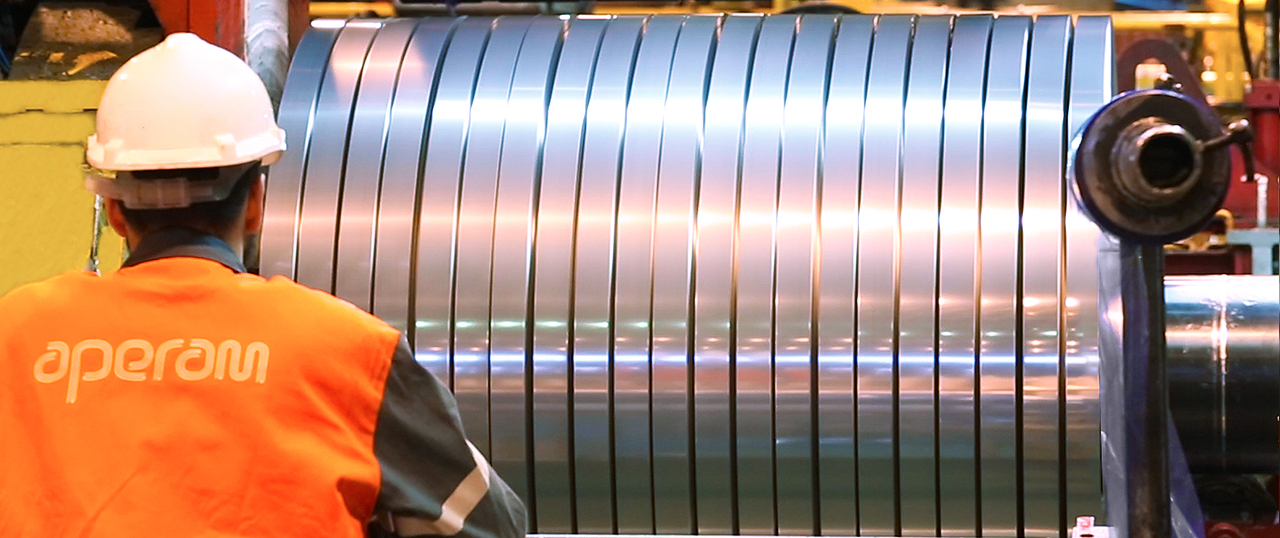
French stainless steel producer Aperam is increasing its February alloy surcharges for its austenitic range of flat stainless steels for Europe. The steelmaker is pushing up 304 prices by only €30/tonne ($32) month-on-month, and more significantly for other grades such as 316 where the cost of molybdenum skyrocketed in January, Kallanish notes.
Aperam’s surcharges for grade 304 (1.4301) will increase from €2,906/t in January to €2,930/t, effective 1 February. Grade 316 will hike from €4,693/t to as much as €5,012/t this month. Grade 309S, a heat-resistant stainless steel used in high-temperature applications, will go up also significantly from €3,731/t to €4,066/t. The surcharge for the most popular ferritic grade, 409, will however decrease from €851/t to €834/t, the company reveals.
Offers for nickel cash buyers meanwhile have been volatile over the past weeks. They reached $30,420/t on 30 December and fell to $29,065/t on 27 January.
Meanwhile, Aperam applied a €879/t energy surcharge to its contracts in January, down from €901/t in December. The company is expected to publish another surcharge for February in the coming days. The energy surcharge is composed of electricity, gas costs, and CO2 emission allowance costs.
The reference for the electricity costs is the “producer price index in industrial production sold in France − CPA 35.11 and 35.14 − wholesale electricity”, reported by national institute of statistics Insee.
The reference for gas costs is also provided by Insee in its “producer price index in industrial production sold in France − CPF 35.23 − wholesale of gas, on spot markets”. The carbon emission allowance cost is based on “carbon emissions futures – EUA daily future/front December futures, daily close prices” reported by ICE. The reference period for the energy composite index is the third quarter of 2021, the company reveals.
Natalia Capra France
Turkish flats duties may only affect some pipemakers
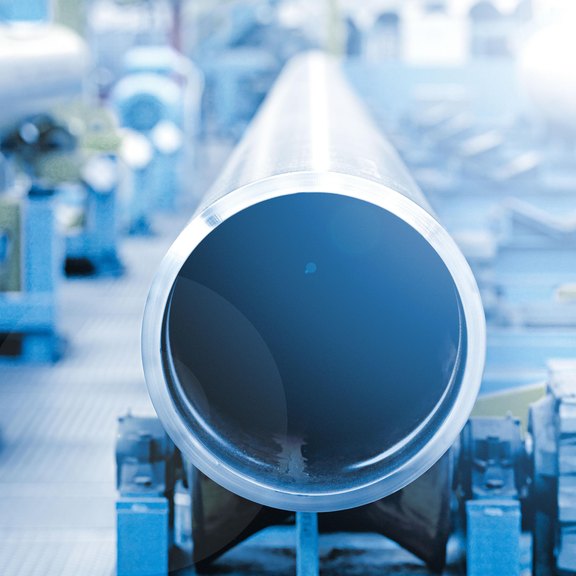
Turkey’s increase of customs duties on the most imported flat steel products announced over the weekend is unlikely to affect imports of lower-priced products. However, it may affect some end users’ capacity to produce at a profit, several market participants tell Kallanish.
Ankara increased import duties on steel products falling under HS codes 7208.10.00.10.00 to 7208.10.00.90.11 from 9% to 15%, except for welded pipe producers and some re-rollers, whose duties will rise from 6% to 13%. The same duty of 13% will apply to alloyed hot rolled coil under HS codes 7225.30.90.00.11 and 7225.30.90.00.19. Import duties on unalloyed cold rolled coil under HS code heading 7209 increased from 10% to 17%.
The customs duty on steel plate will increase to 15-20% from 9-15%, and on hot-dip galvanised coil, tinplate and PPGI from 15% to 20%.
Meanwhile, import duties on dynamo steel sheet remain at 6%, on stainless HRC at 2%, and on stainless CRC at 8%, Kallanish notes.
Although some Turkish steel market participants do not appear concerned about these measures, thought to have largely resulted from lobbying by domestic producers, some participants, including pipe producers, are concerned. Having been under pressure to obtain appropriately priced feedstock for the past several years, they went as far as to call on Ankara to suspend import duties for HRC altogether in summer 2021.
The Steel Pipe Manufacturers Association (Cebid) pointed out at the time the unused capacity of the industry to expand product range and exports with investments into production of higher value-added products. Instead, even with the previous duty on HRC at 9% and 6%, competitiveness was reduced by limited resources.
Others are not so concerned, citing suppliers’ ability to adjust prices to match buyers’ expectations, especially in the last year, when Russian suppliers’ export markets have been severely constrained by Western sanctions. Additionally, a majority of imports of HRC are brought in under the internal processing mechanism, when the duty is repaid back when the material is exported, they point out.
Turkish exporters of HRC have themselves been hit by not being able to sell in the European market, as their prices were unworkable, with anti-dumping duty added, in the past couple of years. Turkish mills have been lobbying for better protection of their domestic market in the past, especially since sanctions on Russia appeared to have seen the Turkish market flooded with material. Asian-origin imports have also increased significantly in the past year.
Katya Ourakova UK

European HRC buyers expect prices to correct; mills optimistic on good order books
Trading in the European hot-rolled coil market was limited on Wednesday February 1 due to buyers being cautious about accepting higher prices, sources told Fastmarkets.
Fastmarkets calculated its daily steel hot-rolled coil index domestic, exw Northern Europe at €751.88 ($815.63) per tonne on Wednesday, edging lower by €3.75 per tonne from €755.63 per tonne on Tuesday.
The latest calculation of the index was down by €2.32 per tonne week on week, but up by €83.13 per tonne month on month.
Offers from producers in the region for April-delivery coil were reported at €770-800 per tonne EXW, sources told Fastmarkets. But tradeable values were lower, between €740 and €760 per tonne EXW, according to buyer sources.
Distributors and steel service centers said that end users were reluctant to accept higher HRC prices and only limited volumes had been traded recently.
“We actually expect a downward correction in one or two weeks, since demand from both the automotive and construction industries remains slow,” a buyer source in Germany told Fastmarkets.
But producers remained firm citing strong order books and limited availability of coil due to production cuts.
Fastmarkets’ assessed the daily steel hot-rolled coil index domestic, exw Italy was €750.00 per tonne on Wednesday, down by €1.67 per tonne from €751.67 per tonne on Tuesday.
The latest calculation of the index was up by €7.22 per tonne week on week, and by €97.50 per tonne month on month.
For bigger volumes, it is still possible to book coil at €730-740 per tonne EXW in Italy, sources told Fastmarkets.
But buyers preferred to make hand-to-mouth bookings while assessing market conditions.
Offers from local producers were heard at €760-780 per tonne EXW for second-quarter delivery.
One Italian integrated mill was overbooked and might delay deliveries of material bought in December, according to local sources.
Meanwhile, another integrated steelmaker in Italy was opting to produce more value-added flat products, such as hot-dipped galvanized coil, so HRC volumes for the spot market were limited.
Sources suggested the limited availability of HRC would support an uptrend in the second quarter.
Meanwhile, other sources questioned further rises in the local HRC market while demand from end users was still stable at low levels with no sign of a rebound.
Import HRC offers from Taiwan were heard at €720 per tonne CFR, but for limited volumes.
Several sources, however, said this offer was no longer available in the week starting on January 30.
April-shipment HRC from India was offered to Italy at €735 per tonne CFR.
Turkey-origin HRC with April delivery was offered to Italy at €735-750 per tonne CFR, sources said.
Published by: Julia Bolotova
Europe urgently needs structured automotive industrial policy: ACEA
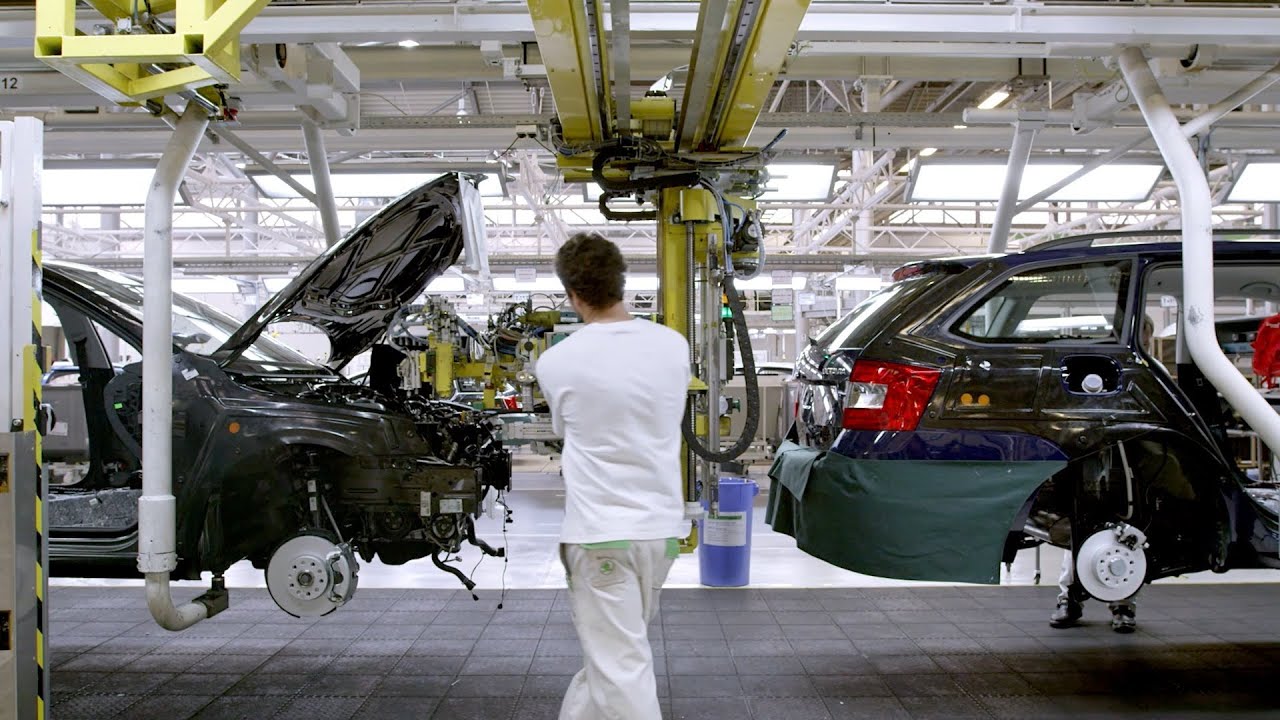
The European Automobile Manufacturers’ Association, or ACEA, has called for an ambitious and structured automotive industrial policy to rival that of other competitor regions.
In a Jan. 31 open letter to EU policymakers, ACEA President Luca de Meo said that the automotive sector has been a “key driver of Europe’s prosperity, competitiveness and innovation.”
To ensure it remains so, ACEA is “urgently calling on Europe to put in place an ambitious and structured automotive industrial policy, to rival those of other world regions — while safeguarding and promoting free trade across the globe,” de Meo said.
ACEA expects around 9.8 million new cars to be sold in 2023, up 5% year on year, although this is would still be 25% below 2019 pre-pandemic levels.
“In this context, it is of all the more importance that our industry strengthens its position on the global stage,” ACEA Director General Sigrid de Vries said in a statement.
The continent’s automotive industry has been gradually losing ground to global competitors in the past two decades, de Meo said in the letter.
“Car production and sales in China for instance have risen more than 25-fold since 2003, while they have dropped by some 25% in Europe,” he said, adding that automakers’ domestic market share had dropped to 70%, down 7 points over the same period.
“And recent political decisions risk putting Europe’s automotive industry in an even more unfavorable situation compared to its Chinese and American competitors,” de Meo said, referring to the US’s Inflation Reduction Act, or IRA, and the Made in China 2025, or MIC, plan.
He pointed out that Europe was also set to be at a disadvantage with the shift to electric vehicles and the associated value chain, especially compared to China, as by 2030, no more than 5% of the raw materials needed for battery production would be sourced in Europe.
Platts, part of S&P Global Commodity Insights, assessed seaborne lithium carbonate and lithium hydroxide at $70,500/mt CIF North Asia and $79,000/mt CIF North Asia Jan. 31, up 109% and 149%, respectively, since the start of 2022.
Decarbonizing road transport
De Meo also pointed out that, while other industries were being asked under the EU’s Fit for 55 climate package to reduce emissions by 50%-70% by 2035, passenger car emissions were being asked to reduce by 100%.
“Make no mistake, the auto industry is unequivocal and fully committed to decarbonize road transport as fast as possible, working with all partners… this puts us way ahead of most other industries,” de Meo said.
He called for the EU to adopt a consistent and holistic regulatory approach, saying that policies and regulations should align with and support this goal.
“We therefore need the regulator to speak with one coordinated voice, considering the specific rhythms of industry, research and investments,” de Meo said, adding that this was not the case with the recent Euro 7 proposal, which would force automakers to invest billions in engine and exhaust aftertreatment technology, for minimal environmental gains.
“This means moving substantial engineering and financial resources from battery and fuel-cell electric vehicles back to the internal combustion engine,” he said, adding that the funds would be better spent on zero-emission technologies that would tackle CO2 and pollutant emissions.
Charging infrastructure
De Meo also called for EU policymakers to ramp up private and public charging and hydrogen refueling infrastructure, saying more commitment and coordination was needed among member states and with other sectors.
There were only 2,000 public charging stations being installed EU-wide weekly, well below the 14,000 a week needed to ensure the transition to electric mobility, he said.
Another factor highlighted in the letter was affordability.
“The cost of batteries and electricity is bound to remain high, for reasons that we do not control,” de Meo said, citing heavily taxed electricity consumption, high battery costs, and reduced purchase incentives due to budgetary constraints.
“Notwithstanding all this, demand for electric cars already remains insufficient to reach the critical mass we need to make the system work in the time we are given,” he said, adding that only 1.5% of the 250 million cars on European roads were fully electric, with it estimated that this proportion should be around 25% by 2030.
“If we really want to have an impact on climate change, there is no doubt that we will also have to find solutions for the existing vehicle fleet, without limiting the mobility of our fellow citizens,” de Meo said in the letter.
— Jacqueline Holman


EU HRC domestic prices mostly remain stable as market awaits imports
Domestic prices for hot-rolled coil were fairly stable in Europe on Jan. 31 as market participants waited for the return of Asian producers in the EU market after the Lunar New Year holidays.
Import offers have been limited — so far only an India-based supplier had returned to the market looking for Eur735/mt CIF Italy for HRC and Eur810/mt CIF Italy for cold-rolled coil.
the latest deals for HRC from Turkey were reported at around Eur740/mt delivered CIF Southern Europe, including anti-dumping duties. The Turkish exporters have been planning to increase the offers soon, according to three market sources.
“Now everyone is waiting for China to return with export offers and for Asian mills to give new offers for Europe,” a steelmaker said. “Then the domestic coil price rise in Europe should resume.”
An Italy-based service center source said that if imports from Asia remained at prices around Eur735/mt CIF and Turkish mills managed to increase offers, then domestic prices of Eur780/mt either delivered or ex-works Italy would be possible.
In the meantime, domestic offers of HRC in Southern Europe were heard at Eur730-Eur780/mt ex-works, and tradable values at Eur730-Eur750/mt ex-works Italy and a few deals at Eur740-750/mt ex-works Italy were reported.
Platts assessed domestic prices for hot-rolled coil in Southern Europe at Eur745/mt ex-works Italy on Jan. 31, up Eur5 on the day.
In Northwest Europe, offers were reported above Eur800/mt delivered Ruhr. Tradeable values were talked at Eur750-Eur780/mt ex-works Ruhr and deals were heard at Eur750-Eur760/mt ex-works Northern Europe.
A Northwest Europe-based distributor also said that prices for HRC from re-rollers were lower at Eur730/mt ex-works Northern Europe.
Platts assessed domestic hot-rolled coil prices in Northwest Europe at Eur755/mt ex-works Ruhr on Jan. 31, unchanged on the day.
The bullish mood among European steelmakers was supported by good order books. The majority of the mills had sold out the first-quarter rolling coil, and only limited volumes for March production material were available in the market.
Despite long lead times from European mills, more buyers were turning to domestic coil suppliers, as lead times of overseas material were even longer, with delivery for Asian coil reported in June-July.
“It is clear that due to long lead times, buyers turn to domestic suppliers,” a Southern Europe-based distributor said. “It is unclear what is going to happen in the future and they do not want to risk and book material that would arrive in June-July. And the import prices with all additional costs and in line with those from the EU mills. And risks are less when you buy domestic.”
Buyers, meanwhile, were cautious in their purchases due to concerns that European steelmakers would bring more capacities in operation, and increased availability would drag coil prices down.
Slovakia’s US Steel Kosice, ArcelorMittal Spain and SSAB Raahe in Finland confirmed the restart of blast furnaces idled in 2022. Some market sources believe that the capacity restart is likely to result in domestic coil prices softening in the second quarter.
Platts is part of S&P Global Commodity Insights.
— Maria Tanatar, Benjamin Steven

Global crude steel production falls 4.3% on year in 2022: worldsteel
Global crude steel production in 2022 fell 4.3% year on year to 1.83 billion mt, according to World Steel Association data published Jan. 31
Largest producer China produced 1.01 billion mt of crude steel during the year, down 2.1% year on year, making up 55.3% of the overall total.
The world’s second-largest steel producer India increased output by 5.5% in 2022 to 124.72 million mt, while production from Japan dropped 7.4% to 89.23 million mt for the year.
Output from the US fell 5.9% year on year to 80.71 million mt in 2022, while an estimated 71.5 million mt was produced in Russia, down 7.2%, mostly likely affected by the Russia-Ukraine war and related sanctions.
South Korea production for the year also decreased 6.5% on the year to 65.86 million mt and output from Turkey dropped 12.95% to 35.13 million mt.
European output falls
Crude steel production in the whole of Europe, including the UK, fell 10.9% year on year to 181.43 million mt in 2022, with Germany, the largest European steel producer, producing 36.85 million mt, down 8.4% from 2021.
A number of European steelmakers curtailed or shut production in the second half of 2022 due to high energy prices and/or low demand.
Platts, part of S&P Global Commodity Insights, assessed domestic hot-rolled coil prices in Northern Europe at Eur680/mt ex-works Ruhr Dec. 30, down 26.2% since the start of 2022.
Brazil’s output for the year declined 5.8% year on year to 34 million mt, while Iran produced 30.59 million mt in 2022, up 8% from the previous year.
The data released covers the 64 countries that report to worldsteel, accounting for around 98% of the world’s crude steel production.
The worldsteel data also showed that pig iron production for the year from 38 countries totaled 1.28 billion mt, down 3.8% year on year, while total global direct reduced iron output climbed 6.9% year on year to 110.5 million mt in 2022.
— Jacqueline Holman