German steel market expects prices to soften, production levels to increase: survey
German steel traders and producers expected prices to trend lower over February, according to data from S&P Global Commodity Insights’ monthly steel sentiment survey.
The February index for traders’ sentiment stood around 50 points compared to almost 78.50 points in January. The index for producers’ sentiment was around 58 points, compared to a January index of 68.75 points. The overall index for prices was at approximately 54 points down from 74 points for January.
“Currently mills are being pressured to achieve higher prices, but the market doesn’t seem ready for it,” one European flat mill source said. “The current transactional level is stable, but buyers aren’t going to be receptive to repeated increases, especially if capacities do continue to come back online across Europe.”
A flat steel distributor source said: “If prices come up too fast, not only will we lose the market share to imports, but buyers will retreat again, especially if production comes back. Sentiments are not hugely positive for the second half of the year.”
Platts assessed TSI North European hot-rolled coil up Eur5/mt on the day Feb. 3, at Eur755/mt ex-works Ruhr. Platts is part of S&P Global.
One long steel producer said prices for long steel are almost at the bottom, and he expects them to stay stable during the month. The source also expects demand to start picking up adding that the month of February might see a slight increase while the month of March may show real improvement
“A lot of projects are on hold, so demand has to come back,” he said. “Everyone is waiting for demand.”
A long steel distributor source noted that prices were in a downtrend due to limited end-user demand.
“End-users are holding back,” he said, adding that amid high energy costs and weak demand market was seeing low prices.
Platts assessed TSI Northwest Europe rebar down Eur20/mt to Eur715/mt ex-works on Feb. 1. Platts assessed European medium sections (category 1, S235 JR) down Eur10/mt on Feb. 1 to Eur970/mt delivered.
The overall index for German inventory sentiment was almost stable on month, with an index of approximately 43 points compared to 43.75 points in January. The index for steel producers for February was around 42 points, compared to 37.50 points in January. The index for traders’ sentiment stood at 43.75 points for February compared to 50 points in January.
Production levels expected to increase
The index for production outlook stood at around 58 points for February, compared with 27 points for January. Producers anticipated a stronger rise in production levels with an index of around 54 points for the month, compared to 12.50 points in January.
Traders and stockholders also expected production levels to strengthen according to the survey, with a current index of around 62.50 points, compared with approximately 43 points in January.
One long steel producer noted that mills were operating at lower capacities to manage high energy costs and he expects mills to continue operating at reduced capacities.
However, amid restocking activity seen in December and January on the flat steel side, some mills are perceiving increased demand and are considering or in the process of bringing capacities back online. However, some buyers fear that this uptick in demand is illusory — driven by traditional restocking cycles rather than supportive end-consumption.
— Rabia Arif, Benjamin Steven


ArcelorMittal boosts digitisation in France
The launch of the 5G network for industrial uses in France is helping ArcelorMittal carry out digitisation and robotisation at its French production sites.
The company started its 5G Steel project in 2021 in France in partnership with Orange Business Services and Ericsson, and supported by the French government. 5G Steel has now become fully operational at the Dunkirk and Mardyck sites, northern France, and it is scheduled to be extended to Florange this year.
The presence of a wide coverage and high throughput network, which now extends to the entire industrial complexes, both indoors and outdoors, is making the workload more agile in all departments from recycling to production, the producer says. It is also enhancing the mobility of workers. Production processes are better monitored and simplified; a reduced latency is also improving rolling lines remote pilot control.
“Steel arriving on site for recycling is weighed and scanned to assess its density and composition. This data is then automatically transmitted by the operators in charge of quality control from the field via 5G Steel. Machinery operators (crane and stackers) directly receive information from the production programme and can inform about the actions carried out through 5G Steel,” the steelmaker explains. Other operations are also made easier, such as the hot rolling mill processes, data recording, and inspections during maintenance and safety audits, it adds.
The project is one of the first steps in ArcelorMittal’s roadmap to boost automation and digitisation. The company envisages driverless trains and vehicles in Florange and Dunkirk together with mobile maintenance, virtual reality and safety devices.
5G Steel will be extended to the port of Dunkirk, ArcelorMittal’s digital labs in Dunkirk and the site of Florange, Kallanish notes.
Natalia Capra France

EU imports fall despite higher longs intake: Eurofer
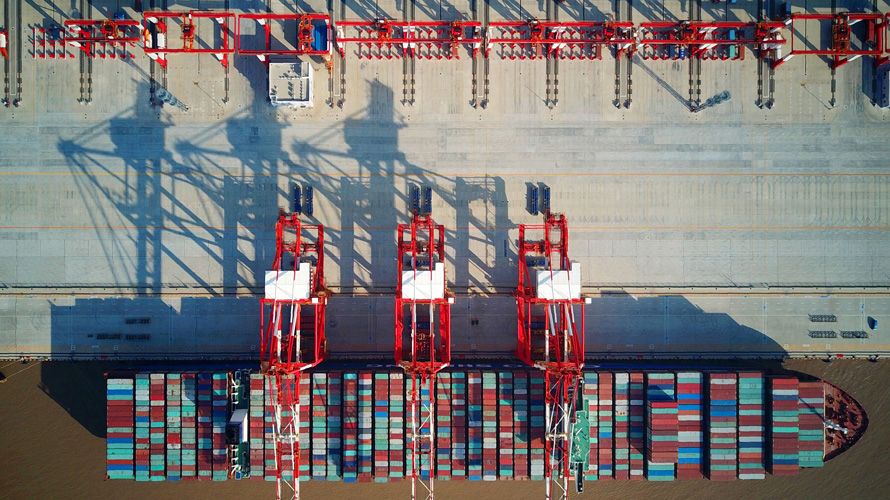
EU steel imports dropped 17% on-year in the third quarter of 2022, led by a 15% slump in flat product intake, although longs imports inched up 1%, steelmakers’ association Eurofer points out. Finished steel exports fell 9%, driven by a 15% decline in longs shipments, Kallanish notes.
In the 11 months through November 2022, finished products imports dropped 5% on-year, with flats down 9% and despite longs rising 10%. Reflecting weaker demand from Q1 2022, imports have constantly been declining in volumes throughout 2022, Eurofer says.
Turkey (381,000 tonnes), South Korea (255,000t) and India (238,000t) were the main 11-month finished steel suppliers, while Russia and Ukraine dropped out of the picture due to war. Although imports from India and Turkey dropped notably, intake increased markedly from China, South Korea and Taiwan.
Besides tin mill products (+43%), organic coated sheet (+22%) and cold rolled sheet (+2%), all flats imports declined in the 11 months. All longs imports meanwhile rose, with rebar seeing the highest growth of 22%.
11-month finished steel exports fell 12%, with flats and longs down 8% and 21% respectively. The UK (221,000t), Turkey (207,000t) and the US (202,000t) were the main destinations. Shipments to Brazil and the US rose notably, and to China and the UK declined markedly.
All flats shipments declined, except for hot rolled wide strip (+6%) and quarto plate (+3%).
The EU’s total steel trade deficit thus widened to 1.8 million tonnes in the 11 months versus 1.5mt a year earlier.
Adam Smith Poland

Energy prices become key factor in European metallurgical market in 2022
Russia’s military invasion of Ukraine has triggered a lot of issues globally and, particularly, effected the energy balances in several regions, given that Russia had been one of the world’s major hydrocarbon exporters. Particularly, in 2022 the energy crisis hit EU countries and their steel sectors, and affected the costs, production rates, competitiveness and margins in business. By the end of the year and in early 2023, the situation eased somewhat due to government policies in the EU to reduce dependency on Russian energy and also owing to favorable weather conditions, which enabled household energy consumption to remain at acceptable levels.
The high energy prices which the EU countries had to implement in 2022 rewrote the structure of the European steel industry. Gas supply issues resulted in energy prices spiking, so steel producers were forced to increase steel prices while facing higher costs or to cut their output. The situation resulted in some production cuts since some European mills chose to suspend operations at some of their facilities or to reduce utilization rates significantly starting from August and during the autumn months of 2022.
List of main European mill with idled or reduced capacity in H2 2022

Integrated coil producers, mainly in Italy, started purchasing imported slabs from China, India, Indonesia, South Korea, Vietnam and Brazil in order to replace the missing semis volumes from Ukraine and Russia. In fact, while Ukraine has hardly been present in the slab market since the war started, some Russian mills have still had the chance to sell to the EU based on EU regulations. Along with the target to substitute the regular missing imported tonnages, some mills were buying slabs, aiming to get better margins from slab rolling compared to own slab production.
During 2022, European electricity and natural gas prices for industry increased by two- or three-fold. The highest average monthly wholesale electricity price in the EU was recorded in August 2022 at €543/MWh. It was caused by a rise in gas prices, which prompted European politicians to consider intervening in the energy market to protect consumers and businesses.
Before the electricity and natural gas prices increased in 2022, the share of energy in steel production costs was 10-18 percent for BOF steel and 9-16 percent for EAF steel, SteelOrbis estimates. In the third quarter of 2022, the share of energy costs in the European steel sector’s cost increased to 25-40 percent against the backdrop of natural gas and electricity prices rising…