


Standstill in European HRC market continues
European hot-rolled coil prices were largely flat amid a lack of trading, market sources told Fastmarkets on Tuesday February 7.
Fastmarkets calculated its daily steel hot-rolled coil index, domestic, exw Northern Europe, at €755.00 ($812.37) per tonne on Tuesday, up by €3.33 per tonne from €751.67 per tonne on Monday.
The latest calculation of the index was down by €0.63 per tonne week on week, but up by €85.83 per tonne month on month.
Offers prices from steel mills in the region were at €770-780 per tonne ex-works, Fastmarkets heard, while most buyers still believed €750-760 per tonne ex-works to be the highest workable price in the region.
Several sources said, however, that a leading European steelmaker was planning another round of price rises to be imposed on second-quarter-rolling coil. They said that lead times for HRC at European mills were becoming longer, with most of them being able to offer April-May delivery.
“Reduced supply and a lack of competitive imports are the major market drivers now,” a distributor in the region told Fastmarkets.
HRC for April-May delivery was on offer from Italy to Germany at €810 per tonne delivered on Tuesday, sources said. Buyers considered that price to be too high for the moment, but the mill had no intention of cutting it, citing good order books.
“The buyers are not happy with higher prices [for HRC] and are holding back from bookings. But the question now is who can wait longer, mills or buyers? And from the mills’ side, we can say that we are very well booked,” a producer source in the region told Fastmarkets.
Fastmarkets’ calculation of the daily steel hot-rolled coil index, domestic, exw Italy, was €749.58 per tonne on Tuesday, up by €2.91 per tonne from €746.67 per tonne on Monday.
The latest calculation of the index was down by €2.09 per tonne week on week, but up by €97.08 per tonne month on month.
Offers from local mills for HRC with April delivery were reported close to €770-780 per tonne CPT, which would net back to €750-770 per tonne ex-works, sources said.
Buyers’ estimates of achievable prices, however, remained within the range of €740-750 per tonne ex-works.
Purchasing in Italy was quiet because buyers have been holding back, assessing the market situation.
“There are very few transactions in the market. Buyers were booking [HRC] actively in January, so now it is at a bit of a standstill,” a trading source told Fastmarkets.
Producers, in their turn, had good order books and had no intention of reducing the price.
The lack of competitive import offers was also supportive of the uptrend in the domestic HRC market.
Buyers reported price indications for Indian and Asian HRC at €735-740 per tonne CFR for April shipments. But overseas offers were scarce, with some key suppliers still out of the market.
“There are still no offers from Japan or South Korea, and of course nothing from Turkey this week,” a trading source said. “And the current indications [of €735-740 per tonne CFR] are still too close to domestic European prices to take a risk and wait for that HRC to arrive in May-June.”
Published by: Julia Bolotova

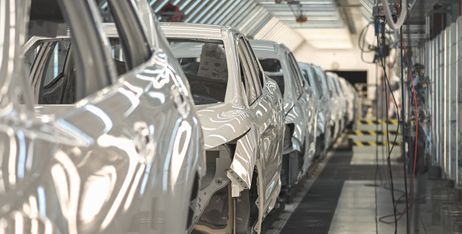
2022 EU car production and new car sales remain below pre-pandemic levels
The semiconductors shortage remained the main factor limiting EU passenger car production and sales in 2022, especially during the first half of the year, the European Automotive Manufacturers Association (ACEA) said on Tuesday February 7.The automotive industry is one of the largest consumers of steel, consuming about 12-15% of the global steel production, according to the World Steel Association (Worldsteel).
On average, a car contains around 820-1,134 kg of steel that is used for the car body, chassis, engine, transmission, and other components, depending on the type of vehicle and the manufacturing process.
Production
EU car production increased in the second half of 2022, which contributed to a year-on-year growth of 7.1%, totaling 10,769,893 units produced.
All major car producing countries in the EU reported growth, except Slovakia, with Germany leading the way with a 13.2% increase compared to 2021.
Central European markets, such as Romania, the Czech Republic, and Hungary, provided a strong boost to the region’s positive performance.
Despite the year-on-year growth, the 2022 figures were in line with those registered in 2020, when the industry was affected by Covid-19 lockdowns. The overall EU production output last year was still 24% lower than the 2019 pre-pandemic levels.
Passenger cars accounted for 82% of all vehicles manufactured in the EU, according to ACEA.
There are 134 car assembly plants in Europe, of which around 80 are in the EU.
New car sales
EU new car sales fell for the third consecutive year and reached the lowest level since 1993, amid a challenging economic environment and component shortages. In total, 9.3 million new units were sold in 2022.
Sales declined year on year in three of the EU’s four largest automotive markets: Italy (-9.7%), France (-7.8%), and Spain (-5.4%). Germany was the only exception, with a modest increase of 1.1%.
New car registrations in the EU are expected to rise by around 5% in 2023, putting registration volumes on par with 2020. Even if that level is achieved, total car registrations would still be lower than the 13 million units of 2019.
“Despite the many uncertainties ahead, the market should start embarking on a recovery process in 2023,” ACEA director general Sigrid de Vries said on January 31.
“We expect around 9.8 million new cars to be sold across the region this year, up 5% from 2022. However, this remains 25% below the 2019 pre-crisis levels, showing that we are still in a fragile situation,” she added.
Impact on the finished steel market
European hot-rolled coil prices have been under pressure due to weak automotive demand and overstocking during the second half of 2022.
The war in Ukraine has flustered the European steel market, and caused a wave of a panic buying in February-March 2022, with prices for flat and long steel reaching new historical peaks and breaking records set in the 2021 European summer.
Fastmarkets’ calculation of its daily steel hot-rolled coil index domestic, exw Northern Europe averaged €1,278.50 per tonne in March 2022, up by €326.49 per tonne month on month from €952.01 per tonne in February, and up by €489.60 per tonne year on year from €788.90 per tonne.
HRC prices began falling from April 2022 until the year-end, however, due to slowing automotive demand and competitive import offers. Automotive output in the EU has been in decline since because of acute component shortages and lack of consumer confidence caused by the energy crisis and recession concerns, sources said.
Fastmarkets’ calculation of its daily steel hot-rolled coil index domestic, exw Northern Europe averaged €642.73 in December 2022, up by €8.37 per tonne month on month from €634.36 per tonne in November and down by €273.67 per tonne year on year from €916.40 per tonne.
The demand for steel from the automotive industry has improved slightly in 2023 mainly due to a backlog of automotive orders, several sources said.
The 2023 outlook for the industry is discouraging, however. Eurofer expected the automotive sector output to have recovered by 2.7% in 2022, but this would mostly be a rebound from the low comparison base in 2021 due to a components shortage that year.
The sector was expected to return to growth in 2023, albeit very moderately (+1.1%), according to Eurofer.
Impact on scrap marketsThe year-on-year increase of car production in the EU boosted E8 scrap supply and pressured prices. Meanwhile, E3 scrap prices are on the rise due to reduced investments in the construction sector and, therefore, fewer demolition projects, from which E3 scrap is generated.
As a result, the spread between E8 and E3 scrap has narrowed to €10-15 per tonne in January from €15-20 per tonne in December. In January 2022, when car production in the EU was falling, the premium of E8 over E3 scrap was €70 per tonne in Germany, the region’s biggest car producer.
Pricing history
Steel scrap E8 thin new production steel domestic, delivered consumer Germany
Steel scrap HMS 1&2 (80:20 mix), Northern Europe origin, cfr Turkey

Published by: Julia Bolotova, Elina Virchenko
Swiss Steel develops new high-grade production process
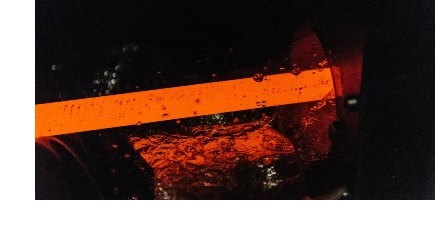
Swiss Steel says it has found a way to produce an ultra-fine-grained and tough high-grade steel which makes the need for additional alloys and special treatment obsolete, thanks to a controlled thermomechanical processing phase.
In the process it has named “Extreme Performance Technology (XTP)”, systematic temperature control and alternative forming processes produce an extremely ultra-fine-grain microstructure with grain sizes of less than 5 µm. Steel produced in this way is noted for improved properties with better dynamic and mechanical characteristics, the company explains to Kallanish.
While XTP-treated steel looks like conventional steel on the outside, its advantages are hidden beneath the surface. An ultra-fine-grained steel microstructure provides an unprecedented level of material resistance and strength, Swiss Steel claims. This creates possibilities and paves the day for versatile designs and unconventional component engineering, it notes.
The steel, produced at Swiss Steel’s Steeltec plant in Düsseldorf, Germany, withstands challenges such as intense vibration, high internal pressure or extreme cold. Even at ultra-low temperatures of -101°C, at which conventionally produced steel can become brittle and crack or break, the XTP steel grades retain a high toughness, according to Swiss Steel.
Christian Koehl Germany


Benteler terminates sale to Tenaris
Tenaris says that Benteler Steel Pipe & Tube Manufacturing Corporation has exercised its right to terminate the $460 million sale of its 400,000 short ton/year Shreveport, Louisiana, pipe plant, Kallanish learns.
“Benteler discovered that they had contracted to sell too cheap. Tenaris got bogged down in Hart Scott and other stuff. So, the clock ran out, and Benteler had the right to terminate,” says a US tubular distributor.
The deal was announced in July and was expected to be completed in Q4.
Kristen DiLandro USA
Leave a comment | View comments | Related articles | Steel Prices | Print Back to top
US raw production slips on-year
US raw steel production for the week of 4 February was 1.66 million short tons with a capability utilisation rate of 74.1%, Kallanish learns from the American Iron and Steel Institute. The figure represents a 5.2% decrease from the same week in 2022, when production was 1.74m st and utilisation was 80.4%.
Raw steel production increased by 1.3% since last week, when production was 1.64m st and capability was 73.1%.
The South produced 705,000 st of steel, while the Great Lakes region produced 528,000 st. The Midwest produced 207,000 st, the Northeast produced 152,000 st, and the West produced 64,000 st.
The adjusted year-to-date production through 4 February is 8.11m st with a capability utilisation rate of 72.5%. This is down 6.7% from the adjusted year-to-date figures for the same period last year, when the US produced 8.68m st at a rate of 79.9%.
Kristen DiLandro USA

Beltrame invests in French plant decarbonisation
AFV Beltrame Group will start the new reheating furnace at its French merchant bar facility Laminés Marchands in Trith-Saint-Léger on 9 February.
The equipment replaces an outdated furnace, for an investment of €22 million ($23m) in the framework of the steelmakers’ major commitment to reduce its CO2 emissions by 40% by 2030 compared to 2015 for all European plants. Beltrame is launching its “Chalibria” carbon-neutral steel, for the upstream Scope 1, 2 and 3 emissions in the “cradle-to-gate” value chain, the Italian steelmaker’s head of business development, Carlo Beltrame, tells Kallanish.
Considering the Scope 1 CO2 emissions, the French site is currently the best-performing plant of the group. The new furnace has an increased performance and significantly reduced energy consumption needing 17% less gas compared to the dismantled reheating furnace. This translates into a 6% fall in the plant’s CO2 emissions.
The Chalibria project started two years ago following a three-step decarbonisation approach: measuring CO2 emissions, identifying actions and reducing emissions. This approach led to the definition of a decarbonisation plan that includes a list of new investments to be deployed across the group’s facilities in Italy, France, Switzerland and Romania by 2030.
The calculation of the Scope 1+2+3 carbon footprint of Chalibria is verified by independent certification body RINA, in accordance with ISO14064-1. Chalibria’s carbon neutrality is achieved by offsetting CO2 emissions through the purchase of carbon credits on a voluntary basis, in line with the PAS2060 (specification for the demonstration of carbon neutrality) certification.
Scope 1, 2 and 3 upstream emissions are currently about 70% below the emissions average for the steel industry and 15% below the European average of electric arc furnace players, Beltrame claims. By 2030, the group’s decarbonisation plan targets to reduce 40% of Scope 1 and 2 emissions. The main projects of the decarbonisation plan are related to production efficiency, circular economy and green energy sourcing.
In France, Beltrame operates a mill with a 700,000 tonnes annual capacity and two rerolling lines with a total capacity of 600,000t.
Natalia Capra France
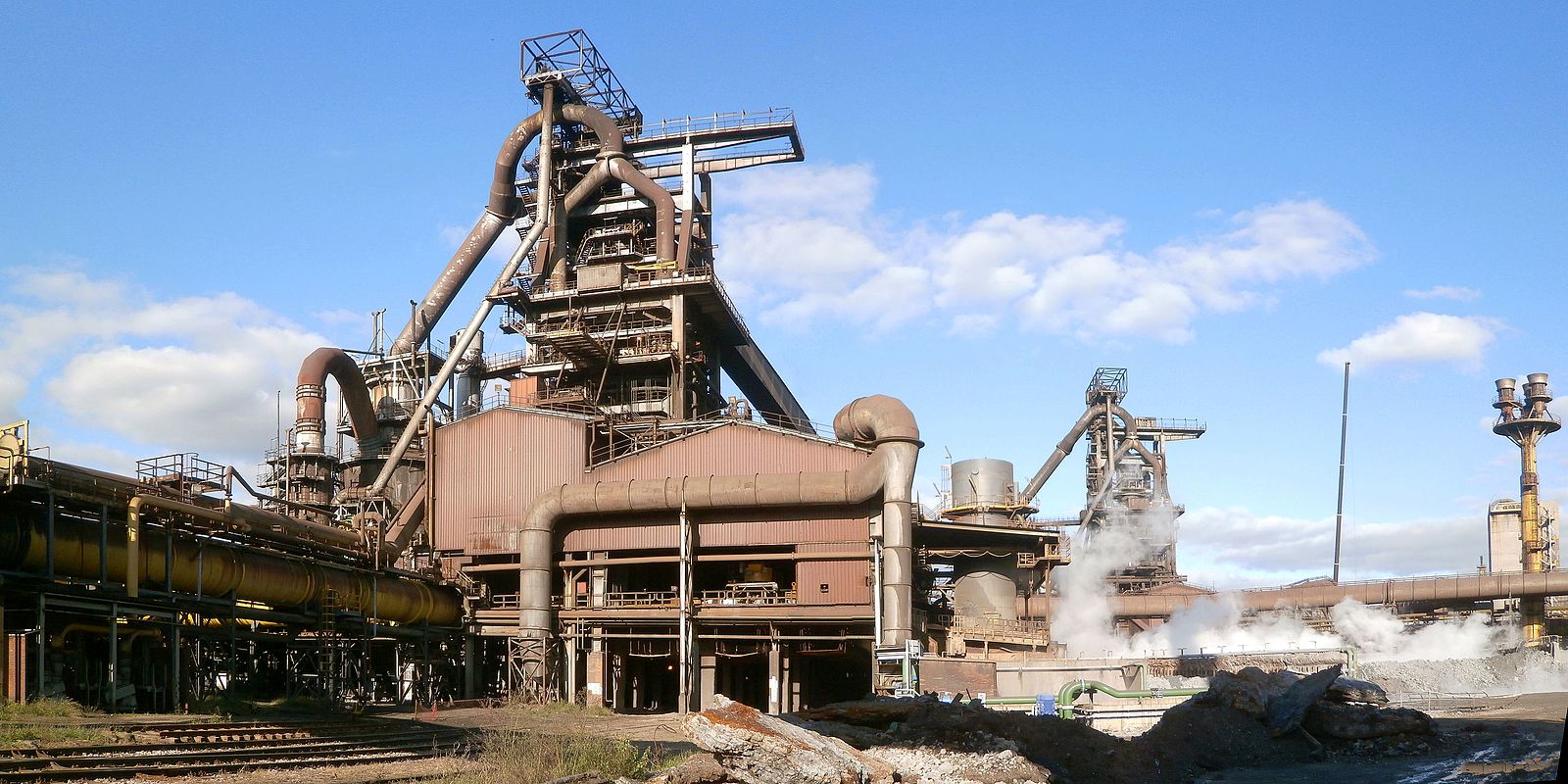
ArcelorMittal Gijón’s blast furnace A resumes production
ArcelorMittal tells Kallanish it restarted pig iron production at blast furnace A at the Gijón mill in northern Spain on Tuesday. The equipment was idle since late September due to the uncertain economic scenario and poor market conditions.
“After successfully completing all BF A reheat activities on Monday, including the start of the new secondary chimney at the Sinter B plant, today [7 February] we began producing pig iron,” a company spokesperson said. The steelmaker declined to comment on its current utilisation rate, although it confirmed that “production is adapted to the market situation, amid still low demand”.
Gijón’s two blast furnace have annual capacity to produce 4.7 million tonnes of steel.
Meanwhile, ArcelorMittal has ended the existing temporary employment regulation scheme (ERTE) for its workforce at BF A, which involved 250 employees.
Todor Kirkov Bulgaria
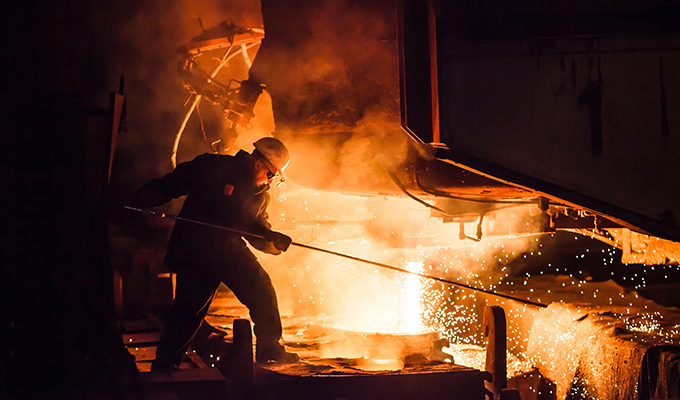
INTERVIEW: Liberty Steel advances decarbonization despite challenging market conditions
As the UK steel industry is making faster progress towards decarbonization compared to its European counterparts, Liberty Steel is focusing on its low carbon steel, Greensteel, amid demand across certain markets, a senior official at the steelmaker told S&P Global Commodity Insights.
“Greensteel as a commodity has not been fully tested yet but we’re already seeing some markets start to embrace it – green buildings, high-end automobiles and so on,” Liberty Steel’s Chief Transformation Officer Jeffrey Kabel said in an interview.
“The pace of change will accelerate and it’s our role as producers to sell it and to create the market for Greensteel,” Kabel said.
The UK was making the right noises to support the industry and its pathway towards decarbonization, he said.
For its part, Liberty Steel remained committed to achieving its pledge for net zero carbon emissions across all of its operations by 2030 supported by the recycling of steel scrap while transitioning towards less emission-intensive power sources such as natural gas and hydrogen.
“Government has made some welcome policy changes over the past couple of years, and I think they increasingly see steel as a strategic industry,” said Kabel.
“There’s a high degree of political consensus – both parties are on the same page. Even so markets will remain tough and for UK steel producers to compete we will need reform in energy markets and changes in carbon border rules. I do think things are moving forward,” he said.
Some major UK producers are reportedly about to receive large funding packages from the UK government in order to sustain their business and decarbonize their steelmaking operations, which is likely to include the installation of electric arc furnaces, or EAFs, using steel scrap.
One probable outcome of the decarbonization of the UK steel industry was increased demand for high-quality steel scrap, of which the UK is a large-scale exporter.
Kabel said there was still a reluctance by the government to halt steel scrap exports, despite the probability of increased demand from steelmakers. He noted, however that there were no issues concerning scrap availability in the UK at this point of time.
“The UK generates a lot of scraps and that can be a huge asset for decarbonizing its steel industry.,” he said.
“That’s the beauty of our Rotherham plant – logistically it’s in the right place to get scrap to. If the government can do more to facilitate the domestic use of scrap, then that will help speed the transition to EAFs.”
Specialty steel
Despite a weak economic backdrop, Kabel said Liberty continued to see good demand across specialty markets, such as aerospace, energy infrastructure and defense.
“We’re focusing on specialty steel products as those markets are very strong,” he said, adding that aerospace was coming back way faster than anyone thought.
“Key customers really value our specialist alloys and components and that’s underpinning our plan this year at Stocksbridge. Plate demand is strong too,” Kabel said.
Meanwhile, Kabel pointed to a challenging period for the business in recent months with surging inflation and heightened volatility across global commodity and shipping markets weighing on profitability within the steel industry.
“Since the Ukraine war, there’s a greater focus on domestic industrial policy and the baseload capacity to produce in-country,” he said.
— Euan Sadden


Earthquake damage at Iskenderun port continues to affect shipments
Shipping operations at the major Turkish port of Iskenderun continue to be affected following the major earthquakes in the region Feb. 6, with damage assessments at the port continuing Feb. 7.
Logistics company Maersk said in a Feb. 7 statement that Iskenderun Port was significantly damaged and a subsequent fire broke out among containers at the terminal following the earthquake.
“It’s not yet known how long recovery efforts will take and when the port can undergo a full inspection of the damage. At this time, we are not accepting any new bookings to and from Iskenderun,” the company said.
The operator of the port, Limak Holding, said damage assessments were ongoing.
Iskenderun is one of the largest container ports in the Eastern Mediterranean region, with a capacity of over 1 million TEU/year and dry bulk capacity of 2.5 million mt/year.
Steel mills continued to be impacted by damage to some highways and ports, as well as the lack of natural gas flow and electricity in the affected regions.
Large steelmakers in the impacted regions had also been focusing more on rescue efforts.
MMK Metalurji, the Turkish subsidiary of Russian steelmaker Magnitogorsk Iron & Steel Works, said Feb. 7 it had opened its doors to workers and their families affected by the earthquake.
Mills in the region were expected to remain closed for a while, amid energy cuts and damage to ports and highways, which could impact scrap and steel pricing, as the mills located in the region produce at least around 25% of Turkey’s steel production, according to S&P Global Commodity Insights’ calculations.
Platts, part of S&P Global, assessed Turkish imports of premium heavy melting scrap 1/2 (80:20) at $427.50/mt CFR Feb. 6, while assessment for Turkish exported rebar was at $700/mt FOB, both stable on the day.
— Cenk Can

UK’s TRA proposes keeping antidumping measure on heavy plate steel from China
The UK government’s Trade Remedies Authority has proposed that the UK keep the antidumping measure on heavy plate steel from China until March 1, 2027, according to interim findings in a transition review published Feb. 7.
The UK imports around 100 mt/year of heavy plate from China and the TRA was investigating whether duties were still needed to counter dumping of these imports at prices below what they would be sold for in China.
It provisionally found that if the antidumping duties were removed, dumping and injury to UK producers would likely recur, while maintaining the measures would benefit UK producers and their suppliers without materially harming any other UK interests.
“Our provisional finding is that the UK should retain existing tariffs protecting domestic producers of heavy plate steel, concentrated in Motherwell and Gateshead, from unfair Chinese imports,” TRA CEO Oliver Griffiths said.
He said the economic analysis had also given weight to the projected negative impacts on the upstream steel supplier if the measures were revoked.
The measure covers certain flat products of non-alloy or alloy steel often used in making construction, mining and logging equipment, in oil and gas pipelines, for shipbuilding, and in construction of bridges and buildings.
The findings are provisional, with the TRA calling for affected businesses to comment via its online case platform before March 4.
It will then review any further evidence and submit its final recommendation to the Secretary of State for International Trade, who will make a final decision on retaining the measure.
In addition, the TRA said it had also launched a transition review into antidumping measures on imports of corrosion resistant steels from China.
This measure was inherited from the EU and the TRA will review it to establish whether it is still suitable for the UK’s needs and required to protect the UK industry.
The products under review include flat rolled, iron/alloy/non alloy steel, plated or coated by hot dip galvanization with zinc and/or aluminum and/or magnesium, which made steel rustproof.
Corrosion resistant steel is mainly used in the construction and automotive industries.
The TRA said coated steel, which includes corrosion resistant steels, was “seen as a prospective growth area for the UK steel industry — representing future revenue opportunity worth nearly GBP1 billion [$1.2 billion] annually by 2030.”
The investigation will look at calendar year 2022, while the injury period was set as 2019-2022.
Affected businesses can registering their interest on the TRA’s online case platform by Feb. 15.
Platts, part of S&P Global Commodity Insights, assessed the monthly European plate import price at Eur740/mt ($791.69/mt) CIF South European ports Jan. 10, unchanged month on month.
— Jacqueline Holman