


Boosting steel scrap recycling in the EU: EURIC Position Paper
Debunking myths & setting a clear pathway to decarbonise steel through recycling
Europe champions steel recycling, both in terms of quantity and quality delivered to steel mills every year. Since 2007, the quality of recycled steel materials is defined in an EU-27 specifications which are based themselves on earlier specifications (1995 EUROFER – EFR specifications).
These specifications standardize the qualities (grades) of recycled steel scrap that are delivered by the recycling industry to steel mills. It ensues from these specifications that steel recycling facilities use as inputs waste and scrap containing ferrous metals which are reprocessed into recycled steel scrap meeting these specifications (e.g. as E1, E2…E40 quality grades).
These recycled materials are used by steel mills in Europe and globally as a substitute or as a complement to iron ore, thus enabling major carbon savings and circular economy gains.
The European steel recycling industry currently recycles on average 100 million tons of ferrous waste for about €40 billion turnover and employs several thousand non-outsourceable workers across Europe. On average 80% of that amount is used domestically by European steel mills and 20% are exported.
With a supply of recycled steel scrap that structurally exceeds the demand in Europe, there is no risk, presently or in a foreseeable future, of supply shortages that could justify trade restrictions. In a similar fashion, while recycled steel scrap plays an essential role to decarbonize steelmaking in the EU and globally, recycled steel scrap cannot be labelled as being a critical raw material since it is everything but scarce, at least in the EU.

EU sources expect long steel prices to climb in near term amid availability concerns
Most market participants expect long steel prices in Europe to rise in the near term amid availability concerns after the recent major earthquakes in Southeastern Turkey and Syria, sources told S&P Global Commodity Insights.
“Unfortunately, we are expecting long steel prices to move up in a few weeks’ time,” one European mill source told S&P Global, in the aftermath of the earthquakes in Turkey and Syria Feb. 6. “The flow of imports will definitely come down in the coming weeks, which will mean an improvement in prices.”
Turkish mills have been major exporters to European countries for long steel products like rebar and wire rod evident by the quick exhaustion of Turkish-imported long steel European safeguard quotas in the past.
Little demand for January-March quota period
For Turkish-origin rebar imports into Europe, the October-December 2022 quota of 90,857 mt was exhausted Oct. 1, 2022, while about 30% of 114,236 mt of October-December 2022 quota of Turkish-imported wire rods was transferred to the January-March safeguard quota period.
However, Turkish mills saw little demand for the January-March quota period from Europe. For the current quota period that started Jan. 1, 52,252 mt, or 58.8%, of a total of 88,881 mt of Turkish-origin rebar imports was still awaiting allocation at 6:30 pm London time Feb. 10.
Elsewhere, 138,982 mt, or about 95.6% of a total Turkish-origin wire rod quota of 145,329 mt, still remained as of 6:30 pm London time Feb. 10 for the January-March quota period.
A second European mill source indicated that quota was not fully booked from Turkey for the January-March quota period as weather conditions and high inventory levels over the past quarter impacted demand. The source also noted that competitive prices from Egypt and Algeria also affected demand for Turkish long steel products.
Platts, part of S&P Global Commodity Insights, assessed Turkish exported rebar at $670/mt FOB on Dec. 31, 2022, down from an intrayear high of $970/mt FOB reached March 24, 2022. Platts current assessment of Turkish exported rebar stood around $700/mt FOB on Feb. 10, as the market was mainly on hold amid the ongoing crisis.
Amid the recent earthquakes and ongoing crisis in the Southeastern part of Turkey, the European mill source noted that customers in the Mediterranean Sea region were inquiring about rebar amid concerns that some cargoes might not be able to be delivered from Turkey.
“Customers are more concerned if we have availability in case the material cannot come,” the source said.
“Prices in the European domestic market are currently stable for rebar,” the source said. “We were planning to increase prices after last week but since the situation in Turkey we are in a wait and see mode. One point of view is that scrap prices will be going down, but the other point of view is that there might be a lack of rebar in Europe,” he said, implying that limited availability of rebar might support higher prices.
Platts’ assessment of Northwest Europe Rebar decreased Eur5/mt to Eur710/mt ex-works week on week to Feb. 8, according to S&P Global data.
Domestic scrap prices expected to soften
“Prices might increase for finished steel products [in Europe], but we can see the full effects of it in a few weeks,” another European mill source said. “It is too early to tell, and there are other factors too, like other importers and scrap prices.”
“Because of the crisis … [the importers’] capacity to receive scrap in Turkey is going to be lower, which will mean more supply in Europe, which can lead to lower prices for scrap,” the source said. “So, we can have a better idea about the situation in a few weeks.”
Platts assessed Turkish imports of premium heavy melting scrap 1/2 (80:20) at $427.50/mt CFR Feb. 10, unchanged from Feb. 9.
Amid uncertainties regarding near-term scrap demand from Turkey, domestic ferrous scrap prices in Northern Europe softened in February, as mills resisted seller attempts for further hikes. In Northern Europe, Platts’ assessment for domestic shredded scrap was at Eur382.50/mt delivered to the mill Feb. 10, down Eur5/mt month on month. Platts’ assessment for Southern European shredded scrap was at Eur390/mt delivered to the mill Feb. 10, unchanged month on month.
One distributor source in the Benelux region said it was too early to deduce “what the real impact might be on imports or domestic prices in the region after the earthquake in Turkey.”
Meanwhile, Turkish steel mills in the impacted regions of the Feb. 6 earthquakes were aiming to restart production as soon as possible, as no serious damage was reported at most of them, the mills said Feb. 10.
— Rabia Arif


EU opens Chinese HDG anti-dumping duty expiry review
The European Commission confirmed last week the opening of an expiry review for anti-dumping duties against certain corrosion-resistant coils originating from China, Kallanish notes.
The original measures were first imposed in late 2017. Currently, duties range from 17.2-27.9% depending on the mill. The measures currently do not include automotive grade hot-dip galvanized coil and were last reviewed in 2020.
The expiry review has been requested by Eurofer, which argues the termination of the measures in place will result in a recurrence of dumping and injury to the European industry.
“[Eurofer] alleges the likelihood of recurrence of injury from China. In this respect, the applicant has provided evidence that, should measures be allowed to lapse, the current import level of the product under review from China to the Union is likely to increase due to the existence of unused capacity in China,” the note by the European Commission explains.
“In addition, the surplus of supply due to low steel demand in China due to post Covid-19 developments, the measures imposed from other third countries against imports of certain corrosion resistant steels from China, as well as the significant and continuous decrease of the freight costs from China to the Union is likely to lead to the redirection of the imports of the product concerned to the Union market, if measures expire,” it adds.
Eurofer also provided evidence that Chinese exporters are selling their products in other markets at prices much lower than the one seen in the EU market, confirming therefore that the latter remains an attractive market for Chinese exporters.
According to Eurofer data, Chinese-origin imports of HDG in Europe fell significantly from the peak of 1.9 million tonnes in 2016, following the imposition of duties. Last year, nevertheless, these surpassed 700,000t, up from 550,000t in 2021.
The expiry review will be concluded by the second quarter of 2024. In the meantime, the existing measures will remain in place.
Emanuele Norsa Italy


Iskenderun mills suspend contracts amid force majeure conditions
At least four mills in the Iskenderun area, a major steel production hub across which output remains halted following the earthquake on 6 February, have declared force majeure.
In a letter sent to business partners, the mills say the state of emergency called by presidential decree and enacted by parliament last week has seen a force majeure enter into force legally. In cases not specified in contracts, force majeure arising from natural disasters specified in the laws is still valid, the letter points out.
“The contracts between our parties have been suspended for an indefinite period of time due to force majeure caused by natural disasters. We hereby notify you that you will be informed as soon as possible in case of any improvement in the current situation,” the mills state in the letter seen by Kallanish.
A source at one of the mills in question clarifies that contracts have been temporarily suspended and that this is not a final force majeure declaration which terminates contracts.
Although no mill has declared significant damage to production facilities, workforce shortages remain the main problem hindering production.
A southern Turkish steel mill source says: “The current situation may last for another 15 days or a month. At least four steel mills have sent these letters to their business partners. Customs are closed in the region and it is not possible to run operations at ports. Even if you discharge scrap in ports, its relocation is subject to a state of emergency permit which I believe would not be granted. Let’s say permission is granted, but then there is no one to carry out work. We lost some of our colleagues, and most of them have lost families, relatives and 70% of them their homes.”
On the other hand, almost all mills have opened their facilities as shelter for affected people, and sent some of their equipment, like cranes, to aid rescue efforts.
Some small scrap vessels are heard being redirected to other destinations, while some large vessels are still anchored at sea, off the coast of Iskenderun. One large mill, however, is heard to have started running its operations at its own port. Some southern mills are trying to redirect scrap vessels to sister mills in other regions.
The immediate impact of the earthquake will be a significant fall in Turkish steel production in February after the January recovery. However, in the longer run, an increase in domestic steel consumption is expected due to the reconstruction of the destroyed cities. Fears are also growing over a potential earthquake exceeding 7 on the Richter scale occurring in the Marmara region. This would also require substantial reconstruction activity.
With the removal of debris in earthquake-affected areas, domestic scrap supply is expected to increase as well.
Burcak Alpman Turkey
Italian re-rollers seek increases
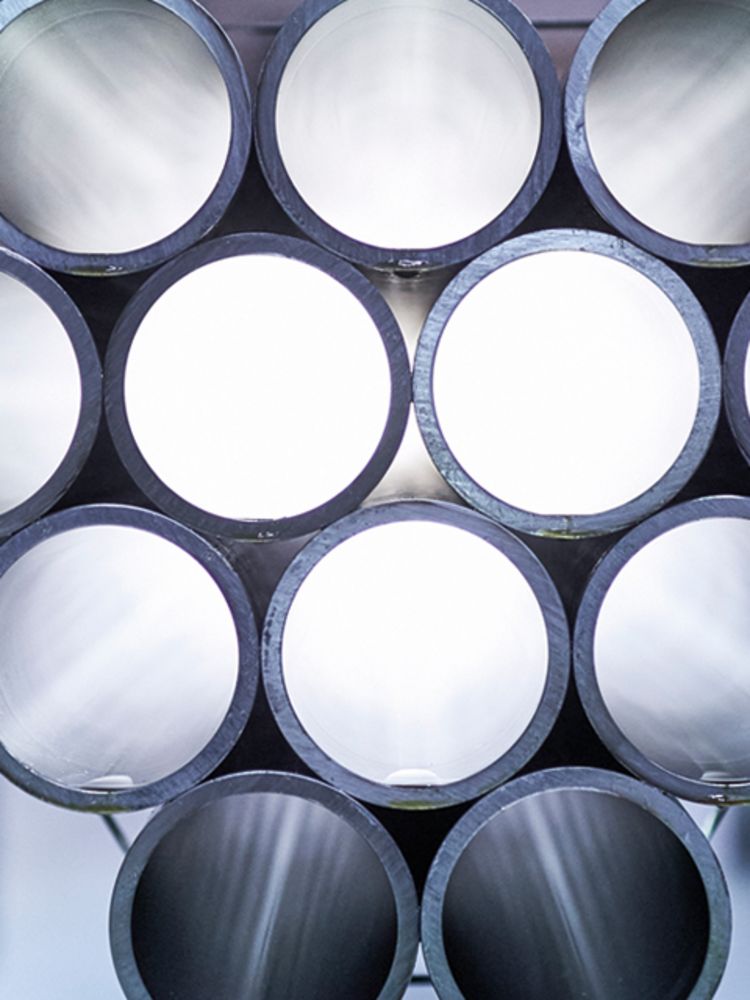
Italian re-rollers are in the process of decreasing tube discounts. Some intend to accelerate the price increase with the objective of catching up with hot rolled coil prices hikes.
Welded tube values in Italy and the rest of Europe are lagging behind HRC values by some €50/tonne ($53), sources in the market tell Kallanish.
While demand remains patchy, depending on end-user sector, welded tube prices continue to increase by one or two points per week, reaching 30-31 points in Italy. Each point of discount is equal to €12-13/t depending on product. After consolidating at the level of 30, re-rollers intend to reach 25 points gradually by 1 March.
While some end-users, like the automotive and appliances sectors, continue to order less material, demand is being sustained from the infrastructure, construction, energy, yellow goods and tractors sectors. Overall demand is more positive compared to the fourth quarter last year, despite the distribution sector’s careful purchasing attitude.
Discounts in Italy reached some 36 points in December. Domestic asking values for HRC are now at some €800-820/t base ex-works.
Natalia Capra France
ArcelorMittal goes for fresh EU coil offer increase
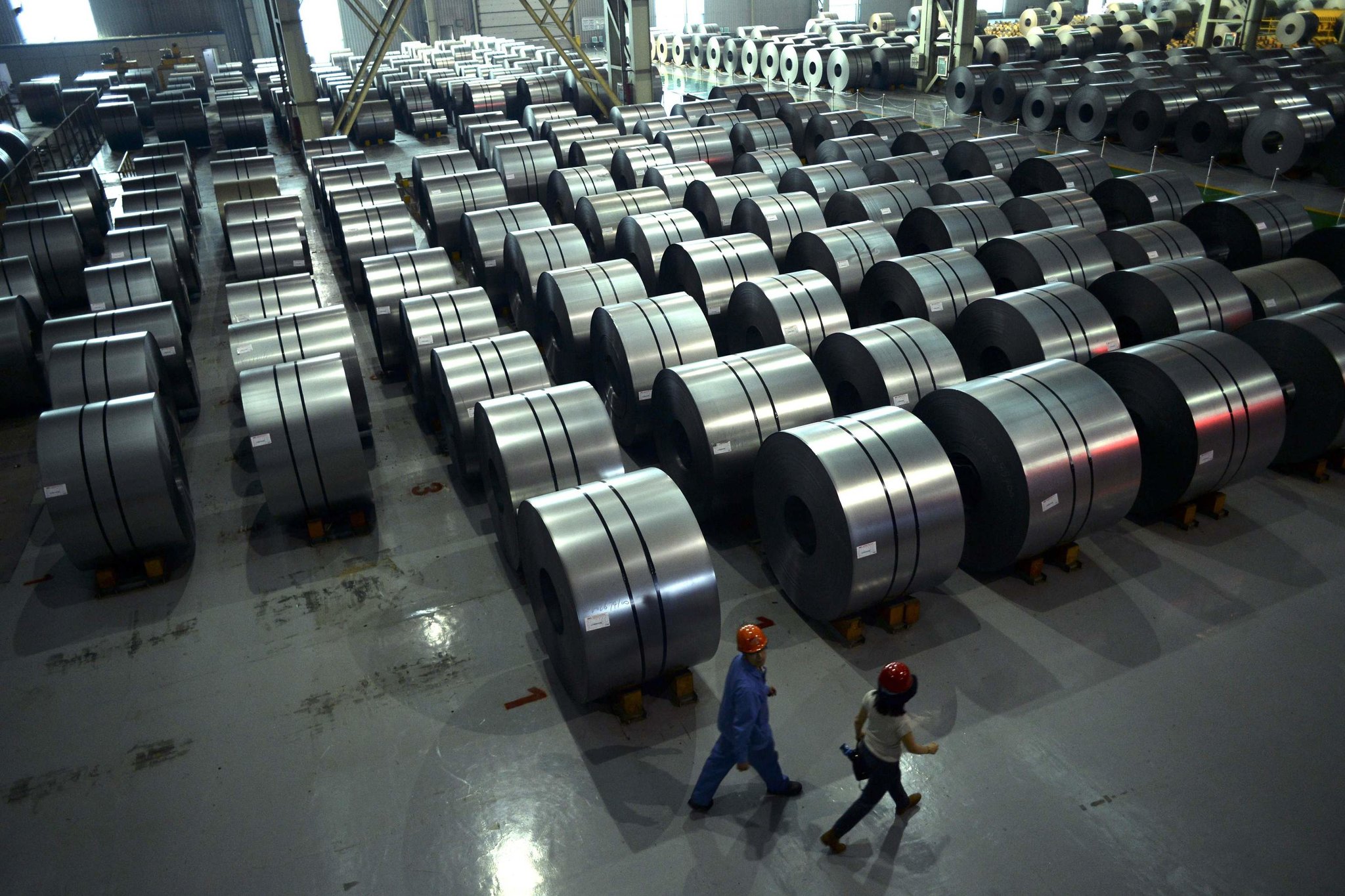
ArcelorMittal is pushing coil offers in Europe up further. They are now at €820/tonne ($878) delivered across Europe for hot rolled coil, up some €40/t compared with the last offers heard at the end of January, sources in the market tell Kallanish.
The new offer levels are set be applied to all new European orders. Hot-dip galvanized coil offers should be lifted to €940/t base as a result.
European coil prices are continuing their recovery, but at a slower pace than suggested by the latest ArcelorMittal price hike. According to Kallanish price indices, transaction levels in northern Europe were still at some €740-770/t last week, while in Italy they are also yet to reach €800/t.
ArcelorMittal said last week in its 2022 earnings report that the peak of the destocking that negatively impacted European steel demand in 2022 has now been passed. In 2023, the company expects apparent steel demand in Europe to recover some 0.5-2.5% year-on-year.
Emanuele Norsa Italy