


Northern European wire rod prices not workable, producers say
The Northern European wire rod market was quiet in the week to Wednesday February 15 after most buyers chose to restock in January, Fastmarkets heard.
Sources said there’s no logic in prices continuing to fall because input costs for iron ore and scrap have been rising and underlying consumption from the construction industry has been relatively stable.
Market participants forecast a future downtrend reversal across long products in Northern Europe.
Fastmarkets’ weekly price assessment for steel wire rod (mesh quality), domestic, delivered Northern Europe was €710-725 ($762-779) per tonne on Wednesday, narrowing upward by €30 per tonne from €680-725 per tonne week on week.
Mills are likely to resist any further downtrend in the Northern European wire rod market, sources said.
Despite cut and benders offering unworkably low prices to end-users and attempting to restock at similar price levels, mills will not offer further discounts, sources said.
Consumption levels from public and industrial projects remain robust and fears regarding a worsening recession have been overstated, sources said.
“Domestic prices will go up,” a producer source said. “At the moment, we are not working with a realistic or workable price. Iron ore and scrap prices are going up so there is no reason why prices are so depressed.”
“Demand, aside from in the private housing sector, is stable in Northern Europe,” a buyer source from Germany said. “For whatever reason, be it negative sentiment or overcapacity among cut and benders, prices are unworkably low.”
The impact of a recession on the construction industry has been overstated, sources said, with bearish sentiment unreflective of the current market situation. This opinion was similarly stated in the the International Rebar Producers & Exporters Association’s (IREPAS) short-term outlook.
“It seems that customers heard too much talk of recession last year and were convinced that all construction would stop in 2023,” the IREPAS outlook said.
“Actually it looks like Europe managed to avoid recession in 2022 and even in January, Germany showed economic growth. Core inflation is going down and the situation looks much better than expected in Europe and the US,” the outlook added.
Sources remained uncertain regarding the impact of the earthquake in Turkey on the market.
“Attention is focused on Turkish steel mills. Logistical problems in terms of getting raw materials into mills have made production more difficult, in turn potentially limiting production capacity,” a second producer source said.
A reduction of Turkish imports into Europe could increase demand for domestic stock, sources said.
International scrap prices, which have been rising since December 2022, affect the price of all long steel products.
Fastmarkets’ daily calculation of the index for steel scrap, HMS 1&2 (80:20 mix), North Europe origin, cfr Turkey was $410.79 per tonne on February 15, down from $418.62 per tonne last week.
Published by: India-Inés Levy


Price rises expected in Northern European rebar market
Current price levels in the Northern European rebar market are not considered workable by producers, Fastmarkets heard.
Rising input costs and stable consumption levels have resulted in depressed prices no longer reflecting market realities, sources said.
Aside from the private housing sector, demand from public and industrial construction projects was reported as stable.
Negative sentiment regarding a recession and overcapacity among cut and benders has put pressure on prices, but the bearish outlook has not been reflective of underlying consumption levels which are relatively robust, sources said.
Mills are unlikely to accept further price drops, because it would bring prices below the cost line, sources said.
Fastmarkets’ weekly price assessment for steel reinforcing bar (rebar), domestic, delivered Northern Europe was €710-730 ($762-784) per tonne on Wednesday February 15, up by €20 per tonne from €690-710 per tonne week on week.
Market activity remained quiet in the Northern European rebar market in the week to February 15, because buyers restocked in January.
Despite weak demand, underlying consumption from public and industrial projects remained robust, sources said.
“The market is very quiet at the moment. Such a quiet market is unusual for this time of year, especially as the weather is good,” one buyer source from Germany said.
The buyer source, however, maintained that demand was stable.
“Demand, aside from in the private housing sector, is stable in Northern Europe,” the source said. “For whatever reason, be it negative sentiment or overcapacity among cut and benders, prices are unworkably low. Cut and benders are speculating on further reductions, which are not going to happen. Mills cannot drop prices further but also have minimal leverage.”
Future price rises are expected, Fastmarkets heard.
“Domestic prices will go up,” a producer source said. “At the moment, we are not working with a realistic or workable price. Iron ore and scrap prices are going up so there is no reason why prices are so depressed.”
The impact of a recession on the construction industry has been overstated, sources said, with bearish sentiment remains unreflective of current market situation. This opinion was similarly stated in the International Rebar Producers & Exporters Association’s (IREPAS) short-term outlook.
“It seems that customers heard too much talk of recession last year and were convinced that all construction would stop in 2023,” IREPAS said in the outlook.
“Actually it looks like Europe managed to avoid recession in 2022 and even in January, Germany showed economic growth. Core inflation is going down and the situation looks much better than expected in Europe and the US,” the outlook added.
Sources remained uncertain what the impact the earthquake in Turkey will have on the market.
“Attention is focused on Turkish steel mills. Logistical problems in terms of getting raw materials into mills has been affected, in turn potentially limiting production capacity,” a second producer source said.
“We are waiting to get a better understanding of how this could impact the market, but it will likely reduce Turkish imports of long products into Europe,” the source added.
International scrap prices, which have been rising since December 2022, affect the price of all long steel products. Prices have fallen in the week to February 15.
Fastmarkets’ daily calculation of the index for steel scrap HMS 1&2 (80:20 mix), North Europe origin, cfr Turkey was $410.79 per tonne on February 15, from $418.62 per tonne last week.
Published by: India-Inés Levy

EU HRC producers insist on higher prices despite slow trading
European steelmakers are insisting on higher prices for hot-rolled coil despite buyer hesitation on positive trend sustainability and limited trading activity, sources told S&P Global Commodity Insights Feb. 15.
Earlier this week, ArcelorMittal and other European steelmakers increased offers to Eur820/mt delivered across Europe. The new offers were the equivalent of about Eur790-805/mt ex-works Ruhr and of Eur780-800/mt EXW Italy, according to estimations of market participants.
Buyers have been reluctant to accept the price increase, and trading activity remained limited.
The resistance of the distributors to accept the higher prices has been mainly driven by a combination of uncertain outlooks and the fact that they struggled to transfer the price increases to end-consumers.
“The distributors argue that they are squeezed between the resistance of end-users, such as [original equipment manufacturers], to accept higher prices despite good prices for finished goods and rising steel prices from the mills,” a German service center said. “Buyers book only absolutely required volumes as concerns remain high that prices would drop in the second half of the year.”
“It is not easy to push price rises for the material ex-distributor to end-users, so price rises for new material have also slowed down,” an Italian trader said.
Some buyers have also suggested that the mills would give discounts if they received firm bids. Such statements, however, have not been supported by information about any new transactions.
The supportive mood of the steelmakers has been driven by good order books, a lack of competitive import offers, and stable demand.
The European mills have limited volumes for April rolling HRC and a majority have already been trading May production material.
Platts assessed domestic prices for HRC in Northwest Europe at Eur785/mt EXW Ruhr Feb. 15, up Eur15 on the day, based on tradable values reported at Eur760-800/mt EXW Ruhr and offers heard at Eur820/mt delivered Ruhr.
The assessment for the import HRC prices in the region rose by Eur10 to Eur750/mt CIF Antwerp Feb. 15. Import offers for Asian material have been heard at Eur740-770/mt CIF Antwerp.
Platts assessed domestic prices for HRC in South Europe at Eur770/mt EXW Italy, up by Eur10.
Market sources reported tradable values at Eur750-780/mt EXW Italy. One source reported deals at Eur760-770/mt EXW Italy. Italian mills have been offering HRC at Eur820/mt delivered.
Import offers, in the meantime, have been reported at Eur740-770/mt CIF for HRC from Asia.
Platts assessed prices for imported hot-rolled coil in South Europe at Eur750/mt CIF Italy Feb. 15, up by Eur10.
Import prices need to be about Eur70-100/mt below the domestic coil prices to spur buyer interest, according to market sources.
Platts is part of S&P Global Commodity Insights.
— Maria Tanatar

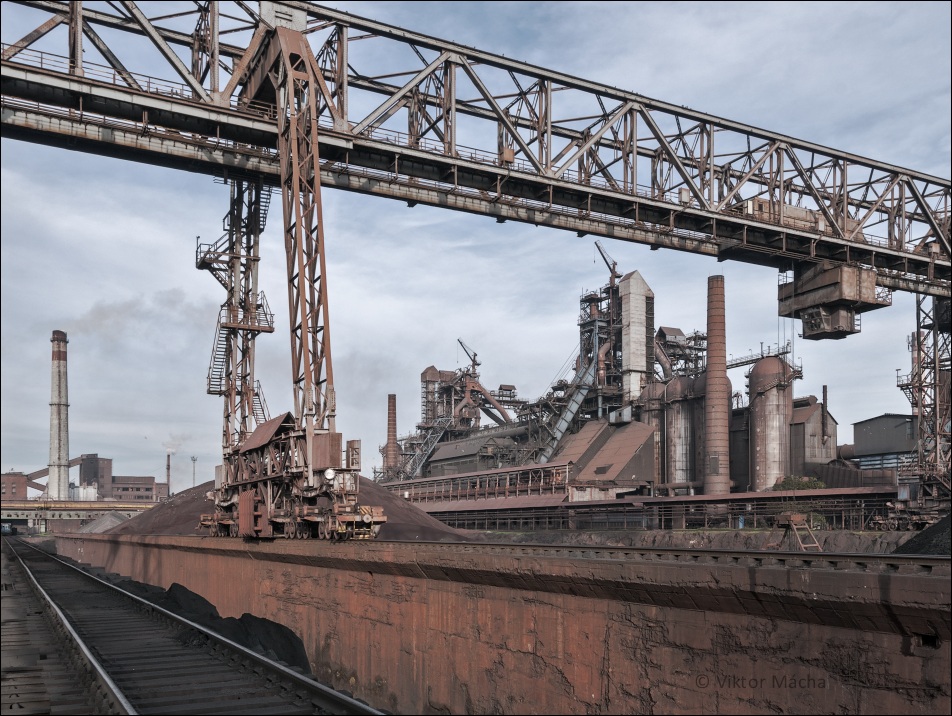
Dunaferr restarts blast furnace amid market uptrend: sources
Dunaferr has restarted one of its two idled blast furnaces after months of completely suspended production. Coking coal feedstock for the troubled Hungarian steelmaker’s coking plant, the shortage of which was a major factor behind the production stoppage, has been supplied by Liberty Steel, informed sources tell Kallanish.
Iron ore feedstock has been sourced from stock, according to one source, and is sufficient to ramp up production, but significant fresh supplies must follow to ensure its continuation, especially considering logistical problems and the Ukraine war.
Liberty Steel is said by various sources to be managing Dunaferr’s restart, having signed a short-term contract to run the steelmaker. This is, however, yet to be confirmed by Liberty, which also owns and operates the Galati, Ostrava and Czestochowa mills in Romania, Czech Republic and Poland respectively.
“In this configuration, Dunaferr should generate significant losses,” says a source of the latest development. “But the [Hungarian] government ensured six months of salary as well as free electricity and natural gas, so it’s pretty much a warm bath for Liberty, who may later take over assets against cash they spent for coal.”
Hungarian Prime Minister Viktor Orbán said earlier this month that besides paying the salaries, the government will also work to find a reliable new owner for the troubled steelmaker. Ukraine’s Metinvest recently expressed its interest in acquiring the insolvent mill.
Some sources also suggest Dunaferr plans to restart its hot strip mill in March and supplement captive slab feedstock with slab sourced from Liberty Galati. Dunaferr’s BF1 will remain out of operation, possibly permanently if it has sustained irreparable damage as a result of its prolonged shutdown.
Liberty Steel declined to comment.
Now is an opportune time for Dunaferr to come back onto the hot rolled coil market, with European producers increasing prices consecutively since December. Market leader ArcelorMittal raised its HRC quote this week to €820/tonne ($878) delivered across Europe. Coated coil is also reported to be in strong demand.
Regional sentiment has improved following the peak of destocking, coupled with reduced supply in the fourth quarter last year. Contrary to fears, Europe also managed to avoid recession in Q4, while inflation has eased and energy prices fallen.
Adam Smith Poland


French scrap prices flatten after Turkish earthquake
French and domestic scrap prices are more or less stable compared to January, with some €5/tonne ($5.3) increase. However, before the Turkish earthquake, mills in Luxembourg and Belgium agreed to hikes of €20-25/t month-on-month, in line with the European market trend before the event.
Shredded and chiselled E40 and E1 remain in short supply, while E8 new arisings is abundant. Demand is patchy this month – rather strong in Luxembourg but more moderate in France where producers are witnessing a continued downturn in sales of finished long products, sources tell Kallanish.
So far, French domestic shredded E40 grade is pegged at €375-380/t delivered on average. The mixed E8 grade remains flat at €350/t on average. Demolition E1 and E3 are on average at €330/t and €350/t delivered respectively this month, sources suggest.
Meanwhile, scrap prices in the Benelux have fallen gradually since the earthquake hit Turkey. Business activity remains quite weak as Benelux exporters are avoiding buying scrap until there is more clarity over the Turkish market situation. Benelux exporters’ dock prices, which were on an upward trend and at around €350-360/t delivered a week previously, were mostly at €315-320/t in Belgium and €320-325/t delivered in the Netherlands on Monday (see Kallanish 14 February).
Natalia Capra France

Italian HRC increases further
Italian coil demand has gone quiet after the strong sales of recent weeks. Hot rolled coil contract prices are now increasing by €20/tonne ($21) compared to last week, but service centres are beginning to adopt a wait-and-see attitude, Kallanish hears.
Local steelmakers are increasing their HRC offers to €800-820/t base ex-works or delivered, from last week’s €780/t. ArcelorMittal is also pushing coil offers in Europe up further. They are now at €820/t delivered across Europe for HRC (see Kallanish 14 February).
Buyers believe European producers now have a strong advantage as traditional exporters to Italy – Japan, Korea, Taiwan, and India – have smaller allocations to Europe. Their quotes are uncompetitive and have very long lead times. Domestic HRC increases will be successfully passed on downstream, not least because all indexed contracts are also increasing in line with higher asking prices.
This week, Italian contracts are hovering at €770-800/t base delivered, with lead times extending to end-April and May.
While re-rollers are struggling to increase welded tube prices because of slow demand, service centres are reporting sustained sales volumes and shipping in January and February. New orders, however, are said to be slowing down due to increasing prices.
Natalia Capra France