


Only policies threaten European scrap supply: Euric
Future supply of steel scrap for the needs of European steelmakers is not at risk, unless export trade restrictions impact the activity of European recyclers, according to a recent report published by EURIC, a European organisation representing European recycling industries.
The association calculated that since 2005 the percentage of domestic ferrous scrap used by the European steel industry has remained stable at 56-57%. Crude steel production in 2005 reached its peak in Europe at over 180 million tonnes, with consumption of scrap surpassing 100mt. In 2021, crude steel production was 152.6mt and scrap consumption 87.9mt.
While local demand has remained proportionately stable, exports have increased as the European recycling sector has boosted activities. “The European steel recycling industry, despite two landmark economic crises (in 2008-2009 and in 2020-2021), has steadily increased without benefiting from any subsidies. The industrialisation of metal recycling combined with the multiplication of recycling facilities across the EU enables metal recyclers to cope with a foreseeable increased demand for steel scrap within the EU or outside the EU,” EURIC explains in the report seen by Kallanish.
As a result, the association believes there is no risk of shortage of European scrap for European steelmakers. “The steel recycling industry recycles more steel than past, present and expected future demand, provided the right policy framework is maintained and further developed to reward CO2 savings and the use of circular materials,” EURIC adds.
The only risk could arise if export restrictions impact the European recycling sector as much as to limit scrap collection and processing in the continent.
“Curtailing access to international markets through regulation will simply distort well-functioning markets and artificially decrease the value of recycled materials. This will result in less collection and less recycling as empirically observed in all regions across the globe where such measures have been put in place,” EURIC explains. “In addition, lower or no profit margin will deprive European recycling companies, the majority of them being SMEs, from having the ability to invest into capacity and innovation needed to meet the needs of steelmakers and end-producers.”
The association also points out that putting further burden on recyclers in Europe could unlevel the playing field with suppliers of extracted raw materials, such as iron ore, imported from non-EU countries. These are not included in CBAM despite their intrinsically high carbon content.
“From a strict environmental and human health standpoint, stricter regulations to ensure that extracted raw materials are mined in conditions equivalent to the ones set in the EU shall be a priority, also to incentivise sustainable mining in Europe,” EURIC concludes.
Emanuele Norsa Italy


Stainless flats activity in Europe remains slow
Slow activity continues in the European stainless flat steel market. Both upstream demand for coil and downstream demand for tube and sheet remains subdued, with sources in northern and southern Europe not foreseeing any particular change in the coming months.
Attempts at increasing cold and hot rolled coil prices by European mills have mostly failed, as most countries are showing stable values compared to January. Lead times are extending for imported Asian-origin material, making import purchases less attractive. European mills are quoting March and April lead times, Kallanish notes.
While mills are sustaining high costs of production and say they are in need of increasing their prices, service centres in northern and southern Europe are reporting an average level of demand for their products. Some see the return of normal consumption following the post-pandemic rush. “The market is not booming any more, it is just going back to the normal levels of 2018 and 2019. We must forget about 2021 and 2022 – they were exceptional years,” a service centre comments. Another says that keeping prices stable is a substantial achievement and the flats market can no longer absorb any hikes.
Northern European stainless CRC values are now hovering at €3,050-3,100/tonne ($3,263-3,317) on average and at approximately €2,800-2,900/t delivered for HRC. Italian prices are at some €50/t lower, sources suggest.
Natalia Capra France
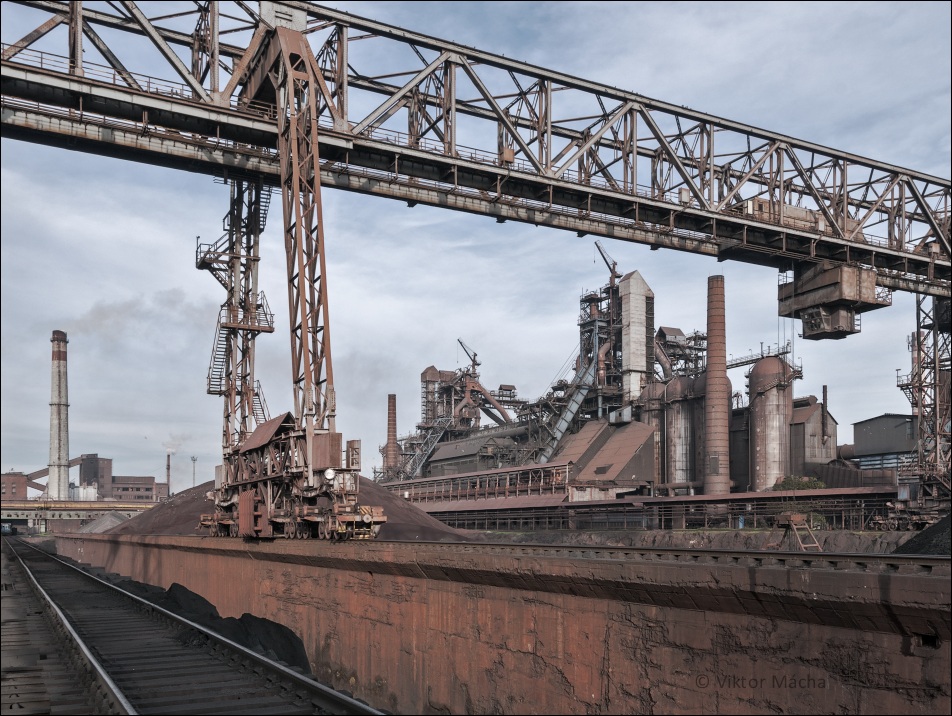
Liberty Steel wins Hungarian state support for restarting Dunaferr steelworks: source
Liberty Steel has secured a deal with the Hungarian state allowing it to draw a credit line in state-owned EXIM Hungary in connection to Hungarian integrated flat steel producer Dunaferr, a source close to the matter told S&P Global Commodity Insights Feb. 16.
UK-registered Liberty Steel declined to comment on the state guarantee for the credit line, but its spokesperson confirmed that in the Dunaferr liquidation process, Liberty has proposed a series of steps to ensure business continuity at the steelworks.
The Dunaferr team has started to stabilize the company’s operations, which includes restarting blast furnace No. 2, running the coke ovens and ensuring a sustainable supply of raw materials, the spokesperson said.
“Further measures will be needed to ensure a sustainable future of the Dunaferr business in the long term,” he said, adding that Liberty was committed to using its experience to help Dunaferr take these steps.
Liberty Steel began to pay for raw materials and transportation fees, and has already supplied 40,000 mt of coal, all of which should ensure Dunaferr’s operations for several months, according to the source.
The capacity of the restarted furnace is 55,000 mt/month of pig iron. The other blast furnace at the mill that was stopped in August cannot be restarted at a reasonable cost, the source said.
Liberty Steel’s first request to Dunaferr was to produce 10,000 tons of hot-rolled coil for Liberty’s coil coating Liege and Dudelange operations in Belgium and Luxembourg, respectively; this way Liberty would like to restart the Liege and Dudelange mills, he said, adding that the mills have not been operating for some months, leading to discussions about their possible nationalization.
Since September 2022, Liberty Steel had been in negotiations with the administration of the Walloon region, where Liege mill is situated, for the region’s investment arm Sogepa to take a 49% stake in the plant and put up a loan for it to continue operations, as S&P Global reported previously.
— Maria Tanatar, Ekaterina Bouckley

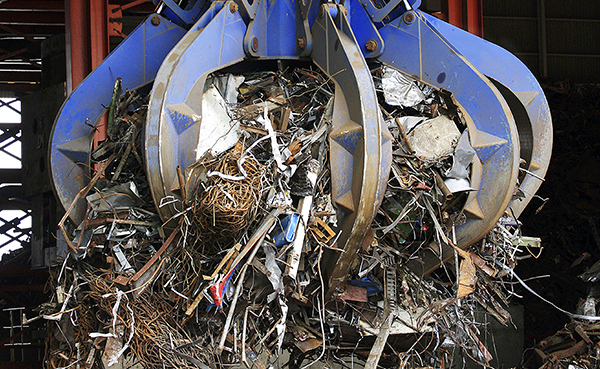
Salzgitter buys scrap recycler to secure supply for low CO2 steelmaking
German steel producer Salzgitter has acquired recycling company Must-Metalle-Container-Recycling as part of its strategy to secure supply for its low CO2 steelmaking transformation, it said Feb. 16.
The acquisition of the scrap trading company, based in Goslar in northwest Germany, closed on Feb. 15 for an undislcosed price and was made through Salzgitter’s subsidiary Deutsche Erz- und Metall-Union.
Must-Metalle-Container-Recycling manages a regional container provision and waste point business and relies for its supply predominantly on companies in the metalworking industry. Its downstream operations comprise sorting and processing for the targeted provision of quality scrap grades.
Salzgitter said the acquisition contributes to its 2030 strategy aimed at “circularity” and achieving low CO2 steelmaking under its SALCOS (Salzgitter Low CO2 Steelmaking Transformation) project.
For SALCOS, Salzgitter needs to significantly expand its scrap recycling capabilities and captive supply of high-quality secondary raw materials for its future steel production. With Must-Metalle-Container-Recycling in the portfolio Salzgitter will have ample scrap collection in the immediate vicinity of its flagship Flachstahl steelworks.
The SALCOS program will see the construction of two direct reduction plants and three electric arc furnaces (EAFs) at the mill in Lower Saxony to incrementally replace its blast furnaces and converters. The first of the three EAFs, with a crude steel capacity of 1.9 million mt/year, is scheduled to go live by the end of 2025, with full completion by 2033.
Must-Metalle-Container-Recycling will continue to operate as an independent company within Salzgitter under the name Harzer Schrott und Recycling.
Another European industry major, ArcelorMittal, has bought four scrap metal recycling companies over the last year boosting its captive scrap recycling in Europe by around 1.5 million mt/year as it develops its capability to deliver low-carbon emissions steel.
Platts, part of S&P Global, assessed Turkish imports of premium heavy melting scrap 1/2 (80:20) at $418/mt CFR Feb. 15, unchanged on day. The assessment gained $16/mt or 4% from this year-start but was $88 or 17.5% lower year on year.
— Ekaterina Bouckley

Standoff between European HRC buyers and mills continues
Trading activity remained limited in the European hot-rolled coil market Feb. 16 as mills insisted on higher prices and buyers resisted the increases because of an uncertain market outlook.
Platts assessed domestic hot-rolled coil prices in Northwest Europe stable day on day at Eur785/mt ex-works Ruhr.
Offers have been reported at the equivalent of Eur780-800/mt ex-works Ruhr and Northwest Europe. Market participants estimated tradable values at Eur780-800/mt ex-works Ruhr. Bids have been heard at Eur750/mt ex-works Ruhr. One source also reported unconfirmed deals at Eur750-755/mt ex-works Northwest Europe.
European steelmakers have been offering late April-May rolling HRC. The full order books have been the key driver behind the mills’ bullish approach.
Some buyers, however, questioned the producers’ claims and believed that they would be able to get earlier production in case of firm bid.
Lack of competitive import offers and high production costs have also contributed to the domestic coil price rise.
“Mills say that they have enough volumes sold, and you can either accept the offer price or leave it,” a service center source said.
Distributors have been struggling to transfer price rises for new production coil to their customers.
“End-users are not ready to accept higher prices,” a European distributor said. “The mills face high energy and other costs, and the price rise is justifiable, but end-users set the mood in the market. If they do not accept higher prices, a price increase is unlikely.”
In addition, buyers have been concerned that the end-user demand has not been strong enough to support higher prices.
As a result, buyers have been making deals only for smaller lots of coil to fill gaps in their stocks.
Also, some market participants were expecting prices to decline in the second half of the year.
Platts assessed domestic hot-rolled coil prices in South Europe at Eur770/mt ex-works Italy Feb. 16, stable day on day.
A deal was heard at Eur770/mt ex-works Italy. Tradable values have been reported at Eur770-780/mt ex-works Italy. An integrated mill from the north of Italy has been offering HRC to Northwest Europe at Eur850/mt delivered, making it the equivalent of Eur790-800/mt ex-works Italy.
Volumes available from Italian mills have been limited, as a producer from the south of the country had no volumes to offer, a mill in the north has been focused on sales of downstream coil, and rerollers had reduced availability.
Platts is part of S&P Global Commodity Insights.
— Maria Tanatar