


EU coil buyers question uptrend sustainability
Coil prices are currently climbing in northwestern Europe but some observers express doubt over the sustainability of the uptrend.
ArcelorMittal’s price announcement of €820/tonne ($877) for hot rolled coil has been followed by other mills, according to a Dutch service centre (SSC) buyer. One argument for mid-term stability is rising prices for imports from Asia, and delivery times stretching to 4-5 months, he says.
A Swiss trader, however, cautions there could be a contrary effect with imports. The low prices until December encouraged orders from India, which will arrive later in spring, along with additional volumes not yet pre-sold and free for the market, he tells Kallanish. However, if buyers in Europe are reserved because of real demand remaining shaky, the stockists of this additional material may reduce prices to shift volumes, thereby pulling down prices.
Another factor is the “comeback” of blast furnaces. “Spanish customers tell me the mills are fully booked, and of course they are, when they are running at half their capacity,” a Scandinavian trader points out. But that should soon change, given the run-up of blast furnaces at four mills since January, including Gijón, “with more material coming onto the market soon”, the SSC buyer says.
However, he also points at one previously unforeseen and macabre factor – the earthquake in Turkey/Syria and its devastating consequences. The damage to road infrastructure leading to Turkish mills and to Iskenderun port will mean inquiries are redirected to mills in other countries for material normally bought from Turkey, he says. He even believes this incident encouraged northwest European mills to go for the latest price hikes.
Christian Koehl Germany


Wuppermann expands production hall in Austria
Wuppermann Metalltechnik, a manufacturer of tubes, tube and sheet metal components in Altmünster, Austria, has expanded its plant with a new logistics hall for sheet production.
In order to optimally load and transport increased volumes, the new hall section was planned with its own truck access to the main road, Kallanish learns from the company. WMT is creating the pre-requisite space for further growth in the sheet metal processing division, it notes. “Our goal is to continue to grow here at the Altmünster site in the coming years,” says managing director Georg Wildauer. The site currently employs just under 150 people.
Despite the difficult accompanying circumstances in 2022 due to the war in Ukraine, the energy crisis and inflation, the company was able to close the 2022 business year with a good result, it says. Demand is particularly high from customers in the alternative energy generation, service machines and device industries, as well as from manufacturers of components for fully automated warehouse logistics, it notes.
Meanwhile, parent company Wuppermann Group, headquartered in Leverkusen, Germany, is re-evaluating the environmental impact of its heat-to-coat strip galvanizing process compared to the conventional cold strip galvanizing process. To that purpose, it commissioned the renowned Fraunhofer Institute for Environmental, Safety and Energy Technology (UMSICHT). The study now also includes the group’s most recent galvanizing plant at the Hungarian site.
Christian Koehl Germany
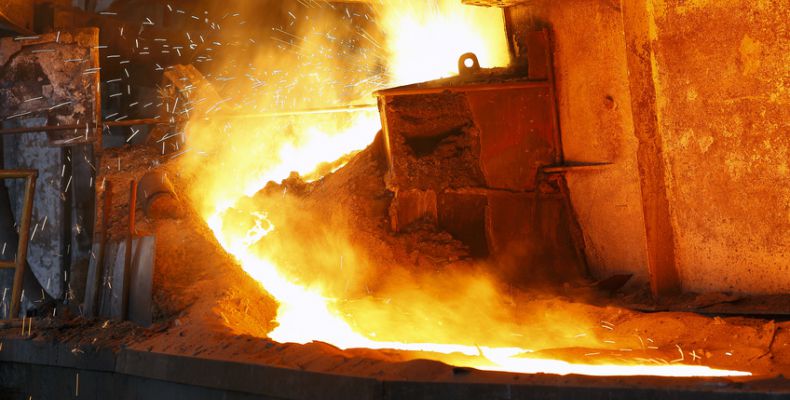
MMK, Koç Metalurji in southern Turkey resume steel production after earthquakes
Turkish steel producers MMK Metalurji and Koç Metalurji have resumed steel production following the devastating earthquakes that hit the country on February 6, the companies said on Monday February 20.
A 7.7-magnitude earthquake struck the Pazarcik district of Kahramanmaras province early on February 6, which was followed by a 7.6-magnitude quake centered on Kahramanmaras’ Elbistan district. Several other provinces were also affected, including Adana, Adiyaman, Diyarbakir, Gaziantep, Hatay, Kilis, Malatya, Iskenderun, Osmaniye and Sanliurfa.
Steel mills in the region stopped production following the disaster.
About one third of Turkey’s total steel production capacity is located in the region affected by the earthquakes.
Flat steel producer MMK Metalurji, which is located in the Dörtyol province of Hatay and has crude steel capacity of 2.3 million tonnes per year, has restarted production, the company said on Monday.
The company produces hot-rolled coil, cold-rolled coil, hot-dipped galvanized coil and color-coated coil.
“At the first stage, the work of a continuous pickling unit and a reversing mill has been started. Their products should ensure the full capacity utilization of the MMK Group plant in Dilovasi, Kocaeli, with a continuous hot-dip galvanizing unit and a polymer coating unit,” the company said.
“At the same time, with the commissioning of the first production lines, specialists will carry out additional reinforcement of various structures at the facility and preparations for the launch of other units of the complex. The MMK Dortyol port has been operating at full capacity since last week,” the company added.
Meanwhile, Koç Metalurji, located in Osmaniye in southern Turkey, resumed trial production on February 19 and was planning to start steel production on a 12-hour-per-day shift by February 20, a company executive told Fastmarkets.
The steel producer has 1.2-million-tpy crude steel capacity and produces rebar.
Other mills in the region had not announced plans to resume production at the time of publication.
On Friday February 17, Isdemir, located in Islenderun, said it was continuing due diligence studies.
“Studies are continuing to determine the financial aspect of the damage caused by the earthquake. It is considered that the amount of the damage is not at a level that will significantly affect the financial statements of our company,” it said on Friday.
“In addition, our company’s damages due to earthquakes are covered by the insurance coverage. Process-based works at the facilities are continuing in order for our company to start production again. It is planned to restart production in a gradual and controlled manner after the mentioned works are completed,” the company said.
Iskenderun port also halted operations following the earthquakes.
Operations are expected to resume at the port in three months’ time, sources in the region told Fastmarkets.
Published by: Serife Durmus, Cem Turken


GFG Alliance buys Aartee steel distribution assets in Italy
Steel, metals, and energy grouping GFG Alliance said Feb. 20 it has acquired the Italian assets of international steel manufacturing, distribution, and trading group Aartee through the 100% purchase of shares in Aartee Group Pte Limited.
News of the acquisition follows GFG Alliance’s Feb. 17 announcement that it has acquired collapsed UK steel firm Aartee Bright Bar with the intention of incorporating ABB into its Liberty Steel Group subsidiary.
The acquisition of Aartee will boost Liberty Steel Group’s presence in Italy, where it already owns Liberty Magona at Piombino, thus improving its competitive advantage in the country, GFG Alliance said in an emailed statement.
Aartee operates in Italy through Aartee Distribuzione Italia, with four processing plants in Italy, at Arcore and Graffignana—both near Milan—Quarto Inferiore, near Bologna, and Rieti. Together, the plants employ around 115 people and have a capacity of more than 160,000 mt/year of specialist steel products.
Aartee has 90% of its sales within Italy, with customers in sectors, including automotive, construction, and white goods. The acquisition will allow Liberty Steel Group “to reduce costs through synergies,” the statement said. Aartee also manages the former Ferretti International plant activities in Italy.
“Aartee Distribuzione Italia is an important part of Italy’s steel supply chain and will allow us to extend our product offering, customer base, and distribution network within Italy,” said Ajay Aggarwal, Liberty Steel Group’s European president. “I look forward to visiting the sites over the next few weeks and welcoming Aartee’s employees, with their excellence and motivation, into our group.”
Prior to running into financial issues during the coronavirus pandemic with the collapse of its major lender, UK-based Greensill Capital, in March 2021, Liberty Steel Group had made several acquisitions, including several works formerly belonging to ArcelorMittal in Europe.
In June, Liberty Steel Group reached a debt standstill agreement with Greensill Bank on debt facilities for its European business.
In November, Liberty Steel Group reported it had reached an agreement to restructure its global debt with some of its main creditors.
Following the November accord, Liberty Steel Group has resumed some merger and acquisition activity. On Nov. 25 it announced it had agreed to buy South Korea’s 3 million mt/year Dongbu steelmaking plant and associated equipment from steelmaker KG Steel, now followed by the two Aartee purchases.
Liberty Steel Group is Europe’s fourth-largest steel manufacturer, with more than 10.5 million mt of annual rolling capacity in the region, according to the company’s website.
Platts assessed hot-rolled coil in Northwest Europe at Eur790/mt ($844.12/mt) ex-works Ruhr Feb. 20, up Eur5 from Feb. 17.
— Diana Kinch

Turkey’s largest steelmaker Isdemir to restart production gradually
Turkey’s largest integrated long and flat steelmaker Iskenderun Demir ve Celik, or Isdemir, which suspended its production in Southeastern Turkey for due diligence studies after the Feb. 6 earthquakes, said Feb. 18 that it was aiming to restart production gradually.
“Process-based works at the facilities are continuing in order for our company to start production again,” the company said, adding that the amount of the damage is not at a level that will significantly affect the financial statements of the company.
“It is planned to restart production in a gradual and controlled manner after the works are completed,” Isdemir said in a regulatory filing to the public disclosure platform seen by S&P Global Commodity Insights.
Following the company’s statement, Isdemir equities resumed trading again at the Istanbul stock exchange Feb. 20 after a two week break due to the Feb. 16 earthquakes that hit Southeastern Turkey, where Isdemir is located.
Isdemir has the capacity to produce 5.8 million mt/year liquid steel, 3.5 million mt/year flat steel, 2.5 million mt/year billet and 600,000 mt year wire rod.
Some other Turkish steelmakers in the region, like MMK Metalurji and Koc Metalurji, also told S&P Global last week that they were aiming to restart production soon in a controlled manner.
The Turkish government’s demand from domestic producers to supply 4 million mt of rebar within four months for reconstruction works in the region accelerated the mills’ production restart efforts, according to sources.
Producer offer prices for flat steel have also risen to $800/mt ex-works and over in recent days amid higher demand and some availability issues, sources said.
Platts, part of S&P Global, assessed Turkish HRC at $800/mt ex-works Feb. 17, up 4.58% on the week.
— Cenk Can

Steelmaker ArcelorMittal France plans to restart Fos-sur-Mer blast furnace in April
European steelmaker ArcelorMittal plans to restart its idled 2 million mt/year blast furnace at its flat steel plant at Fos-sur-Mer in France in April, the company’s spokesman told S&P Global Commodity Insights on Feb. 20.
The steelmaker had announced the closure of the blast furnace in November 2022 in response to a negative trend which settled in the European coil market, a surge in energy costs and a rise in import volumes as well as a decline in demand.
Domestic coil prices, however, have been recovering since December 2022, driven by improved demand and reduced availability. By the start of December, distributors had finally resumed restocking after reducing inventories accumulated in the second quarter of 2022. Import offers have also moved up since then, while European steelmakers have kept production rates low and stopped some furnaces.
Platts assessed domestic hot-rolled coil prices in Northwest Europe at Eur790/mt ex-works Ruhr on Feb. 20, up Eur185/mt from Nov. 28, 2022, when they were the lowest.
ArcelorMittal operates two BFs at Fos-sur-Mer with a total capacity of 4 million mt/year. Its other blast furnace remained operating last year.
— Maria Tanatar