

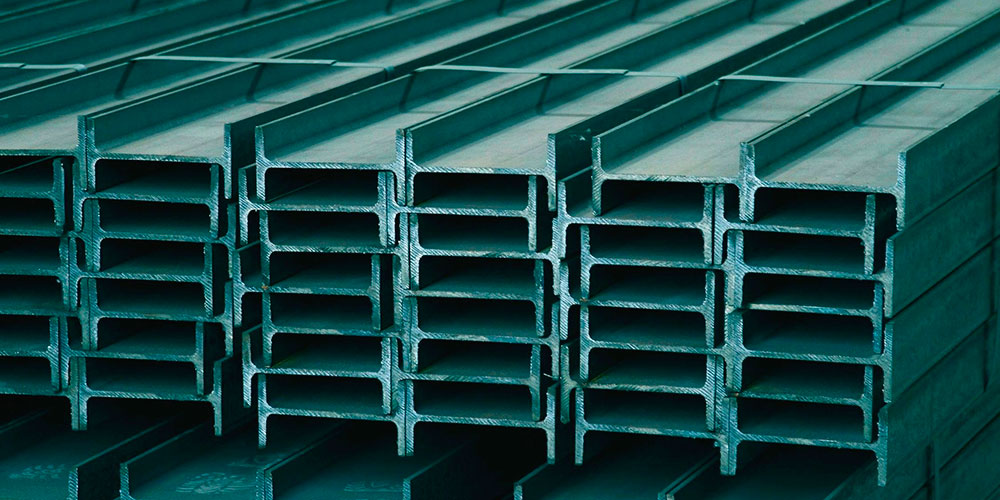
Europe longs: mills try to raise offers
The upwards trend seen in the international longs market encouraged European suppliers to increase offers recently, but demand has yet to materialise amid sufficient stocks and slow construction activity.
The Argus weekly Italian rebar and drawing-quality wire rod assessments were steady at €740/t ex-works and €695/t delivered.
Italian producers have started discussing price increases in the past few days, citing stronger global markets. Sources expect levels to rise by €20-30/t, while latest workable levels for rebar were reported at €740-750/t ex-works locally, including extras for sizes. For larger volumes, €720/t ex-works and slightly below was heard achievable late last week, also reflecting softer energy costs.
In the meantime, tradeable values for drawing quality wire rod were reported at €680-710/t delivered in Italy and at €670-680/t delivered in Spain, amid high pressure from overseas markets, but there mills were also seeking higher prices now.
Latest levels from Italy were at €680-700/t delivered for rebar and wire rod for central European markets, with rebar in coils at €720-730/t delivered. Some markets looked frozen, with weak demand and a lack of projects and new works, an Italian participant said. There is a small price difference in the north-south and east-west regions, he added. The outlook was particularly negative for the private sector, but some recovery is generally expected in the near term, with the construction season approaching.
In the Balkans, Italian wire rod was available as low as €620/t fob/fca and rebar in coils at €640/t fob/fca, reflecting strong competition with overseas and regional suppliers. In Bulgaria, rebar was available at €695-705/t delivered, in Romania prices were slightly below these, depending on the tonnage, at least by €10-20/t for smaller lots.
Egyptian and Algerian suppliers were indicating offers for wire rod at $660-670/t fob this week, but were willing to negotiate small discounts. In particular, workable levels for Egyptian wire rod and rebar to the Balkan region were reported at €645-655/t cfr for positional cargoes and producers. Rebar sales from Egypt were heard last week, but the details could not be obtained.


EU new car sales up 11% in January except in Germany, Acea says
In January 2023, the EU car market showed growth of 11.3% in new vehicle registrations compared with the corresponding month last year, reaching a total of 760,041 units, the European Automotive Manufacturers Association (Acea) said on Tuesday February 21.
But this increase was from the historic low base figure of last year, Acea added.
The positive performance was reflected in three of the region’s four key markets, with Spain showing the strongest gains at 51.4%, followed by Italy with 19.0%, and France with a more modest but still solid growth of 8.8%.
But on the other hand, Germany, the Europe’s largest car producer and consumer, recorded a decline of 2.6% in the same period.
On average, the automotive sector consumed around 40% of EU strip mill products and 2.9% of quarto plate products in 2021, according to regional steel association Eurofer. This accounted for around 16% of total steel consumption in the EU, according to the same source.
On average, a car contains 820-1,134kg of steel in the car body, chassis, engine, transmission and other components, depending on the type of vehicle and the manufacturing process, according to the World Steel Association (Worldsteel).
Passenger cars accounted for 82% of all vehicles manufactured in the EU, according to Acea.
The European steel hot-rolled coil market has been quiet recently, with prices largely flat amid a lack of trading. Most mills in Northern Europe claimed to be sold out for April-delivery coil and only able to offer May lead times.
Fastmarkets calculated its daily steel hot-rolled coil index, domestic, exw Northern Europe, at €772.26 ($825.14) per tonne on Tuesday, stable day-on-day.
This compared with an average monthly price in January 2023 of €720.36 per tonne ex-works, versus €920.41 per tonne ex-works in January 2022.
The current signs of recovery in Europe, with the exception of Germany, were foreseen by industry market participants which estimated that, despite many uncertainties ahead – including acute component shortages and lack of consumer confidence caused by the energy crisis and recession concerns – about 9.8 million new cars will be sold in the region this year, up by 5% from 2022.
This figure was, however, still 25% down from pre-Covid pandemic levels in 2019, indicating that the industry was still in a delicate position.

Published by: Elina Virchenko


Italian distribution sees slow downstream market
The Italian distribution sector reports slow domestic demand for coils derivatives and particularly welded tubes, for which prices continue to lag behind the latest hot rolled coil price increases. Demand however is forecast to be supported by the Turkish earthquake
The disaster is causing a drastic reduction of tube volumes traded into Europe. The large northern European buyers are seen purchasing their volumes only in Europe as a consequence. This should sustain southern European re-rollers’ prices and sales, market sources say.
Some high-grade and structural tubes remain in short supply. However, for the moment Italian end-users continue to strongly oppose any reduction in the tube-making coil discounts implemented by re-rollers. Tube discounts are now at 29-30 points. Each point of discount equals €12-13/tonne ($12.7-13.8). Tube producers are pushing their prices up and trying to decrease discounts to the level of 25 points by the end of the month, Kallanish notes.
Some more sustained demand is reported for sheets, for which asking prices are also increasing. Sheet producers are asking some €900/t ex-works for hot rolled sheets with April lead time and €960/t for galvanised grades.
The distributors see prices gradually decreasing in long product markets, affected by continued slow demand, stagnation, and uncertainty. Merchant bar prices are at €910-920/t ex-works with some producers reducing output to balance demand and supply. The first category of beams has also fallen to €950-960/t ex-works while rebar values have declined to €700-720/t ex-works including extras, sources suggest.
Natalia Capra France


Romanian steelmaker Liberty Galati to restart its only blast furnace in March
Liberty Galati, the largest integrated steel producer in Romania, will resume pig iron and steel making operations in full after restarting its only blast furnace in March, parent company Liberty Steel said Feb. 21.
Flat-rolled steel producer Liberty Galati will restart blast furnace No. 5 in mid-March 2023 on signs of market recovery in Europe supported by improvements in input costs and pricing.
The furnace has undergone a Eur3.67 million maintenance program since December, which has increased its safety, stability and optimized energy use, the company said.
Blast furnace No. 5 achieved 2.1 million mt hot metal output in 2021, the year when the mill also produced its 12-year record high of 2.35 million mt of steel. Liberty Galati did not disclose its Romanian site production for 2022 though.
The company is currently in the process of choosing an electric arc furnaces supplier for the Romanian mill. As part of the Eur1 billion ($1.1 billion) transformation designed to make the Galati plant carbon neutral by 2030, Liberty previously said Galati will see new hybrid EAFs replace older more polluting blast furnaces at the works by 2025.
“We’re also well underway with feasibility studies for the relocation [to Galati] of the plant and equipment from [Dongbu] Steel in South Korea,” said Ajay Aggarwal, president of Liberty Steel Europe and board chairman of Liberty Galati.
Liberty committed to purchase the Dongbu steel plant and its associated equipment from South Korean steel company, KG Steel, in November 2022. The asset comprises two modern electric arc furnaces, two thin slab continuous casters, and a hot strip mill, S&P Global reported earlier.
The company is also considering a spring restart of a blast furnace at its other Eastern European mill, according to several sources, who mentioned slab shortage as a growing issue in Europe. Liberty refused to comment on the restart.
Liberty Ostrava, its flat and long rolled steel and pipe producer in the Czech Republic, idled one of its two blast furnaces (No. 2) for a Eur9.5 million upgrade in July 2022 and continued operating the remaining No. 3 furnace and rolling mills, as S&P Global reported earlier.
— Maria Tanatar, Ekaterina Bouckley


EU Carbon Prices Surge to 100 Euros
The European Union’s Emissions Trading System (EU ETS) has experienced significant fluctuations in the carbon prices over the years.
As of February 2023, the price of carbon in the EU ETS has exceeded 100 euros per metric ton of CO2. That’s a significant increase from just a few years ago when the price was around only 10 euros per ton.
The EU carbon price has experienced these fluctuations due to a variety of factors. These include policy changes, market forces, and global trends.
The EU ETS is a cap-and-trade system that aims to reduce greenhouse gas emissions by putting a price on carbon. The system covers emissions from power plants, energy-intensive industries, and commercial aviation. It is one of the largest and most established carbon markets in the world.

The Drivers Behind the High EU Carbon Price
One of the main drivers of the high carbon price in the EU ETS is the region’s commitment to cut GHG emissions by at least 55% by 2030 compared to 1990 levels. This ambitious goal requires a significant emissions reduction from the energy sector, which is responsible for a large share of the EU’s emissions.
In addition, market forces have also contributed to the price increase.
Operating on a cap-and-trade system, there’s a limited number of EU allowances available for companies to emit carbon. As the cap decreases over time, the price of allowances increases as companies are willing to pay more to meet their emissions targets.
Global trends have also played a role in the increase in EU carbon prices. There has been a growing awareness of the urgent need to address climate change.
The Future of the EU Carbon Prices
Looking ahead, the future of the EU ETS will depend on a variety of factors, including political will, technological innovation, and global trends.
The high EU ETS carbon prices provides a powerful incentive for businesses and investors to transition to a sustainable future. However, concerns have been raised about the impact of this on consumers and businesses.
To address these concerns, the EU has implemented measures to protect vulnerable industries and consumers. These include exemptions for certain industries and measures to protect low-income households from energy poverty.
Who Buys EU ETS Offsets?
The primary buyers of EU ETS offsets are companies that have emissions reduction obligations to comply with. These companies may choose to buy offsets to meet a portion of their emissions compliance, as offsets can be less expensive than reducing emissions within their own operations.
EU ETS offsets are from projects that reduce carbon emissions in developing countries, such as renewable energy projects, energy efficiency improvements, and reforestation efforts. These projects generate carbon credits, which can be purchased and used by companies to offset a part of their footprint.
The demand for EU ETS offsets has been driven in part by the increasing ambition of the bloc’s climate targets. This has created a greater need for emissions reductions across the economy. This has further led to an increase in carbon prices and a corresponding increase in the demand for offsets.
Examples of large multinational corporations that are committed to reducing their GHG emissions and may be purchasing EU ETS offsets include companies such as Microsoft, Unilever, and Nestle.
These companies have made public commitments to reducing their carbon footprints. And they have implemented a variety of measures to achieve these goals, including:
- purchasing renewable energy,
- improving energy efficiency, and
- investing in emissions reduction projects.
It’s worth noting that there are a growing number of companies that are voluntarily purchasing offsets as part of their efforts to become carbon-neutral or achieve other sustainability goals.
These companies may include those in the tech industry, such as Salesforce and Google, as well as companies in the fashion industry, such as Burberry and H&M.
The EU Emissions Trading System
The high carbon price is a reflection of the urgent need to address climate change. It also provides a powerful incentive for businesses and investors to transition to a sustainable future.
However, there are concerns about the impact of the high EU carbon prices on consumers and businesses. So, it will be important for the EU to strike a balance between achieving its climate targets and protecting vulnerable groups.
The future of the EU ETS will depend on various factors. Thus, it will be crucial to continue to monitor its carbon price and its impact on the economy and society.
Source: carboncredits.com