


European inventories are still weak
Recently, European OEMs have been forced to trim build significantly, while incoming orders have slowed. How has this affected inventories?

While inventory figures are not publicly available in Europe, recent events have highlighted that stock movements are a critical component when it comes to understanding the likely evolution of production volumes.
Following the Lehman Brothers collapse in 2008, OEMs were immediately faced with crashing market volumes. They responded by slashing output to minimise unplanned or unrequired stocks. But the scale of the crisis was such that this response proved to be too slow, leaving European OEMs sitting on circa one million Light Vehicles by the close of 2008, all of which were stuck in the supply chain and surplus to requirements. Of course, such shocks are not uncommon. Following the German reunification boom, the European market crashed in 1993. More recently, with the outbreak of the COVID-19 pandemic and the ensuing lockdowns, European OEMs saw days’ supply rocket to over 115 days in the first quarter of 2020. An ideal level for European days’ supply is around 60 days, meaning that the region was overstocked by 55 days!
European OEMs have been forced to trim build significantly, while incoming orders have slowed as both have been impacted by the chip shortage. While the impact of chip shortages has improved in recent months, full normalisation of semiconductor supply is not anticipated to be achieved during this year. In addition, China’s recent change in approach to managing COVID-19 is set to cause a rapid spike in local supply-side disruption, with knock-on effects feeding through to wider automotive supply chains.
But there is some good news – European inventories have essentially been flat since the start of last year, in contrast with the destocking of -1.2m cars suffered during the first in 2021 (itself worse than that suffered under Lehman Brothers). Indeed, we saw a recovery in Q4 of 2021, but at +320k units this was still far from an exceptional performance.
Our outlook for this year is what can be described as a ‘fragile recovery.’


So, unlike the Lehman Brothers-induced recession of 2008/9, the sector is in a much healthier position to respond to the market if supply difficulties ease. Much, therefore, rests on how the war in Ukraine and COVID-19 restrictions in China unfold.
by ARTHUR MAHER, DIRECTOR OF RESEARCH


Stainless steel production forecast at 60mt in 2023
MEPS forecasts that global crude stainless steel production will reach 60 million tonnes, in 2023. Significant contributors to this growth will be steelmakers in China and Indonesia.
While India is likely to remain the third largest stainless steel producing country next year, its output is predicted to surge by more than ten percent. The authorities in that nation are investing heavily in major stainless steel-consuming infrastructure projects.
Downside risks to MEPS’ latest forecasts include geopolitical tensions and the recent period of destocking in the West lasting longer than expected. However, falling energy costs and easing inflationary pressures provide some cause for optimism in the stainless steel market.
China
In China, production in the fourth quarter of 2022 was higher than anticipated, due to the government’s decision to relax Covid-related restrictions. This move boosted market sentiment, and, as a result, domestic steelmakers lifted their output. Moreover, the authorities are providing stimulus to the indebted property sector, which many market participants believe will fuel economic activity.
The International Monetary Fund predicts that China’s GDP growth will rebound to 5.2 percent, this year. This should support key stainless steel-consuming sectors such as construction and consumer appliance manufacturing. Consequently, MEPS estimates that stainless steel production will reach 34 million tonnes, in 2023.
Europe
In Europe, output in the July/September 2022 period decreased by approximately one third, quarter-on-quarter. Local mills withdrew melting capacity, due to weakening demand from customers. High interest rates and energy costs caused end-user consumption to fall.
However, production data for October/November 2022 suggests that output should recover, to 1.47 million tonnes, in the fourth quarter. Furthermore, several major stainless steel producers expect shipments to improve, in the first quarter of 2023. They believe that restocking will begin in the short term. Recent reductions in energy costs, and signs that peak inflation has already been reached, are also fuelling market confidence.
United States
US production in the fourth quarter of 2022 is estimated to be 450,000 tonnes. The recovery in melting activity, in the first three months of 2023, is expected to be slower than that in Europe. The period of destocking undertaken by local distributors may last longer than previously foreseen. However, melting activity should rebound in the middle of the year, for seasonal reasons.
East Asia
In South Korea, output in the final three months of 2022 reached only 161,000 tonnes. This was due to hurricane damage to POSCO’s stainless steelmaking facilities, sustained earlier in the year. However, the company recently announced that its stainless cold rolling mill came back online, in January. MEPS envisages a staged ramp-up of production in 2023, with the total for the year reaching 2 million tonnes.
Production in 2023 is forecast to increase, year-on-year, by 7 percent, in Japan, and 8.5 percent, in Taiwan. Improving market sentiment in East Asia should support an upturn in stainless steel consumption, in 2023. Nonetheless, while peak inflation may have been passed, end-user demand in segments such as white goods and catering equipment may remain constrained.

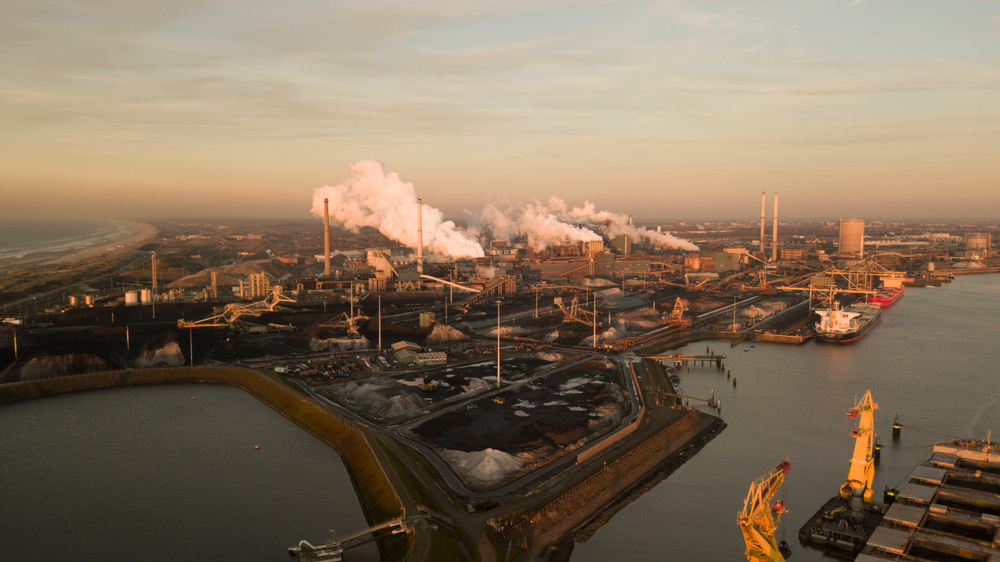
Tata Steel Nederland invokes force majeure on extended rolling mill upgrade
Tata Steel Nederland has invoked force majeure due to difficulties following its Cold Mill 21 upgrade, the steelmaker said Feb. 24.
The company said it was experiencing severe disruptions during the upgrading process of its cold rolling mill 21 at IJmuiden steelworks on the Dutch North Sea coast in the north of Holland.
Unforeseeable challenges have led to an extended commissioning of the upgraded mill, putting extreme pressure on the steelworks’ supply chain, said Tata Steel Nederland.
Despite Tata Steel’s efforts to mitigate disruptions and reduce supply risk through its own or alternative channels, the company has now reached a point where it has to inform its customers that delivery obligations cannot be fully met adding it will continue to explore all options to minimise the impact on their operations.
Tata Steel Nederland had started the upgrade of Cold Mill 21 in August 2022 to further improve the surface quality.
The blast furnace-basic oxygen furnace-based IJmuiden plant is capable of producing up to 7.5 million mt/year of hot- and cold-rolled coil in a variety of finishes, according to Tata Steel Nederland’s website, but the company declined to disclose its actual production.
— Ekaterina Bouckley


German distributors’ steel product sales, stocks fell on year in January: BDS
Steel product sales in the German distribution and stockholding system fell to 836,149 mt in January from 857,602 mt a year earlier, German steel stockholders’ association BDS reported Feb. 23.
The January total was nonetheless markedly higher than sales of 536,626 mt in December, indicating that a destocking cycle in the European steel sector late last year may have started to give way to restocking activity.
January’s sales comprised 229,246 mt long products and 537,595 mt flat products, with both product categories showing a marked increase from December.
Total January sales were also higher than both the 825,630 mt/month averaged in 2022 and 707,808 m averaged in Q4, according to BDS.
Again pointing to market upturn accompanied by client restocking, German stockholders’ stocks fell on a year-on-year basis to 1.969 million mt in January from 2.184 million mt a year earlier, the DBS data showed.
The stocks were also lower than the 2.18 million mt/month averaged in 2022 and 2.054 million averaged in Q4.
However, January’s stocks were still marginally higher than 1.951 million mt in December, with both long products at 745,054 mt and flat products at 1.185 million mt edging higher on a month-on-month basis.
2022 sales fall
German steel product sales by distributors and stockholders plunged 36.4% month on month to 536,626 mt in December and were also down 15.3% year on year, earlier DBS data published Jan. 23 showed.
For full-year 2022, steel product sales totaled 9.91 million mt, down 6.8% from 10.62 million mt in 2021.
Sales of long products, used primarily in construction, totaled 152,506 mt in December, down 40.9% month on month and down 11.1% year on year, while sales of flat products, used in automotive and construction industries, fell 34% month on month and 11.1% year on year to 345,526 mt.
The decline in monthly steel product sales in December coincided with a 4.7% month-on-month reduction in domestic steel inventories to the lowest level since June 2021.
Stocks of all steel products totaled 1.95 million mt in December, down 5.9% year on year, with long product stocks up 3.3% at 742,255 mt and flat product stocks down 10.7% at 1.17 million mt, the lowest level since July 2021.
Stocks fell alongside a slowdown in domestic steel production, which fell 14.6% year on year to 2.6 million mt in December, the lowest since May 2021, Germany’s steel association Wirtschaftsvereinigung or WV Stahl reported Jan. 23.
The country’s steel producers have been forced to curtail steel production in recent months due to high energy prices in the wake of Russia’s invasion of Ukraine.
Platts, part of S&P Global Commodity Insights, assessed domestic prices for hot-rolled coil in Northwest Europe stable at Eur795/mt EXW Ruhr Feb. 23, amid reports of strong mill order books.
— Diana Kinch and Euan Sadden

European heavy plate prices rise despite softening demand
Domestic prices for heavy plate have increased in Europe in the week to Feb. 24 despite a slow down in trading activity.
“Plate market entered slow period as stockists have not been active in the market,” a steelmaker said. “But projects have already started looking for April-June plate.”
Bigger distributors have been holding back from booking volumes, unwilling to commit to making deals for the material with longer lead times. Earliest production plate available in the market was April rolling.
End-users that acquire heavy plate for projects or by long-term contracts, however, have continued to show healthy demand.
Platts assessed domestic prices for heavy plate in Northwest Europe up Eur25/mt on the week to Eur1,050/mt ex-works Ruhr on Feb. 24.
For integrated mills in the region tradable values have been reported at Eur1,050/mt ex-works Ruhr and offers heard at Eur1,050-1,100/mt ex-works Northwest Europe.
German mills have had limited volumes for spot buyers due to good order books with projects.
A Northwest European re-roller has been offering plate at Eur1,050/mt delivered Germany.
Offers from Central Europe have been limited. A producer from Poland remained out of the market. A steelmaker from Romania has been offering June delivery plate at Eur1,035/mt ex-works. And a re-roller from Czech Republic has been offering the s355jr grade material at Eur1,068/mt delivered.
Platts assessed domestic heavy plate prices in South Europe up by Eur10/mt on week to Eur930/mt ex-works Italy on Feb. 24.
Few transactions have been heard at Eur930-940/mt ex-works Italy, offers – at Eur930-950/mt ex-works Italy and tradable values – at Eur910-940/mt ex-works Italy.
Platts assessed prices for imported slab in South Europe unchanged on the week at $750/mt CIF Italy on Feb. 24.
Offers and tradable values for imported slab from Asia have been heard at $720-$750/mt CIF Italy.
Platts is part of S&P Global Commodity Insights.
— Maria Tanatar

Polish rebar producers refuse to cut prices more despite zero demand, citing costs
Steel rebar prices in Poland remained flat during the week to Friday February 24 amid persistently slow demand, sources told Fastmarkets.
Producers in the region maintained offers at around 3,300-3,330 zloty ($738-744) per tonne CPT (3,250-3,300 zloty per tonne EXW) for 12 mm rebar, stable week on week.
Trading was close to zero during the assessment week, but local mills were reluctant to reduce their rebar prices further, claiming that offers are already at the cost line.
“In fact, mills claim that they need to increase prices because selling at current levels is loss-making. But there is no room for a price rise in such conditions, and neither is there room for a price drop due to costs. So the standstill continues,” a distributor in the nation said.
Fastmarkets’ weekly price assessment for steel reinforcing bar (rebar), domestic, exw Poland was 3,250-3,300 zloty per tonne on Friday, stable week on week
Trading was very low in the nation amid poor end-user demand.
Some cut-and-bend companies started closing their rebar shops in mid-February due to low prices and high costs, several sources told Fastmarkets.
In the secondary market, rebar was offered and traded at prices around 3,350-3,400 zloty per tonne CPT, widening from 3,400 zloty per tonne seven days ago.
Italian producers were offering rebar for March delivery to Poland at €700 ($742) per tonne CPT, but only very limited volumes. Moreover, sources said that closer to the end of the assessment week, Italian mills withdrew from the market and were expected to come back with higher offers in March.
Published by: Julia Bolotova


ArcelorMittal accelerates Fos’ decarbonisation through hydrogen
ArcelorMittal France is accelerating the decarbonisation of its steel processing through hydrogen. Spanish engineering company Idom has been contracted by “GravitHy”, the joint venture created last year by a consortium of energy and steel-related companies, to produce the pre-feasibility studies to build a green hydrogen-based direct reduced and hot briquetted iron (DRI/HBI) facility at the steelmaker’s plant in Fos-sur-Mer, southern France, Kallanish notes.
The plant will generate green and low-carbon hydrogen to produce DRI that will be used either on-site as a feedstock for green steelmaking or traded globally as HBI. Construction is set to begin in 2024 for commissioning in 2027. The future facility is planned to have an annual throughput of 2 million tonnes of DRI. Located on the Mediterranean coast, the plant will have direct access to European trading markets.
Last year a consortium of European companies established the GravitHy joint venture to build the hydrogen and DRI plant at Fos. GravitHy’s shareholders include companies such as EIT InnoEnergy, Engie New Ventures, Forvia, Idec, Plug, and equipment maker Primetals Technologies. The JV plans to intercept about €2.2 billion ($2.3 billion) of EU funding for the clean energy transition to build the new H2 and DRI facility.
“The PFS will consist of the preliminary engineering, project implementation strategy and CAPEX/OPEX development, which will allow GravitHy to prepare a solid dossier for the permitting process, define core packages, mitigate risks, validate key business fundamentals as well as to advance in the project financing” Idom explains in a note.
Natalia Capra France


Finnish SSC installs Voortman technology
Finnish steel service centre BE Group will be installing an automated routing system from Dutch supplier of sheet processing technology Voortman Steel Machinery.
The new machine line will be installed in March, Kallanish learns from the supplier company. Profiles can be loaded from six different halls, from where automated processes start, it explains. Different infeed locations, machines and processes will form the core of the logistics route. The scope of supply includes a Voortman drilling and milling machine and band saws with an automatic short piece removal system.
A separate route will be installed with the Voortman VB1250 band saw with backstop system, which allows high volume profiles to be cut and bundled. According to Voortman, data-driven logistics routing enables production to be tripled with more efficient use of crane capacity. BE Group says it aims for added customer value, offering drilling, milling and marking as a complete package supplier.
Christian Koehl Germany

Thyssenkrupp selects SMS for DRI plant
Thyssenkrupp on Friday announced that it has awarded SMS group with the construction of the hydrogen-driven direct reduction plant it will set up at its Duisburg location, to partially replace blast furnaces, Kallanish reports.
SMS will furthermore supply two “innovative melters,” thyssenkrupp says in a short statement. This could refer to submerged arc furnaces, which the company mentioned earlier as a technology of choice.
Thyssenkrupp did not give more details, but will do so at a press conference on 1 March. Attendants will include the ceos of thyssenkrupp Steel, parent group thyssenkrupp AG, and SMS group, as well as North Rhine Westphalian prime minister Hendrik Wüst and state economy minister Mona Neubaur.
Although it is not mentioned explicitly in Friday’s statement, SMS for the DRI part will likely work with Midrex, its standard partner in this technology. According to thyssenkrupp, it will become the largest direct reduction plant in Germany. Other German mills have also announced plans to replace blast furnaces with DRI plants. Salzgitter in this respect will be cooperating with Tenova.
Germany is the only country in Europe which has an operating direct reduction plant – in Hamburg, since the 1970s, today owned by ArcelorMittal.
Christian Koehl Germany