Tata sells Zeremis steel to German, Spanish processors
Tata Steel Nederland has reached agreements with Germany’s Wuppermann, Bilstein, EMW Stahl Service, and with Spain’s Arania to supply them with its Zeremis Carbon Lite steel starting 2023.
The four customer companies supply major players in the automotive and industrial markets.
Tata’s Zeremis brand for steel with an allocated carbon footprint reduction of up to 90% for the sum of Scope 1, 2 and 3 emissions was launched last year. In October, Tata signed a supply deal for Zeremis with carmaker Ford.
The new deals this week were signed with long-standing customers, with whom Tata Steel Nederland has held an open discussion to reduce their Scope-3 emissions and create shared sustainability strategies, Kallanish understands. “We can already supply them a significant amount of high-quality low-CO2 steel now, and we aim to offer large quantities of high-quality green steel by 2030,” says Hans van den Berg, chief executive of Tata Steel Nederland. By 2030, the steelmaker is targeting to commission its first direct reduction plants and electric arc furnaces at the IJmuiden site.
According to Tata Steel Nederland, Zeremis’s lower CO2 intensity is based on CO2 savings realised within its steelmaking process. and is verified by independent assurance expert DNV. Additional Zeremis green steel products will follow in the near future; for example, Zeremis products with increased recycled content, it says.
Christian Koehl Germany


Montenegro’s EPCG readies Niksic plant restart
Montenegro state-owned power company Elektroprivreda Crne Gore (EPCG) is preparing to start production at its newly acquired Zeljezara Niksic plant, Kallanish notes.
Last week, EPCG president Milutin Đukanovic reiterated there is a business plan for Zeljezara Niksic, which foresees that 300 workers will be hired at first. He also however pointed out he will not be satisfied until there are 1,000 workers at the plant.
“We have often said that Zeljezara is the soul of Niksic, but when we put these emotional components aside, this property is worth €54 million ($57m) according to the last estimate, and we paid €20m for it,” he noted during the mill’s reopening ceremony. Production will resume shortly, he added.
“I am extremely proud that we have removed the chains from the gates of Zeljezara and that we are returning the plant to the path of glory,” noted Montenegro Prime Minister Dritan Abazovic.
In January, EPCG concluded the purchase of Zeljezara Niksic plant from Tosyali Holding (see Kallanish passim).
According to EPCG, it will transfer to a newly formed subsidiary the property acquired through the purchase agreement. Its aim is to provide additional support for the development of solar and other types of renewable energy sources, which represent the future of the Montenegrin energy sector.
The business plan foresees the new company will consist of several production units – solar, substructure and construction.
Tosyali acquired Zeljezara Niksic in 2012 for €15.1m at a public auction. The company then invested in the plant to improve and modernise production technology, and achieve high product quality.
However, in early 2021, the plant suspended production due to falling orders caused by the Covid-19 pandemic, leading to Tosyali’s decision to sell the unit.
Niksic specialises in the production of alloy and non-alloy steel, roller bearing tool steel and heat-resistant steel.
Svetoslav Abrossimov Bulgaria

German fabricators bemoan 2022 slowdown, bad transport infrastructure
Germany’s steel and metals working industries are looking back at weakening performance in 2022, and hope that in 2023 national politics will become friendlier towards manufacturing industries.
Production of fabricators in 2022 fell by 0.3% year-on-year, according to their federation WSM.
Although the fourth quarter was slightly better overall than Q4 2021, the increase of 0.9% is only meagre. On top of that, the trend points downwards, WSM notes. Production lost 3.4% in Q4 2022 compared to Q3. “We need decisions now that support growth forces, not slow them down. 2023, the ‘Year of Industry’, needs an avowed ‘yes’ to Germany and Europe as a business location – as a prelude to a long-term industrial policy,” says WSM economist Holger Ade.
In a separate statement, the federation bemoans the state of infrastructure, especially for transportation. “Blocked bridges, miserable roads, inadequate connections – things are not running smoothly on Germany’s routes. We urgently need renovation and rapid road expansion, so that companies can be reached without problems,” Kallanish hears from WSM managing director Christian Vietmeyer.
A defective transport network also endangers climate and sustainability goals, WSM underlines. Every kilometre of diversions increases fuel consumption and emissions. The desired circular economy comes to a standstill when companies are no longer accessible for waste management companies, it says.
Christian Koehl Germany

Acciaierie d’Italia extends layoffs, operates two BFs
Italian steelmaker Acciaierie d’Italia (ADI), the joint venture between state company Invitalia and ArcelorMittal, is to extend its temporary layoffs until June for up to 3,000 workers mainly at its Taranto steelworks, sources close to the company confirm to Kallanish.
This extends the current layoff scheme at Taranto, previously set to expire on 27 March, where about 2,500 workers will be affected. The remaining workers will be laid off at the Racconigi, Genoa and Novi Ligure sites.
In a document sent to unions, the company says it is planning the reconstruction of blast furnace no.5 which has been idle for several years, together with an electric arc furnace. This year, the steelmaker has vowed to produce about 11,000 tonnes/day of pig iron, or 4 million tonnes/year, using between two and three blast furnaces. This compares to an average of 20,000 t/d that could be produced without layoffs, the document says.
Last month, the Italian finance ministry (Mef) officially authorised the payment of €680 million ($718m) to Acciaierie d’Italia. In 2023, the plant in Genoa will benefit from a revamping of the tinplate re-rolling lines, while Novi Ligure will see a revamp of the coating line. ADI will also boost the Racconigi warehouses’ automation (see Kallanish passim).
Acciaierie d’Italia employs over 10,000 workers. It is currently operating with BFs no.1 and no.4, while BF no.2 remains idle.
Natalia Capra France

European scrap contracts to hike in March
European scrap prices will increase in March. With Turkish demand strong, merchants in France, Italy, Germany and Eastern Europe are expected to ask for some €30/tonne ($31.7) increase, although it is still too early to be sure, Kallanish hears.
In some Eastern European countries such as Romania, sellers are seen asking for as much as $50/t increases month-on-month, although some sources consider these levels an exaggeration. In Poland, it is still early to quantify March hikes, but two sources believe they will be in the range of €20-30/t.
In Germany and Italy, mills have already granted €10/t increases for contracts with prompt delivery within the first week of March. This has pushed E8 mixed grade in these two countries to €390-400/t delivered and E1 to €360/t delivered.
In Italy, mills are cautious over increases but are looking for material. Rebar, merchant bar and wire rod markets in Western Europe continue to be affected by low sales. Some mills will implement production cuts in March, which should cause scrap demand from these producers to lower. Flats and specialty steel producers however will buy high scrap volumes thanks to their filled order books.
Natalia Capra France
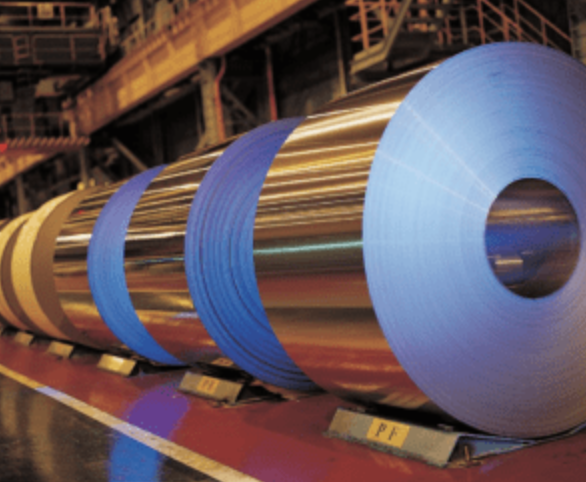
Tata Steel Nederland to supply low carbon steel from 2023
Tata Steel Nederland has reached agreements to supply its low carbon product Zeremis Carbon Lite to a number of steel-processing companies, it said Feb. 28.
The steelmaker has signed agreements with sustainable steel belt and tube producer Wuppermann, shock absorbers and suspension system manufacturer BILSTEIN, German steel distributor EMW Stahl Service and southern European cold rolled high and low carbon steel maker Arania.
Tata has been supplying Zeremis Carbon Lite, which has an allocated carbon footprint reduction of up to 90%, since last July.
It plans to introduce additional Zeremis low carbon steel products, such as Zeremis products with increased recycled content.
“The use of lower CO2 steel by these steel processors, who supply major players in the automotive and industrial markets, enables their customers to make greener end-products such as kitchens, robotic storage systems and passenger cars,” Tata said.
“Over the years, we have developed a collaboration with Wuppermann, BILSTEIN, EMW Stahl Service and Arania that allowed for open discussion on ways to further reduce their scope-3 emissions and create shared sustainability strategies,” Tata Steel Nederland CEO Hans van den Berg said.
“We can already supply them a significant amount of high-quality low-CO2 steel now, and we aim to offer large quantities of high-quality green steel by 2030, when we target to commission our first direct reduction plants and electric furnaces at our IJmuiden site.”
Currently, the CO2 intensity of the steel produced in IJmuiden is around 7% below the European average and 19% below the global average, and set to fall further once it is converted to using green hydrogen-based steelmaking.
Tata Steel Nederland aims to reduce its CO2 emissions by 35%-40% by 2030 and to be carbon neutral by 2045.
Last August, Tata Steel Nederland signed contracts with three companies to advance technical preparations for the use of hydrogen in steelmaking at Ijmuiden.
Tata also previously signed an agreement with the national grid operator TenneT for a direct connection to the national electricity grid to be able to use green energy for future operations.
Platts, part of S&P Global Commodity Insights, assessed domestic HRC prices in Northern Europe at Eur795/mt ($843/mt) ex-works Ruhr Feb. 27, up 16% since the start of 2023.
— Jacqueline Holman


H-Beam rises for fourth straight month, but gains slow as buying weakens
Wide-flange H-beam import prices into Southeast Asia rose for the fourth straight month Feb. 28, but the gains weakened compared with a month earlier due to a sluggish buyer’s market.
Platt’s assessment of S275JR H-beam rose $9/mt month on month to $789/mt CFR Malaysia Feb. 28, with an offer from Thailand rising $10-$15/mt, while buyers’ acceptable level remained below $790/mt CFR.
South Korean H-beam from Hyundai was heard offered at $910/mt CFR Singapore, while Thailand’s SYS was heard to have offered at $810-$815/mt CFR Singapore and $790-$800/mt CFR Malaysia.
Chinese H-beam was heard offered at $720-$725/mt CFR Manila for ASTM A36 grade H-beam.
“Prices keep on fluctuating. There was a time in February when Chinese offers breached $740/mt CFR Manila. Demand is not too good, stable. Customers are only buying for replenishment and not stocking up too much,” said a Philippine trader.
A Malaysian importer was bearish about prices. “The Malaysian market is still struggling. We just ended the Lunar New Year, but there is another round of holidays and Ramadan fasting, so demand will be flat for two months of April and May,” the source said, adding that “buyers can only accept below $790/mt CFR Malaysia.”
— Edward Low

Revista InfoAcero Febrero 2023
En el siguiente enlace pueden acceder a la edición de Febrero de nuestra revista INFOACERO
Destacamos a continuación algunos de sus contenidos:
- Opinión – D. Alberto Fernández– Junta Directiva UAHE.
- Evolución del Índice de Precios de Productos Siderúrgicos – UAHE
- Información Asociativa: Conferencias UAHE- Perspectivas en nuestro sector- SUSIDER (2 febrero), CL Grupo Industrial (9 febrero)
- Sector Siderúrgico: Evolución de los sectores consumidores de acero, consumo real y aparente de acero- Eurofer 1er Trimestre 2023.
- Próximos Eventos: Steel Net Forum Iberia (Oporto, 16,17 Marzo), Kallanish Europe Steel Markets (Amsterdam, 16, 17 Mayo)