


What can we expect in 2023 as the Baltic Dry Index falters?
Freight rates have fallen sharply so far in 2023. After a golden time for the shipping industry, we have seen a progressive weakening of freight rates throughout the past year as congestion eased and global economic growth slowed. Shipping firms did not begin 2023 with much optimism. Prices continued to fall in early 2023, reflecting disruptions to commodity production caused by bad weather and the seasonal Chinese New Year slowdown. The Baltic Dry Index (BDI) decreased 56% from the beginning of January to 21 February to reach the lowest level in over two and a half years (Figure 1, right-hand side).
The decline in earnings across the market is notable. Time charter rates underline the current weakness of the market. A one-year time charter on a Capesize ship in 2022 Q1 would have earned owners $28,000 /day, whereas for 2023 Q1 the Maritime Forecasting and Strategic Advisory (MSI) forecasts $16,000 /day (Figure 1, left-hand side).
We expect a modest recovery in 2023 H2
The question now is whether rates are set to continue this downward trend. As weather problems fade and Chinese economic growth rises, demand should improve from the very weak levels in January and February. However, broader fundamentals do not look strong for 2023. Despite the global slowdown, MSI expects modest growth of 1.8% y/y in cargo volumes this year, following a steady trade outlook for iron ore and a positive outlook for minor bulks. Improved fleet efficiency will, however, translate this into a fall of 1% y/y in deadweight tonnage demand for dry bulk shipping. This means ships will carry more cargo tonnes per deadweight tonnage. At the same time, supply is expected to increase by 3% y/y. Although demolitions are set to grow from their low level in 2022, this year will bring another influx (~30 MDwt) of newly built ships. The net effect from fleet growth and deadweight tonnage demand reduction is a 32.5 MDwt increase in fleet supply.
Demand will partly depend on the nature of recovery in China. Previous surges in Chinese growth – for example after the 2008-09 financial crisis – have been driven by commodity-intensive investment spending. If this recovery is led by consumer spending, particularly on services, it will create less demand for dry bulk freight.

The outlook is rather conservative in the coming quarters. MSI forecasts modest improvements in average rates for the four dry bulk vessel segments towards 2023 H2 as temporary factors such as unfavourable weather fade. The Forward Freight Agreement (FFA) curve shows Capesize rates will improve in 2023 H2, standing as of market close at ~$18,625 /day for 2023 Q3 and $18,275 /day for 2023 Q4, up from $13,600 /day for 2023 Q2.Given the supply-demand fundamentals, however, there is little chance of a return to the high rates of 2021-22.
The container shipping sector outlook for 2023 does not look strong either. Fleet growth is expected to accelerate markedly. The orderbook of newbuild container ships, expected to be delivered between this year and 2027, is equivalent to about one-quarter of the existing carrying capacity, according to Drewry. A combination of sluggish demand and a sharp increase in vessel delivery will likely challenge the container freight market in 2023.

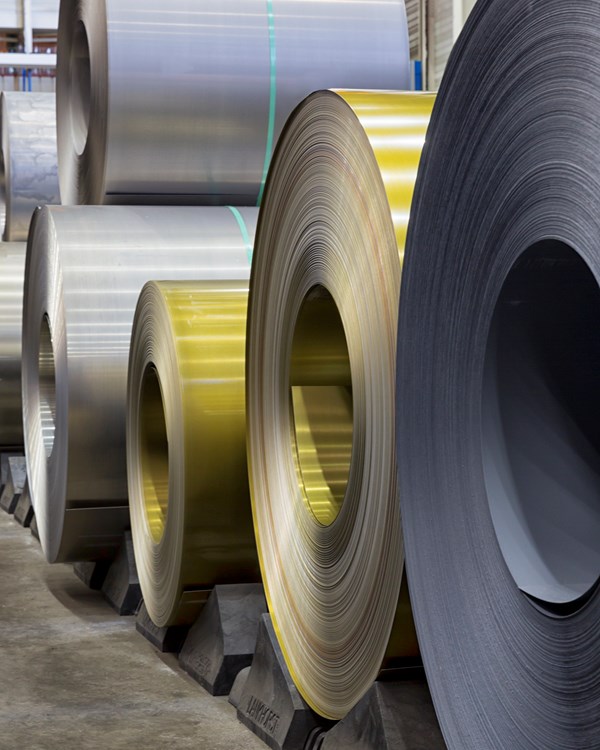
ArcelorMittal to test low-carbon steel in Kirchhoff-made auto parts
ArcelorMittal and Kirchhoff Automotive have signed a memorandum of understanding to develop low carbon-emissions steel for cars and trucks, the steel company said March 2.
The agreement will help expand the use of low carbon-emissions steel in highly engineered vehicle parts, ArcelorMittal Europe-Flat Products Vice President Yves Koeberlé said.
The agreement covers a project to test the use of ArcelorMittal’s Usibor1500 — a hot formed grade intended for use in automobile structural and safety components, which is made with recycled steel and 100% renewable electricity — in the high-strength parts that Kirchhoff Automotive supplies to original equipment manufacturers, or OEMs, in Europe, Asia and North America.
Usibor1500 is part of ArcelorMittal’s XCarb brand, which is an umbrella term for reduced, low- and zero-carbon steels. The XCarb product family is set to expand as ArcelorMittal invests in the decarbonization of its steelmaking operations across Europe in line with its target to reduce CO2 emissions by 35% by 2030, and to reach carbon neutrality by 2050.
ArcelorMittal’s Europe Flat Products division began manufacturing XCarb recycled and renewably produced steel at its Sestao plant in Spain more than a year ago, marking a new chapter in flat rolled steel production, which allows customers to buy steel with a reduced carbon impact.
On a life cycle basis, Usibor1500 with XCarb substrate has a 70% lower CO2 footprint compared with the same product made via a conventional blast furnace production process, the steel company said.
“The future use of low carbon-emissions steel will enable us to make production significantly more sustainable, as 90% of our carbon footprint is currently determined by the use of conventionally produced steel and aluminium,” according to a statement by Kirchhoff Automotive CEO Wolfgang Kirchhoff.
Kirchhoff Automotive, through its 27 plants, is present in 11 countries across Europe, Asia and North America. It supplies metal and hybrid structures for the body-in-white stage of vehicle assembly and for chassis.
The company began determining the sources of greenhouse gas emissions in its supply chain (Scope 3) last year, both upstream with suppliers and downstream with customers, and is addressing them partly through projects and partnerships like this one with ArcelorMittal.
— Ekaterina Bouckley


German steel market sees stronger March prices on restocking, restrictive lead times
German steel market participants held bullish expectations for prices over March, data from S&P Global Commodity Insights’ monthly steel sentiment survey showed.
The March index for market sentiment stood at 75 points, with both distributors and producers scoring equally on the sentiment index. This is a large increase from February’s average of 54 points, indicating bullish expectations for the weeks to come.
“The market is cautiously positive, mills have the upper hand in pricing as they have full order books — sold out until June delivery,” a trader said. “Import offers are limited and only available for August. European mills claim that there will be restocking soon.”
Indeed, with the market now feeling the effects of widespread production cuts in the latter half of 2022, many attribute increasing prices to strong orderbooks and the anticipation of supportive demand, pushing delivery periods into June for the majority of European flat steelmakers.
“Expectations are that the prices [for coil] will be gradually moving up, without any major price jumps,” a service center source said. “European mills do not perceive all the import as a threat, the general feedback is positive with some rebound expected — no downward pressure in the coming week.
“There are no alternatives but to buy in the EU for shorter lead times.”
The lack of competitive import offers give European mills greater power in the market, with the limited offers available only from Asian origins for August delivery.
Evidencing these sentiments, leading steelmaker ArcelorMittal announced price increases across Europe for March trading, with other producers expected to follow the uptrend.
Supply and demand
Amid the likelihood of higher prices, respondents also expected an increase in inventory levels, suggestive of near-term distributor restocking.
The index for inventory sentiment averaged around 59 points for March, with distributors and producers scoring 62.5 and 56.25, respectively.
This is the first time the inventory index has scored above 50 points this year, indicating greater confidence that inventories are reaching critical levels, especially on behalf of producers.
“It seems that the buyers would need to restock in a couple of weeks and then the prices will rise,” a European steelmaker said.
“The last large volume bookings were in January, and since then buyers did not restock,” a German service center said. “They will have to book big volumes in the coming weeks.”
Steelmakers recently announced a spate of restarts across the European market, bringing capacities back online in the context of recovering demand.
The March index for production sentiment mirrored the inventory index, averaging 59 points on the same producer-distributor scores.
Most expected a slight increase, or stability of production, but the restart of some idled furnaces in March-April is not expected to have an immediate impact on supply and prices, according to market participants.
“It takes time for the mills to restart furnaces, and that’s if they do all restart,” a trader said. “If we do see restarts in March-April then additional volumes won’t hit the market until June-July.”
Platts is part of S&P Global Commodity Insights.
— Benjamin Steven, Maria Tanatar, Rabia Arif

Turkish Trade Ministry, steelmakers agree on price control mechanism
The Turkish Trade Ministry and steelmakers, which held a meeting at the ministry March 2 about steel supply for reconstruction projects in earthquake-affected regions, have reached an agreement on establishing a price control mechanism to prevent speculation.
According to an information note from steelmakers seen by S&P Global Commodity Insights, the housing development administration of Turkey is planning to build 350,000 houses in the region within a year.
This will require 5 million mt of steel products, including 3 million mt of rebar, 750,000 mt of wire rod, and 1.25 million mt of sheet metal, according to calculations done at the meeting.
This could easily be met by the domestic market, steelmakers said, although they also brought up the increase in raw material and product prices in the post-earthquake period.
“By detailing the cost items in the production phase, attention has been drawn to the share of raw materials and energy in costs, and our producers have promised that no increase will be made in rebar prices, except for fluctuations in raw material prices,” they said.
Demand for steel for reconstruction projects has seen imported billet and scrap prices rise in recent weeks.
Platts, part of S&P Global, assessed Turkish imports of premium heavy melting scrap 1/2 (80:20) at $452.50/mt CFR March 1, $27.50 above Feb. 1, while its CIS export billet assessment was at $617.50/mt FOB Black Sea, up from $560/mt CFR Feb. 1.
“An agreement was also reached at the meeting on preventing speculative steps that may arise from sellers other than manufacturers and providing a price control mechanism,” producers said in the note.
The steel quantities needed for reconstruction projects could be obtained by producer organizations by prioritizing the domestic market, as in the case of containers, the producers noted.
Another meeting will be held at the Ministry of Commerce March 7 to establish a similar system for rebar supply, as in the case of container production, or to discuss and clarify other applications that could be created, according to the note.
— Viral Shah, Cenk Can