

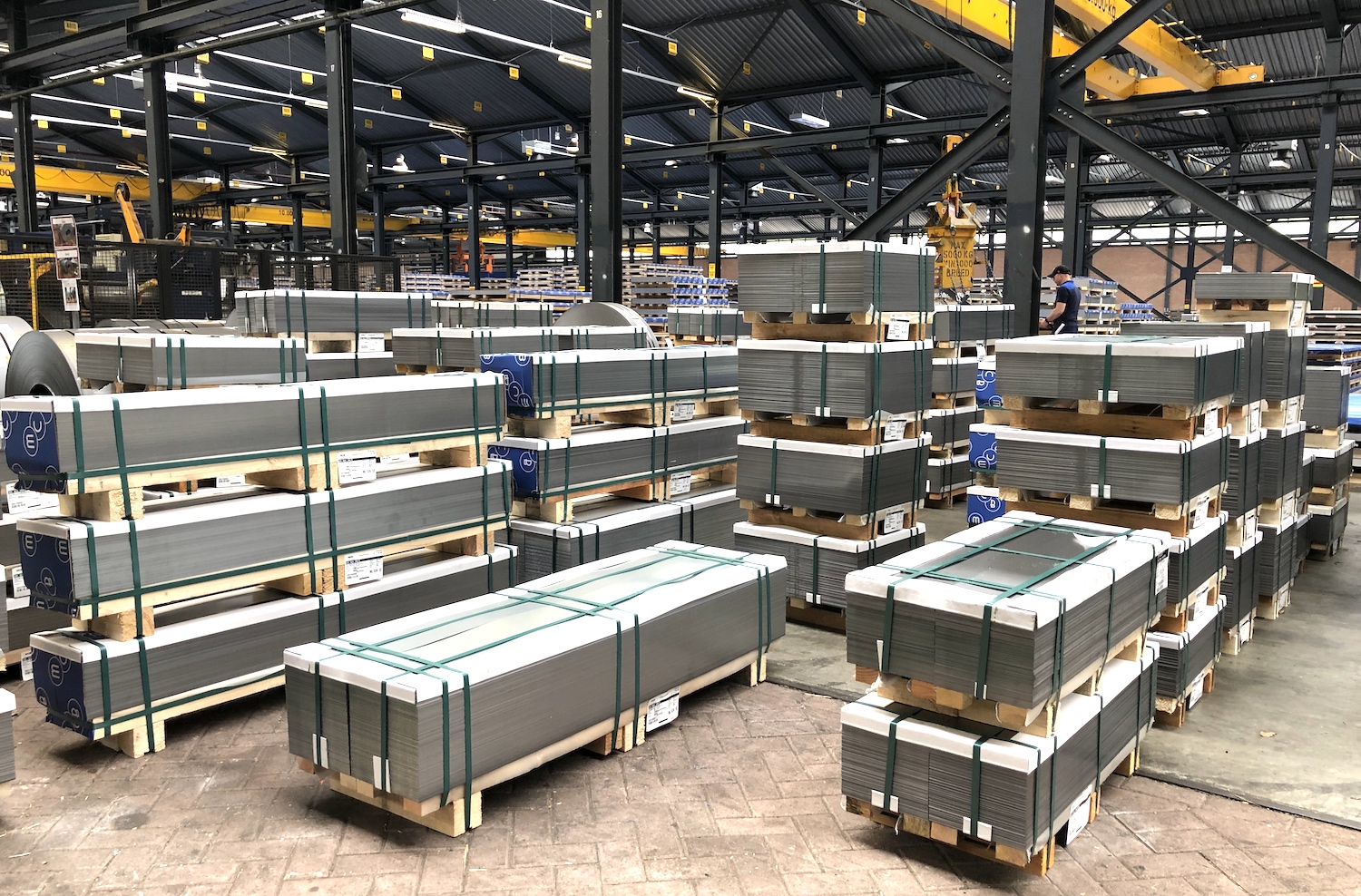
EU service centre shipments slow in February
EU flat steel service centre shipments increased 0.5% on-year in January-February, distributors’ association EUROMETAL informs Kallanish.
This, however, represents a slowdown in February after Strip Mill Products shipments in January had risen 3.8% on-year. Only hot-rolled flats have shown a positive trend.
When expressed in days of shipments, stocks at EU SSC reached 73 days in February compared to 71 days in February 2022.
The February index of stock volumes dropped to 101, compared with 106 in February 2022 (average 2018 = index 100).
Adam Smith Poland


Green steel demand to rise exponentially
The green steelmaking transition is an unstoppable trend that is about to embrace significant demand growth over the coming decades, said speakers at the Kallanish Asia Steel Markets 2023 conference in Ho Chi Minh City last week.
Dr Sebastian Langendorf, chief executive and founder of Singapore-based Meranti Steel, expects significant demand for green steel due to considerations of increasing political pressure, carbon self-commitments, supply chain requirements and awareness of end customers.
Langendorf sees global green steel demand rising from 7 million tonnes in 2021 to 41mt in 2025, and then jumping significantly to 235mt by 2040. Simultaneously, the share of low-emission steel demand versus all flat steel demand will grow from 1% to 26%. He sees the trend as a big challenge but also a huge opportunity.
Meanwhile, Martin Smith, Asia business development director at Primetals, said at the event: “It [the transition to carbon neutrality] is coming, and we can’t stop it.”
In terms of technology, Gaku Ito, general manager at Japan’s largest pure EAF-based steelmaker Tokyo Steel, asserted that carbon capture, utilisation and storage (CCUS) will not be effective and feasible for low-carbon steelmaking in Japan. This is because “land and other costs are too high,” he explained.
Gaku Ito regards EAF technology as the first-choice route for green steelmaking, meaning prime scrap will become more demanded and therefore expensive.
However, questions remain over where the vast sums of money needed for the low-carbon shift will come from. “If half of global steel demand decides to be low carbon, that would require a total of $11 trillion. Who is going to pay for that?” asked Kallanish managing editor Asia Tomas Gutierrez.