

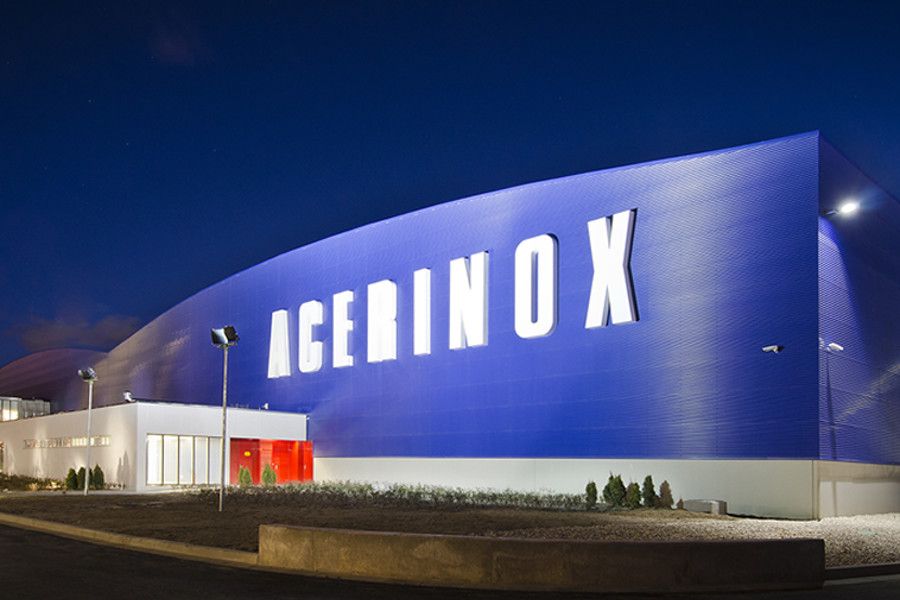
Sarralle supplies metal recovery plant to Acerinox
Steel industry technology and engineering supplier Sarralle Group tells Kallanish it has won a new order from Acerinox for the upgrade of its Palmones unit in Spain.
After having successfully built and commissioned a crushing slag plant in June 2022, Sarralle will now execute the second phase of the project by supplying new treatment and recovery equipment.
The investment includes design, engineering, automation and control technology.
“The treatment and recovery of slag is still one of the most challenging operational processes since stainless steel contains chromium and iron and consequently these valuable components have potential environmental and economical profit,” Sarralle says.
With the new metal recovery plant, Acerinox will be able to treat 70 tonnes/hour of stainless steel slag, according to the company.
Todor Kirkov Bulgaria


Stahl-Holding-Saar sees ‘toughest time’ ahead for its German steel mills
Stahl-Holding-Saar, the German parent of steel mills Dillinger and Saarstahl, was expecting the “toughest time” in the company’s history, driven by rising scrap shortages and expected higher production costs, CEO-elect Stefan Rauber said May 26. Rauber will take over as CEO from Karl-Ulrich Kohler on July 7.
On a call to announce the change in leadership of the supervisory board, the company said the energy transition and move towards lower carbon intensive steel will be an unprecedented 10-year challenge.
Asked by S&P Global Commodity Insights whether the company was expecting a shortage in scrap to come as increasingly more European steel mills are moving toward the more-scrap-intensive electric arc furnace production route, Rauber said it was already facing a material tightness and the scrap shortage will be even more intense in the future.
Asked whether he would also expect a shortage of green, or lower carbon emission steel, he said the market was very small in terms of tonnage.
The company is still waiting to receive funds from the government to start implementing the technical changes they have planned to receive lower carbon emissions in steel production with an estimated cost of Eur3.5 billion ($3.8 billion).
The plans include the commissioning of a direct-reduced iron plant, closure of one blast furnace and two new electric arc furnaces by 2030 and the commissioning of a third EAF by 2045.
Salzgitter, another German steelmaker, received government of Eur1 billion in April for lower CO2 steelmaking.
Rauber was optimistic Dillinger and Saarstahl will receive funding despite an open letter issued this week by trade union IG Metall that Germany’s biggest steelmaker Thyssenkrupp could face cuts to its funding for a DRI plant.
Current market for green steel small amid ramp-up
While the spot market for carbon-accounted steel remains small, European mills are in the market and testing offers currently asking for a premium of certified hot-rolled coil up to Eur300-350/mt but buy-side sources reporting workable levels at Eur100/mt.
Platts, part of S&P Global Commodity Insights, assessed carbon-accounted hot-rolled coil at Eur100/mt on May 25 for material with CO2 content at max 2.1 mt and below.
Outgoing CEO Kohler said the long steel mill Saarstahl and platemaker Dillinger combined will be offering 3.5 million mt of green steel from 2027 with a target to achieve the tonnages by 2030.
Around 1.6 million-1.7 million mt/year of long steel was expected to be produced while the plate arm at Dillinger was expected to produce 1.8 million-1.9 million mt/year of plate.
Author, Laura Varriale
