


EUROMETAL participated in the UAHE General Assembly


EUROMETAL participated yesterday in Madrid in the General Assembly of the Unión de Almacenistas de Hierros de España (UAHE).
The day’s agenda included two keynote presentations, the first given by Santander Asset Management with the title “2023 Market Vision and Investment Behavior”, and the second, on “Carbon Adjustment Mechanism at the Border”, given by EUROMETAL President.
Fernando Espada alerted Spanish steel distributors and stockists to the most recent carbon regulation adopted by the European Commission. CBAM will progressively replace the European Union Emissions Trading System (EU ETS) and for which we must start preparing ourselves from now on.
Some experts warn of possible reductions in imports and exports; the possible reduction of import quotas and shortages of some products and the possible disappearance of small and medium-sized importers, especially agents, who will have more difficulties in dealing with the new requirements.
The event was attended by 80 UAHE members among the 130 participants.
Photos: UAHE
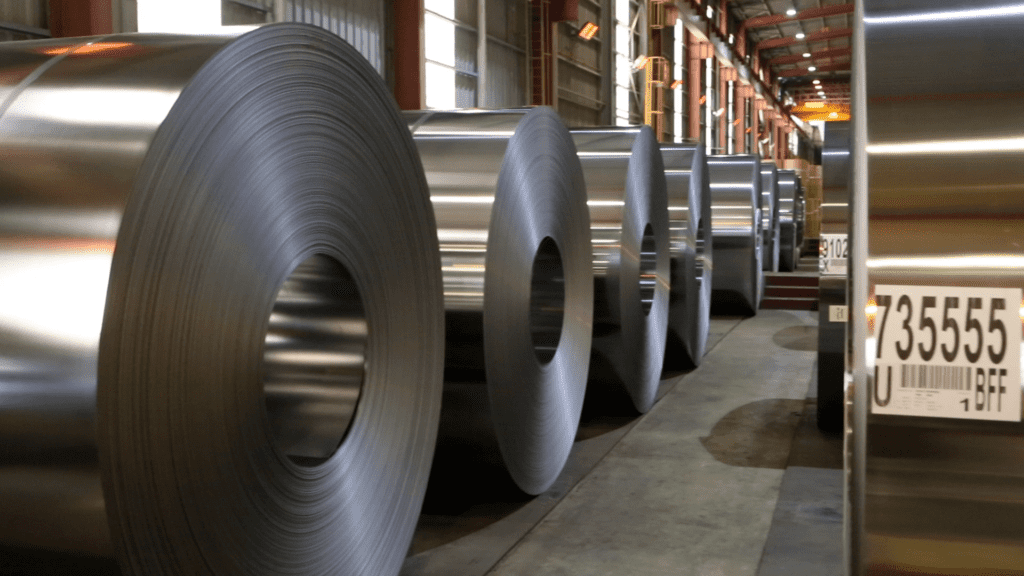
EU HRC price stable; market seen evaluating impact of production cuts
European domestic prices for hot-rolled coil were unchanged on July 27, with market participants seen evaluating the impact of unplanned production cuts.
Platts assessed domestic prices for hot-rolled coil in Northwest Europe stable on the day at Eur670/mt ex-works Ruhr on June 27.
Market participants estimated tradable values at Eur660-700/mt ex-works Ruhr with a majority of achievable prices reported at Eur660-680/mt ex-works Ruhr.
On June 27, German steelmaker Salzgitter issued a notice of force majeure to its customers, saying that recent heavy rain and local flooding have damaged roads and rail tracks, affecting its ability to ship raw materials and dispatch steel goods.
Labour Inspectorate also ordered ArcelorMittal France to temporarily close its production at Fos-sur-Mer June 23 due to high levels of emissions threatening the health of workers. The company has started to prepare for the shutdown of the steel mill and site facilities, but it is scheduled to have a meeting with French authorities in early July to discuss an action plan.
“Fos-sur-Mer will most likely have to lower production, as it is the easiest and the fastest way to reduce emissions,” a service center source said. “This situation and the recent announcement of Salzgitter will be used by mills to increase offers. Most likely prices will remain stable or move up slightly, as demand is not great. But at least the negative sentiment about prices will disappear from the market.”
In addition, Hungarian-integrated steelworks Dunaferr has suspended rolling operations because of a lack of slabs with a restart tentatively scheduled by mid-July.
Majority of the European steelmakers expect to have longer summer maintenance to balance supply and demand, according to sources.
Although downward pressure from new import offers has disappeared due to a limited number of offers, uncompetitive prices and longer lead times, large volumes of cheap import coil are currently on the way or crossing borders of the EU, they added.
Offers of HRC from Asia were reported at Eur630/mt CIF European ports.
Platts assessed domestic prices for hot-rolled coil in South Europe at Eur645/mt ex-works Italy on June 27, stable on the day.
The assessment was based on deals heard at Eur640-650/mt ex-works Italy. The mills, however, were seen trying to increase offers to Eur670-690/mt ex-works Italy.
Platts is part of S&P Global Commodity Insights.
Author Maria Tanatar


EU extends sanctions on imports of products, goods containing Russian steel
Importers of iron and steel goods into the European Union will have to prove that the material they have used isn’t sourced from Russia, the EU said June 23, as part of the 11th package of sanctions against Moscow.
The bloc first banned the import of key iron and steel products from Russia in March 2022, S&P Global Commodity Insights reported. In a bid to further tighten restrictions, the latest sanctions now require importers to prove that the inputs used in their goods have not originated from Russia.
According to the European Steel Association, the EU imported 3.2 million mt of steel finished products from Russia in 2020 and an estimated 3.7 million mt in 2021, when Russia was the second-largest supplier after Turkey, as reported by S&P Global.
Turkey continues to buy large volumes of Russian steel, some of which is processed and re-exported to the EU market. The EU ban on the third country steel imports incorporating inputs originated in Russia, coming into effect Sept. 30, is likely to be a challenge for Turkish exporters who depend on the sales to the EU market.
Shift to non-EU markets?
However, market players in Turkey do not expect the low-priced imports of Russian steel to stop because of the EU sanctions.
Russia remained Turkey’s top HRC supplier in the first quarter of the year at 287,500 mt, up 90% on the year, Turkish Statistical Institute data showed.
It is possible that some Turkish mills would shift the steel exports incorporating Russian feedstock to non-EU markets, while supplying the EU buyers with products originating in Turkey or other non-sanctioned countries, including Southeast Asia or North Africa, according to a few Turkish sources.
However, complete elimination of the Russian input and replacing it with alternatives to maintain the same level of exports to the EU may not be possible due to the sheer size and competitiveness of Russian material for Turkish buyers compared with other origins. This may be particularly relevant for Turkish imports of billet and slab, where Russia’s share in the Turkish imports is much bigger than for the finished products.
In 2022, Turkey’s semi-finished steel imports from Russia reached a record high of 3.2 million mt, up 1 million mt on the year. The data for January-April 2023 showed a 7% on the year drop in the imported volumes but the import level from Russia was nevertheless high at 1.12 million mt and represented 50% of the total.
The EU ban on the imports of steel products rolled from Russian semis will become effective April 1, 2024 — when suppliers, mainly of rebar and wire rod, will face curbs on any steel products rolled from Russian billet. The same measure for slab will come into force on Oct. 1, 2024, and is likely to affect Turkish exports of HRC to the EU.
Ban on car exports to Russia
Also, with the 11th package, the EU extends the ban on exports to Russia of luxury cars to all new and second-hand cars, above engine size of 1,900 cm³, and all electric and hybrid vehicles.
In addition to luxury cars, the EU has banned supplies of new and used electric cars, hybrids and gasoline cars with an engine capacity of more than 1.9 liters, Russian auto industry analysts Autostat said.
However, the ban applies only to firms/corporates, so cars from Europe will continue to be imported through individuals, while the majority of hybrid cars and EVs come to Russia from China and Korea, noted Autostat.
That said, Autostat expects a shortage of cars of all brands in the domestic market throughout 2023, and sales of new cars will take more than one year to return to their pre-war levels.
Sales of passenger cars and light commercial vehicles in Russia over January-May 2023 declined 26% on the year to 228,500, while domestic production of cars over January-April stood at 113,000, 57% lower versus the corresponding period last year.
On the other hand, sales of new electric vehicles keep rising each month, and their market share is also growing, having reached 1.2% in May with a record high 880 cars sold last month, up from the previous 861 record in April and eight times more than in May 2022.
The Kaliningrad-based car manufacturer Avtotor has started the construction of a foundry and mechanical plant. The project is in line with Avtotor’s agreement with Russia’s Ministry of Industry and Trade aimed at developing domestic production of parts and components for the car industry, especially those that are no longer supplied because of European sanctions, as well as European and American auto companies’ self-sanctioning.
The Avtotor foundry and mechanical plant, with 5,000 mt/year non-ferrous and 10,000 mt/year ferrous maximal output, will produce aluminum, cast iron, copper, steel, titanium castings, as well as magnesium alloys.
Author Ekaterina Bouckley, Wojtek Laskowski

EC maintains steel safeguard measures until June 30, 2024
The European Commission has kept in place definitive safeguards on certain steel products until June 30, 2024, it said in its Official Journal on June 27.
The decision follows a review to determine whether the measures should be terminated a year early in June 2023.
The EC concluded that “an increase in the volume of imports should the measure be terminated as originally expected, could undermine significantly any meaningful economic recovery and the efforts being made by the Union steel industry in its process of adjustment to a higher level of imports.”
“All tariff-rate quotas of the steel safeguard will continue to be increased (liberalised) by 4% as of 1 July 2023,” the EC said in a statement on its website.
The EC said it did not consider that the current outlooks for the EU’s steel market could justify the early termination of the measure, and that despite a slowdown in EU consumption, notably in the second half of 2022, imports in 2022 were the third-highest in the last decade.
Therefore, despite a reduction in the level of tariff-rate quotas used in a situation of lower consumption, data shows that import pressure increased and remained, in terms of market share, close to the historic highs seen just before the adoption of the safeguard measure in early 2019.
Author Annalisa Villa
Swedish SSAB steps up cost-saving efforts at Ruukki Construction
Ruukki Construction, part of Nordic and US-based steel company SSAB, is streamlining operations and reducing costs in the light of persistently weak demand in the construction sector, SSAB said June 27.
Ruukki has presence in 10 European countries and the market situation in all of them has been weak for some time with no signs of improvement in the short term, yet the division aims to improve the operating efficiency by adjusting its cost structure and streamlining the organization, the company said in a statement.
Specifically, Ruukki Construction is targeting annual cost savings of Eur15 million ($16 million) by the end of 2023 that could lead to a reduction of 200 positions among its 1,500 strong personnel in the Nordics, Baltics and Central Eastern Europe, according to the statement.
“Demand for building products is weak in all of our operating countries. To ensure our competitiveness in this difficult situation, we have to adjust our cost structure in all countries,” Ruukki Construction President Sami Eronen said in the statement.
Ruukki Construction, that offers steel-based building products and services, shipped 1.33 million mt of products in January-March, seeing a more pronounced-than-normal downturn versus the fourth quarter, and SSAB did not expect the construction industry in Europe to bump back even in H2 2023 as its recovery is now hampered by high interest rates, S&P Global Commodity Insights reported.
Author Ekaterina Bouckley
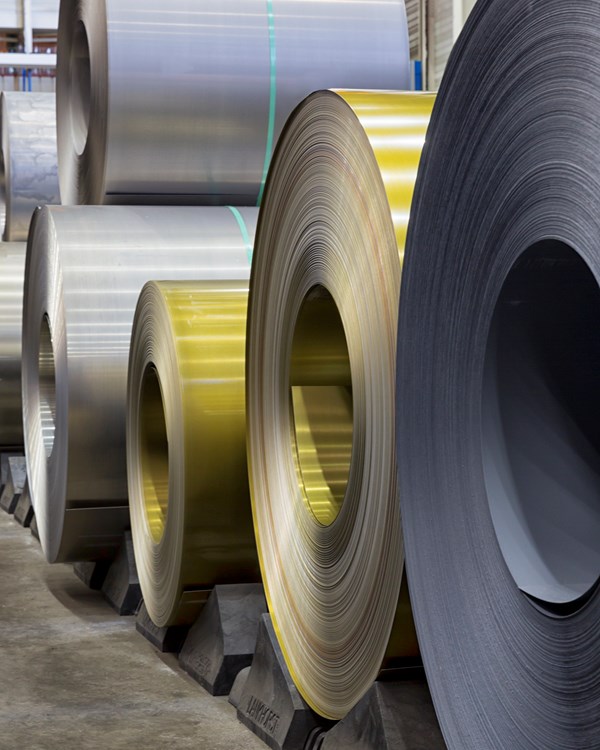
Supply disruptions at major producers likely to support European HRC price stabilization
Following disruptions to production and deliveries at key producers, supplies of steel hot-rolled coil in Europe are likely to become tighter, supporting price stabilization in the coming weeks, sources told Fastmarkets on Tuesday June 27.On Monday June 26, authorities ordered the shutdown of steelmaking operations at ArcelorMittal’s Fos-sur-Mer site in southern France, on environmental and worker-safety considerations.
On the same day, German steelmaker Salzgitter declared force majeure on steel deliveries because of disruptions resulting from heavy rain in Germany.
Market sources did not expect there to be any immediate consequences for the HRC market from these developments, but they did suggest that — in the longer run — the disruptions might help to stabilize prices by balancing supply and demand.
“Supply limitations might help the [HRC] market to stabilize. We need to prevent prices falling closer to €600 [$654 per tonne ex-works], and we might now end up at €680 [per tonne ex-works],” a trading source in Germany said.
Trading activity in the Northern European HRC market has been limited recently, even though market sources agreed that prices were close to rock-bottom.
Buyers’ estimates of tradeable values were still being reported in the range of €660-680 ($720-742) per tonne ex-works, while firm offers were rare.
One market source reported the range of offers from the mills in the region to be €680-700 per tonne ex-works, but pointed out that all recent sales have been done at prices lower than €700 per tonne ex-works.
As a result, Fastmarkets’ daily steel HRC index, domestic, exw Northern Europe was calculated at €672 ($732.88) per tonne on June 27, down by just €0.50 per tonne from €672.50 per tonne on June 26.
The latest calculation of the Northern European index was down by €7.75 per tonne week on week and by €78.83 per tonne month on month.
Fastmarkets calculated its corresponding daily steel HRC index, domestic, exw Italy at €645.99 per tonne on Tuesday, down by just €0.26 per tonne from €646.25 per tonne on June 26.
The Italian index was down by €6.01 per tonne week on week and by €42.76 per tonne month on month.
Offers from integrated producers and rerollers in the region were still being heard in the range of €650-670 per tonne ex-works for August-September delivery HRC.
One integrated producer in the south of Italy was reported to be ready to accept a price as low as €620-630 per tonne CPT. But one market source said that such low prices would only be available under pre-payment conditions and for large tonnages.
Trading was also slow in the Italian market, with market sources expecting to see some limited restocking during July, before the seasonal summer closures at mills.
“If the buyers think rock-bottom has been reached, during July we could see some restocking,” a distributor told Fastmarkets.
HRC offers from Asian mills to Italy had been heard around €610-620 per tonne CFR on Monday, mainly for August shipments from Vietnam and Taiwan.
South Korea was reported to be out of the market, and Indian mills had withdrawn their offers, according to market sources.
“After [achieving an] agreement on Section 232 [trade regulations] with the US… Indian mills would be more interested in selling HRC to the US market than to Europe,” a trading source said.
Published by: Julia Bolotova

Salzgitter declares force majeure on steel deliveries due to heavy rains, flooding in Germany: newsbreak
Salzgitter declared force majeure on steel deliveries on Monday June 26 due to disruption caused by heavy rains in Germany, sources told Fastmarkets on Tuesday.Heavy rains in the Lower Saxony, Hesse and North Rhine-Westphalia and across other regions on June 22 and 23, directly affected a number of Salzgitter facilities, Fastmarkets understands, with widespread flooding disrupting rail and road movements across Germany.
“The [flooding] damage to many railway tracks throughout Germany resulted in stranded trains and a large number of local roads closures,” Salzgitter told customers in a letter seen by Fastmarkets.
“Due to flooding… production had to be temporarily stopped at some parts of our plant in Salzgitter,” the company said in the letter.
Supplies of raw materials to the Salzgitter mill have also been disrupted and some finished steel stocks have been damaged by flooding, sources told Fastmarkets.
The Salzgitter letter to customers added that “the effect [of the flooding] on production and deliveries [at Salzgitter] are currently been examined but cannot yet be definitely determined… However, it is certain that temporary production restrictions and delays to deliveries will follow.”
The company said that as soon as the impact of the flooding on production and deliveries had been fully checked, it would contact customers.
Salzgitter Flachstahl, located in the city of Salzgitter is the major company’s steelmaking asset in Germany, with three blast furnaces with a combined capacity of more than 4 million tonnes per year of pig iron. The Flachstahl facility produces about 3.7 million tpy of hot-rolled coil, 1.8 million tpy of cold-rolled coil and 1.4 million tpy of coated flat steel.
At Peine in Lower Saxony, Salzgitter has an electric-arc furnace (EAF) with a capacity of 2 million tpy along with a sections mill, but also produces slab for “green” flat steel production, Fastmarkets understands.
At Mülheim an der Ruhr in North Rhine-Westphalia Salzgitter has a 900,000-tpy steel plate rolling will and an SAW tube welding facility.
The company also has a plate mill in Ilsenburg, in Saxony-Anhalt, although that area was less affected by flooding, sources said.
Delivery disruptions from Salzgitter, however, might lend support deteriorating flat steel prices in Northern Europe.
“Supply limitations might help the [HRC] market to stabilize. We need avoid prices moving more to the €600 [per tonne EXW] level, so perhaps, we might now end up at €680 [per tonne EXW],” a trading source in Germany said.
Fastmarkets’ daily steel HRC index, domestic, exw Northern Europe was calculated at €672.50 ($733.42) per tonne on June 26, down by €0.80 per tonne from €673.30 per tonne on June 23.
The latest calculation of the Northern European index was down by €12.25 per tonne week on week, and by €78.33 per tonne month on month.
Published by: Julia Bolotova

CBAM to slash Indian export margins: ICRA
The EU’s Carbon Border Adjustment Mechanism (CBAM) compliance requirements could pull down the profits of Indian steel exporters, says credit rating agency ICRA.
CBAM compliance requirements are expected to slash Indian steel exporters’ margins by around $60-165/tonne from 2026 to 2034, Kallanish notes.
During CBAM’s transitional phase from 1 October 2023 to 31 December 2025, the focus will be on carbon reporting, but without any financial adjustment for EU importers.
From 1 January 2026 onwards, EU importers will have to buy CBAM certificates corresponding to the embedded emissions above the EU Emissions Trading System (ETS) benchmark levels.
Apart from India, some of the other large steel exporters to the EU are Turkey, South Korea, Taiwan, Vietnam, China and Japan. However, the carbon footprint of Indian steel mills is significantly higher than that of key competitors, ICRA says.
“The prospect of the incidence of a large carbon tax from the March quarter of the fiscal year ending 31 March 2026 (FY26) can incentivise EU importers to shift towards steel producers with a low carbon footprint, much ahead of the outer deadline,” ICRA says.
“Therefore, unless Indian mills can materially bring down their carbon footprint during the transition period, it can potentially lead to lower profits and a loss of market share in Europe,” the rating agency concludes.
Sayed Aameer India


Prospective steelmaker H2GS eyes hydrogen supply for shipping
Swedish industrial start-up H2 Green Steel (H2GS) is partnering with compatriot Gotland Company to explore the feasibility of supplying the shipping company’s fleet with green hydrogen, Kallanish reports.
This would represent a new direction for the prospective steelmaker who until now was thought to be aiming to consume its entire hydrogen output captively for ironmaking. It also suggests there is surplus hydrogen available in Sweden.
H2GS is currently constructing a 700-megawatt (MW) electrolyser in Boden, northern Sweden. Using the experience from its preparatory work, which has been focused mainly on steelmaking, the firm says it is now taking a step into a new field – green fuels for shipping.
“Our purpose is to accelerate the decarbonisation of hard-to-abate industries, and green hydrogen holds the key to true industrial transformation. Collaborating with Gotland Company signifies expanding our competence in large-scale hydrogen production beyond iron and steel,” explains Kajsa Ryttberg-Wallgren, head of hydrogen business at H2GS.
Under the planned study, the companies will identify locations for hydrogen production, as well as infrastructure for transporting it to harbours. H2GS estimates the facility will require 300MW of electrolysis capacity.
Gotland, which develops, charters and operates passenger ferries, has two new ships in development. Capable of operating on hydrogen gas, at least one of the ships is expected to be operational by the end of this decade. The new Horizon series ships will run on gas turbines powered by “multi-fuel”, meaning, different types of fossil-free fuels.
However, Gotland’s goal is to eventually run the ships on 100% hydrogen. For this, it will require 20,000 tonnes/year of hydrogen to operate between Gotland Island and the mainland. For such large amounts of hydrogen gas, “development of both production and infrastructure is essential”, says Gotland Company chief executive Håkan Johansson.
Reethu Ravi UK
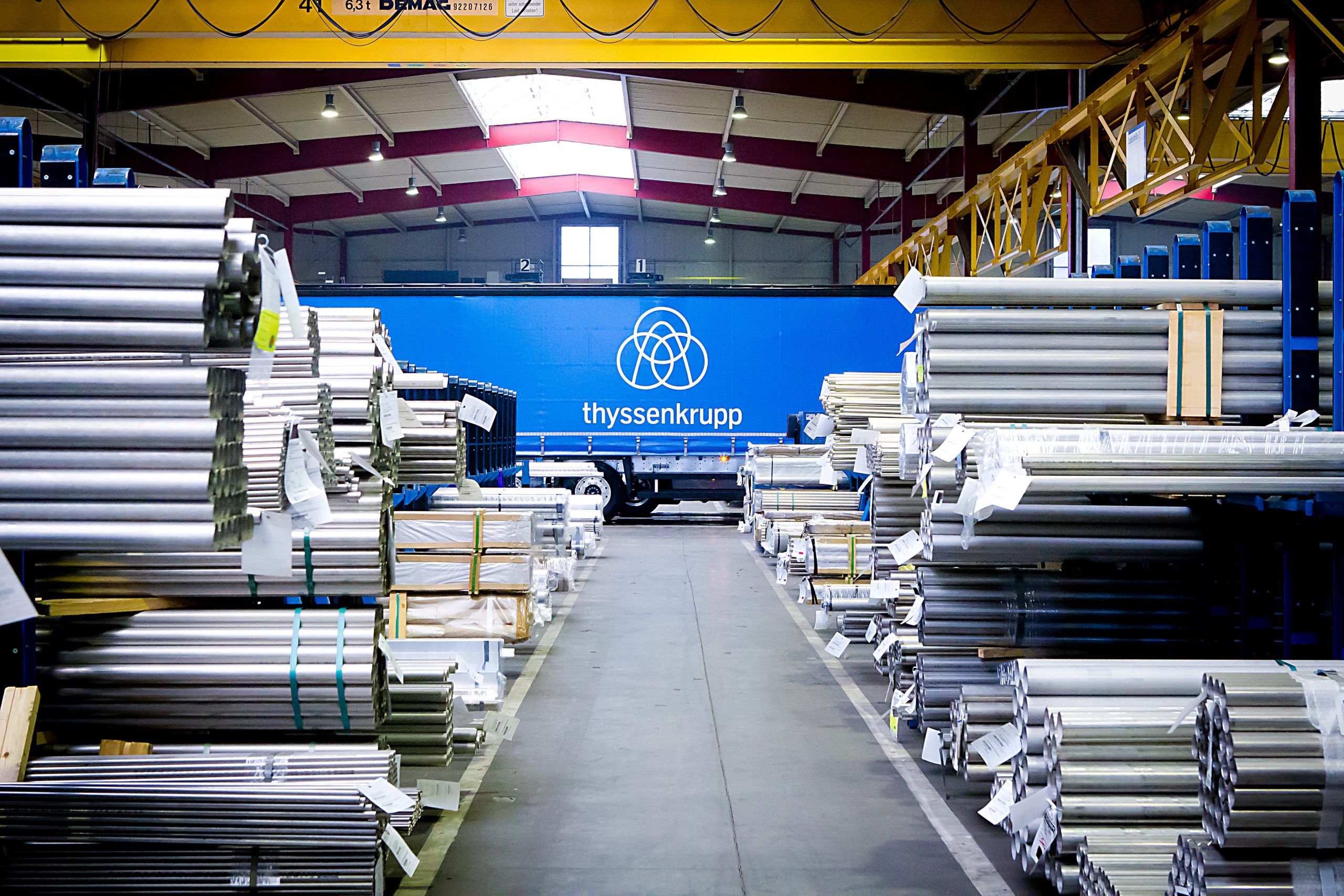
Czech billionaire to bid for thyssenkrupp Steel: reports
A new candidate has emerged from the mist of rumours surrounding the potential acquisition of thyssenkrupp’s Steel division as it spins off from its parent group.
Czech billionaire Daniel Kretinsky is rumoured to be interested in acquiring a stake in the steelmaker, Der Spiegel reported. Previously, Abu Dhabi-based steelmaker Emirates Steel Arkan (ESA) was reported as a potential buyer, with a formal bid expected in months (see Kallanish 27 April).
Other parties that have expressed interest in the unit are reported to include Brazil’s CSN and financial investor CVC.
Thyssenkrupp continues to decline commenting on talks or bids in this process.
Christian Koehl Germany