

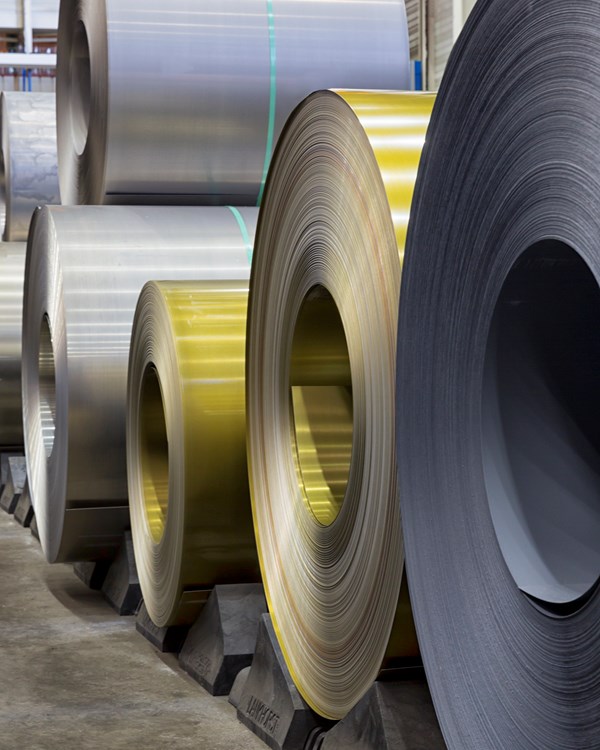
Northwest European mills likely to hike HRC prices
Northwest European mills are expected to increase coil offers in the week starting July 3 following the announcement of higher offers by Italian steelmakers, sources told S&P Global Commodities Insights on June 30.
Market participants believed that as coil prices reached the bottom across Europe, more buyers returned to the market looking for orders. Demand, however, was unlikely to be strong enough to support a significant rise in price, particularly ahead of the slowdown during the second half of summer, sources said.
Northwest European mills are expected to increase coil offers by Eur50/mt, according to market participants.
“Demand from the automotive industry is normal, import prices are not as competitive as they used to be, and mills will reduce production during summer stoppages for repairs, so it is the right time to increase offers,” a service center said.
“The steelmakers claim that they need to increase prices to cover costs, but the buyers do not see that they need to buy that much material at higher prices,” a producer source said.
Platts assessed domestic prices for hot-rolled coil prices in Northwest Europe at Eur680/mt ex-works Ruhr on June 30, up Eur10/mt on the day, reflecting deals and tradable values heard at Eur670-690/mt ex-works Ruhr.
Platts assessed domestic prices in South Europe unchanged on the day at Eur645/mt ex-works Italy on June 30, reflecting tradable values reported by market sources.
Some Italian mills increased HRC offers to Eur670-730/mt ex-works Italy, but they were not included in the assessment, as buyers deemed the prices to be too high.
Platts is part of S&P Global Commodity Insights.
Author: Maria Tanatar

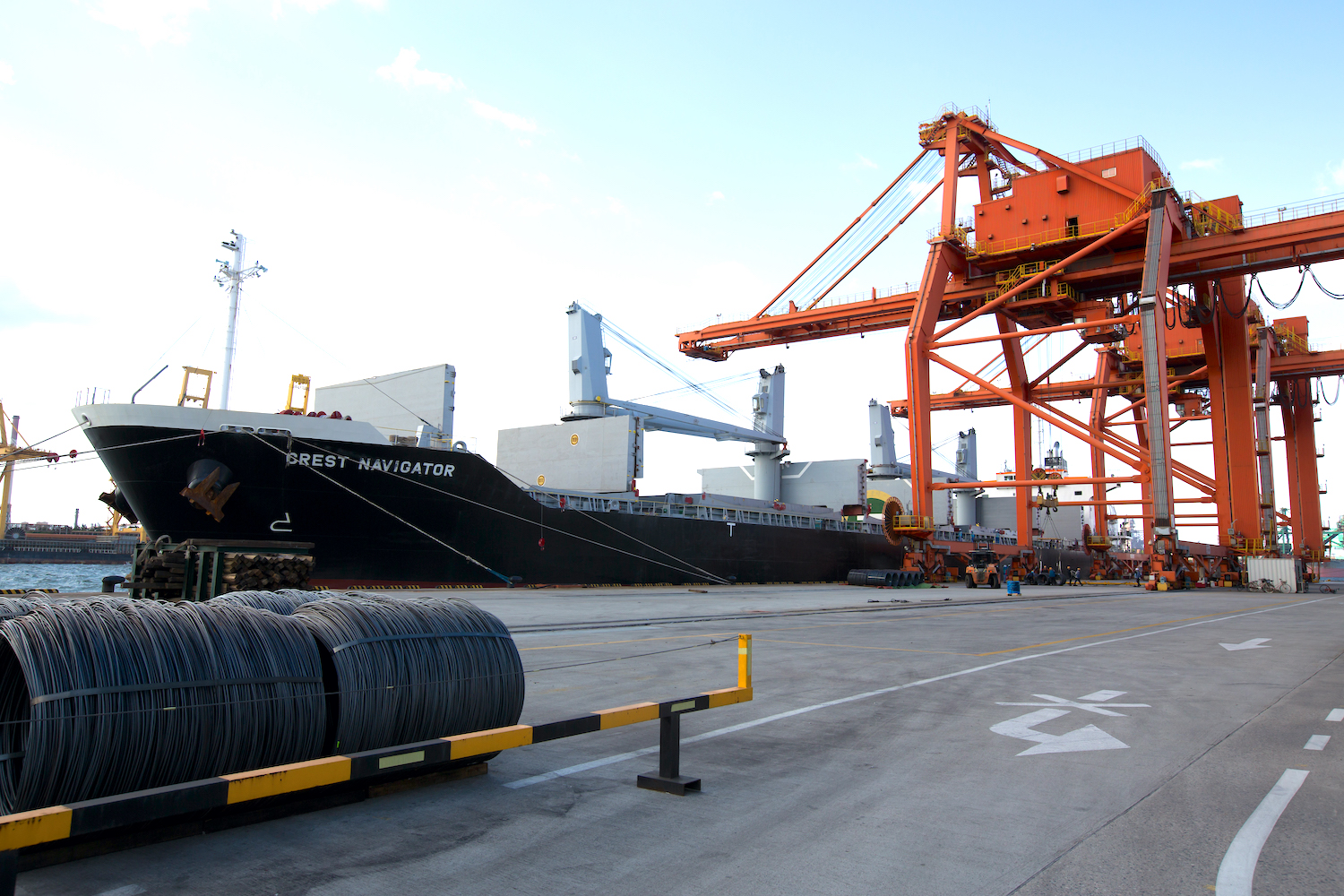
POSCO to spend $93 bil by 2030 on building eco-friendly steel, battery materials
South Korea’s POSCO Group expects to spend Won 121 trillion ($92.6 billion), both locally and globally, by 2030 on building its eco-friendly materials competitiveness, it said July 3, earmarking Won 73 trillion for its domestic businesses.
The group “will invest intensively in the steel business, which is the basis and competitiveness of the group, as well as the secondary battery material business that will lead future new mobility and the hydrogen business for the group’s “2050 carbon neutral” goal,” it said.
The group’s steelmaking unit, POSCO, aims to start up a new electric arc furnace at its Gwangyang steelworks from the end-2025 to 2026 with a production capacity of 2.5 million mt/year of crude steel.
To supply the new and future EAFs, sister company POSCO International aims to have 500,000 mt/year of scrap supply capacity in place by 2025.
Overseas, POSCO and India’s Adani Group are considering building a “green” integrated steel mill at Mundra, Gujarat.
In April, POSCO announced plans to spend Won 4.4 trillion over the next 10 years at Gwangyang to build an industrial complex that will include battery materials and hydrogen.
Also in April, group company POSCO Holdings and Japan’s Honda Motor joined forces to build up their supply of battery materials for electric vehicles, encompassing the supply of cathode and anode materials, and technical exchanges on future battery materials.
More immediately, for its battery materials business, POSCO Pilbara Lithium Solution Co. Ltd., a joint venture with Australia’s Pilbara Minerals, is expected to start up the first line of its 43,000 mt/year lithium hydroxide monohydrate plant at Gwangyang from late-2023.
As for hydrogen, in June, Oman awarded a project to manufacture 220,000 mt/year of green hydrogen and 1.2 million mt/year of green ammonia to a consortium which included POSCO and France’s Engie.
Platts assessed seaborne lithium carbonate and lithium hydroxide at $43,800/mt CIF North Asia and $47,000/mt CIF North Asia, respectively, on June 30, both unchanged from the previous session, data from S&P Global Commodity Insights showed.
Author: Clement Choo
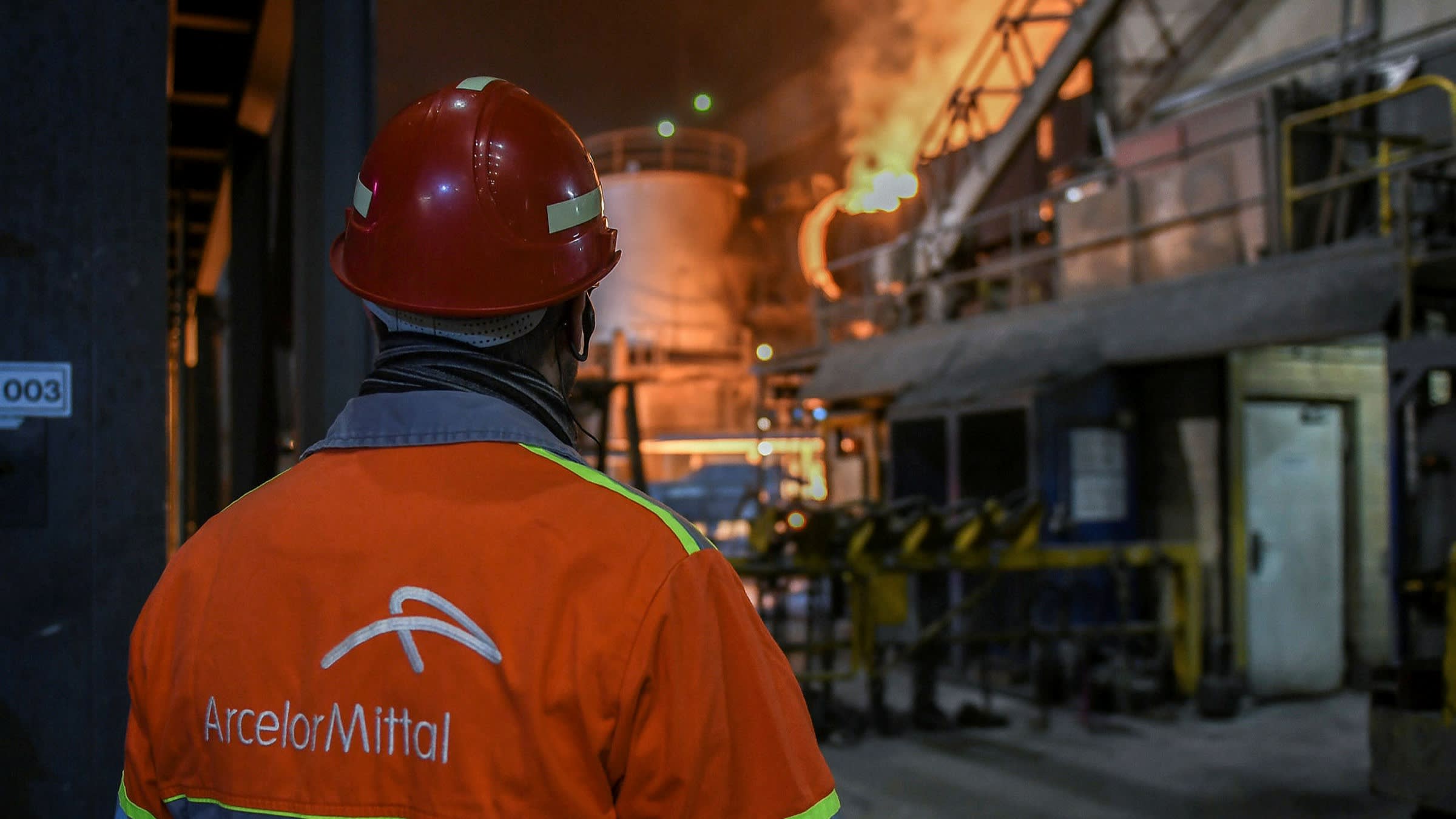
ArcelorMittal, Snop test XCarb steel for automotive parts
ArcelorMittal is contributing to cut CO2 emissions from the automotive sector by accelerating the application of its XCarb recycled and renewably produced steel. XCarb is the brand that represents ArcelorMittal’s low-carbon emissions products, Kallanish notes.
The steelmaker is partnering with French automotive supplier Snop to experiment the use of its high-strength, low carbon-emissions steel called Usibor in structural car parts. While tests are underway, the two firms signed an agreement that also covers the supply and purchase of other XCarb solutions, including XCarb green steel certificates.
Steel represents 96% of the CO2 emissions from Snop’s purchases. The company intends to cut its Scope 3 supply chain emissions by 30% by 2030 and Usibor boasts a 70% lower CO2 footprint compared with conventional steel.
ArcelorMittal Europe plans to curb emissions by 35% by 2030 on the path to achieving net-zero by 2050. The company started producing XCarb low-carbon products last year at its Sestao plant using the electric arc furnace route, scrap steel and 100% renewable electricity. XCarb is a global programme launched in 2021 which aims to bring together all the group’s efforts and investments in low-carbon and carbon-free steels. The brand also encompasses further initiatives and innovation projects.
Among several low-carbon steel developments, ArcelorMittal Germany now offers XCarb beams in the sizes of HE100 to HE300, and IPE180 to IPE600, in grades S235JR+M and S355J2+M. From its plant in Belval in Luxembourg, the steelmaker is supplying XCarb-certified sheet piling to one of Norway’s largest fishing ports in Egersund. In Brazil, the company launched its first 50S XCarb rebar in Latin America (see Kallanish passim).
Natalia Capra France


French rebar stagnates, prices flat
The French rebar market is forecast to remain quiet in July, continuing the current trend of low orders and uncertainty. The weak performance of the private residential construction sector is preventing buyers from purchasing despite stocks being low. Rebar prices remain stable on-month, after sentiment in the construction industry deteriorated in June.
Rebar orders are being carried out back-to-back but, given the low orders seen in June, distributors who spoke to Kallanish hope that some restocking may happen before the 14 July bank holiday for September delivery.
There is a “hunger for orders” and continuous incursion of lower-priced Italian, Spanish and now also German material, particularly in the south of the country. Domestic rebar prices are hovering at €570-610/tonne ($618-661) delivered including size extras, depending on tonnage.
Customers and construction companies have low stocks. A distributor says it is impossible to forecast given the current low visibility, and sellers are playing it by ear on a daily basis. Another source says it is difficult to think about price increases like those happening in other countries where steelmakers are pushing up quotes to stop prices from dropping. The French and German markets are now performing worse than in Italy and Spain, Kallanish notes.
Natalia Capra France

Automotive leads green steel demand, construction challenging: BloombergNEF
The automotive industry is leading the way for green steel demand, but the construction sector, which accounts for over 50% of steel consumption, has much thinner margins and therefore slower green steel uptake, says Dr. Julia Attwood, head of sustainable materials at BloombergNEF.
“Demand for premium products like green steel always come first from sectors where materials are a small portion of the total cost of the product and can be absorbed or passed on to consumers with little resistance. A 25% increase in the price of steel would only raise vehicle production costs by 1%,” Attwood says in a note seen by Kallanish.
BNEF calculates that, on average, green steel costs 40% more than unabated production today. However, these costs could fall by 2050, so that green steel costs 5% less than fossil-based routes.
Decarbonisation capital expenditure costs should decline through economies of scale, and development costs will fall due to greater experience with building these projects. Operational costs are more uncertain. Intermittent renewable power costs are expected to fall to $10-20/MWh by 2050, but electrolysis-based steel production may require firm clean power, which could be closer to $50-60/MWh due to very high clean backup power costs, Attwood observes.
Hydrogen costs are also expected to fall, from around $7/kg today to less than $1/kg by 2050. This depends not only on cheap clean power being available but also on the scaling up of electrolyser manufacturing.
Higher costs are eventually passed to customers as higher prices. Some steelmakers have been very transparent about their premiums. H2 Green Steel has disclosed that its steel will come at a 25% premium, and SSAB says its fossil free steel will be priced at €300/tonne ($325) higher than unabated steel.
“Most green steel projects are funded with a traditional project finance model, using a combination of equity and debt. For newer technologies such as hydrogen, carbon capture and electrolysis, the projects need to be de-risked. Offtake agreements, especially those that commit to buying green materials over several years can help to do that. This makes forming partnerships and selling off capacity, even before the plant is designed, extremely important,” Attwood concludes.
Adam Smith Poland

European plate imports wane, except for value-added product
There are signs that imports of plate into Europe, which have been strong in recent months, are about to wane, but imported value-added product remains of interest.
According to one German buyer, flame-cut plate from China has gained quite a share in his home market this year. “I’ve just lost one customer who is ordering all from China now,” he tells Kallanish. “They are making enormous progress in our market, especially with big buyers.”
Domestic German processors would normally add some €400/tonne ($435) for such services, which would require a deal price of €1,300/tonne ($1,415) to be profitable. Chinese material can be had for less than €1,000/t, which pays off for European customers despite transport costs. He expects these offers will continue.
Meanwhile, imports of standard plate could mitigate after the influx seen this spring. Prices were most recently struck at around €780/t cfr Antwerp for S355 grade, not really lower than a month ago but a good €100/t below prices quoted by northwestern integrated mills. However, “yesterday a manager from a mill told me that India and Indonesia have stopped offering,” one buyer said on Thursday. Other sources make similar suggestions, but the situation is unclear.
“There are quite some vessels cruising outside Antwerp; the situation is pretty chaotic,” another observer says. He believes that rebounding slab prices on the Asian market could help stop the flow to Europe.
Christian Koehl Germany

ArcelorMittal lifts European longs offer prices: sources
ArcelorMittal is communicating to its sales teams and customers its intention to lift prices for all long products in Europe by €30/tonne ($33), Kallanish hears from market sources.
The new price announcement is understood to be for all long products, for new July and August orders. Longs prices in Europe have been correcting downards almost continuously since April 2022.
Steelmakers across Europe have said during recent weeks that longs prices are currently at levels considered to be unsustainable. This is also forcing suppliers, in some cases, to reduce output at their mills.
A source in the market notes that after such a long negative trend for longs prices in Europe, it is fair to expect the bottom has now been reached. He added the current price levels heard at sub €600/t in Europe for rebar cannot be justified by the current costs of raw materials and energy.
According to Kallanish price series, the current rebar price levels in Europe are at their lowest since the first quarter of 2021. Similarly, domestic scrap levels in Europe have fallen back to Q1 2021 levels. Other costs such as energy are however much above the levels registered in Q1 2021.
Emanuele Norsa Italy

Polish rebar producers try to increase prices despite weak demand
Polish steel rebar producers tried to raise prices during the week to Friday June 30, but slow end-user demand remains a key challenge, sources told Fastmarkets.Official offer prices from two local producers during the assessment week were heard at 2,750 zloty ($672) per tonne CPT. This is roughly equivalent to 2,700-2,730 zloty per tonne EWX, and compares with 2,650 zloty per tonne CPT in mid-June.
Transaction prices, however, were still reported at lower levels – around 2,700 zloty per tonne CPT (2,650-2,670 per tonne EXW).
Sources reported a slight pick-up in trading earlier in the week, after mills indicated that they would raise their prices, but, in general, traded volumes remained limited.
“There were some signs of better demand [after mills had announced plans to raise prices] but the end of the week shows that buyers do not believe [there is any reason to support] any price hikes,” a distributor said.
Chronically weak demand from the construction industry — a major consumer of rebar — was one of the main factors behind the downtrend in the Polish rebar market in the past month.
“In Poland, the main problem is that we are still waiting for the EU funds. We already know what we want to build. Only, Poland and Hungary are still waiting for these funds. And it is unlikely that we [will] receive it until the end of the year,” a trading source in Poland said.
Fastmarkets’ weekly price assessment for steel reinforcing bar (rebar), domestic, exw Poland was 2,650-2,700 zloty per tonne on Friday, up by 50-70 zloty per tonne from 2,600-2,630 zloty per tonne on June 23.
In the secondary market, rebar prices were reported at 2,700-2,750 zloty per tonne CPT, compared with 2,680-2,700 zloty per tonne CPT in the preceding week.
Import rebar offers to Poland were up by about €10-15 ($11-16) per tonne week on week.
Rebar offers from Hungary and Germany for July delivery were heard at €610-615 per tonne CPT Poland during the assessment week.
Italian producers were aiming for €620 per tonne CPT for July delivery rebar.
Published by: Julia Bolotova


European HRC prices continue stabilizing but trading remains subdued
The recent stabilization of the European hot-rolled coil market continued on Friday June 30, with limited restocking expected in the first half of July, sources told Fastmarkets.Fastmarkets’ daily steel hot-rolled coil index domestic, exw Northern Europe was calculated at €674.10 ($734.14) per tonne on Friday, up by just €1.37 per tonne from €672.73 per tonne on Thursday.
The latest calculation of the Northern European index was up by €0.80 per tonne week on week but down by €74.03 per tonne month on month.
Despite the recent stabilization of HRC prices in Europe in the past week, buyers have remained cautious about making bookings.
“We are getting many more inquiries this week [the week ending Friday], but those do not result in deals; it looks like buyers are just testing the pulse of the market,” a producer source in the region said.
Buyers’ estimations of tradeable values varied between €660 and €700 per tonne EXW, while rare offers were heard at closer to €700 per tonne EXW.
Mills in Northern Europe were offering August/September-delivery coil, while some suppliers from Central Europe still had July-delivery material available, sources said.
Italy-origin coil was sold to Germany at €690 per tonne CPT during the week to Friday, sources said.
HRC from Central Europe was on offer to Northern Europe at around €680-695 per tonne CPT.
Sources said they expect buyers will come back to the market for some limited restocking in the first half of July, with prices likely to stabilize.
“No chance for a rebound so far, demand [from the end-user side] is still rather slow. And there is plenty of steel arriving from imports,” a trading source said.
HRC offers from Asia were heard at €620-630 per tonne CFR to Antwerp on Friday, mainly for September-shipment already.
Fastmarkets calculated its corresponding daily steel hot-rolled coil index domestic, exw Italy at €650.00 per tonne on Friday, up by just €1.25 per tonne from €648.75 per tonne on Thursday.
The Italian index was, however, down by €3.75 per tonne week on week and by €30.63 per tonne month on month.
Italian integrated producers and re-rollers were aiming for higher prices for August/September-delivery HRC, notably of €670-700 per tonne EXW, but had no success so far due to limited demand.
Actual sales prices were still around €640-650 per tonne EXW, which was rather stable over the past week.
Sources in Italy also said they expect some limited restocking in the first half of July.
Import offers were limited in the week to Friday, with some suppliers seen to be out of the market.
September-shipment coil from Japan was offered to Italy at $680 per tonne CFR.
Vietnam- and Taiwan-origin HRC were offered to Italy at similar levels — €615-620 per tonne CFR — with Vietnamese suppliers reportedly having some end-August shipments available.
Published by: Julia Bolotova

SMS to upgrade Spain’s Tuflesa plant
Germany’s SMS group is to upgrade Spanish tubemaker Tuflesa’s Las Torres de Cotillas plant in Murcia, Kallanish learns from the supplier.
The welded structural tube manufacturer has agreed on a contract with SMS to replace its existing electric resistance welding line (ERW).
“The new technology will be designed to cover round tube production up to 240 mm diameter,” says SMS. “The new equipment will improve Tuflesa’s production reliability in critical areas of the product range to meet the increasing demand for high-strength, thin-walled, ovality, straightness, round, square and rectangular tubular solutions.”
With the investment, Tuflesa will meet the growing demand from the solar energy market for high-end structural solutions, as well as for the idler and conveyor sector.
SMS group and Tuflesa are jointly developing a tailor-made modernization concept consisting of new forming and welding equipment, including the latest design standards for roll tooling based on finite elements analysis (FEA).
The commissioning of the new ERW is scheduled for the end of August 2024.
Todor Kirkov Bulgaria