


Bankrupt Romanian wire producer faces new auction: reports
Romanian steel wire producer Dan Steel, based in Beclean, which has been in bankruptcy proceedings since the beginning of the year, will undergo another auction round, at a lower asking price, according to Romanian media reports.
CITR Cluj Branch, together with Prime Insolv Practice, as judicial liquidators, are organising the auction later this month. The starting price of the auction is €23 million ($25m), down from €25m and €28m in the previous auctions respectively.
CITR did not reply to Kallanish request for comment before deadline.
In April, it said its aim is to attract potential investors to bring the plant back to life, as one of the main employers of the city of Beclean (see Kallanish passim).
Dan Steel Group was active in the production of wire and wire products, with a production capacity exceeding 100,000 tonnes/year. The asset comprises over 40 hectares of land, buildings with a total usable area of 75,460 square meters and related equipment.
Dan Steel produces a range of carbon and galvanized steel wire, as well as welded mesh, fencing and nails. The company imported feedstock from Ukraine, Italy, Poland, Belarus and Moldova, from suppliers such as ArcelorMittal, Metinvest, Belarussian Steel Works and Moldova Steel Works. The firm’s main competitors are IS Campia Turzii, Ductil Steel Buzau, and Metalicplas. The main export markets in 2019 were Hungary and Slovakia.
In 2019, the firm suffered from weaker domestic demand compared to 2018 and had planned to increase exports to new markets after shipments abroad also declined on-year (see Kallanish passim). Production fell 26% on-year in 2022 to 31,994 tonnes.
In 2020, Dan Steel was directed into insolvency proceedings following a request from creditor Unicredit Leasing Corporation.
The company has accumulated debt of over €35m, which has created additional pressure on its financial situation.
Svetoslav Abrossimov Bulgaria


EU half-year coil contract talks continue
Now that the second half-year has commenced, European negotiations for long-term supply contracts valid until December remain ongoing between a number of buy- and sell-side participants.
One major regional mill tells Kallanish it concluded a number of negotiations last week, and this week expects to conclude the remainder. Other observers are not so sure that the game will be over that soon. “We have not signed yet, as we are waiting for the big buyers to go ahead and set the price, but to my knowledge this has not happened yet,” one German manager says.
In fact, none of the buyer companies contacted have concluded a deal. “At the moment, the negotiations are suspended, given that even our customers are not clear about the market,” a buyer at a processor says. “I, myself, do not have a clear idea about prices. He is however positive that prices will not be above those of the first half-year, despite mills’ initial attempts to the contrary.
One mill source basically concurs. “Generally, we have landed at rollovers, with some minor increases” in contracts that were signed “at the low end” half a year ago. Back then, the negotiation period was shaken by a massive and largely unexpected surge in spot prices. While December began with HRC hardly at €650/tonne ($704), prices surged to €750 over the course of January and then continued their way upwards.
This time, the direction is opposed, and the current price cycle is not at its beginning but nearing its end. Coincidentally, the apparent price floor is equal to that seen seven months ago, at around €650/t.
Long-term contracts traditionally include a premium of at least €100/t over the temporary spot price.
Christian Koehl Germany

New EU sanctions leave Russia-origin slab prices unaffected
Prices for Russia-origin slab remained stable on-week, with only a small risk seen of values declining over summer despite the traditional seasonal lull, market participants inform Kallanish.
Some mills tried to increase offers but interest from customers was subdued. Demand is seen rebounding in September at the earliest, when all market participants return from summer vacations.
The new sales campaign may meanwhile be more difficult for Russian sellers, considering the EU’s recent 11th package of sanctions that mandates importers prove the origin of inputs used in sanctioned iron and steel processed goods imported from third countries.
The devaluation of the rouble against the dollar was favouring slab exporters. Russia’s central bank set the exchange rate for 7 July at RUB 92.5695 per $1, compared to RUB 90.3380 a day before and RUB 80.9942 on 1 June.
Exporters’ exchange rate advantage amounts to $29/tonne in case of a week-on-week comparison and almost $52/t month-on-month.
A trading source indicates slab from a sanctioned mill was available for sale at around $470-475/t fob, and $510-515/fob for non-sanctioned mills, adding the active stage of the sale campaign is expected later this month.
Heavily sanctioned Alchevsk slab from Donbas territory was quoted at $430-440/t fob Black Sea, finding no buyers due to quality and delivery risks. But the producer was said to have an option to convert slab into plate to deliver to Russia’s domestic market at a more attractive price.
In Italy, non-sanctioned Russian slab was quoted at $570-580/t cfr, according to a Russian mill source, and at $560/t cfr, according to a trading source. Italy is said to still have some appetite to buy slab before the holidays.
In Turkey, offers of non-sanctioned Russian material were reported at $510-530/t cfr. However, due to sales by Russian sanctioned and non-sanctioned mills into Turkey in previous months, the Turkish market is oversaturated with cheap material, purchased at $475/t cfr, and possibly even lower.
Russian suppliers would find it difficult to increase prices in Turkey, opine market participants, with Turkish buyers purchasing substantial quantities earlier. Turkish slab imports reached 480,657 tonnes in May after clocking 329,232t in April.
Russia remained the dominant supplier to Turkey, shipping 276,553t in May and 209,793t in April, and holding around 60% of Turkey’s January-May import share.
The Kallanish assessment for Russian slab was at $460-515/t fob Black Sea, with the midpoint at $487.5/t fob, compared to the previous week’s assessment of $455-520/t fob.
Alternative-origin offers in Turkey from traders were heard at $550/t cfr for material from China and $565/t cfr from Indonesia, both for September shipment.
China-origin slab from tier-1 mills is reported offered at $570-580/t cfr Turkey.
In other slab producing nations, slab is quoted at $540/fob China for exports by second-tier mills and in Vietnam at $545/t fob, with the latter corresponding to the latest bookings, according to sources.
One source suggests Russian slab sold to China at $475/t cfr earlier via Russian Far Eastern ports may be diverted to other destinations, including Turkey. It will be sold as China-origin at higher prices with the letter of credit payment in RMB.
In Iran, the new tender for August-shipment slab was expected to be concluded by the end of the current week. July-shipment material was traded at $460/t fob.
On finished steel, Russian sanctioned hot rolled coil was on offer at $570-575/t fob Black Sea and cold rolled at $655/t, considering the extra $80-85/t on top of HRC.
Elina Virchenko UAE
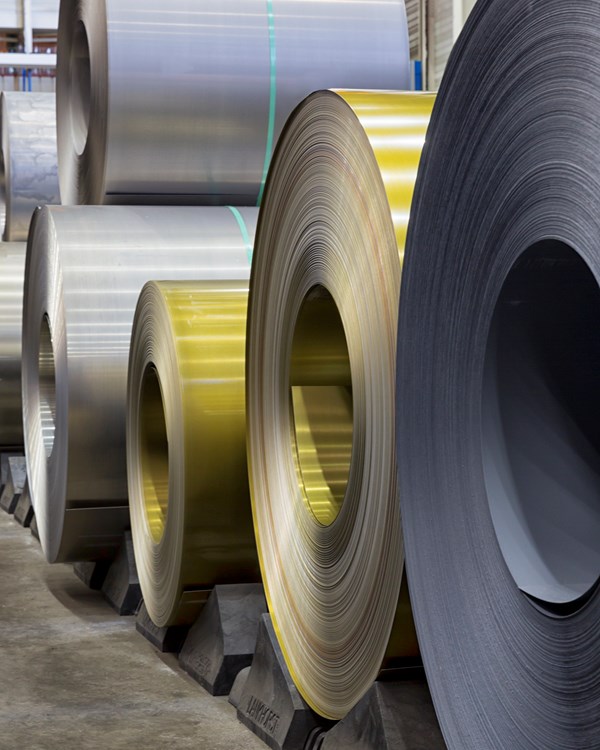
Italian HRC producers struggle to push up values
Italian hot rolled coil producers are pushing up values to €700/tonne ($762) base ex-works amid uncertainty and weak sales volumes to both re-rollers and service centres. Demand continues to drag and costs are climbing, Kallanish notes.
One local steelmaker is trying to increase prices gradually, by €10-15/t per week. The idea is to get rid of the low point of the range at €640-650/t and make larger-volume buyers pay €700/t. Each step of price hike needs to be consolidated against the backdrop of a very fragile market.
The spread between domestic values and imported material from Asian countries remains significant. The market continues to be tough, with steelmakers dealing with high production costs and limited volumes.
In the first days of July, there has still been no sight of the much-awaited July restocking before the August maintenance closures take place. Sellers however expect some higher buying activity in the next few days despite the slow market.
Domestic HRC prices remain mostly stable on-week, with €10-15/t hikes seen in some low-tonnage contracts. Values are at between €640-660/base ex-works. The level of €670-680/t has been achieved but for extremely low volumes.
Meanwhile, weak coil derivative sales and low prices are persisting as the sheet and welded tube markets continue to suffer. Competition and suppliers’ desire not to lose orders downstream is causing prices to continue to decline, Kallanish notes.
Natalia Capra France

EU coil mills reduce prices in contract talks
In contract negotiations for coil supply in the second half-year, the positions of mills and buyers have come closer together. Mills have actually made concessions after first asking prices were rejected across the market.
The main factor for prices in such negotiations is the comparison with the figures struck last time, of course also taking into consideration the current spot market level. In June, the initial offer from mills was to ask for €100/tonne ($108) on top of the prices achieved in December/January talks for H1 2023.
Buyers dismissed that claim, in view of the overall lull in the market and given spot prices continued their downward trend. The asking price was “totally unrealistic and without reason”, one buyer at a German processor tells Kallanish.
Against that, mills cite rising production cost and the fact that December saw the start of an unforeseeable price surge. Many early contracts then were signed at below €800/t for hot rolled coil, a figure that was easily overtaken by the spot market price two months later. In long-term contracts, buyers accept a premium of at least €100 over the temporary spot price, as a warranty for supply safety.
The managing director of another German processor confirms the impression that mills are now going for a rollover, or in some cases still trying for an increase. He notes they “defiantly reject the idea of a price lower than last time.” He tells Kallanish that talks are still dragging on, but he believes the overall positions will not modify much further.
Christian Koehl Germany

Slow demand limits trading in Northern Europe long steel market
Activity in the Northern European rebar and wire rod markets was slow it the week to Wednesday July 5, amid ongoing weak consumption and bearish sentiment, sources told Fastmarkets.Fastmarkets’ weekly price assessment for steel reinforcing bar (rebar), domestic, delivered Northern Europe, was €600-610 ($652-663) per tonne on Wednesday, down by €10 per tonne from €600-620 per tonne.
Depressed market condition and an uncertain outlook continued to act as a drag on demand, sources said.
Mills have become resistant to any further price drops, however, opting instead to intensify production cuts through the summer months, they added.
While some market participants forecast prices will remain stable through Summer, others said they expect to see further price drops.
Overcapacity at cut and bending operations and the subsequent fierce undercutting of offer prices has dragged down prices in Northern Europe since the fourth quarter of 2022.
Mills cannot drop prices much further without reaching their cost line, sources said.
“Demand remains very weak and the only option mills have is to cut production,” a buyer source in the Netherlands said.
A trader source in Austria said: “Competition is fierce between the cut and benders. The combination of slow demand and the fierce undercutting by the cut and benders is largely responsible for rebar prices being pressured downward.”
But the market fundamentals remained unchanged in the rebar market.
Slow demand and a pessimistic outlook, meanwhile, continued to plague market activity in the Northern European wire rod market.
And Fastmarkets’ weekly price assessment for steel wire rod (mesh quality), domestic, delivered Northern Europe remained steady at €600-610 per tonne on Wednesday.
Published by: India-Inés Levy


Prices stable in Southern European long steel markets; but producers to seek rises
An uncertain outlook and weak demand has continued to inhibit trading in the Italian wire rod and rebar markets, Fastmarkets heard on Thursday July 6.Higher input costs and cuts to production were expected, so mills will continue to look for price rises, Fastmarkets was told. But it was not certain that these price rises would be accepted by the market, given the current weak demand.
Southern European rebar
Fastmarkets’ price assessment for steel reinforcing bar (rebar) domestic, exw Italy, was €670-685 ($729-745) per tonne on July 5, stable week-on-week.
Prices in the Italian rebar market were similarly stable, with mill offers reported at €685-690 per tonne ex-works. But stock was still being sold at lower prices of €670-685 per tonne ex-works, sources said.
With July order books in good shape and energy costs increasing, mills will try to achieve higher prices in the weeks ahead, Fastmarkets heard.
Output cuts across major mills could also reduce supply, putting upward pressure on prices.
“Rebar producers are trying to put up the price. Prices are currently €670 per tonne ex-works, but mills will now target €690 per tonne ex-works. Currently, customers don’t believe in such big increases, so they’re not buying, and are opting to wait and see,” a buyer source in Italy said.
“Producers are firm on price increases,” a trader source in Italy said, “despite the fact that the market remains flat. Mills say that costs are going up, and this is what is prompting the price increases.”
Production stoppages could also put upward pressure on prices, market sources said.
“All Italian producers have booked export tonnages for July delivery,” a producer source said. “Aside from this, all producers are going ahead with out-of-season production stoppages in June and July, as well as longer-than-usual stoppages in August.”
Meanwhile, prices in the Spanish rebar market remained steady, in line with the Italian market.
Fastmarkets’ price assessment for steel reinforcing bar (rebar), domestic, delivered Spain, was €660-685 per tonne on Wednesday, stable week on week.
Southern European wire rod
The corresponding price assessment for steel wire rod (mesh quality), domestic, delivered Southern Europe, was €580-590 per tonne on Wednesday, also stable week on week.
Prices continued to fluctuate in the Southern European wire rod market in the week to July 5, Fastmarkets heard.
Increasing input costs, such as the prices for gas and energy, coupled with the ending of government support measures, was likely to prompt mills to raise prices.
And market sources said that amended European Commission trade regulations will have a considerable effect on imports of wire rod stock from Egypt, India, Malaysia and Indonesia.
Published by: India-Inés Levy

Few HRC producers active in Northern Europe, prices stable
European hot-rolled coil prices were largely flat amid continued sluggish demand, with distributors and steel service centers struggling to pass on higher prices to downstream customers, sources told Fastmarkets on Thursday July 6.Only a few suppliers are currently active in the Northern European market, sources said.
One integrated mill in Germany announced force majeure last week, while another integrated mill in the Benelux area reportedly had “a big delay with the blast furnace refurbishment,” according to sources.
Offers for September-delivery HRC were reported at between €680 per tonne EXW and €700 per tonne EXW, while rare transactions were heard at €670-680 per tonne EXW in Germany, sources told Fastmarkets.
Information that a major integrated mill in Europe was aiming for a price rise of €50 per tonne for flat steel has been circulating since the start of the week, but could not be widely confirmed by market participants by the time of publication.
In general, however, they said there is no room for a major price rise in the current market conditions, given the slowness of downstream sales.
“Trading activity has picked up from the low levels seen in June, but only because customers are looking to cover for possible shortages [of HRC] due to [technical] problems at some mills and holiday stoppages,” a steel-service center (SSC) source in the region said.
“There is actually no massive restocking [going on], SSCs and distributors have sufficient stocks [and will] only buy some minor tonnages to cover their urgent needs – that’s all. The [distributors, service centers] are not selling much [HRC] downstream and are struggling to increase the price for end users,” a trading source in Germany said.
Fastmarkets’ daily steel HRC index, domestic, exw Northern Europe was calculated at €681.88 per tonne on Thursday, up by €0.21 per tonne from €681.67 per tonne on Wednesday.
The latest calculation of the Northern European index was up by €9.15 per tonne week on week, but down by €39.16 per tonne month on month.
Fastmarkets calculated its corresponding daily steel HRC index, domestic, exw Italy at €659.00 per tonne on Thursday, up by €1.08 per tonne from €657.92 per tonne the previous day.
The Italian index was up by €10.25 per tonne week on week, but down by €8.50 per tonne month on month.
Italian producers were aiming for €670-700 per tonne EXW for August/September-delivery HRC, while buyer estimates of the tradable level came in at €650-660 per tonne EXW.
A transaction for a small tonnage was reported at €660 per tonne EXW by a buyer source on Thursday.
Trading in Italy was also sluggish, with distributors and service centers trying to pass on price rises to downstream customers.
“Sales are very slow, nobody wants to commit to big volumes,” a trading source in Italy said.
The HRC import market was also quiet. August shipments were sold out, while European buyers were not yet ready to book September-October cargoes (with November-December arrival), sources said.
“None of our customers has booked imports [of HRC] in the past couple of weeks,” a distributor said.
Asian suppliers, meanwhile, were aiming for €610-620 per tonne CFR for September-shipment HRC to Italy. Suppliers from Taiwan, Vietnam and Japan were active in the market during the week, sources said.
Published by: Julia Bolotova