


EU HRC prices stabilize in slow market
Domestic prices for hot-rolled coil in Europe were unchanged on July 7 as market activity remained limited.
Demand remained limited due to combination of sufficient stocks of some distributors, slow demand from end-users as well as uncertain price trend. A seasonal slowdown in the second half of summer has also continued to the market lull.
Traded volumes have been limited due to restocking of smaller tonnages, sources said.
“There is some market activity, as some buyers book to avoid future shortage and logistics issues in September,” a service-center source said. “They just want to get some volumes to make sure that they have needed material after summer maintenances.”
The combination of scheduled maintenances at some mills and unplanned production issues at other plants would support the domestic prices. However, the reduction of availability is unlikely to be enough to result in a substantial price recovery, sources said.
Platts assessed domestic prices for hot-rolled coil in Northwest Europe at Eur680/mt ex-works Ruhr on July 7, unchanged on day.
Market participants have reported tradable values at Eur660-690/mt ex-works Ruhr, with the majority of the data heard at Eur670-690/mt ex-works Ruhr.
Platts assessed domestic prices for hot-rolled coil in South Europe stable on day at Eur660/mt ex-works Italy on July 7.
Tradable values have been reported at Eur650-670/mt ex-works Italy.
Europe-based buyers have been holding back from import coil purchases due to long lead times and uncertain price trends. In addition, the number of offers available in Europe have been limited.
Offers of Asian HRC have been heard at Eur610-630/mt CIF Antwerp and at Eur610/mt CIF Italy.
Platts is part of S&P Global Commodity Insights.
Author Maria Tanatar


Italian re-rollers aim for higher plate prices after restocking
Italian re-rollers have been targeting higher prices for heavy plate prices in the week to July 7, after large distributors had restocked earlier this month.
“Italian buyers booked significant volumes, and now the mills have sold out July and majority of August rolling plate,” an Italian source said.
Platts assessed domestic heavy plate prices for heavy plate in South Europe up Eur15/mt on the week to Eur760/mt ex-works on July 7.
Delas have been reported at Eur750-770/mt ex-works Italy and offers have been heard at Eur770-780/mt ex-works Italy.
Market sources believe that the Italian re-rollers will target to reach Eur800/mt ex-works Italy or higher in the next round of deals.
In Northwest Europe, German mills continued to focus on long-term contracts and project supplies and they had limited volumes of plate to offer in the spot market.
Platts assessed domestic prices for heavy plate in Northwest Europe at Eur860/mt ex-works Ruhr on July 7, up Eur15/mt on the week.
Limited volumes of heavy plate from German mills have been offered at Eur860-880/mt ex-works Ruhr.
Author Maria Tanatar

German steel market expects prices to increase, production to decrease
German steel traders and producers expect steel prices to increase during July, according to data from an S&P Global Commodity Insights survey.
The July index for traders’ sentiment stood around 41.67 points, compared with 33.33 points in June, data from S&P Global’s German Steel Sentiment Survey showed. The index for producers’ sentiment was around 50 points, compared with a June index of 20 points, indicating that producers were more bullish on the near-term price trends. The overall index for prices was at about 45.83 points, up from 26.67 points for June.
On the long steel side, sources expected prices to increase in the near term despite weak demand in the market ahead of the upcoming summer holidays, as steelmakers tried to manage high costs.
“Prices have bottomed out. Even if scrap corrects itself by Eur5-10/mt it will not be sufficient to support lower prices. And I don’t think that mills can sell at lower prices anymore,” one long steel producer said.
The Platts assessment of Northwest Europe Rebar increased Eur10/mt week on week to July 5 to Eur580/mt ex-works. Platts’ assessment of European medium sections price (category 1, S235 JR) was up by Eur20 week on week July 5 to Eur820/mt delivered. Platts is part of S&P Global.
In flat steel, market activity was slow both on seasonal factors and sufficient stocks of distributors. The combination of scheduled maintenance at some mills and unplanned production issues at other plants was expected to support the domestic prices. However, the reduction of availability is unlikely to be enough to result in a substantial price recovery, market sources said.
Platts assessed domestic prices for hot-rolled coil in Northwest Europe at Eur680/mt EXW Ruhr July 6, down Eur5 from July 5.
The overall index for German inventory sentiment decreased month on month, reflecting the market’s expectation of lower inventory levels in July, with an index of about 43.33 points, compared with about 49.17 points in June. The index for steel producers for July was around 45 points, compared with 40 points in June. The index for traders’ sentiment stood at 41.67 points for July, compared with 58.33 points in June, indicating that traders and stockholders were more bearish and expecting a significant drop in inventory levels.
One long steel producer expected inventory levels to remain stable during the month of July, adding that customers are only buying what they needed and were not particularly focused on restocking activity ahead of the summer holidays.
Market expects production levels to decrease
Sources expected production in July to soften month on month. The index for production outlook was around 16.67 points for July, down from 35.83 points for June. The index for traders’ sentiment was around 8.33 points, compared with an index of 41.67 points in June. The index for producers’ sentiment was around 25 points, compared with a June index of 30 points, indicating that traders and stockholders were more bearish on near-term production levels in the market.
European steelmakers were expected to close facilities for planned maintenance during the summer holidays affecting the overall production levels in the market. Meanwhile, some steelmakers were also planning ad-hoc stoppages in efforts to control costs and balance the supply and demand situation in the market
“Normal maintenance breaks are planned for the third week of July so that might lower production levels. But that would be normal for this time of year,” one long steel producer said.
Author Rabia Arif

Europe flat stainless steel prices approach floor amid reduced supply
Prices of stainless steel flat products in Europe are showing signs of approaching a floor, largely due to reduced supply, industry sources told Fastmarkets on Friday July 7.Stainless steel mills in Europe are understood to have been operating at significantly reduced rates during the second quarter because of poor demand and low prices.
Fastmarkets’ monthly assessment of stainless steel cold-rolled sheet 2mm grade 304 transaction domestic, delivered North Europe was €2,500-2,600 ($2,717-2,826) per tonne on Friday, widening downward by €50 from €2,550-2,600 per tonne one month earlier.
In addition to the reduced supply, stabilizing stainless steel scrap prices have been a factor in the stainless steel prices approaching the bottom, the source added.
Fastmarkets’ weekly assessment for stainless steel scrap 18/8 solids import, cif main European port was €1,120-1,170 per tonne on Friday, widening downward by €30 from €1,150-1,170 per tonne one week prior, but up from the low point of the year of €1,070-1,120 per tonne on June 23.
Following months of decline, these factors hint at a potential shift in market dynamics. Stainless steel mills’ unwillingness to sell below a certain level has reduced negotiations with distributors to a minimum.
“Production will see a contraction and the lower availability of material will keep the price from decreasing,” a distributor said.
With the industry heading into the traditionally slow summer months, attention is turning towards the anticipated return of demand in September.
“The [end-user] price will gradually reach more reasonable levels for the distributor, who will be able to start rebuilding his margin. Due to lower availability, special steels could see their price increase more clearly,” the distributor added.
Fastmarket’s monthly stainless steel cold-rolled sheet 2mm grade 304 alloy surcharge domestic, Europe was €2,382-2,403 per tonne on Friday, down from €2,506-2,518 per tonne one month earlier.
Surcharges for July will typically be based on alloy component costs between May 20 and June 21, when the average three-month daily official nickel price on the London Metal Exchange was $21,544 per tonne, a $1,732-per-tonne decline from $23,276 per tonne one month earlier.
Published by: Zdravko Cherkezov


Polish wire rod prices slightly down on poor demand
Slow demand continued to drag on wire rod prices in Poland in the week to Friday July 7, with a rebound unlikely in the short term, sources told Fastmarkets.Official offers for July-rolling low-carbon drawing-quality wire rod by local steelmakers were reported at 2,800-2,900 ($689-713) zloty per tonne CPT, down from 3,100-3,200 zloty per tonne CPT for June-rolling material.
Transactions, however, were reported at lower levels — at 2,750-2,800 zloty per tonne CPT — during the assessment week.
Traded volumes remained thin amid ongoing weakness in the key consuming industry — construction.
“Nobody books more than a truck [of wire rod], nobody is restocking, there is no clarity on whether the downtrend has stopped,” a distributor said.
Fastmarkets’ weekly price assessment for steel wire rod (drawing quality), domestic, delivered Poland was 2,750-2,800 zloty ($676-689) per tonne on July 7, narrowing downward by 100 zloty per tonne from 2,750-2,900 zloty per tonne on June 30.
Import wire rod offers to Poland were stable to slightly higher during the week to Friday.
Notably, an Italian mill has increased offer prices by €10 ($11) per tonne, to €620 per tonne CPT for July delivery, citing rising output costs.
Sources reported offers from one Ukrainian supplier at €560-570 per tonne DAP border, which would net back to €590-600 per tonne CPT in southern Poland, stable over the week.
Another Ukrainian supplier was offering wire rod from stock at €610-615 per tonne CPT, depending on tonnage, sources said.
Limited tonnages of Moldova-origin drawing-quality wire rod were offered to Poland at €625 per tonne CPT.
Published by: Julia Bolotova

Poor performance in finished steel slows global scrap trading
Trading in steel scrap in the global markets was limited in the week to Friday July 7 due to a lack of support from the finished steel markets.• Turkish mills make minimum deep-sea bookings due to weaker steel sales
• US deep-sea exports follow fragile Turkish rebar market downward
• Scrap prices in China rangebound due to weak fundamentals for finished steel
• Vietnam import market falls due to slow finished steel demand, weaker alternative markets
• Taiwan market bearish on lack of support from finished steel
• Indian demand also undermined by poor domestic steel sales; scrap import prices down.
Turkey
Turkish steelmakers kept their deep sea scrap buying slow in the week to July 7, amid limited sales in the country’s domestic and export markets for finished steel, sources told Fastmarkets.
The most recent deep-sea deals were heard on July 4, when a steel mill in the Marmara region booked a US cargo, comprising HMS 1&2 (85:15) at $381 per tonne, and shredded and bonus at $399 per tonne CFR. The same mill also booked a European cargo of HMS 1&2 (80:20) at $369 per tonne CFR.
Pricing history
steel scrap, HMS 1&2 (80:20 mix), Northern Europe origin, cfr Turkey.
steel scrap, HMS 1&2 (80:20), US origin, cfr Turkey.
United States
“Very weak” sentiment in the Turkish rebar market put further pressure on US deep-sea export prices to the region, which tracked incrementally lower in a fresh deal heard over the US’ Fourth of July holiday.
Pricing history
steel scrap, HMS 1&2 (80:20), export index, fob New York.
steel scrap, shredded scrap, export index, fob New York.
steel scrap, HMS 1&2 (80:20), export index, fob Los Angeles.
Vietnam
Spot prices for ferrous scrap imported into Vietnam dropped in the week to July 7 due to slow demand for finished steel products and a downtrend in alternative markets, Fastmarkets heard.
Pricing history
steel scrap, HMS 1&2 (80:20), cfr Vietnam.
China
Domestic scrap prices were steady in China over the week with demand and supply both soft. Prices for scrap imported into China were also rangebound due to thin trading. Factors such as buyers’ pessimism about near-term steel demand, and a persistent gap between bids and offers, contributed to a muted market for scrap imports.
Pricing history
steel scrap, index, heavy recycled steel materials, cfr north China.
steel scrap, index, heavy recycled steel materials, cfr east China.
Taiwan
Spot prices for containerized steel scrap imported into Taiwan dropped over the week, with market participants expecting more of a downtrend to come due to weakness in Taiwan’s finished steel market. Deal prices for US-origin containerized HMS 1&2 (80:20) fell to $365 per tonne CFR Taiwan on Thursday, from $370-375 per tonne early in the week.
Pricing history
steel scrap, HMS 1&2 (80:20 mix), US material import, cfr main port Taiwan.
India
Import prices to India dropped this week amid slow buying interest, with sources pointing to poor finished steel sales domestically. Steel sales have been poor for much of this year and, with the monsoon season having started, were not expected to to improve before September.
Pricing history
steel scrap, shredded, index, import, cfr Nhava Sheva, India.

Published by: Cem Turken, Lee Allen, Amy Hinton, Ross Yeo, Tianran Zhao

HRC prices stabilize in Europe; demand too weak to support substantial rise
Trading remained thin in the European hot-rolled coil market on Friday July 7, with prices broadly unchanged due to a lack of demand, sources told Fastmarkets.Fastmarkets’ daily steel HRC index, domestic, exw Northern Europe was calculated at €682.00 ($743.14) per tonne on Friday, up by €0.12 per tonne from €681.88 per tonne on Thursday.
The latest calculation of the Northern European index was up by €7.90 per tonne week on week, but down by €26.13 per tonne month on month.
Buyers in the region estimated the tradable level at €670-700 per tonne EXW for September-delivery HRC.
One source reported that a mill in Central Europe was trying to push offers up to around €750 per tonne EXW on Friday, but this could not be widely confirmed by the time of publication.
Traded volumes remained limited in the region, however, amid continued sluggish demand from end users, sources said.
“Sales are slow, there are no signs of restocking in the market yet,” a mill source told Fastmarkets.
Fastmarkets calculated its corresponding daily steel HRC index, domestic, exw Italy at €662.00 per tonne on Friday, up by €3 per tonne from €659.00 per tonne the previous day.
The Italian index was up by €12.00 per tonne week on week, but down by €8.87 per tonne month on month.
Italian producers have recently been trying to increase prices, aiming for €680-700 per tonne EXW in their offers, but no deals have been done at that level because buyers are reluctant to accept higher prices when sales are so slow.
Transactions were reported at €650-660 per tonne EXW in the week to Friday, but mainly for limited tonnages and trading remained slow in the Italian HRC market, with buyers still holding back from restocking.
“[Steel service centers and] distributors are banking on a continued downtrend in the domestic and import [HRC] markets and have therefore been selling [processed HRC] downstream very aggressively,” a producer source in Italy said.
Sources said they expect buying activity to pick up in the Italian HRC market toward the end of July, when restocking takes place ahead of the summer stoppages at steel mills.
They added, however, that the restocking is likely to be limited due to looming uncertainty regarding post-holiday season demand and price trends.
HRC was on offer from a few Asian mills at €610-630 per tonne CFR Italy in the week to Friday, Fastmarkets understands, mainly for September shipment. And one Indian mill was offering HRC at €600 per tonne CFR for mid-October shipment.
The shrinking gap with domestic prices, along with the long lead times, have limited buying interest in overseas coil in recent weeks.
Published by: Julia Bolotova

Turkish merchant bar producers struggle to conclude deals
Turkish merchant bar producers are seen struggling to sell in the global arena as buyers decrease their price targets each day.
On Friday, producers’ export quotes were pegged mostly at around $640-670/tonne fob Turkey for angles, $650-680/t for IPN-UPN sections, $660-690/t for flat bars, and $650-680/t for IPE sections.
Although the number of inquiries was high during last week, Turkish mills struggled to convert these into sales. This was mostly due to decreasing billet prices. Buyers further decreased their price targets as billet values continued to fall.
One Turkish merchant bar producer tells Kallanish: “While we were negotiating with European buyers, Kardemir announced lower billet prices. Although Kardemir’s prices do not represent our costs, as our previously bought higher-priced material has not yet arrived, buyers are revising their price targets based on Kardemir’s prices.”
Another producer says he received many inquiries from the Gulf Cooperation Council and the EU but failed to convert most into deals.
“Buyers’ bids are at around $620-630/t fob for angles. $635-640/t could be considered but $620/t is way too low,” says a re-roller and adds: “My previously bought billet at $555-560/t cfr has not yet arrived.”
In the billet market, the latest CIS-origin billet was concluded at $500-510/t cfr Tukey following Kardemir’s billet sales at $565-570/t ex-works on Wednesday.
Burcak Alpman Turkey

German car production rises but below pre-Covid level
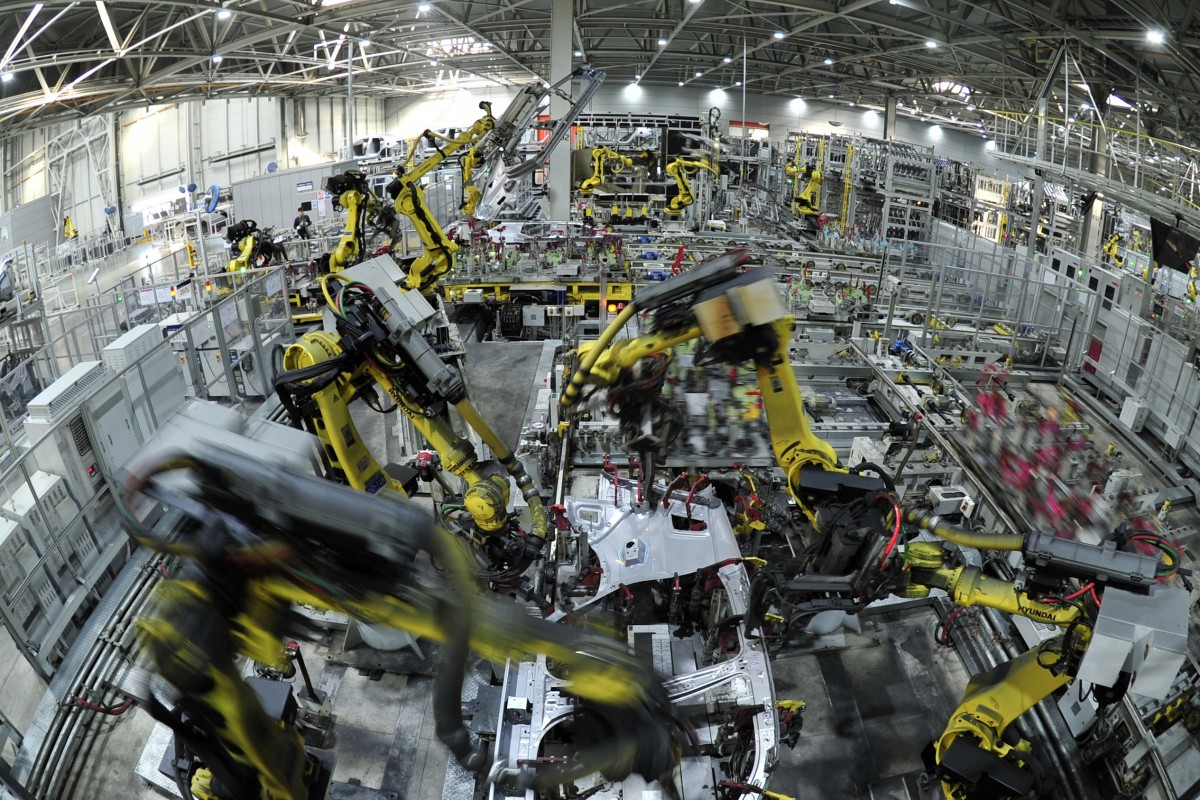
Production and registration of new cars rose again gently Germany, but is still lagging behind pre-Covid figures, says automotive association VDA in its statistics for the first half of 2023.
In June, the production level at German car plants was higher on-year for the 14th month in a row. Last month, 389,900 passenger cars rolled off production lines, 31% more than in June 2022, Kallanish hears from VDA.
In the first half of the year, a total of just over 2.2 million passenger cars were produced. This corresponds to an increase of 32% compared to the same period last year. Despite the positive trend of recent months, production remains significantly below the pre-crisis level, at 10% fewer vehicles than in the first half of 2019.
VDA president Hildegard Müller warns that the upward trend could expire going forward. “Passenger car production in Germany increased significantly in the first half, primarily due to the efforts to ease tensions in supply chains,” she says. “Looking at the overall economic situation and at new orders, we expect that the high growth rates will weaken soon, and that the high order backlog will be slowly reduced.”
Overall, new orders dropped by 9% from H1 2022, with mainly domestic orders weakening. Domestic orders in the first six months fell by 27% year-on-year. Foreign orders were down 5%.
Christian Koehl Germany
Italian tube prices tick up
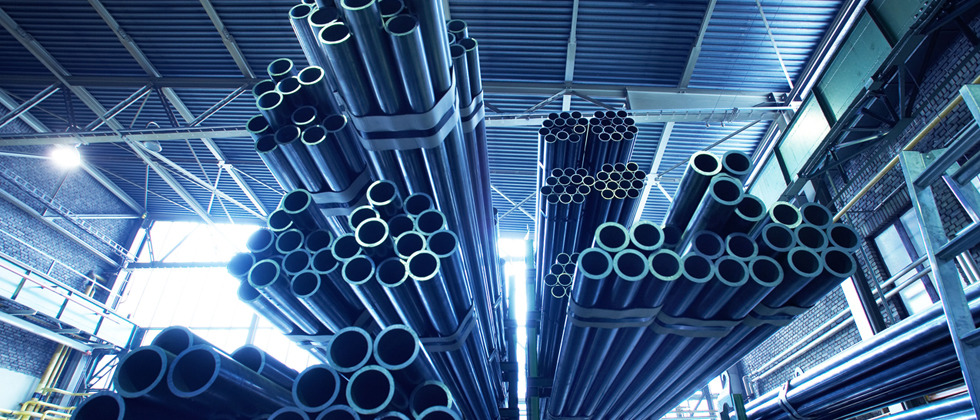
Italian welded tube prices are increasing by some €35/tonne ($38) compared to the end of June following re-rollers’ hikes at the end of last month.
The hikes are in line with higher hot rolled coil contracts in Europe. Tube prices however continue to lag behind HRC values amid uncertainty dominating the market.
Over the past ten days, tube sellers have noticed some increased confidence and better demand also from the distribution sector, which continues to grapple with weak downstream consumption. Thanks to the latest increases achieved in Italy, discounts have lowered to 36-37 points. In the coming week, re-rollers are targeting to reach 35 points and will continue to implement gradual increases, Kallanish notes.
Tube sales in July are reported to be higher than the June average despite the market remaining challenging.
European HRC producers are pushing up values and quoting in Italy at €700/t base ex-works or delivered depending on mill, client and volume. Contracts have not yet reached this level as steelmakers are also going for gradual hikes considering the market fragility.
The target to reach 35 points for tube discounts is based on HRC prices at €650/t ex-works. If in the next few days, domestic values continue to increase, re-rollers will have to target 30 points of discounts before the sector shuts down for August stoppages, sources say.
Tube producers in Europe, like steelmakers, are facing high production, financial, transport and energy costs that the market downstream refuses to absorb. Many re-rollers have reduced output to balance demand and supply.
Natalia Capra France